taiwan says targeted
| |

Taiwan says it was targeted last month in AI-driven hacking campaign

Taiwan detected AI-assisted cyberattacks on government agencies last month coming from overseas but the affected bodies successfully “handled” the incident, the Ministry of Digital Affairs said on Thursday, August 13.

Taiwan has in recent years complained about what it sees as China’s “hybrid warfare” — from daily military drills near the island to disinformation campaigns and cyberattacks — as Beijing ramps up military and political pressure on the democratically governed island to force Taipei to accept its claims of sovereignty.

Chinese cyberattacks on Taiwan’s key infrastructure from hospitals to banks rose 6% in 2025 from the previous year to an average of 2.63 million attacks a day, the island’s National Security Bureau said in January, adding some of the hacks were synchronised with military drills in “hybrid threats” to paralyze the island.

In a statement, the Ministry of Digital Affairs said its cybersecurity monitoring units detected the “abnormal attack” targeting government agencies in July, and beginning July 20, its National Institute of Cyber Security issued a series of warning alerts while it investigated.

The investigation results showed the attacks displayed clear characteristics of an “overseas source”, with hackers employing a hybrid approach that combined manual operations with AI agent-assisted attacks, such as Open Claw, it said.

“The relevant attack sources, methods, and scope of impact have all been fully investigated, and the affected units have successively completed their handling,” the ministry added.

In response to this new type of AI-derived cybersecurity threat, the government has established protective guidelines and strengthened system monitoring across agencies to block attacks early, it said.

The statement did not mention China, and China’s Taiwan Affairs Office did not immediately respond to a request for comment on the attack.

Iraeli firm’s report

Taiwan’s statement came a day after the Israeli cybersecurity company Dream said in a blog post that it had uncovered an AI-driven hacking campaign that stole credentials and other data from an unnamed government in Asia.

Dream said a team of AI agents worked together to extract scores of passwords from unidentified officials, steal personnel records from Taiwan’s justice ministry, and scan its nuclear safety agency for vulnerabilities over the course of four days.

Dream, which said it was able to reconstruct the hacking campaign after recovering the agents’ “complete operational workspace,” declined to share the data or name the government when approached by Reuters, but the Financial Times, which was the first media outlet briefed on Dream’s findings, identified the target agencies as Taiwanese.

Growing threat

The threat of AI-assisted hacking campaigns has been growing for years but ramped up dramatically over the past few months after top AI labs released models, such as Anthropic’s Mythos, which can rapidly conduct reconnaissance, identify vulnerabilities, and take advantage of them.

Cris Thomas, a researcher who works as a security advocate at the code security company Semgrep, said the spy campaign was an illustration of just how quickly AI-assisted hackers could hit their mark.

Thomas cautioned against exaggerating the power of AI agents, however.

“There’s still a human in there somewhere. Somebody had to choose who to attack, had to establish an objective and give it a directive. It’s not totally 100% autonomous. There was a capable operator in charge that did that,” he added. – Rappler.com


Similar Posts

  • |

    BJP lawmaker alleges son-in-law married 25 women

    An Indian politician has accused his son-in-law of fraud after allegedly discovering that the man had married around 25 women using different identities. Bharatiya Janata Party (BJP) lawmaker Gyan Tiwari, who represents the Sevata constituency in Uttar Pradesh, filed a complaint against his son-in-law’s family. He alleged that his daughter was deceived into marrying a man who had concealed his alleged criminal background and previous relationships. According to the complaint, Tiwari’s daughter Pragya married Prakhar Trivedi in 2024. Prakhar is the son of Anuj Trivedi, a resident of Chandrawal. Tiwari alleged that Anuj presented himself during the marriage arrangements as a well-known real estate businessman based in Mumbai. He claimed that the family had also received positive information about the prospective groom from local sources and influential people before approving the marriage. However, the lawmaker said his family later learned about Prakhar’s alleged activities through social media and other sources. Tiwari alleged that Prakhar had used fake identities to establish relationships with women in different Indian states, particularly Maharashtra. He further accused him of allegedly obtaining large sums of money from several women. The politician claimed that Prakhar had entered into around 25 marriages. The allegations have not been independently established. Tiwari said the revelations caused severe emotional distress to his family. He also said that the incident affected his reputation as a public representative. Following the allegations, Tiwari said he had severed social and personal ties with the accused family and brought his daughter back home. Police said a case had been registered following Tiwari’s complaint at the Reusa police station. Anuj Trivedi and his son Prakhar Trivedi have reportedly been arrested as the investigation continues. Authorities are now investigating the allegations of fraud, the alleged use of multiple identities and the claims involving several marriages.

  • | |

    Trump hits back at Canada as tariff war escalates

    WASHINGTON: US President Donald Trump has lashed out at Canada after Prime Minister Mark Carney announced retaliatory tariffs on American goods, deepening a trade dispute that threatens to further strain economic ties between the two neighbouring countries. Trump responded sharply on Sunday after Canada confirmed that new tariffs targeting US products would take effect on September 8. “Canada wants the benefits of being a state, without being one!!!” Trump said in a post on Truth Social, while also accusing Canada of imposing heavy tariffs on American farmers for years. The latest escalation follows the introduction of new US tariffs covering around $20 billion worth of Canadian goods. The measures, which took effect on Saturday, impose tariffs of up to 50 per cent and affect products ranging from hockey sticks and cement to other Canadian exports. Carney announced Canada’s response a day earlier, saying Ottawa would impose new tariffs particularly targeting American steel and dairy products. The Canadian prime minister described the situation in unusually forceful terms, saying the country had effectively been “attacked” and was responding accordingly. The confrontation follows the collapse of recent trade negotiations between Washington and Ottawa. Earlier discussions had appeared more constructive, with Trump saying he believed the United States could reach an agreement with Canada and pointing to his positive relationship with Carney. But Carney said the latest US demands had crossed a line. According to the Canadian leader, Washington proposed terms that were “uneconomic” and “unfair” while undermining the benefits Canada expected from a potential agreement. Ottawa ultimately rejected the proposal. US Trade Representative Jamieson Greer offered a different account of the negotiations. He told The New York Times that Washington had offered to reduce tariffs on Canadian steel, aluminium and automobiles while also removing a recently imposed tariff on Canadian lumber. Greer said the proposed measures would have provided Canada with exceptionally favourable treatment compared with other US trading partners. However, the offer failed to produce a breakthrough. Greer also told Fox News that Washington was preparing measures in response to Canada’s retaliation, signalling that the dispute could escalate further rather than return immediately to the negotiating table. A senior US official described the latest talks as candid but not acrimonious, suggesting that despite the increasingly hostile public statements, both sides had maintained communication during negotiations. The economic stakes are significant. The United States and Canada share one of the world’s largest trading relationships, with businesses and consumers on both sides relying heavily on cross-border commerce. The latest tariffs could therefore raise costs for companies, disrupt supply chains and put additional pressure on industries already facing uncertainty. With Canadian counter-tariffs scheduled to take effect in September, attention will now turn to whether Washington and Ottawa can find a compromise before the measures trigger a wider trade confrontation.

  • EASA issues urgent advisory warning airlines to avoid Jordanian airspace

    The European Union Aviation Safety Agency (EASA) has issued a security bulletin urging commercial airlines to suspend all operations within Jordanian airspace. The safety agency highlighted an escalation in cross-border military strikes and ballistic missile trajectories as primary drivers behind the severe risks currently facing civilian flights in the region. The newly released directive instructs European carriers and EASA-authorized foreign operators to avoid the Amman Flight Information Region (FIR) across all flight levels. Alongside this new warning, EASA officially extended its existing airspace warnings for several neighboring Middle Eastern territories through August 31, 2026. According to official EASA statements, security conditions across the region have deteriorated rapidly since mid-July. The airspace over and around Jordan has become increasingly hazardous due to active kinetic military engagements, including drone deployments, ballistic missile transit, and the frequent activation of heavy air defense systems. The regulatory agency highlighted several critical factors endangering high-altitude commercial flights. The heightened operational state of regional air-defense units increases the probability that radar systems could accidentally target civilian airliners. Active aerial engagements create unpredictable hazard zones caused by mid-air missile interceptions, anti-aircraft fire, and descending shrapnel. Rapid combat developments often leave local aviation authorities without adequate time to issue timely rerouting orders or close vulnerable corridors. Because Jordanian authorities have not yet published definitive local flight restrictions or comprehensive safety mitigations, European regulators felt compelled to intervene directly to protect commercial flights. Jordan’s addition to the no-fly advisory list reflects a widespread expansion of flight restrictions across key aviation transit hubs in the Middle East. EASA had previously reinstated and strengthened safety advisories for several other nations and maritime zones following intensified conflicts involving U.S. assets and Iranian forces. The full list of airspaces currently subject to EASA’s strict operational warnings includes Jordan (Amman FIR); Iran, Iraq, and Lebanon; Bahrain, Kuwait, Qatar, and the United Arab Emirates; overwater corridors in the Gulf of Oman. All related advisories, which were previously scheduled to expire on July 29, have now been synchronized and extended until at least August 31, 2026. The decision to bypass Jordan forces international airlines to implement extensive flight path revisions. Carriers are diverting long-haul journeys around extended no-fly zones, leading to longer flight durations, increased fuel consumption and higher operating costs.  Also, the potential schedule shifts for passengers traveling along major international routes. EASA emphasized that all affected air operators must continuously track real-time Notice to Air Missions (NOTAMs) and conduct rigorous safety evaluations prior to dispatching aircraft near or around adjacent flight zones. European regulators stated they will continue to monitor regional security developments closely and modify their airspace guidelines as conditions evolve.  

  • | |

    Echoes from the Interstellar Dark

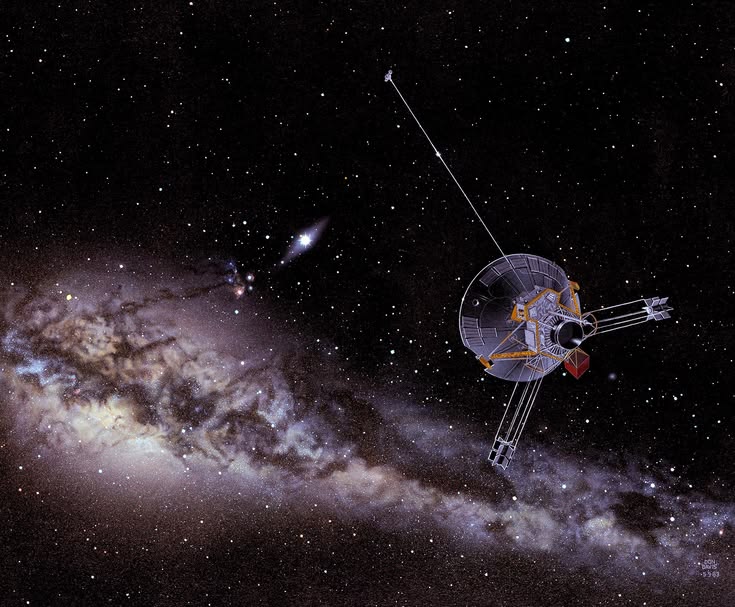
    NASA’s Voyager 1 probe was designed to explore the outer giant planets and send back photographs of Jupiter and Saturn. It was launched in 1977. More than eleven billion miles from Earth, floating through the icy void beyond our solar system, a tiny scrap of 1970s human ingenuity continues its lonely journey. Decades after its primary mission ended, the craft crossed the heliopause. The boundary where the sun’s protective magnetic bubble ends and true interstellar space begins. ​In recent months, engineers faced a daunting crisis. Voyager 1 began transmitting a repeating, meaningless gibberish loop of ones and zeros back to Mission Control. For a moment, scientists feared that after nearly half a century of unbroken operation, the farthest human artifact had finally succumbed to cosmic radiation and cold degradation. Yet through meticulous diagnostic work, engineers isolated a corrupt microchip. They rerouted its memory code across ancient hardware.  Hence, they successfully restored intelligible science data across the vast distance. ​Voyager 1’s survival is not just an engineering miracle; it is a profound testament to humanity’s desire to touch the unknown. ​A spindle of wire, a heart made of bronze, It drifts through the night where the quiet responds. Beyond the sun’s breath and the cradle of red, It whispers the secrets of worlds overhead. ​A Message in a Bottle Across Cosmic Waves ​Carried on the hull of Voyager 1 is the Golden Record, a gold-plated copper phonograph disc containing sounds of Earth, greetings in fifty-five languages, musical compositions from Bach to Chuck Berry, and encoded images of terrestrial life. It serves as an interstellar time capsule, intended to outlast our civilization and tell any distant intelligence who we were. ​We carved our desire on golden veneer, To prove in the darkness that someone was here. A chorus of ocean, a child’s brief greeting, Sent out to outlive every mortal heart’s beating. ​As the probe glides through the cosmic dust, its radio signal traveling at the speed of light takes over twenty-two hours to reach dish antennas on Earth. Every line of telemetry received is a faint echo from an environment no human eye will ever witness firsthand. The spacecraft operates on a diminishing power supply provided by its decaying plutonium generators. Year by year, NASA engineers shut down non-essential instruments to conserve every milliwatt of power, prioritizing the magnetometers and cosmic ray sensors that measure the interstellar medium. ​The Final Quiet Crossing ​The remaining active instruments will inevitably power down as the thermal generators fade entirely by the end of this decade. Voyager 1 will then become a silent voyager, drifting along its galactic orbit around the center of the Milky Way, unbothered by atmospheric drag or gravitational interference, lasting for millions of years. ​When the last power flickers and warmth slips away, It will glide through the night till the dawn of no day. No longer a transmitter, no longer a thread, Just a monument floating where gods used to tread. ​The triumph of retrieving clear data from Voyager 1 reminds us why we look up. Science and art stem from the same original impulse: the refusal to remain quiet in the vastness of the dark, and the drive to leave something meaningful behind before the power fades.

  • | |

    Pogacar on verge of Fifth Tour de France title aft…

    Defending champion Tadej Pogacar is on the verge of winning a record-equalling fifth Tour de France after taking a storming victory on stage 19 to Alpe d’Huez. The UAE Team Emirates-XRG rider pulled more than three minutes back on a breakaway group on the hors category final climb up to the famous ski resort, which was flanked by thousands of spectators from around the world. Pogacar, 27, is aiming to become the joint-most successful rider in the Tour’s history with five wins, alongside legends Jacques Anquetil, Eddy Merckx, Bernard Hinault, and Miguel Indurain. He holds a dominant lead over Belgium’s Remco Evenepoel of seven minutes 11 seconds, despite the Belgian’s improved climbing form this year. Pogacar’s Mexican teammate Isaac del Toro remains third and in the white young riders’ classification leader’s jersey, nine minutes 42 seconds down. The peloton will take on Alpe d’Huez once again on Saturday for the three-week race’s mountainous ‘queen’ stage, which includes an extra 2,000 metres of climbing. “It was very cool to win up here – it was a crazy atmosphere all climb and I’m thankful for the team that I could pull it off,” said Pogacar. “When I heard some of the guys [were] dropped when [teammate] Felix [Grosschartner] set a super good pace at the beginning of the climb, I was already going full gas, as the breakaway was so strong. Every kilometre of Alpe d’Huez I had good legs and not many could follow [me].” Pogacar crossed the line six seconds ahead of France’s Lenny Martinez of Bahrain-Victorious, who thumped his handlebars several times in frustration as he crossed the line. Ecuador’s in-form rider Richard Carapaz of EF Education-Easypost, who won Thursday’s stage to Ocieres Merlette, finished a further three seconds behind in third. A 40-plus strong breakaway had established a lead over the peloton and yellow-jersey wearer Pogacar by several minutes mid-stage, but the main pack began to slowly reel them in. It was Martinez, the USA’s Sepp Kuss of Visma-Lease a Bike, and a typically animated Carapaz who eventually emerged as the three seemingly set to battle for victory as they began Alpe d’Huez’s legendary twisting ribbons of tarmac. But Pogacar had other ideas and set a record time on the final climb of 35 minutes 27 seconds, beating the time set by Italy’s legendary Marco Pantani in 1997. The victory puts Pogacar in a commanding position heading into the final stages of the Tour. With a lead of over seven minutes, he is all but assured of his fifth title, provided he avoids any mishaps in the remaining stages. The Slovenian rider has been in dominant form throughout the race, winning multiple stages and showcasing his incredible climbing ability. As the Tour enters its final days, fans will be eagerly watching to see if Pogacar can cement his place among the legends of the sport. His performance on Alpe d’Huez has already etched his name into Tour history, and a fifth victory would confirm his status as one of the greatest riders of all time. The final stages promise more excitement as the peloton battles for stage wins and final classification positions, but the spotlight remains firmly on Pogacar as he closes in on another historic achievement.

Leave a Reply

Your email address will not be published. Required fields are marked *