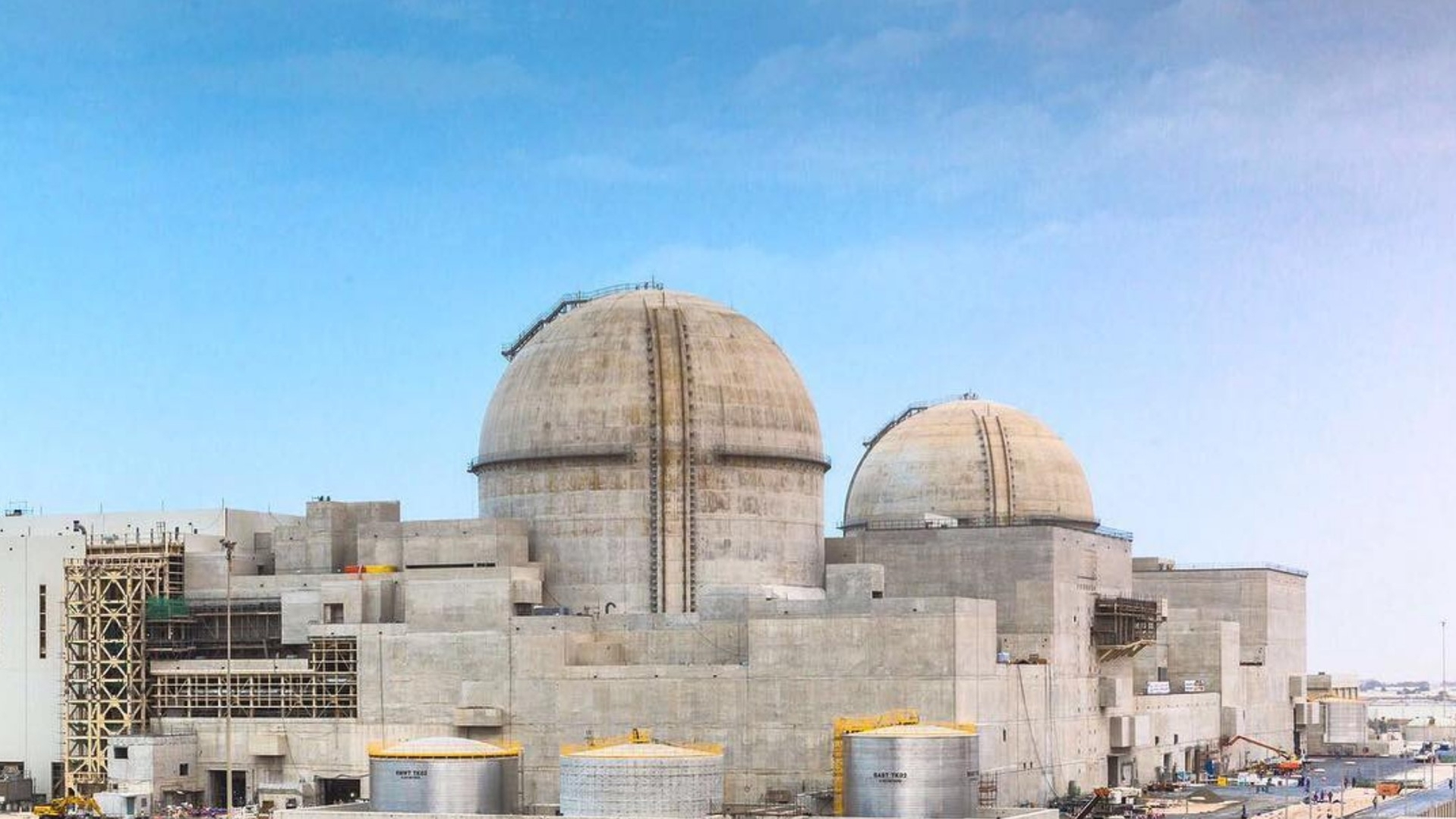
Filipinos helped build UAE’s nuclear plant. PH talent may soon do the same back home.
MANILA, Philippines – Decades after the Philippines abandoned its first attempt at nuclear power, some of the Filipino talent trained for the industry ended up helping other countries build theirs.
The National Power Corporation (NAPOCOR) said around 80% of the people who built the United Arab Emirates’ (UAE) Barakah Nuclear Energy Plant were Filipinos, pointing out both the pool of nuclear-capable overseas Filipino workers and the challenge of rebuilding that expertise at home.
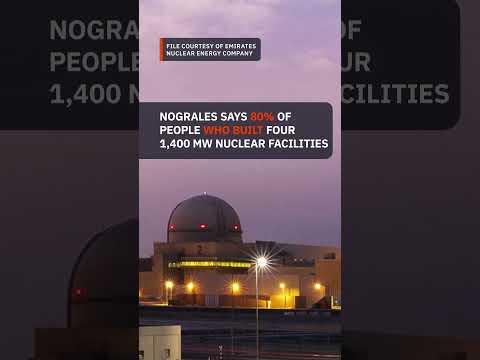
“Many of our nuclear trained personnel have since retired. Others took their expertise overseas where Filipino engineers and skilled workers have contributed to nuclear facilities around the world,” NAPOCOR president and CEO Koko Nograles said during a briefing on Tuesday, August 11.
“‘Yung sa UAE, merong doong apat na 1,400 (In the UAE, there are four 1,400) megawatt nuclear facility sa Barakah. 80% of the people who built that nuclear facility are Filipinos.”
As of 2024, the Philippine government said that around 1,000 Filipinos were working at Barakah.
“That should remind us of something important – that the Filipino can do nuclear,” Nograles said.
The Philippines once had its own crop of nuclear-trained personnel for the Bataan Nuclear Power Plant, which NAPOCOR maintained and kept operationally ready until government policy shifted its responsibility largely to preservation. The plant has been mothballed since 1986, resisting revival attempts by successive administrations due to persistent concerns over public safety and cost.
Asked by Rappler whether the Philippines now needs to rebuild that talent as it revives its nuclear ambitions, Nograles said preparing the workforce could not wait until a new plant was already going up.
“Building a nuclear power plant is easier than operating one,” Nograles said, noting that human resource development is among the 19 infrastructure issues countries must address under the International Atomic Energy Agency’s nuclear roadmap.
Energy Secretary Sharon Garin said the workforce needed for nuclear would extend beyond just nuclear engineers themselves. (READ: Why not nuclear? Marcos pushes for controversial energy source in SONA 2026)
“You don’t have to be a nuclear engineer to build a nuclear power plant,” Garin said, pointing to carpenters, welders, and other skilled workers who could be given additional nuclear-specific training.
There’s evidence of growing interest too. In February, the UP Diliman College of Engineering conducted an interest survey to support the revival of its Master’s Degree Program in Nuclear Engineering, decades after the university stopped producing dedicated nuclear engineering graduates.
For expertise that’s not yet readily available locally, Filipinos are also being sent overseas. PNRI has long tapped foreign fellowships and training programs, while private companies are doing the same. Meralco, through its FISSION and NEST programs, has sent engineers to pursue nuclear engineering studies abroad, with the scholars expected to return and help build up the domestic workforce as the company prepares for the integration of nuclear into the energy mix.
![[READOUT] The race to deliver cheaper power](https://www.rappler.com/tachyon/2026/08/The-race-to-deliver-cheaper-power.jpg?fit=449%2C449)
PH nuclear plans move to next stage
The workforce push comes as the Philippines moves deeper into the long process of potentially putting a nuclear power plant into operation.
Department of Energy Undersecretary Giovanni Bacordo said the country is moving into Phase 2 of the IAEA milestone approach, or becoming “ready to invite bids or contracts,” after laying much of the policy and international groundwork under Phase 1.
The government is now focused on establishing PhilATOM, the country’s independent atomic energy regulator, while validating potential nuclear sites in Bataan, Palawan, Masbate, Pangasinan, and Camarines Norte. Possible financing arrangements are also under study. (READ: Gov’t reviews laws as Philippines inches toward nuclear energy use)
Private power companies are also starting to position themselves for a possible nuclear industry. AboitizPower signed an exploratory agreement in July with South Korea’s Korea Hydro & Nuclear Power (KHNP) to conduct joint pre-feasibility studies, share information, and build capacity around nuclear technologies in the Philippines. The agreement carries no commitment yet to build a plant.
KHNP also has a history with the Philippines. The South Korean company helped deliver the aforementioned UAE’s Barakah Nuclear Energy Plant and is wholly owned by KEPCO, which studied the possible rehabilitation of the Bataan Nuclear Power Plant in 2009, although that effort did not proceed.
Meralco PowerGen is likewise studying the viability of deploying small modular reactors, backed by a $2.8-million US government grant to evaluate technologies and identify a preferred option. – Rappler.com
![[OPINION] Beyond Bataan: Building the Philippines’ energy future](https://www.rappler.com/tachyon/2026/08/beyond-bataan-building-philippines-energy-future-August-6-2026.jpg?fit=449%2C449)