meta pledges share
| |

Meta pledges to share data over imminent threats, says Hontiveros

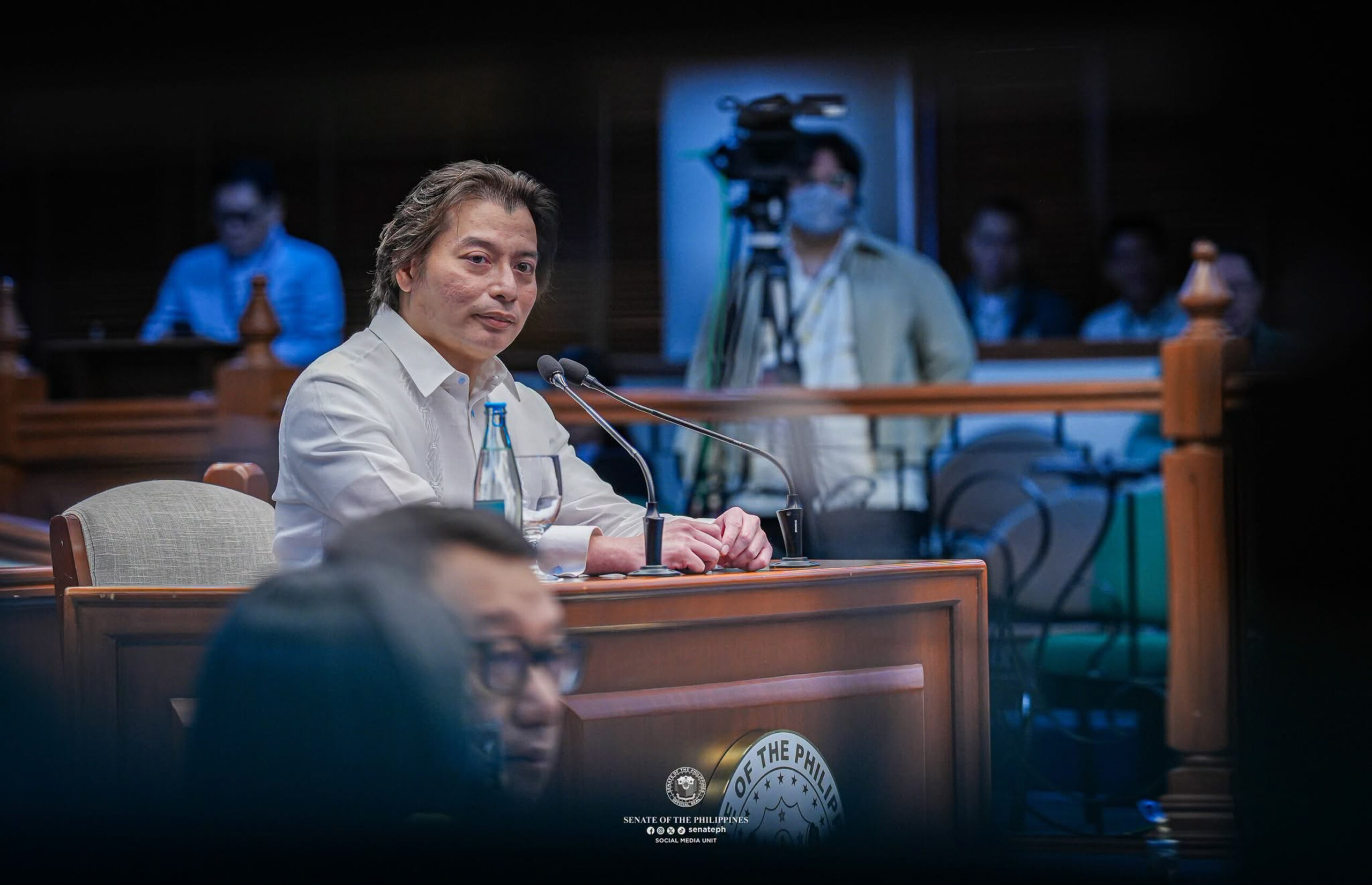
MANILA, Philippines – Senator Risa Hontiveros on Friday, August 28, said the government has secured a commitment from Meta to respond to requests from Philippine law enforcement authorities for user data when there are indications of an imminent threat of violence.

Hontiveros sent representatives on Thursday, August 27, to join a Philippine delegation of key government officials in a roundtable meeting with Meta’s top Asia-Pacific policy officers at the tech giant’s regional headquarters in Singapore.

The meeting focused on the responsibilities of Meta’s platforms, particularly Facebook, in addressing the spread of nihilistic violent extremism and preventing online activity from translating into real-world attacks.

As the meeting neared its conclusion, Hontiveros’ representatives pressed Meta to commit to providing subscriber information and traffic data to Philippine authorities once an imminent threat to public safety has been identified.

Meta agreed to the request, according to Hontiveros.

Napapayag natin, napa-commit natin ang Meta na ibibigay nila sa ating mga awtoridad ang subscriber information at pati traffic data once na may ma-identify silang banta sa kaligtasan ng ating mga bata bago pa may mangyaring aktwal na pag-atake,” Hontiveros said.

(We were able to get a commitment from Meta that they will provide subscriber information and traffic data once they identify a threat to the safety of our youth before an attack even happens.)

Hontiveros also linked the agreement to the looming passage of the Child Online Safety and Protection Act or Senate Bill No. 2424, a priority measure that seeks to strengthen safeguards for children on digital platforms.

The bill consolidates social media regulation bills pertaining to children’s use of such platforms.

Under the bill, children below 16 years of age shall not be allowed to create, access or maintain accounts on these platforms, with corresponding penalties to platform owners, as well as parents if proven willfully negligent.

The proposed legislation builds on protections established under Republic Act No. 11930, or the Anti-Online Sexual Abuse and Exploitation of Children and Anti-Child Sexual Abuse or Exploitation Materials Act.

The senator stressed that technology companies operating in the Philippines should be held accountable for harmful content distributed through their platforms.

Her remarks come amid growing scrutiny of social media companies over the role their platforms play in the spread of extremist content, violent threats and other harmful material. At a Senate hearing on August 20, police revealed that it had handled 74 cases linked to nihilistic violent extremism so far.

At the same hearing, Hontiveros had castigated Meta for allowing a livestreamed video of the Ateneo de Zamboanga shooting incident to remain published online for 14 minutes. She said: “Linisin niyo ang kalat niyo, ang basura niyo sa inyong powerful platform, linisin niyo. Huwag niyo iwan lahat sa CICC (Cybercrime Investigation and Coordinating Center).”

Must Read

Zamboanga school shooting kills at least 2 | The wRap


Zamboanga school shooting kills at least 2 | The wRap

(It shouldn’t be the CICC that cleans up after Meta. Clean your mess up, your trash on your powerful platform. Don’t leave it up to the CICC.)

Two minors, including the student who fired his father’s gun inside the school, died in the Ateneo de Zamboanga incident last August 18.

During a Senate plenary session on Tuesday, August 25, Hontiveros also said digital platforms must establish local legal entities to make it easier for authorities to hold them accountable, and called for stronger regulation of these platforms’ business models, especially the use of virality that can at times spread harmful content. – Rappler.com


Similar Posts

  • |

    An alien planet

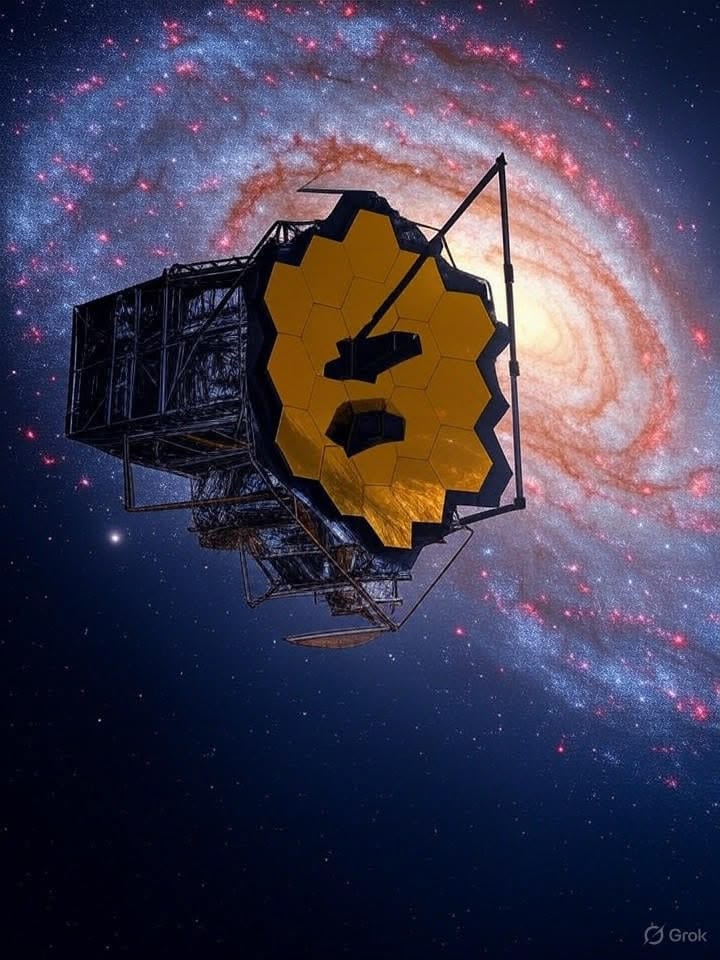
    Imagine living on a world where the start of the day and the end of the day aren’t just different times, but entirely different environments. On one horizon, morning arrives in a chilly mist where vaporized rocks might condense into glittering, mineral clouds. On the opposite horizon, evening sets in as a roaring, hyper-heated furnace hot enough to shred water molecules into raw hydrogen and oxygen. This isn’t sci-fi world-building, it is the reality of WASP-121 b, an extreme exoplanet located roughly 850 light-years from Earth. Astronomers analyzing data from NASA’s James Webb Space Telescope (JWST) have uncovered unprecedented details about this distant world, proving for the first time that its morning and evening twilight zones are fundamentally different from one another. A World Locked in Perpetual Extremes WASP-121 b belongs to a class of cosmic objects known as hot Jupiters: giant gas planets that orbit extraordinarily close to their parent stars. Because of this extreme proximity, the planet is tidally locked. Just as the Moon always presents the same face to Earth, WASP-121 b always presents the exact same hemisphere to its star. One side endures an unrelenting, eternal day with scorching temperatures topping 2,500 degrees Celsius (4,500 degrees Fahrenheit). The opposite side faces permanent night, staring into cold space. For years, astrophysicists hypothesized that the narrow transition zones between day and night. The planet’s terminators might harbor complex, asymmetrical weather patterns. However, confirming this required measuring subtle variations in starlight as the planet passed in front of its star. How Jet Streams Reshape Alien Skies Using JWST’s Near-Infrared Spectrograph (NIRSpec), researchers tracked how starlight filtered through different parts of WASP-121 b’s atmosphere. The findings revealed a dramatic contrast between the morning transition and the evening transition. The driver behind this strange weather is a planetary-scale jet stream. Superheated air on the dayside doesn’t stay still; it rushes toward the cooler nightside at extreme speeds. Because the planet rotates toward the east, these violent winds carry thermal energy around the globe and dump the bulk of that heat directly into the evening region. As a result, WASP-121 b’s evening atmosphere grows significantly hotter than its morning counterpart. Heat causes gases to expand, puffing up the evening sky like a inflated balloon. When starlight filters through this swollen atmospheric layer, it reveals an environment so fierce that water molecules cannot survive intact. Clouds of Metal and Torn Molecules In the searing furnace of the evening sky, chemical bonds break. Water vapor brought in from the dayside is torn apart by the heat, leaving behind a sky depleted of chemical stability. As those same winds continue their journey around the cold nightside, the atmosphere gradually cools down. By the time the air sweeps around to form the morning twilight, the story flips. Here, temperatures drop enough for chemical compounds to reassemble. Scientists suspect that in this cooler morning zone, minerals such as silicates condense out of the gas phase. Instead of water clouds like those on Earth, WASP-121 b’s morning sky likely features reflective clouds made of liquid rock or iron droplets. These metallic clouds block radiation from deeper layers, making the morning side appear even cooler to space observatories. A New Era of Exoplanet Meteorology Until recently, studying alien worlds meant treating entire planets as single, uniform points of light. This discovery demonstrates that modern space telescopes can resolve climate dynamics across distinct regions of a world hundreds of light-years away.   By capturing the contrast between a planet’s morning and evening, astronomers are moving from simply discovering exoplanets to mapping their active weather systems. WASP-121 b may be far too hostile for life as we know it, but understanding its violent atmospheric currents brings us one step closer to reading the skies of smaller, cooler, and potentially habitable worlds in the future.

Leave a Reply

Your email address will not be published. Required fields are marked *