
Strange News

  • | |

    Tech firms accused of destroying books after AI scanning

    Books are playing a major role in the rapid development of artificial intelligence. However, experts warn that the growing demand for printed books to train AI models is putting valuable knowledge and cultural heritage at risk. According to a British media report, several technology companies have started buying large collections of old books. The books are scanned using high-speed machines so their contents can be converted into digital data. The material is then used to train advanced artificial intelligence systems. The report claims that after the scanning process is completed, some companies discard or destroy the original printed copies. This practice has raised concerns among historians, librarians, and preservation experts, who fear that irreplaceable works may disappear forever. The project reportedly began around two years ago. In February 2024, a leading AI company hired a specialist with the task of collecting as many books as possible from around the world. The goal was to secure a vast collection of written material for AI training. Experts say the destruction of ordinary books is troubling, but the loss of historical or rare editions would be far more serious. They warn that once an original copy is destroyed, valuable physical features such as handwritten notes, bindings, paper quality, and printing techniques may be lost forever. These details are often important for researchers and historians. According to the report, AI companies are especially interested in books published before 2022. They believe these books contain mostly human-written content, making them more useful for training AI models. Newer online content is increasingly influenced by AI-generated text, which experts say could reduce the quality of future AI training. The growing use of books for AI development has also sparked debate over copyright, preservation, and ethics. Critics argue that technological progress should not come at the cost of destroying cultural and historical treasures. They are urging companies to preserve original copies after scanning them and work with libraries and archives to protect valuable collections for future generations.
  • | |

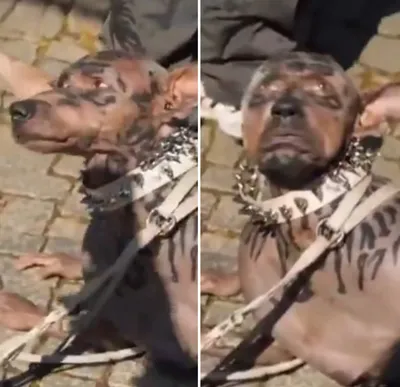
    Did a Japanese man really spend Rs220 crore to become a dog?

    A viral claim suggesting that a Japanese millionaire spent Rs220 crore on surgeries to transform himself into a dog has been debunked, with available information indicating that the story is based on a highly realistic costume rather than any medical procedure. The claim recently gained traction on social media alongside a video showing a man appearing to move and behave like a dog. Posts circulating online alleged that a 26-year-old Japanese millionaire, reportedly identified as “Jaso”, had undergone expensive surgeries to permanently alter his body and acquire a canine appearance. However, there is no credible evidence that the man underwent such surgeries or spent anything close to Rs220 crore on a physical transformation. The viral story appears to have originated from a genuine case involving a Japanese man known online as “Toco”. He attracted international attention after fulfilling his long-held dream of experiencing life as a dog. Toco commissioned Japanese modelling and sculpting company Zeppet to design an extremely realistic Collie costume. The outfit was specially created to resemble the appearance of a real dog and reportedly cost around 2 million Japanese yen, equivalent to approximately Rs11–12 lakh. The costume was designed with considerable attention to detail, allowing Toco to convincingly appear as a Collie when wearing it. Videos and photographs of him using the costume subsequently spread widely across social media. The transformation, however, was entirely temporary. Toco did not undergo surgery, alter his body permanently or medically transform himself into an animal. Instead, he uses the elaborate costume as part of a personal hobby and to fulfil a childhood fascination with experiencing life from an animal’s perspective. The dramatic Rs220-crore figure appears to have been added or distorted as the original story circulated online. The huge difference between the reported cost of the costume and the alleged surgical expenditure highlights how the original account was exaggerated on social media. The viral video may therefore give viewers the impression that a person has physically transformed into a dog, but the available details point to a sophisticated costume rather than surgery or permanent physical modification.