nvidia probes whether

Nvidia probes whether CEO Huang was target of foreign intelligence effort as he admits affair

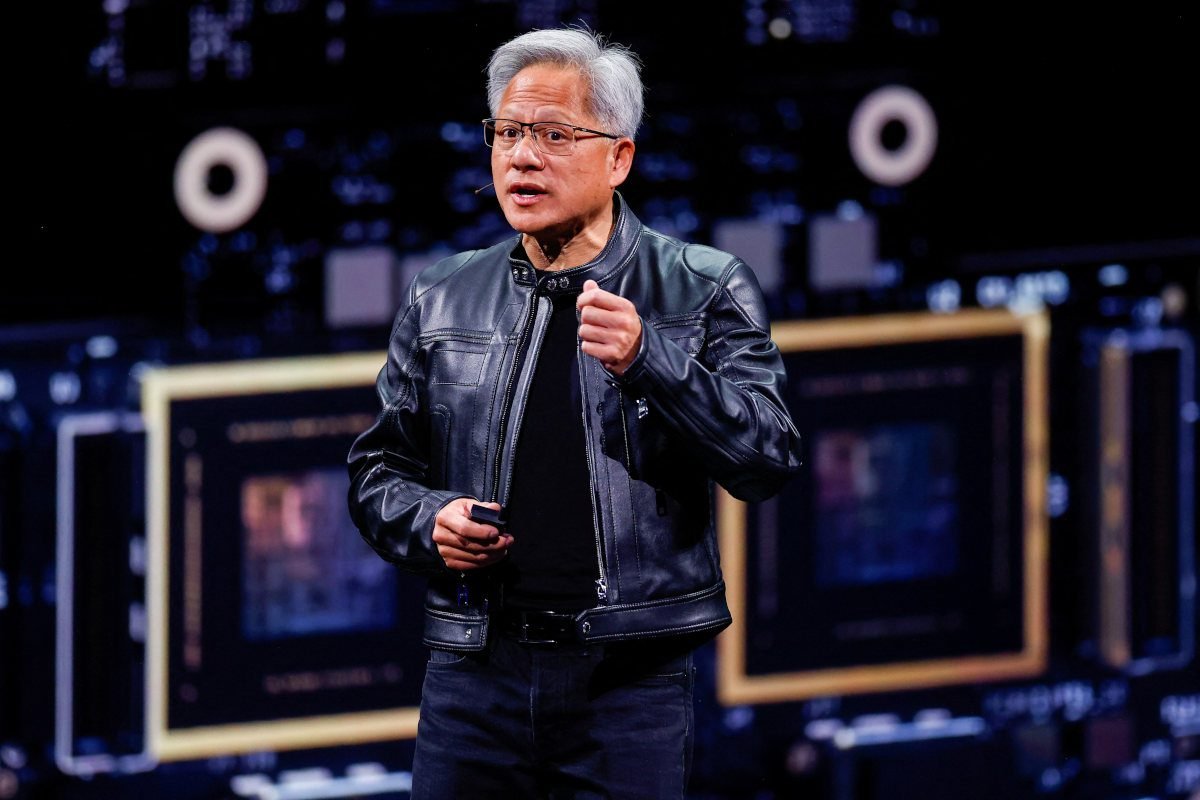
Nvidia said on Sunday, November 8, it is probing whether CEO Jensen Huang has been the target of a foreign intelligence effort, after a media report alleged he had a close relationship with a Chinese businesswoman who passed information to Beijing.

Huang admitted in a message to employees that he had been unfaithful to his wife and took “full responsibility” for his actions, while Nvidia said the CEO was committed to continuing to lead the company without interruption.

The New York Times reported last month that Huang had a relationship with Alice Huang, a former executive of Singapore-based company Megaspeed, whom US authorities were investigating.

US authorities have scrutinized Megaspeed, which buys AI chips from Nvidia, over suspicions it helped Beijing gain access to advanced AI chips that are barred from shipment to China.

“The NVIDIA Board is initiating an independent investigation in light of recent reporting that founder and CEO Jensen Huang has been the target of a foreign intelligence effort. A committee of independent directors, assisted by outside independent counsel, will oversee the investigation,” Nvidia said.

The company said on Sunday that, while its board has no reason to believe that either US national security or Nvidia secrets were compromised, its inquiry will examine all available information.

Huang fully supports the review and has committed to cooperating with it, it added.

The investigation adds to pressure on Nvidia at a time investors are already pulling back from uncertainty over the sustainability of the AI market, in which the company is a leader. The $4.5 trillion chipmaker’s shares have given up all their gains this year amid a broader tech market rout triggered by worries over AI sustainability.

Huang admitted to having been unfaithful to his wife, saying, “My actions hurt her and our children. There is no excuse for what I did. I am deeply sorry.”

Addressing his colleagues, board, partners and shareholders, Huang said: “My responsibility is to serve you and be worthy of your trust. I have fallen short of that responsibility. I am fully committed to NVIDIA and will work to earn back your confidence.”

Top Republican lawmakers in the US House of Representatives have called on Huang to brief Congress this month about the report.

The report raises “significant national security concerns regarding (China’s) access to sensitive US technology and information,” the lawmakers said in a letter dated November 4. “It is vital that Congress determines the extent to which US national security has been placed at risk,” they added.

Huang, who founded Nvidia in 1993, said that he was “committed to protecting NVIDIA and supporting America’s national security.”

Nvidia had earlier said that Huang talks with “thousands of customer executives every year,” and that cloud customers in Asia receive ordinary business information, not sensitive Nvidia trade secrets or anything tied to US national security. – Rappler.com

Similar Posts

  • Meta platforms suffer second outage in 72 Hours

    Thousands of social media users found themselves locked out of their accounts on Wednesday morning. Meta’s primary networking platforms, Facebook and Instagram, suffered another major service disruption. The technical meltdown marks the second widespread failure for the tech giant within a short 72-hour window, frustrating millions of individuals and digital creators who rely heavily on these apps for daily communication, business operations, and content distribution. The disruption began escalating rapidly early Wednesday morning, with real-time outage monitoring platform Downdetector logging thousands of user complaints simultaneously. Reports reached a massive peak around 7:54 a.m. Eastern Time, as roughly 3,600 users submitted formal issue tickets across both platforms within minutes. The sudden spike highlighted a troubling trend of technical instability across Meta’s digital ecosystem. While both platforms experienced severe connectivity issues, the exact nature of the glitches varied slightly between Facebook and Instagram. For Facebook users, the operational breakdowns were distributed relatively evenly. Roughly 37% of reporting users stated that the dedicated smartphone application failed to launch or froze upon opening. Approximately 32% encountered connection errors while trying to load the desktop or mobile web browser versions. About 23% struggled with account authentication, encountering repeated login failures or session timeouts. Conversely, Instagram’s problems were heavily concentrated within its primary mobile software interface. A substantial 62% of complaints involved total application crashes or non-responsive user interfaces on mobile devices. Around 15% of users reported an inability to establish a stable connection with Instagram’s host servers. About 13% noted that their personal news feeds, stories, and direct messages failed to refresh or update properly. What makes this latest disruption particularly concerning for industry observers and users alike is its timing. Meta’s services suffered a similar widespread failure just three days prior, on Sunday morning. Experiencing two major platform breakdowns within 72 hours points to potential systemic vulnerabilities rather than an isolated, one-off server hiccup. Technology experts note that repeated infrastructure failures cast doubt on the robustness of Meta’s server architecture and automated monitoring systems. For a company that manages global communication channels for billions of daily active users, back-to-back outages raise critical questions about network redundancy and server load management. Despite the mounting complaints and widespread publicity surrounding the outage, Meta has yet to issue an official public statement or detail the underlying root cause of the disruptions. Cyber-security analysts advise users to remain patient during these service interruptions and avoid making repeated attempts to reset account passwords or click unverified account recovery links, as these actions can inadvertently trigger temporary account lockouts. Until Meta provides formal technical updates and permanently stabilizes its server networks, users and businesses relying on Facebook and Instagram will remain on edge to see if additional outages destabilize the platforms in the coming days.  

  • | |

    Press freedom across South Asia

    Press freedom across South Asia faces significant structural constraints. Media environments throughout the region share a common historical legacy often relying on inherited colonial-era penal codes alongside modern cybersecurity legislation. However, the legal frameworks and regulatory instruments used to govern the press vary across neighboring countries. Comparative Analysis by Country  Pakistan Pakistan Electronic Media Regulatory Authority (PEMRA), Prevention of Electronic Crimes Act (PECA), and administrative policy frameworks like the Foreign Media Facilitation Guidelines. Media regulation in Pakistan relies heavily on administrative controls, licensing restrictions, and broad content advisories prohibiting coverage of sensitive political or national security subjects. While constitutional protections exist under Article 19, exceptions based on glory of Islam, national defense, and public order give authorities broad latitude to issue blackout orders, manage foreign correspondents’ mobility through No Objection Certificates (NOCs), and impose structural pressure on broadcast networks.  India Information Technology Rules (2021), Digital Personal Data Protection (DPDP) Act, and the Unlawful Activities Prevention Act (UAPA). While India possesses a large and diverse private media market, journalists increasingly face legal scrutiny under broad national security and anti-terror legislation. Amendments to digital media laws allow central authorities to demand the takedown of online content deemed harmful to state interests. Furthermore, criminal defamation suits and restrictions on access to conflict areas (such as Jammu & Kashmir) remain common mechanisms of regulatory pressure. Bangladesh Cyber Security Act (CSA)—which replaced the controversial Digital Security Act (DSA) and state information ministry directives. For years, non-bailable clauses in cybersecurity statutes were widely criticized by media watchdogs for chilling investigative reporting on corruption or state officials. Following recent political transitions, draft media reform policies have been introduced, though press operations remain tightly monitored during periods of political volatility and public unrest.  Sri Lanka Online Safety Act, Prevention of Terrorism Act (PTA), and Official Secrets Act. Sri Lanka’s regulatory framework expanded significantly with the passage of the Online Safety Act, which created a government-appointed commission with sweeping powers to classify online content as false statements and order its removal. Critical reporting regarding state response to economic crises or wartime history continues to face legal and physical friction in sensitive provinces. Nepal: Press Council Act and National Mass Communications Policy. Nepal consistently ranks highest in South Asia on global press freedom indices, supported by a constitution that explicitly guarantees press rights without prior restraint. However, challenges persist regarding local government transparency, criminal defamation provisions, and proposed social media regulation bills that civil society groups fear could introduce licensing hurdles for digital outlets.  Afghanistan Direct directives issued by the Ministry for the Propagation of Virtue and the Prevention of Vice and the Ministry of Information and Culture. Following the political shift in 2021, independent journalism in Afghanistan has faced near-total suppression. Women journalists are largely banned from broadcasting, international news services face widespread blocking, and all local reporting is subject to strict pre-publication censorship. Common Trends Across the Region Across South Asia, governments are increasingly shifting control from traditional print/broadcast regulators toward cybersecurity, online safety, and data protection laws to monitor digital newsrooms and independent creators. Constitutional guarantees of free speech throughout South Asia uniformly contain broad public order and national defense exceptions, which states routinely cite to enforce reporting restrictions during regional crises. Beyond direct legal action, states across the region frequently utilize non-judicial levers such as withholding state advertising funds, slow-walking accreditation, or requiring special travel permits to shape editorial stances.

Leave a Reply

Your email address will not be published. Required fields are marked *