ibrahim zadran stars
|

Ibrahim Zadran stars as Jaffna Kings beat Colombo …

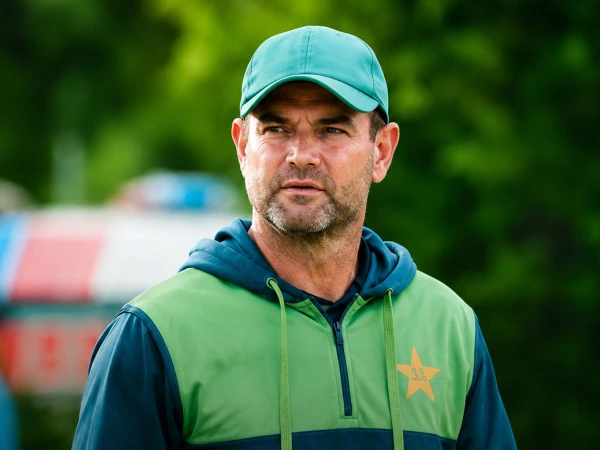
Ibrahim Zadran’s brilliant 95 off 65 balls powered Jaffna Kings to a 19-run victory over Colombo Kaps in the 15th match of the Lanka Premier League (LPL) 2026 at the Pallekele International Cricket Stadium on Tuesday.

Set a daunting target of 203, Colombo Kaps were restricted to 183-9 in their 20 overs. Rubin Hermann was cleaned up by Dilshan Madushanka in the second over before Sadeera Samarawickrama and Ashen Bandara steadied the innings with a 50-run partnership. Bandara made 15. The scorecard read 58-2 in seven overs when skipper Kamindu Mendis joined Samarawickrama. The duo stitched a 39-run partnership to take the total near the 100-run mark. Jaffna Kings struck back with back-to-back wickets to jolt Caps’ progress, leaving them at 97-3. The lower-order kept Caps in the hunt, but with the asking rate soaring, it was an up-and-down affair. For Jaffna Kings, Dilshan Madushanka scalped three wickets.

Earlier, after losing Avishka Fernando in the second over, Kamil Mishara and Ibrahim Zadran raised a half-century stand to end the powerplay on a strong note. Mishara hit two sixes and five fours in his 44 from 19 balls. Kings’ scorecard read 68-2 in 7.1 overs when Dunith Wellalage joined Zadran at the crease. The pair added a 61-run partnership for the third wicket. Zadran scored the bulk of the runs while Wellalage contributed only 17. Ibrahim Zadran was run out in the penultimate over after scoring 95 from 65 deliveries, peppered with three sixes and 12 fours.

Towhid Hridoy injected late momentum into the innings, scoring a quick-fire 31 not out off just nine balls, including 31 runs off Shahnawaz Dahani’s final over. The right-hander tonked the pacer for three consecutive sixes and another maximum on the final ball to take the total over the 200-run mark. For Colombo Kaps, James Neesham picked up two wickets while Dahani conceded 71 runs in his four overs.

The victory strengthens Jaffna Kings’ position in the LPL standings as the tournament progresses.

Similar Posts

  • | |

    Cardi B opens up about needing time away from musi…

    Cardi B is making it clear that pressure from fans will not make her work harder. Instead, the rapper says constant complaints about her music are pushing her toward taking a much-needed break. During an X Spaces conversation on Tuesday, August 11, Cardi addressed fans who have criticized her release schedule and questioned why some of her songs receive music videos and more promotion than others. Rather than motivating her to return to the studio, the criticism appears to be making her want to step away. (People.com⁠) Cardi explained that complaints have the opposite effect on her. She made it clear that she does not respond to pressure by immediately creating more music. Instead, she would rather take a step back and enjoy her personal time. The rapper also pushed back against expectations that every song should receive the same promotional treatment. According to Cardi, different songs can have different aesthetics, visuals and promotional plans. She does not feel obligated to give every release an identical rollout simply because fans want more content. Cardi also admitted that she has not been spending much time in the studio recently. The decision is intentional. She said she had already planned to take the summer off and wants to enjoy her life rather than allow outside expectations to control her schedule. (People.com⁠) For Cardi, spending time with her family is also part of the break. She said that when fans are complaining, her instinct is to stay in bed and spend time with her children instead of rushing back into the studio. The timing comes after an extremely busy period in her career. Cardi released her long-awaited second album, Am I the Drama?, in September 2025. The 23-track project debuted at No. 1 on the Billboard 200, marking another major achievement for the rapper. She then took the album on her first full headlining arena tour, the Little Miss Drama Tour. The 35-date North American tour began in February and concluded in April, giving Cardi another demanding stretch of performances and promotion. (People.com⁠) Even while taking time away, Cardi has not completely disappeared from music. On July 31, she released “AH HA,” a solo single that became her 30th career top 10 on Billboard’s Hot Rap Songs chart. (People.com⁠) For now, Cardi appears determined to enjoy her freedom and return to music when she genuinely feels ready. Her message to fans is straightforward: complaints will not speed up her creative process. Instead, she is choosing rest, family and happiness over pressure — and she is perfectly comfortable doing things on her own timeline.

  • | | |

    Pakistan, Kazakhstan vow to boost trade and invest…

    Pakistan and Kazakhstan have reaffirmed their commitment to expanding bilateral trade, investment and regional connectivity, as senior leaders from both countries held high-level talks on the sidelines of the Shanghai Cooperation Organisation (SCO) meeting. Pakistan’s Deputy Prime Minister and Foreign Minister Ishaq Dar met Kazakhstan’s Deputy Prime Minister and Foreign Minister Yermek Kosherbayev, where the two sides reviewed the steady progress in bilateral relations following the recent visit of Kazakh President Kassym-Jomart Tokayev to Pakistan. During the meeting, both leaders expressed satisfaction over the positive momentum in diplomatic and economic cooperation. They reiterated their commitment to implementing the understandings reached during President Tokayev’s visit, including the execution of 37 Memorandums of Understanding (MoUs) signed between the two countries. According to Pakistan’s Foreign Office, the discussions focused on enhancing cooperation across a wide range of sectors, including trade, investment, transport, regional connectivity, energy, people-to-people exchanges and collaboration in multilateral forums. The two ministers agreed that stronger economic ties and improved transport links would create new opportunities for businesses and investors while contributing to broader regional integration. Kazakhstan’s Foreign Minister also praised Pakistan’s efforts to promote peace, dialogue and diplomacy in the region. He reaffirmed his country’s desire to further strengthen cooperation with Islamabad and expand engagement in areas of mutual interest. The leaders also exchanged views on regional and international developments, emphasizing their shared commitment to promoting peace, stability and sustainable prosperity through closer cooperation. In another positive diplomatic development, Kosherbayev extended an invitation to Ishaq Dar to visit Kazakhstan, reflecting both countries’ intention to maintain regular high-level engagement. Pakistan and Kazakhstan have significantly accelerated their diplomatic and economic partnership in recent years, with both governments seeking to unlock new avenues for trade and investment. President Tokayev’s recent visit to Pakistan is widely viewed as a turning point in bilateral relations, laying the foundation for long-term collaboration in strategic sectors. The latest meeting underscores the growing partnership between the two countries as they work to transform political goodwill into tangible economic cooperation, strengthen regional connectivity and create new opportunities for sustainable growth across Central and South Asia.

  • | | | |

    Pakistan’s blasphemy cases hit record low

    Pakistan has witnessed a significant decline in registered blasphemy cases this year following a crackdown on hardline religious groups, signalling what analysts describe as a major shift in the country’s security policy. According to figures cited by the Human Rights Commission of Pakistan (HRCP), only 13 blasphemy cases have been registered so far in 2026, marking a fall of nearly two-thirds compared with the same period in recent years. Data from conflict monitoring organisation ACLED also indicates that only one blasphemy-related riot or attack has occurred over the past year, compared with an annual average of more than seven incidents between 2021 and 2024. The decline comes after security agencies intensified action against several extremist organisations accused of exploiting blasphemy allegations to incite violence. Officials familiar with the matter said the campaign has included arrests of key figures, restrictions on organisational activities, freezing of financial assets and tighter monitoring of religious gatherings. The change was evident during an incident in Karachi last month, where allegations of blasphemy against a Christian family drew a large crowd. Police officers intervened before the situation turned violent and persuaded protesters to disperse peacefully. Authorities later determined that the accusations against the family were baseless, allowing them to be moved to safety without further harm. Analysts believe the reduced presence of organised extremist groups has played a key role in preventing mob violence that has historically followed blasphemy accusations. Pakistan has witnessed around 90 blasphemy-related lynchings since 1990, with many incidents beginning after rumours spread through local communities. Security experts say the military leadership has adopted a tougher stance against groups previously accused of using religious sentiments to mobilise supporters and pressure governments. They argue the policy shift is linked to broader efforts to strengthen Pakistan’s international image, attract foreign investment and improve relations with Western countries while tackling growing security threats at home. Officials also believe that curbing religious extremism is necessary to address worsening militancy in Balochistan and Khyber Pakhtunkhwa, where insurgent violence continues to challenge the state’s authority. Some analysts say extremist organisations and militant groups have historically drawn support from similar networks of radicalised youth. The country’s largest hardline religious party, Tehreek-e-Labbaik Pakistan (TLP), was banned last year after authorities concluded that its activities posed a threat to public order and Pakistan’s international reputation. Government measures reportedly included detaining senior leaders, sealing offices and restricting financial operations. The party has rejected the ban, calling it unconstitutional. Despite the decline in violence, observers caution that extremist ideology remains deeply rooted in parts of society. Human rights advocates say minority communities, including Christians, Ahmadis and Shia Muslims, continue to live under the fear of false accusations, as Pakistan’s blasphemy laws remain in force and carry the death penalty. Security analysts also warn that sustained enforcement will be necessary to prevent banned organisations from regrouping or resurfacing under new identities. They argue that long-term success will depend on consistent policies rather than temporary crackdowns.

  • Thailand Clarifies Gulf Restrictions, Targeting Only Thai Vessels to Disrupt Cambodian Supplies

    BANGKOK – Thai military officials have clarified that newly announced maritime restrictions in the Gulf of Thailand are not a blockade of the sea, but a targeted measure applying solely to Thai-flagged vessels. The move is aimed at preventing the flow of fuel and military supplies into Cambodia amid ongoing border hostilities. The clarification from […]

  • | | |

    Govt raises fuel prices as petrol pump strike thre…

    The federal government has increased the prices of petrol and high-speed diesel, while petrol pump owners have announced a nationwide strike after failing to reach an agreement with the government over the newly introduced daily fuel pricing system. Under the latest notification, the price of high-speed diesel (HSD) has increased by Rs7.15 per litre, rising from Rs360.06 to Rs367.21. The price of petrol has also been increased by Rs4.93 per litre, taking it from Rs315.80 to Rs320.73. The revised prices came into effect on July 22. The increase follows the government’s decision to replace the previous fortnightly fuel price adjustment system with a daily pricing mechanism. Under the new policy, petroleum prices can now change every day depending on international oil prices and fluctuations in the exchange rate. The new pricing mechanism has been strongly opposed by petrol pump owners and fuel dealers. They argue that daily price revisions are difficult to implement and create financial uncertainty for retailers across the country. After negotiations with government officials failed, the All Pakistan Petrol Pumps Owners Association (APPPOA) announced an indefinite nationwide strike beginning at midnight on Wednesday. The association said petrol pumps across Pakistan would remain closed until the government accepts its demands. Association leaders said discussions with the Petroleum Ministry failed to resolve major issues, including dealer profit margins and the implementation of daily fuel pricing. They insisted that the current system is not practical for petrol station operators and would create serious operational challenges. The Petroleum Retailers Association has also expressed support for the strike, raising concerns about possible disruptions in fuel supplies if the dispute continues. Meanwhile, the All Pakistan Petroleum Dealers Association (PPDA) is expected to decide whether it will formally join the protest. The association has called a meeting of its executive committee to discuss the situation and determine its future course of action. PPDA officials said they had already shared their concerns with the Oil and Gas Regulatory Authority (OGRA). According to the association, the regulator requested additional time to present the dealers’ concerns to the government before any final decision is made. Fuel dealers believe daily price changes make it difficult to manage inventories, update fuel prices, and maintain smooth business operations. They argue that the previous fortnightly pricing system provided greater stability and reduced uncertainty for both retailers and consumers. The government, however, maintains that the daily pricing mechanism will ensure that domestic fuel prices more closely reflect changes in global oil markets. Officials believe the new system will improve transparency and allow quicker adjustments to international price movements.

  • | |

    Hepatitis screening made mandatory for Islamabad e…

    The federal government has decided to launch mandatory hepatitis screening for all government employees in Islamabad. Employees working in federal ministries will also be required to undergo screening. The move is part of the government’s efforts to detect hepatitis cases at an early stage and provide timely treatment. According to sources in the Ministry of Health, the screening will be conducted under the Prime Minister’s Hepatitis Programme. The programme aims to identify people infected with hepatitis and connect them with free diagnostic and treatment facilities. Employees who test positive during the initial screening will be referred for a PCR test. The PCR test will be provided free of cost under the programme. The government will also provide free medicines to patients after completion of the PCR testing process. The initiative is intended to reduce the financial burden on patients and ensure that those diagnosed with hepatitis receive proper treatment. The Prime Minister’s Hepatitis Programme has a total allocation of Rs67 billion. The funds will be used for screening, diagnostic tests, treatment and other measures aimed at controlling the spread of hepatitis. Free hepatitis screening is already being conducted at different locations across Islamabad. The government plans to expand the screening process to federal government employees as part of the wider programme. Sources said more than 50,000 hepatitis screening kits have already been purchased. The kits will be used to screen employees and identify suspected cases. Machinery for PCR testing has also been installed at the National Institutes of Health in Islamabad. The facility will help process tests for people who are found positive during the initial screening. Health authorities are focusing on early diagnosis because many hepatitis patients may not show clear symptoms in the initial stages. Regular screening can help identify infections before they cause serious health complications. The mandatory screening of government employees is therefore being seen as an important step in strengthening hepatitis prevention and treatment efforts in the federal capital.

Leave a Reply

Your email address will not be published. Required fields are marked *