pcb warns former
| | |

PCB warns former cricketers over participation 


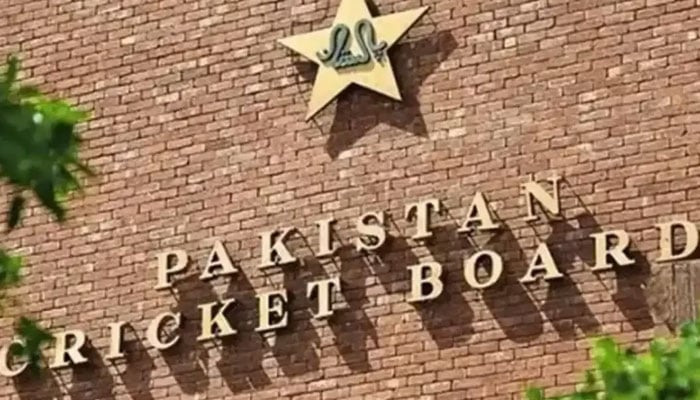
The Pakistan Cricket Board (PCB) has taken serious notice of the participation of former Pakistani cricketers in the unauthorized Asian Legends League currently being held in Zambia. The board has announced strict disciplinary measures against any current or former player who participates in the event without obtaining prior approval through a No Objection Certificate (NOC).

According to the PCB, the Asian Legends League is not recognized or approved by either the International Cricket Council (ICC)

or the Zambia Cricket Union. As a result, the tournament is considered an unauthorized event, and players participating without official permission are deemed to be in violation of the board’s regulations.

In an official statement, the PCB emphasized that all current and former Pakistani cricketers must obtain an NOC before taking part in any cricket event or league outside Pakistan. The board stressed that this requirement is in place to protect the integrity of the game, ensure player accountability, and maintain proper coordination with international cricket authorities.

The PCB warned that any former cricketer found participating in the unauthorized league without receiving an NOC will face strict consequences. One of the key penalties announced by the board is a two-year ban on the issuance of any future NOCs. This means that players who violate the regulations will not be granted permission to participate in overseas cricket tournaments or exhibition events organized outside Pakistan during that period.

In addition to restrictions on international participation, the PCB has also declared that individuals involved in the unauthorized league will be ineligible for coaching, mentoring, commentary, talent development, or any other official responsibilities associated with the Pakistan Cricket Board and the Pakistan Super League (PSL) for two years. The decision reflects the board’s intention to ensure that those associated with unauthorized competitions do not continue to benefit from official roles within Pakistan’s cricket structure.

The board’s statement serves as a strong reminder that compliance with PCB regulations is mandatory for all Pakistani cricketers, regardless of whether they are active professionals or retired players. The NOC system is designed to regulate players’ participation in foreign leagues, safeguard contractual obligations, and ensure that events meet international standards and receive recognition from the relevant governing bodies.

The PCB further advised all current and former players to verify the status of overseas tournaments before accepting invitations to participate. Players have been instructed to seek formal approval from the board in advance to avoid disciplinary action and ensure that the competitions they join are officially sanctioned.

Cricket boards around the world often require players to obtain NOCs before participating in overseas leagues. These approvals help confirm that tournaments are legitimate, properly organized, and conducted under recognized cricketing authorities. The PCB’s latest decision reinforces its commitment to maintaining professionalism, protecting the reputation of Pakistani cricket, and ensuring that its players compete only in approved events.

By announcing these strict measures, the Pakistan Cricket Board has sent a clear message that unauthorized participation in unrecognized tournaments will not be tolerated. The board hopes the policy will encourage greater discipline among players while preserving the credibility of Pakistan’s cricketing system. Going forward, all Pakistani cricketers are expected to strictly follow PCB regulations and obtain the necessary approvals before participating in any cricket event outside the country.
Similar Posts

  • |

    Taiwan condemns planned Chinese navy drills with Indonesia as dangerous provocation

    Taiwan’s government has strongly condemned planned Chinese naval drills with an Indonesian warship off its eastern coast, accusing Beijing of political manipulation to project fake territorial jurisdiction over international waters in the Pacific. China’s Defence Ministry announced on Tuesday that it would conduct a joint “navigation exercise” with the Indonesian navy in mid-August in waters east of Taiwan. Joint exercises between Chinese forces and foreign militaries near Taiwan remain exceptionally rare. Taiwan’s Mainland Affairs Council called the announcement a military provocation, stating Beijing was attempting to create a false impression in the international community that it holds sovereign rights off Taiwan’s eastern coast. Addressing parliament in Taipei on Wednesday, Wu Tien-jen, assistant deputy chief of the general staff for intelligence, clarified that the Indonesian vessel was currently returning from Japan rather than deploying specifically for joint drills with Beijing. “Militarily this does not have a direct impact on Taiwan,” Wu said, adding that the vessel was operating 70 to 80 nautical miles off the coast. “It has a geopolitical significance.” Taiwan’s Foreign Ministry confirmed it has requested formal clarification from Jakarta regarding its involvement. Indonesia, which maintains no formal diplomatic relations with Taiwan, has not issued an official response. The dispute coincides with Taiwan conducting its annual Han Kuang military exercises to simulate defences against a potential Chinese invasion, as well as high-level defence meetings between US and Indonesian officials in Jakarta.

  • Senate slams 20-year delay in gas supply to Ghotki villages

    Islamabad: The Senate Sub Committee on Petroleum has expressed serious concern over a delay of more than 20 years in providing gas to localities within five kilometers of Pakistan’s gas fields, highlighting administrative lapses despite directives from the Prime Minister and the Supreme Court. The Sub Committee, chaired by Senator Jam Saifullah Khan Dharejo, called for accountability of the authorities responsible for failing to implement these binding instructions, particularly in Ghotki, one of the country’s major gas producing and densely populated districts. During the session, MNA and subcommittee members reviewed the progress of gasification projects, noting that out of 57 villages identified in Ghotki, only 42 fall within the five kilometer radius of gas fields. Despite being included in earlier phases of the project in 2021, several schemes remain incomplete. Senator Haji Hidayatullah also raised concerns about ungasified localities in Khyber Pakhtunkhwa, emphasizing that many eligible areas were still awaiting service. Officials informed the committee that approximately Rs670 million is required to complete gasification in Ghotki, while around Rs1 billion may be made available in phases. The funding will be released as a grant and not through the PSDP, with the Petroleum Ministry responsible for preparing a phased implementation mechanism. The committee instructed the Ministry to present a comprehensive plan within a week, detailing timelines, responsibilities, and funding strategies to ensure full compliance with Supreme Court orders. The Sub Committee criticized inconsistent and potentially misleading information previously provided by the Director General (Gas), Petroleum Division. The matter has been referred to the Senate Committee on Privileges to ensure future information is accurate, complete, and supported by official records. Additionally, the absence of the OGRA Chairman, despite prior directions to attend, was strongly noted. The committee decided to inform the Cabinet Division and request his presence at the next meeting to provide viable solutions. The Managing Director of SSGC briefed the committee that Rs480 million had been used in accordance with existing subsidy and tariff provisions, but emphasized the need for a structured, transparent mechanism to ensure funds reach the intended localities. The Sub Committee also requested the Attorney General for Pakistan to attend the next meeting to explain the legal implications of Supreme Court judgments on gas provision. Senator Abro underscored that the directions of both the Prime Minister and the Supreme Court must be implemented “in letter and spirit,” warning that no further undue delay would be tolerated. The Sub Committee emphasized the importance of a fully funded, transparent, and time bound strategy to ensure that all eligible villages in Ghotki, Khyber Pakhtunkhwa, and other regions within the five kilometer radius of gas fields receive gas access without further postponement. The next meeting date and time will be announced separately, with expectations that all relevant stakeholders, including the OGRA Chairman, SNGPL representatives, and the Attorney General, will be present to finalize implementation plans.

  • |

    Mother, daughter killed in Lahore road crash

    A tragic road accident claimed the lives of a woman and her young daughter in Lahore’s suburban area of Manga Mandi after a passenger bus collided with their motorcycle. Another person riding the motorcycle sustained injuries in the crash. According to Rescue officials, emergency teams responded quickly to the scene and shifted the bodies of the deceased mother and daughter to the morgue for legal formalities. Rescuers also transported the injured victim to a nearby hospital, where doctors are providing medical treatment. Police said the bus driver fled the scene immediately after the accident, leaving the vehicle behind. Authorities have launched a search operation and are conducting raids to arrest the suspect. The incident has once again raised concerns about reckless driving and road safety in the city, as traffic accidents continue to claim lives on busy roads across Lahore. Police have started an investigation to determine the exact circumstances that led to the fatal collision.

  • |

    Russian missile attack kills nine in Kyiv

    KYIV: At least nine people were killed and 28 others injured after Russian ballistic missile strikes hit Ukraine’s capital, Kyiv, on Saturday morning, Ukrainian officials said. The attack caused heavy damage in several areas of the city. Multiple explosions were reported as missiles struck residential areas and other locations. Emergency teams rushed to the affected sites to rescue people and control fires. Kyiv Mayor Vitali Klitschko said the capital came under a major missile attack. He said several explosions were heard across the city, while fires broke out and some areas faced power disruptions. Officials said the Darnytskyi district was among the worst-hit areas. At least seven people were killed there, while 14 others were injured. Two children were among those wounded in the strike. Another missile strike hit the Solomyanskyi district, killing two people and injuring eight others. A five-storey residential building was partially destroyed, trapping some residents inside. Rescue workers carried out operations to search for survivors and clear the damaged structure. The attack also affected the area around the Lithuanian embassy. Lithuania’s Foreign Ministry said a missile landed nearby, damaging windows and spreading debris inside the embassy compound. No casualties were reported among diplomatic staff. The latest strikes are part of an increase in Russian missile attacks on Kyiv in recent weeks. Ukrainian officials say Moscow has intensified the use of ballistic missiles, creating greater pressure on the country’s air defence systems. President Volodymyr Zelensky has repeatedly called for additional air defence support, especially Patriot missile interceptors, which Ukraine says are essential for stopping ballistic missile attacks. Zelensky raised the issue during his recent meeting with US President Donald Trump in Washington. He urged greater support for Ukraine’s air defence capabilities as Russian attacks continue. Trump said discussions over Ukraine’s request to produce Patriot interceptors are still ongoing. However, he expressed concerns about sharing advanced US military technology and said such decisions require careful consideration. Ukraine has faced shortages of Patriot systems as Russian air attacks have increased. Kyiv says these systems remain among the few weapons capable of intercepting high-speed ballistic missiles. Meanwhile, Ukraine has continued launching retaliatory strikes against Russian targets. Ukrainian officials say their operations are aimed at disrupting military supply routes and damaging facilities linked to Russia’s war efforts.

  • | |

    Sindh Governor Nihal Hashmi calls for hard work an…

      Sindh Governor Nihal Hashmi has said that Pakistan has become militarily invincible and stressed that “work, work and work” should remain the nation’s guiding principle for the country’s progress and prosperity. The governor made these remarks while addressing an Independence Day ceremony at the Governor House, where he hoisted the national flag and offered prayers for the security, stability and prosperity of Pakistan. Speaking on the occasion, Nihal Hashmi said that Independence Day was an opportunity to remember the people who struggled and made sacrifices for the creation of Pakistan. He emphasized that the nation should honour their efforts by working sincerely for the development of the country. “Work, work and work should be our motto,” the governor said, calling on citizens to contribute actively to the country’s progress. He stressed that Pakistan’s future depends not only on government institutions but also on the commitment and responsibility of every citizen. The Sindh governor also spoke about Pakistan’s defence capabilities, saying that the country had become militarily invincible. He said that when India challenged Pakistan’s defence, Field Marshal Asim Munir gave India a “befitting response,” adding that the response demonstrated Pakistan’s strength and resilience. Hashmi said Pakistan’s defence capabilities had earned recognition internationally. He maintained that the country had shown that it was capable of protecting its sovereignty and responding effectively to any threat. The Independence Day ceremony at Governor House was attended by officials and other guests. The national flag was hoisted as part of the celebrations, while prayers were offered for the country’s security, peace and prosperity. The governor also highlighted the importance of cleanliness and civic responsibility. He said that keeping homes, schools, neighbourhoods and cities clean was the responsibility of every citizen. He urged people to play their part in improving their surroundings instead of relying solely on government institutions to address cleanliness and sanitation issues. According to Hashmi, national development begins at the individual and community levels. If citizens take responsibility for maintaining clean streets and public spaces, it can contribute to a healthier and more organized society. He further called on every Pakistani to play a constructive role in the country’s development and prosperity. He said that citizens should perform their responsibilities honestly and work collectively to strengthen the country. The governor’s message on Independence Day centred on three major themes: national unity, hard work and civic responsibility. He said that remembering the sacrifices made for Pakistan should inspire citizens to work for its future rather than merely celebrate Independence Day as a national occasion. He also emphasized that Pakistan’s continued progress requires collective efforts from people across the country. From maintaining cleanliness in local communities to contributing to economic and social development, every citizen can play a role in strengthening the nation. Concluding his message, Nihal Hashmi urged citizens to remain committed to Pakistan’s progress and prosperity. He said that the country’s future could be strengthened when individuals, communities and institutions work together with a sense of responsibility and dedication.

  • | |

    Pakistan rejects India’s statements at UN securi…

      ISLAMABAD: Pakistan has strongly rejected India’s remarks at the United Nations Security Council (UNSC) concerning the Indus Waters Treaty (IWT) and allegations of terrorism, describing them as an attempt to misrepresent facts and divert attention from issues raised by Pakistan. The response came after India’s Permanent Representative to the United Nations, Ambassador Harish Parvathaneni, accused Pakistan of supporting cross-border terrorism and suggested that the issue had affected bilateral cooperation under the Indus Waters Treaty. Pakistan dismissed these allegations during the UNSC’s High-Level Open Debate on “Natural Resource Governance: The Foundation of Peace, Security and Prosperity.” Speaking in a right of reply, Pakistan’s First Secretary to the UN, Ansar Shah, said India’s statement was misleading and represented a futile effort to distort the facts surrounding the treaty and regional security issues. He maintained that the Indus Waters Treaty remains legally valid and binding, rejecting India’s claim that the agreement could be placed in abeyance through unilateral action. Shah stated that the treaty contains no provision allowing either party to suspend or set it aside on its own. He referred to the Court of Arbitration’s August 2025 award, which, according to Pakistan, reaffirmed that the treaty continues to remain fully in force along with its dispute resolution mechanisms. He argued that India’s unilateral approach violated the terms of the agreement as well as established principles of international law. Pakistan also accused India of using shared water resources as a political tool. Shah said any attempt to weaponise water for political pressure or to restrict water access would amount to a serious breach of international legal obligations and norms. He added that such actions could undermine regional stability and pose risks to international peace and security, making the issue relevant to discussions at the Security Council. Responding to India’s allegations regarding terrorism, Shah rejected the accusations and instead claimed that India was attempting to conceal its own involvement in activities that Pakistan says have contributed to terrorism within its borders. He alleged that militant groups such as the Tehreek-e-Taliban Pakistan (TTP), the Balochistan Liberation Army (BLA), and the Majeed Brigade had been responsible for attacks that claimed the lives of thousands of Pakistani civilians and security personnel, including women and children. Pakistan reiterated its long-standing allegation that India supports and finances these groups, a claim India has consistently denied. Shah also referred to reports of alleged extraterritorial operations involving India, saying such incidents had raised international concerns. He further argued that India could not portray itself solely as a victim of terrorism while ignoring accusations directed against it. Addressing the situation in Indian Illegally Occupied Jammu and Kashmir, Shah said the people of the region continue to be denied their right to self-determination. He maintained that the territory remains internationally recognised as disputed and asserted that no unilateral measures could alter its legal or historical status. He also urged India to fulfil its obligations under the UN Charter and implement relevant UN Security Council resolutions. Earlier in the debate, Pakistan’s Permanent Representative to the United Nations, Ambassador Asim Iftikhar, reaffirmed that the Indus Waters Treaty remains effective and legally binding. He called on the UN Security Council to remain vigilant against the misuse or weaponisation of natural resources and encouraged greater use of preventive diplomacy, peaceful dispute resolution, monitoring mechanisms, and other international measures to prevent disputes over shared resources from escalating into broader conflicts.

Leave a Reply

Your email address will not be published. Required fields are marked *