trump drops major
| | | | |

Trump drops major statement on Iran: what China an…

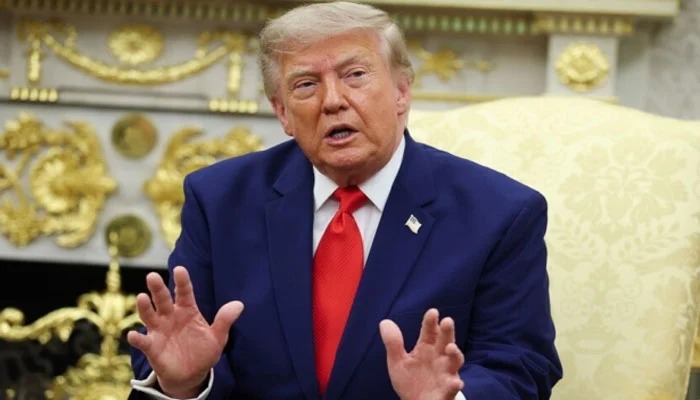
Washington: U.S. President Donald Trump has said he does not believe that China or Russia are supplying weapons to Iran, citing assurances he received from the leaders of both countries.

Speaking to reporters, Trump said Chinese President Xi Jinping had assured him that Beijing would not provide weapons to Iran under any circumstances. According to Trump, the Chinese leader also stated that the policy applies to Chinese companies, preventing them from supplying arms to Tehran.

Trump said he trusts President Xi’s commitment in the context of U.S.-China relations and believes China is adhering to that position.

The U.S. president also said Russian President Vladimir Putin had informed him that Moscow would not sell weapons to Iran.

Trump’s remarks come amid continued international attention on Iran’s military capabilities and regional security. However, he did not provide additional details or evidence to support the statements, nor did he elaborate on whether the assurances were part of recent diplomatic discussions.

The comments reflect Washington’s ongoing focus on limiting the transfer of advanced military equipment to Iran as regional tensions and global security concerns continue to evolve.

Similar Posts

  • |

    Textile industry urges govt to end transport strike, warns of export disruptions

    ISLAMABAD: Pakistan’s textile industry has called on the government to take immediate measures to resolve the ongoing goods transporters’ strike, warning that a prolonged suspension of freight services could disrupt export shipments, restrict the supply of cotton and affect the operations of textile mills across the country. The All Pakistan Textile Mills Association (APTMA) has formally approached Federal Minister for Communications Abdul Aleem Khan, seeking urgent government intervention to restore the movement of goods and industrial cargo. According to the association, the All Pakistan Goods Transport Ittehad began an indefinite strike on August 8, creating significant logistical challenges for export-oriented industries, particularly the textile sector. APTMA Chairman Kamran Arshad said the strike had severely affected the availability of vehicles and containers required for transporting textile-related cargo. Export consignments awaiting shipment, imported cotton arriving through ports and locally purchased cotton being transported from markets to textile mills have all been affected by the disruption. The association said the lack of transportation was creating difficulties at multiple stages of the textile supply chain. Export containers cannot be moved efficiently, while imported raw materials face delays in reaching manufacturing facilities. At the same time, locally sourced cotton is also experiencing transportation constraints. APTMA cautioned that the timing of the strike was particularly concerning because cotton inventories at textile mills were already at relatively low levels following the end of the cotton season. Any prolonged interruption in the movement of cotton, it said, could eventually affect manufacturing activity as mills depend on a steady supply of raw materials to maintain production. The association warned that a slowdown in textile production could have broader economic consequences, including delays in export orders, disruption to employment and reduced foreign exchange earnings. Pakistan’s textile sector remains one of the country’s most important export-oriented industries, generating a significant share of the country’s foreign exchange through shipments of garments, textiles, yarn, fabrics and other related products. Industry-wide logistical problems could therefore have repercussions beyond individual mills and exporters. APTMA noted that the textile industry had faced similar transportation disruptions in the past, resulting in delays in export consignments, additional financial costs and interruptions to factory operations. The association stressed that cargo movement is an essential component of export activity and that any prolonged blockage could make it more difficult for exporters to meet delivery schedules agreed with international buyers. It urged the Communications Ministry to facilitate the immediate movement of essential industrial cargo while efforts continue to settle the dispute between transporters and the government. APTMA specifically called for priority arrangements for export containers, imported cotton and other raw materials, as well as locally procured cotton destined for textile mills. The association maintained that ensuring uninterrupted logistics was essential not only for the textile industry but also for protecting Pakistan’s export commitments and broader economic activity. APTMA has consequently appealed to the government to intervene on an urgent basis and establish arrangements that would allow the movement of critical industrial and export cargo until the transporters’ strike is brought to an end.

  • | |

    Three minors allegedly sexually abused in Chakwal;…

    CHAKWAL: Three minors were allegedly subjected to sexual abuse in separate incidents reported in Chakwal district, with police registering cases against the suspects and arresting three men, including a mosque imam, while two others were taken into custody after an alleged exchange of fire. The incidents, reported in the jurisdictions of Wanhar and Kallar Kahar police stations, have caused concern among residents and prompted calls for effective protection of children and swift action against those found responsible. In the first case, a 10-year-old girl was allegedly sexually assaulted by a local mosque imam after other children attending Quran lessons had left the mosque, according to the complaint lodged by her father with Wanhar police. The complainant said his two daughters regularly went to a nearby mosque in Mohallah Bawa Khan Baig to learn Quranic recitation. On the day of the alleged incident, the imam allegedly sent the 5years younger sister home early and dismissed the other children after hearing their lessons. According to the complaint, the suspect then allegedly called the 10-year-old girl into a room and sexually assaulted her. The girl was allegedly threatened with a knife and warned that she would be killed if she disclosed the incident to anyone. Police registered a case against the imam and launched an investigation. The suspect was subsequently arrested in an injured condition during an operation in the Manara area, police said. According to police, a raid on Wasnal Road, Manara, to arrest the suspect when he allegedly attempted to flee after seeing the police party. Police said the suspect stumbled and fell while fleeing, causing a pistol allegedly concealed in his waistband to discharge. He sustained a gunshot wound and was arrested before being shifted to the Trauma Centre in Kallar Kahar for medical treatment. The suspect was identified as Maulvi Saqlain Hussain, son of Nazar Hussain, a resident of Manara. In a separate incident within the jurisdiction of Kallar Kahar police station, a 16-year-old boy was allegedly sexually assaulted by a man who was staying at a local mosque in Shamsabad, near Khai village. According to the complaint filed by the boy’s father, who is a prayer leader at the mosque, the suspect allegedly assaulted his son and later attempted to assault him again. The complainant said the boy had initially remained silent about the alleged earlier incident out of fear. However, when he went to serve food to the traveller staying at the mosque, a commotion was heard after some time. The mosque caretaker and the boy’s father allegedly reached the spot and saw the suspect attempting to assault the boy, prompting the suspect to flee, according to the complaint. The boy later informed his father about the alleged earlier incident as well. In the third incident, two men allegedly involved in the sexual assault of a Class 10 student were arrested in an injured condition following an alleged exchange of fire in Chak Nagri, an area falling within Wanhar police jurisdiction. According to police, the suspects and two unidentified accomplices had allegedly taken the student to a nearby forest several days earlier, subjected him to severe physical assault and sexually assaulted him. Police alleged that the suspects recorded the incident and subsequently used the video to blackmail and intimidate the student. A police team later raided the suspected hideout to arrest the accused, police said. The suspects allegedly opened fire on the police party along with their two unidentified accomplices. During the ensuing exchange of fire, the two wanted suspects sustained gunshot wounds, allegedly after being hit by firing from their own accomplices, according to police. The two unidentified men escaped under the cover of darkness and the forest terrain. The injured suspects were arrested and shifted to a medical facility for treatment. Police said further investigation and legal proceedings were under way. The three cases have highlighted concerns over the vulnerability of children to sexual violence and exploitation. Residents have called for prompt investigation of the allegations, protection of the victims and strict action against suspects if the charges are established in court. Police officials said investigations into all the cases were continuing and that further action would be taken in accordance with the law.

  • | | |

    ‘We will all take to the streets’ says Mahira …

    KARACHI: Pakistani actress Mahira Khan has publicly voiced her concern over the death of Karachi businessman Mir Raza, expressing support for lawyer and activist Jibran Nasir, who has been speaking about the case. Mahira reacted to a recent statement by Nasir circulating on social media, praising his efforts and calling for an end to what she described as injustice. In her comment, the actress said, “Jibran Nasir, you are doing an excellent job. We will all take to the streets against this injustice.” She further urged that the situation should not be allowed to continue, writing, “All this nonsense should end now.” The case has attracted widespread public attention following the exhumation of Mir Raza. An initial medical report reportedly stated that he had sustained a gunshot wound to the back, while signs of alleged torture were also found on his body. The report further mentioned suspected fractures to his right thigh and jaw, along with blood stains on tissues in the lower part of his body. Meanwhile, investigators have reportedly found additional evidence during the probe. According to details emerging from the investigation, forensic examination of Raza’s shirt indicated that acid may have been thrown on his hands and face, allegedly in an attempt to conceal his identity. Nasir has also stated that Mir Raza’s family did not agree to the formation of a judicial commission and has called for the matter to be investigated through the appropriate legal process. The case continues to generate concern on social media, with calls for a transparent investigation and accountability for those responsible.

  • | | |

    Pakistan approves 1m tonnes wheat imports

    Pakistan’s strategic wheat reserves have fallen to critically low levels, with the stocks held by the Pakistan Agricultural Storage and Services Corporation (PASSCO) reportedly almost exhausted. The shortage has emerged despite the International Monetary Fund (IMF) allowing the government to procure wheat. Federal and provincial authorities, however, were unable to secure sufficient quantities, resulting in a sharp decline in PASSCO’s strategic reserves. The situation has raised concerns about maintaining adequate wheat supplies and meeting future requirements. PASSCO plays an important role in maintaining strategic stocks that can be used to support food security during periods of shortage. In response to the declining reserves, the Economic Coordination Committee (ECC) has approved the import of one million tonnes of wheat. The government has also formed a steering committee to oversee the process and ensure that all necessary requirements are completed before the imported wheat is brought into the country. Officials said the import process will be subject to several conditions. These include pre-shipment inspection to verify the quality and quantity of wheat before it leaves the exporting country. Another major condition requires provincial governments to arrange and provide the funds needed to meet their respective wheat requirements. The latest decision comes as authorities seek to strengthen wheat availability and prevent a potential supply gap. The import plan is expected to help rebuild stocks after the depletion of PASSCO’s strategic reserves. The steering committee will monitor the required procedures and coordinate with the relevant federal and provincial authorities. Its role will include ensuring that the conditions attached to the wheat import decision are fulfilled. The development highlights the importance of timely wheat procurement and strategic stock management. Any delay in rebuilding reserves could create additional pressure on the country’s food supply system, particularly if domestic availability remains insufficient.

  • Thais Flock to Polls in Historic Dual Election

    BANGKOK — Voters across Thailand formed early-morning queues on Sunday to participate in the nation’s unprecedented simultaneous general election and constitutional referendum, with party leaders urging a strong turnout to shape the country’s political future. Thailand Prepares for Unprecedented Simultaneous Election and Referendum Polling stations nationwide opened at 8 a.m., with eager citizens lining up […]

  • |

    Japan protests as Putin visits disputed Kuril Islands

    Japan issued a strong protest on Thursday following Russian President Vladimir Putin’s visit to Iturup, an island within the disputed Kuril Islands chain claimed by both nations. According to Russian state media, the visit represents Putin’s first in-person trip to the archipelago. Japanese Foreign Minister Toshimitsu Motegi reiterated Tokyo’s position, stating that the islands are inherently Japanese territory under both historical context and international law. The territorial row over the four southernmost islands, which Japan refers to as the Northern Territories and Russia calls the Southern Kurils, has prevented the two countries from signing a formal World War II peace treaty. The Soviet Union seized the chain in 1945 and subsequently expelled roughly 17,000 Japanese residents. During his itinerary on Iturup, known in Japan as Etorofu, Putin inspected a local fish-processing plant and sampled regional seafood following his observation of naval drills in Russia’s Far East. The strategically located island also houses a primary Russian military air base. Bilateral relations between Moscow and Tokyo have grown increasingly strained in recent years, particularly following Japanese sanctions imposed over the ongoing war in Ukraine.

Leave a Reply

Your email address will not be published. Required fields are marked *