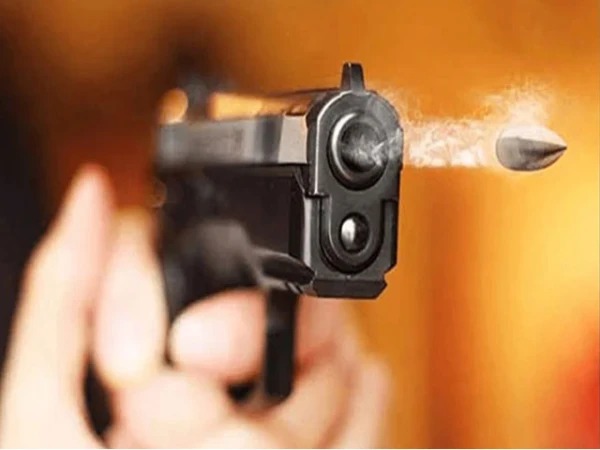
mphil student shot
| |

MPhil student shot dead over marriage dispute, cou…

A tragic incident in Kabeerwala has shocked the local community after a 28-year-old MPhil student was allegedly shot dead in connection with a marriage dispute. Police officials said the woman was targeted in a firing incident in the Sarai Sidhu area of Faridpur village.

According to police, the victim belonged to the Haraj community and was allegedly attacked over a disagreement related to a marriage proposal. Initial investigations suggest that the woman was targeted by her cousin along with two other individuals, who allegedly opened fire at her.

The incident took place in Faridpur village, where the victim lost her life after sustaining gunshot wounds. Following the attack, police reached the scene and began collecting evidence as part of the investigation.

Authorities shifted the victim’s body to the Civil Hospital Kabeerwala for a post-mortem examination. Police said that legal proceedings have been initiated, and efforts are underway to locate and arrest the suspects allegedly involved in the killing.

Officials have stated that the investigation is ongoing and further details will emerge after the completion of evidence collection and questioning of relevant individuals. Police teams are working to determine the exact circumstances behind the incident and establish the motive behind the attack.

Cases involving disputes over marriage proposals and family disagreements have frequently raised concerns regarding violence against women. Legal experts and social observers have emphasized the need for stronger awareness, timely intervention, and effective enforcement of laws to prevent such tragedies.

The death of the young scholar has caused grief among residents, particularly those who knew her academic journey. As an MPhil student, she was pursuing higher education and had aspirations for her future before the incident brought her life to a sudden end.

Police officials have assured that all available resources are being used to investigate the case and bring those responsible to justice. Further updates are expected as the investigation progresses.

Similar Posts

  • | |

    Canada’s pushback against Trump tests bounda…

    Two days before trade negotiations between the United States and Canada collapsed dramatically over the weekend, Vice President JD Vance told an audience at a private fundraiser that Canadian Prime Minister Mark Carney was, in his words, a very sweet guy. According to a private audio recording obtained by a Canadian news outlet, Vance went on to describe Carney as someone who talks tough and claims he can out tough Donald Trump, before ultimately backing down on major issues, a pattern Vance called hilarious. Those remarks, which drew significant attention across Canada, may not have directly caused Carney’s negotiating team to walk away from the table, but they certainly did not help matters. Carney’s decision abruptly ended talks over a new trade agreement and triggered a fresh round of tariffs between two countries that conduct more than 872 billion dollars in annual bilateral trade. The deepening rift, paired with Vance’s comments, offers the latest example of an American administration willing to apply pressure against both allies and adversaries alike, underscoring how such tactics can produce unpredictable consequences on the world stage. If Trump anticipated that Canada would eventually yield to American pressure, following a pattern seen among other US allies over the past year and a half, that assumption may prove mistaken, and the fallout could shape the remainder of his presidency. Tension between Washington and Ottawa did not begin this weekend. It traces back to the first Trump administration and the negotiations that produced the USMCA, the agreement that replaced the original 1990s era North American Free Trade Agreement. Personal friction between Trump and former Canadian Prime Minister Justin Trudeau complicated those earlier talks. As Trump prepared to return to office in late 2024, he mockingly referred to Trudeau as governor and to Canada as America’s 51st state. Behind those remarks sat a broader worldview in which the United States positions itself as the dominant power within its own hemisphere, entitled to shape political, military and economic outcomes across the region, Canada included. Administration officials have argued that Canada contributes too little to regional defense spending while benefiting disproportionately from trade with its southern neighbor. Within Trump’s framework, where economic and national security are treated as inseparable, Canada and Mexico, two of America’s largest trading partners, emerged as early targets. Drew DeLong, head of corporate statecraft at the Kearney Foresight think tank, said officials across the State, Treasury and Commerce departments frequently repeat the phrase that economic security equals national security. By early this year, as North American trade talks moved forward unevenly, Trump’s focus shifted away from Canada toward military interventions in Venezuela and later the Middle East. Even so, the central thread running through Trump’s foreign policy approach has remained consistent, treating the United States as a dominant power capable of imposing its will for national advantage. That power has limits, however, and Trump’s second term has repeatedly tested where those limits lie. Despite the obvious differences between an active conflict with Iran and a trade dispute with Canada, the underlying dynamics share similarities. In both cases, the United States confronts a counterpart with far less overall power but still capable of retaliation. Iran has leaned on its ability to threaten US allies and disrupt global commerce through chokepoints like the Strait of Hormuz. Canada, meanwhile, has begun testing its own capacity to inflict economic pressure, with this week’s targeted tariffs marking an initial step. Future Canadian measures could include limiting American access to Canadian energy and critical minerals, alongside consumer boycotts targeting US products. DeLong said that as the broader global landscape shifts toward economic security concerns, countries increasingly search for chokepoints and leverage across global supply chains, adding that such opportunities exist for nations willing to look for them. For now, clear paths toward resolution remain limited. Trump has escalated his public rhetoric, repeatedly accusing Canada of ripping off the United States, while Ontario Premier Doug Ford responded sharply, telling the American president to kiss his ass. Imran Bayoumi, deputy director of the GeoStrategy Initiative at the Atlantic Council, said that pushing allies and partners away tends to incentivize them to seek new relationships rather than comply with American demands. Room still exists for tensions to ease. Canada’s new tariffs take effect in two weeks, while the most significant American countermeasure, a 50 percent tariff on Canadian built vehicles and auto parts, will not take effect until early 2027. Escalation cycles in economic or military conflicts can be difficult to reverse, but the several month gap before the next round of US tariffs gives both sides room to potentially resume negotiations, which had shown signs of progress before talks collapsed Friday night. A more immediate deadline looms in November’s US midterm elections. Democratic gains in Congress could limit Trump’s authority significantly, while unexpected Republican success could strengthen his position further. Ottawa currently appears to be betting on the former scenario, calculating that concern over midterm losses in industrial swing states like Michigan and Ohio will pressure Trump to soften his stance before voters head to the polls. Bayoumi said he does not see the kind of internal political division within Canada that the Trump administration may have anticipated, adding that Carney has considerable political room to negotiate a favorable outcome for Canada rather than settle for less. Carney has also raised another possibility publicly since Trump returned to office, suggesting Canada may continue drifting away from the United States altogether and deliberately widen the distance between the two nations. Carney has said Canada cannot depend on traditional alliances now that the rules of engagement have fundamentally shifted. While geographic proximity guarantees the two countries will remain connected in some form, the deeply integrated economic relationship built over recent decades may be approaching its end. This stands in contrast to Mexico, which appears to be pursuing closer economic integration with the United States rather than distancing itself. Meanwhile, other global trading partners, including US allies across Europe and Asia, are closely watching Canada’s assertive stance

  • | |

    Sindh records 76% drop in terrorism incidents in 2…

    KARACHI: Sindh Chief Minister Murad Ali Shah chaired a high-level meeting on the Counter Terrorism Department (CTD), where officials reviewed the province’s security situation, operational performance, investigations, infrastructure and future requirements. Sindh Home Minister Zia-ul-Hassan Lanjar, Chief Secretary Asif Hyder Shah, Home Secretary, Inspector General of Police Javed Alam Odho, Additional IG CTD Zulfiqar Larik and other senior officials attended the meeting. The meeting was informed that banned militant and insurgent organisations continue to pose a security challenge to Sindh. However, officials said terrorist incidents in the province had declined significantly during 2026. According to Home Minister Zia-ul-Hassan Lanjar, Sindh reported 37 terrorism incidents in 2025. The number fell to nine in 2026, representing a decline of around 76 per cent. The Sindh police chief told the meeting that seven of the nine terrorism cases reported this year had been traced and their investigations completed. Officials said the CTD conducted 918 intelligence-based operations across the province during 2026. These operations resulted in the arrest of 87 suspected terrorists, while four militants were killed in separate encounters. The briefing said the CTD had dismantled several militant networks allegedly involved in attacks on police personnel and sensitive installations. During a follow-up operation in Karachi, the department arrested a key suspect and an associate. Weapons and explosive material were also recovered from their possession. The suspects are allegedly wanted in several cases involving the targeted killing of police officers. According to the IG Sindh, more than 2,000 kilograms of explosive material were recovered during operations against militant networks. Four militants affiliated with banned insurgent organisations were also killed in encounters. The home minister said several planned attacks on law enforcement agencies and important installations had been foiled. He added that the CTD had also dismantled a network allegedly involved in attacks on railway tracks in northern Sindh. The operation helped prevent planned acts of sabotage, officials said. The meeting also reviewed progress in the investigation into the Karachi Training Centre attack. The police chief told the chief minister that nine suspects had so far been arrested in the case. A Joint Investigation Team has also been formed to conduct a detailed probe. Officials said several investigative sessions had been held during the inquiry and a number of alleged facilitators had been identified. The investigation is still under way. The meeting was also briefed on the performance of the CTD Fusion Centre. Officials said the centre had significantly improved the collection and analysis of intelligence as well as digital investigations. Hundreds of social media accounts allegedly linked to extremist activities have also been blocked or reported, according to the briefing. The Sindh home minister proposed additional resources for modern intelligence software and digital forensic tools. He also called for strengthening crime analytics platforms and systems equipped with artificial intelligence to improve the department’s ability to identify and respond to emerging security threats. The meeting was further informed that major projects for the development of CTD infrastructure across Sindh were under way. Officials said construction of a separate CTD complex in Sukkur had also begun under the province’s Annual Development Programme.

  • Pakistan’s HIV-affected children reach nearly 7,500

    The number of children affected by HIV in Pakistan has reached approximately 7,500. According to data from the Federal Ministry of Health, children account for around 12 percent of the 62,000 HIV patients currently receiving treatment. According to the statistics, Sindh has become the largest center of HIV among children in the country with approximately 4,200 HIV-positive children registered in the province. The federal government has sought nutritional assistance from UNICEF, the World Food Programme (WFP), the World Health Organization (WHO) and Nutrition International. According to officials, children suffering from severe malnutrition will be provided with specialized nutritional food and continuous medical monitoring. Parents and caregivers will also be given guidance regarding the nutritional needs of children. Experts say that children living with HIV require 10 to 20 percent more energy and protein than other children. By addressing malnutrition among children living with HIV, treatment outcomes can be further improved.

  • | |

    Canada announces retaliatory tariffs as trade talks with US collapse

    OTTAWA: Canada has announced plans to impose new tariffs on a range of American products in response to steep duties introduced by US President Donald Trump on Canadian goods, marking another sharp deterioration in trade relations between the two North American neighbours. Prime Minister Mark Carney said on Saturday that Canada would adopt a “dollar-for-dollar” approach to Washington’s latest tariffs. The retaliatory measures are scheduled to take effect on September 8 and will cover products including US steel, electronics, appliances, agricultural equipment, pulp and paper and other goods. The announcement came after three days of intensive negotiations between Canadian and US officials ended without a trade agreement. Both sides blamed the other for the failure to reach a breakthrough, raising fresh uncertainty over the future of the United States-Mexico-Canada trade framework. Carney vows to defend Canadian economy Speaking at a press conference in Ottawa, Carney said Canada would respond to the US measures in an effort to shield workers, farmers, businesses and families from the economic impact of the new duties. “Canada will match Washington’s new tariffs dollar for dollar,” Carney said, stressing that Ottawa could not accept the conditions put forward by the US administration. Asked whether the dispute had effectively developed into a trade war, Carney responded in stark terms, saying Canada had been attacked and therefore had to defend its economic interests. The Canadian government said its countermeasures would target a broad selection of US products. Further details, including the specific goods affected and the tariff rates, are expected to be announced in the coming days. Carney also indicated that Ottawa would introduce support programmes for Canadian industries affected by the American duties. The assistance could remain in place for several years depending on the impact of the trade measures. US-Canada negotiations break down The latest dispute follows the collapse of negotiations that had been viewed as an opportunity to prevent a further escalation in tariffs. US Trade Representative Jamieson Greer described the failed talks as a missed opportunity for Canada and said Washington would proceed with measures responding to Canadian retaliation. He also suggested that no fresh negotiations were immediately planned. The White House and offices representing the US commerce secretary and trade representative did not immediately issue a detailed response to Canada’s announcement. The breakdown has created additional uncertainty for businesses operating across the US-Canada border, particularly industries that depend heavily on integrated North American supply chains. New US duties affect key Canadian exports The latest US tariffs apply to a range of Canadian exports, including wine, furniture, dairy products, cement, clothing, fishing equipment and hockey-related products. According to the Canadian government, the new duties affect approximately $20 billion worth of Canadian exports to the United States. Unlike some previous measures, the latest tariffs do not fully exempt products traded under the existing North American trade agreement. The new duties represent a relatively small share of Canada’s overall exports to the US, but officials and industry representatives warn that individual sectors could face significant pressure. Industries such as softwood lumber, wine, manufacturing and other export-oriented businesses could experience weaker demand, higher costs and potential employment losses if the dispute continues. Candace Laing, chief executive of the Canadian Chamber of Commerce, urged companies across the country to prepare for a prolonged period of uncertainty. Dispute over vehicles and trade conditions One of the most difficult issues during the negotiations involved the treatment of larger vehicles. Canadian negotiators reportedly sought to extend preferential tariff arrangements for light-duty vehicles to medium- and heavy-duty trucks. Washington opposed the proposal, according to people familiar with the negotiations. Carney said the US position could have placed Canadian-made models at a competitive disadvantage. He specifically pointed to vehicles produced in Canada, including Ford’s F-350, F-450 and F-550 trucks and General Motors’ Silverado. The Canadian prime minister also said some US proposals touched on issues involving Canadian culture, language and sovereignty, although he did not provide further details. Ontario backs Ottawa’s position Ontario Premier Doug Ford, a prominent critic of US tariffs, welcomed Carney’s decision to reject what he described as an unfavourable agreement. Ford said the proposed terms would have harmed Ontario’s automotive, steel and manufacturing industries, adding that he supported Ottawa’s decision to retaliate rather than accept a deal that he considered damaging to the province. Ontario is particularly exposed to disruptions in US-Canada trade because of its large manufacturing and automotive sectors and its close integration with American supply chains. Canada seeks new international partnerships The escalating dispute also comes as Canada seeks to reduce its economic dependence on the United States. Nearly 70% of Canadian exports are destined for the US market, making the country particularly vulnerable to changes in American trade policy. Carney has nevertheless pledged to strengthen Canada’s relationships with other countries and explore new trade and security partnerships. The prime minister was elected on a platform that included a tougher negotiating stance toward the Trump administration. His government has maintained that Canada should defend its economic interests while looking for opportunities to expand trade beyond its southern neighbour. Public opinion has also strengthened Ottawa’s position, with polling indicating that many Canadians oppose making major concessions to Washington. Conservative Party leader Pierre Poilievre, who leads the federal opposition, also called for national unity in response to the US tariffs.

  • | |

    Pakistan, Kuwait agree to expand bilateral cooperation

    Pakistan and Kuwait have agreed to strengthen cooperation in several key areas, including trade, investment, energy, labour, agriculture, information technology, health, mining and minerals, and defence. The understanding came during delegation-level talks held at the Ministry of Foreign Affairs in Islamabad on Wednesday. Deputy Prime Minister and Foreign Minister Ishaq Dar and Kuwait’s Foreign Minister Sheikh Jarrah Jaber Al-Ahmad Al-Sabah co-chaired the meeting. Sheikh Jarrah arrived in Islamabad on Tuesday for a two-day official visit aimed at reviewing Pakistan-Kuwait relations and discussing regional and international developments of mutual interest. According to the Ministry of Foreign Affairs, the two sides reviewed the full range of bilateral ties and explored ways to expand economic cooperation and strengthen partnerships across various sectors. The two foreign ministers also agreed to improve institutional coordination by building stronger links between relevant institutions and maintaining regular high-level exchanges. Pakistan and Kuwait further reaffirmed their commitment to working closely at multilateral forums on matters of shared interest. During the talks, Sheikh Jarrah thanked the Pakistani government and people for their warm welcome and hospitality. He also appreciated Pakistan’s support to Kuwait during the COVID-19 pandemic.

  • |

    Eight-year-old girl allegedly raped in Gujranwala, public outraged

    An eight-year-old girl was allegedly subjected to a brutal sexual assault by unidentified perpetrators in the Gujranwala area, triggering widespread grief and anger across Pakistan. The incident has once again raised serious concerns about the safety of children and the growing number of violent crimes being reported across the country. According to reports, the incident took place in Feroze Wala Kala Khatai Gol Pind near Gujranwala. The minor was allegedly taken to nearby fields, where she was sexually assaulted by multiple suspects. Her cries for help alerted local residents, who rushed towards the area and intervened. Police have launched an investigation into the incident and are working to identify and arrest those responsible. The victim was later taken to a police station in critical condition. Reports said that she was in severe distress and was unable to sit comfortably following the alleged assault. The incident has also sparked criticism of the media after the child’s father appeared before news outlets while attempting to conceal his daughter’s face. Despite the family’s efforts to protect the minor’s identity, reports claimed that some media channels broadcast footage showing the child’s face without blurring it. The decision has drawn condemnation from members of the public and celebrities, who argued that protecting the privacy and dignity of a minor victim should be a basic responsibility of the media. Actress Amar Khan expressed her anger over the alleged assault as well as the media’s handling of the victim’s identity. She criticised the decision to broadcast the child’s unblurred face, calling attention to the ethical responsibilities of news organisations when reporting cases involving minors. Maya Khan also reacted emotionally to the incident, urging people to take action against such cruelty. She wrote, “Please do something before Allah reacts to this cruelty and punishes us.” Malik Aqeel was also among those who expressed grief over the disturbing case. The incident has prompted another wave of public outrage on social media, with many users demanding strict action against those responsible. Several commentators questioned whether parents can feel safe raising daughters when children continue to face such horrific violence. Some users called for stronger punishments for perpetrators of crimes against children, while others expressed frustration over what they described as repeated failures to protect vulnerable minors. Many social media users also tagged Punjab Chief Minister Maryam Nawaz, urging authorities to ensure a swift investigation and bring the suspects to justice. The alleged assault comes amid growing public concern over reports of rape, murder, kidnapping and other violent crimes across Pakistan. Recent cases involving children and other vulnerable victims have intensified demands for stronger law enforcement, better protection for minors and greater accountability. As the investigation continues, the public is awaiting concrete action against those responsible for the Gujranwala incident. The case has once again highlighted the urgent need to protect children from violence and ensure that victims are treated with dignity and privacy throughout the legal process.

Leave a Reply

Your email address will not be published. Required fields are marked *