grapes could good

Grapes could be good for your joints

Joint pain affects millions of people around the world and becomes more common as people get older.

A new study from China suggests that eating grapes regularly may help support joint health.

Researchers reviewed previous studies to understand how a natural plant compound called resveratrol affects the joints.

This compound is found in grapes and berries.

For many years scientists have studied resveratrol because of its strong antioxidant and anti-inflammatory properties.

It is also believed to help protect cells and slow down the aging process. The researchers found that resveratrol may help reduce long term inflammation which is one of the main causes of joint problems such as arthritis.

Although the body does not absorb resveratrol easily and most of it is processed by the liver earlier studies suggest it may still help protect joints from damage and reduce pain.

The researchers said more studies are needed before medicines or supplements based on resveratrol can be developed.

However adding grapes and berries to your diet may be a simple way to support healthier joints as part of a balanced lifestyle.

Similar Posts

  • |

    Echoes of 1971 in Pakistan’s Kashmir policy

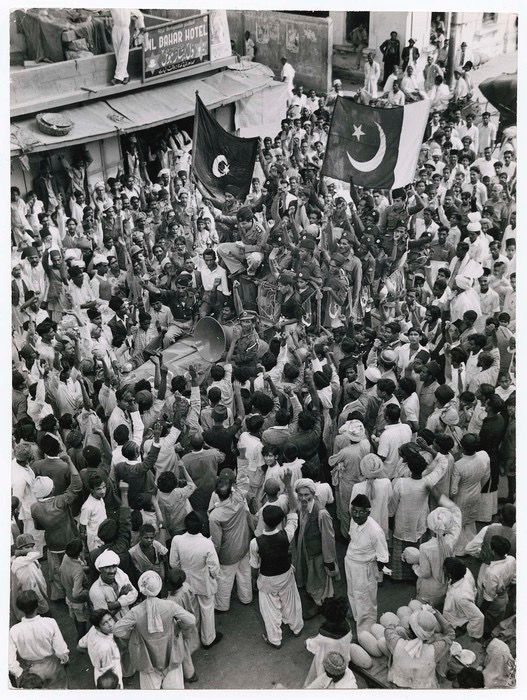
    History rarely repeats itself in exact terms, but it frequently rhymes through patterns of power, dissent and state responses. In Pakistan, analysts and political observers are increasingly highlighting the parallels between historical missteps. It is specifically the events leading up to the loss of East Pakistan in 1971 and the contemporary public grievances in Pakistan-administered Kashmir. The Cost of Ignoring Electoral Mandates In 1970, General Yahya Khan permitted general elections across Pakistan. The Awami League in East Pakistan secured a decisive democratic victory by winning 162 out of 300 national seats. However, rather than facilitating a peaceful transfer of power, military leaders stalled negotiations in Dhaka through early 1971. This breakdown in dialogue culminated in Operation Searchlight, a military crackdown targeting intellectuals, students, and Bengali civilians. The resulting violence triggered a massive refugee crisis. Approximately ten million people were sent to India. A war that ultimately led to the creation of Bangladesh. Pakistan’s own Hamoodur Rahman Commission concluded that political failure and operational excess by military leadership were central to the catastrophe. Despite these official findings, the report remained suppressed for decades, leaving fundamental lessons about the dangers of military overreach largely unexamined within state institutions.  Unrest in Pakistan-Controlled Kashmir Today, army leadership under General Asim Munir continues to champion strong nationalistic rhetoric regarding Kashmir. He has been asserting it as the nation’s core and a willingness to fight further conflicts over Indian-administered territory. Yet, a  different internal dynamic has been evolving since 2025 within the territories Pakistan actually controls. Local populations have mobilized in widespread demonstrations driven by clear economic and political grievances. Unmanageable costs for basic essential goods. Disproportionately high pricing for local power distribution. Legislative structures that assign disproportionate authority to mainland administrators rather than local residents. State institutions responded with heavy-handed measures rather than operating for meaningful negotiation. The organizing groups were banned, communication blackouts were implemented and arrests occurred. Security forces deployed live fire against demonstrators  and caused dozens of civilian casualties. The Danger of Ignoring Unheard Grievances The concern raised by historians is not that history will reproduce the exact outcome of 1971, but that the state is relying on the same flawed logic. State is again attempting to suppress domestic economic and political grievances through state force. When state policy prioritizes coercion over political engagement, it risks alienating populations. The lingering question for Pakistan’s establishment is whether the lessons of past governance failures will finally be integrated, or whether suppressed grievances will once again lead to deep institutional crises.  

  • Forgotten memories may not be gone

    New research suggests that some memories that seem to be forgotten may not completely disappear from the brain.  Instead they may remain stored in a quiet state and can sometimes return when a person receives the right reminder or is placed in a familiar environment. Scientists studied fruit flies and found that memories could become active again when the flies were placed in an environment similar to the one where the memory was first formed. This suggests that some memories may not be erased with time. They may simply become harder for the brain to access. Human memory is a very complex system. Some memories become weaker over time while others may suddenly return after seeing a familiar place, smelling a certain scent or noticing another related signal. However researchers still do not fully understand why the brain sometimes creates false memories along with real ones.  Understanding how the brain brings back true memories and creates inaccurate ones remains an important question for scientists. The findings could  help researchers better understand how memories are stored in the brain and how different surroundings or reminders can help bring forgotten memories back.

  • Can you take a bath during fever?

    During the rainy season and changing weather cases of dengue malaria viral fever typhoid and other illnesses often increase. When people develop a fever many wonder whether taking a bath could make their condition worse. Health experts say that taking a bath during fever is generally safe. A bath with lukewarm water can help the body feel more comfortable and may temporarily reduce body temperature. However the water should not be extremely hot or cold. Avoid very cold water Experts advise against bathing with ice-cold or very cold water during a fever.  Sudden exposure to cold water can cause shivering. This may make the body work harder to produce heat and can increase discomfort. Very hot water should also be avoided. It can raise body temperature and may make weakness and tiredness worse. Do not use alcohol on the skin Some people use alcohol or spirit on the skin to try to lower fever. Health experts do not recommend this method. Alcohol can be absorbed through the skin and may cause harmful effects. It should especially never be used on children for this purpose. What should you do during a fever? Fever is usually not a disease itself. It is often a sign that the body is fighting an infection.  Therefore it is important to find and treat the cause of the fever instead of only trying to lower the temperature. Drink plenty of fluids during a fever to prevent dehydration. Water, ORS coconut water soup and other suitable drinks can help. Wear light comfortable clothes and make sure the room has good airflow. If a full bath feels difficult you can gently clean the body with a soft cloth dipped in lukewarm water. Eating light and easily digestible foods such as porridge, khichdi, and other soft foods may also help the body recover. When should you see a doctor? A mild fever may improve with rest enough fluids and medicines recommended by a doctor. However medical help should be sought if the fever lasts for more than two to three days or is accompanied by confusion breathing problems severe headache repeated vomiting unusual skin rashes, or other serious symptoms. A baby under three months old with a fever should be examined by a doctor immediately. Overall taking a lukewarm bath during fever is usually not a problem. Staying hydrated, getting enough rest eating light food and finding the actual cause of the fever are much more important for recovery.

  • How Indian mughal art inspired Rembrandt’s forgotten miniatures

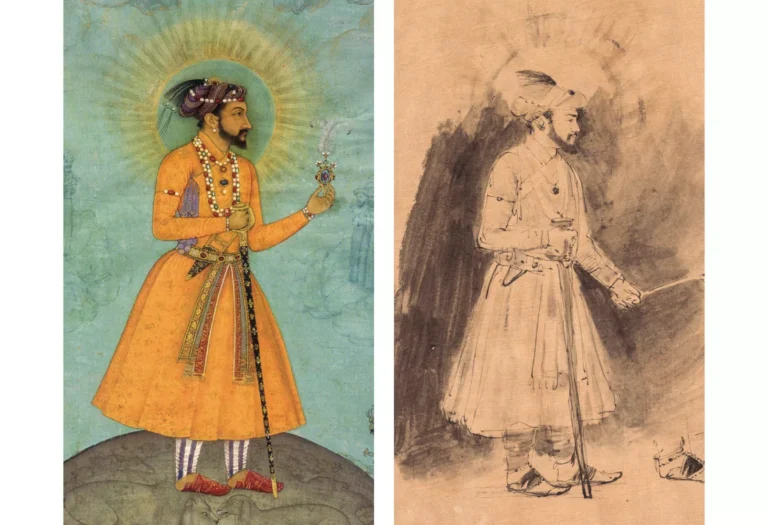
    Art lovers typically look upon dramatic chiaroscuro oil paintings, European portraiture, or biblical scenes while thinking about Rembrandt. Yet, buried within historical records and private collections lies a lesser-known chapter of the legendary master’s life. A profound fascination with South Asian art that inspired a unique series of fine Indian-style portraits. Rembrandt produced 25 delicate drawings depicting Mughal emperors and religious scholars Between 1656 and 1661. These works reveal an artist expanding his creativity through an encounter with Islamic and Indian aesthetic traditions half a world away. During the 17th century, Amsterdam was a booming node in global trade. The locality was largely powered by the Dutch East India Company (VOC). Ships arriving at Dutch ports carried exotic commodities such as raw silk, muslin, spices, and fine craftsmanship straight from Surat in western India. There were original miniature paintings and sketches produced by imperial Mughal ateliers among these goods. Rembrandt was an avid collector who frequently spent beyond his means on art and curiosities from abroad. He acquired dozens of foreign items. An official inventory compiled by municipal authorities during his 18th-century bankruptcy proceedings recorded a slim book labeled item No. 203. The scholars believe that the book contained Mughal miniatures that captured his imagination. Rembrandt’s Mughal series represented a striking departure from his thick, layered oil technique. Instead of broad canvas strokes, he utilized fine brown ink, delicate wash, and subtle chalk accents to carefully document the distinctive attire and posture of Mughal royalty. He repeatedly portrayed Emperor Shah Jahan, builder of the Taj Mahal. That too alongside his sons and predecessor Emperor Jahangir. Every sketch rendered precise details of traditional jamas (stitched coats), elaborate patkas (sashes), turbans, and sarpech ornamentations with remarkable fidelity. Rembrandt drew exclusively on imported Torinoko paper. This paper was seemingly a smooth Japanese paper sourced through East Asian maritime networks. “Copying was his way of learning about another style of making portraits… show[ing] him working in a much more refined manner than he is known for.”   Stephanie Schrader, Curator of Drawings at the J. Paul Getty Museum. Rembrandt didn’t copy images mechanically. He adapted Mughal compositions into his own artistic vision. For instance, in his study titled Four Mullahs Seated Under a Tree, he altered the background and surroundings from the original Indian painting. This exercise directly influenced his later print Abraham Entertaining the Angels (1656). In the latter, he repurposed the relaxed seating arrangements of Mughal scholars to illustrate an important biblical motif. The subtle colors and calm poses he absorbed during this phase continued to echo in his late-career oil paintings. Rembrandt never set foot outside Europe. However, his engagement with Mughal miniatures demonstrates a spirit of cross-cultural curiosity during the Dutch Golden Age. He studied them diligently as an intellectual equal. He discovered new ways to capture human expression and line.  

  • How many squares can you spot?

    Most people enjoy solving puzzles but picture puzzles can be even more fun and challenging. Look carefully at the image and try to count how many squares are hidden in it. At first the puzzle may look simple but it can be surprisingly difficult even for people who are good at solving puzzles. To find the correct answer you need to pay close attention to every part of the picture. A little knowledge of geometry can also help. Remember a square is a shape with four equal sides. There are many small and large squares hidden in the image so counting them all is not as easy as it looks.  You may need to check the picture from left to right and then from top to bottom. If you are still confused don’t worry you are not alone.  The puzzle is designed to make you think carefully. After counting all the squares the total comes to 40. So, the answer is 40 squares.

  • Monsoon eye care tips

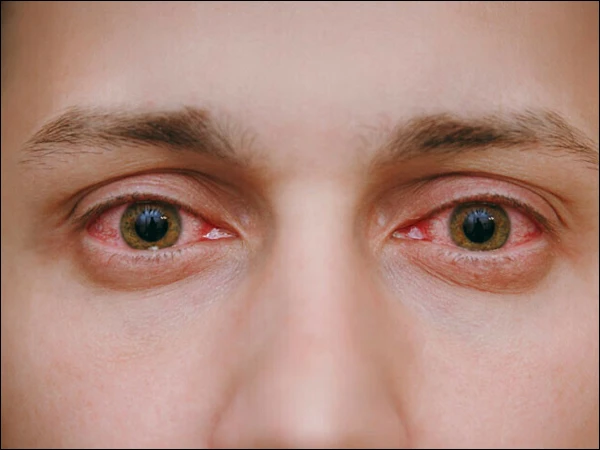
    The monsoon season brings welcome relief from the summer heat but it also creates conditions that allow many illnesses to spread more easily. Eye infections are one of the common health problems during this time. According to experts high humidity pollution and the growth of germs during the rainy season increase the risk of bacterial and viral eye infections. Dust dirty rainwater pollution and allergy causing particles can easily irritate the eyes.  These factors may lead to redness swelling and discomfort making daily activities difficult. Common symptoms of eye infections Some of the most common signs of an eye infection include. •Red eyes •Swelling •Eye pain •Watery eyes •Blurred vision •Itching or irritation If these symptoms become severe or do not improve it is important to see a doctor. How to protect your eyes during the monsoon Experts say that good hygiene is the best way to prevent eye infections.  Wash your hands regularly with soap and avoid touching your eyes with dirty hands. Keeping your face and eyes clean can also lower the risk of infection. If your eyes feel itchy or irritated do not rub them. Rubbing can spread germs and make the infection worse. Instead gently clean your eyes with a clean tissue or soft cloth. Applying a clean warm compress over your closed eyes for a few minutes can help reduce discomfort and swelling. This can be done several times a day if needed. Avoid sharing personal items If you have an eye infection avoid using eye makeup until your eyes have fully healed.  If makeup must be used make sure brushes and other beauty tools are cleaned properly. It is also important to wash bed sheets pillowcases and towels regularly with hot water and detergent. Never share towels handkerchiefs or other personal items that come into contact with your eyes as infections can easily spread from one person to another. When to see a doctor If your symptoms get worse or do not improve after a few days avoid self treatment and consult an eye specialist. A doctor may prescribe antibiotic or antiviral eye drops depending on the cause of the infection to help you recover safely and quickly.

Leave a Reply

Your email address will not be published. Required fields are marked *