plan high level
| |

US and UK plan high level meeting in London on Str…

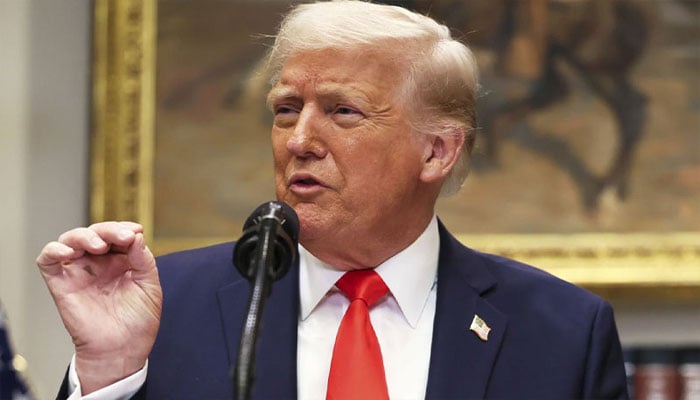
The United States and the United Kingdom are reportedly planning a high-level meeting in London next week to discuss the future of the Strait of Hormuz, according to a report by Axios cited by Al Jazeera. The meeting is expected to include talks on the possible establishment of a coalition naval force to protect ships in the strategic waterway, diplomatic sources told the website.

High-level European, American, and Arab officials, including defence ministers and military commanders, may participate in the meeting, which comes amid a spate of attacks in the Strait of Hormuz and the renewed conflict between the US and Iran. The strait, through which approximately 20% of global oil supplies pass, has been a flashpoint in the escalating tensions, with Iran launching attacks on commercial shipping and the US conducting strikes to keep the waterway open.

The proposed coalition naval force would aim to ensure the safety of maritime traffic in the region, which has been disrupted by attacks on tankers and other vessels. The US has already enforced a naval blockade in the strait, while Iran has targeted ships that violated its rules on navigating the waterway. The situation has raised concerns about global energy supplies and the potential for a wider conflict.

The meeting in London reflects the growing international concern over the instability in the region and the need for a coordinated response. The UK, a key US ally, has been actively involved in efforts to de-escalate tensions and protect shipping lanes. The potential involvement of Arab officials highlights the regional dimensions of the crisis, with Gulf states directly affected by the disruptions.

The establishment of a coalition naval force would be a significant step in ensuring the safety of maritime traffic in the Strait of Hormuz and the broader Gulf region. However, the success of such an initiative would depend on the cooperation of all parties involved, including Iran, which has insisted on maintaining control over the strait. The meeting in London is expected to explore options for addressing the crisis, including diplomatic and military measures.

As the situation continues to evolve, the international community remains focused on finding a resolution to the conflict. The meeting in London represents a crucial opportunity for key stakeholders to coordinate their efforts and develop a strategy to ensure the security of the Strait of Hormuz. The outcome of the discussions could have significant implications for global energy markets and regional stability. The world will be watching closely as the high-level meeting approaches, hoping for a diplomatic breakthrough that can de-escalate tensions and restore stability to the region. The coming days will be critical in determining whether the international community can unite to address the challenges posed by the conflict and protect the vital shipping lanes that are essential to global trade and energy security.

Similar Posts

  • | |

    China stands firm on economic strategy ahead of ke…

    BEIJING: China has intensified its defence of its state-led economic model as it prepares for crucial trade discussions with the European Union and the United States, signalling that it is unlikely to make major policy concessions despite mounting international criticism. Beijing has repeatedly argued that its development strategy, which prioritises investment in advanced manufacturing and technology, remains essential for long-term economic growth. Chinese leaders maintain that the country’s industrial policies have helped strengthen innovation and global competitiveness, rejecting accusations that they distort international trade. The latest policy statements from China’s leadership indicate a commitment to maintaining its current economic direction. While officials acknowledge challenges such as weak domestic demand and excess production capacity, they continue to favour targeted policy support instead of broad consumer-focused stimulus measures. Chinese authorities have also dismissed Western claims of industrial overcapacity, describing such criticism as politically motivated. They argue that China’s manufacturing success reflects its stage of economic development and benefits global consumers through affordable, high-quality products. Ahead of expected meetings between President Xi Jinping and US President Donald Trump later this year, as well as upcoming negotiations with the European Union, Beijing has adopted a more confident tone in defending its economic policies. Analysts believe the messaging is intended to establish clear limits on what China is willing to negotiate while encouraging greater understanding of its development model. China has also sought to counter warnings of a new “China shock” by portraying its industrial expansion as an opportunity for global economic growth. However, many Western economists argue that China’s reliance on exports, combined with subdued domestic consumption, continues to create imbalances that affect international markets. Although Beijing has slowed public investment by tightening oversight of local government spending, officials acknowledge that supply and demand remain uneven. Authorities have pledged to reduce destructive price competition among manufacturers and have reiterated their intention to strengthen consumer demand, though without announcing sweeping structural reforms. Chinese policymakers have also recognised that the country’s traditionally low household consumption cannot remain a permanent feature of its economy. While official publications describe the existing model as historically appropriate, they also suggest gradual adjustments will be necessary to ensure sustainable long-term growth. Despite these acknowledgements, Beijing remains cautious about implementing rapid reforms, fearing that abrupt policy changes could undermine economic stability. International studies continue to raise concerns over China’s economic practices. Recent research suggests that government subsidies have played a significant role in boosting the global market share of many Chinese companies, while other reports attribute much of China’s export growth to weak domestic consumption and industrial overcapacity. Analysts also note that China continues to invest in productive assets at a much faster pace than Europe and the United States, even though returns on those investments have declined. Many experts believe Beijing’s increasingly assertive defence of its economic model reflects growing confidence that it can manage trade tensions with Western partners without fundamentally changing its industrial strategy.

  • | |

    Lebanese troops move into first pilot zone as Isra…

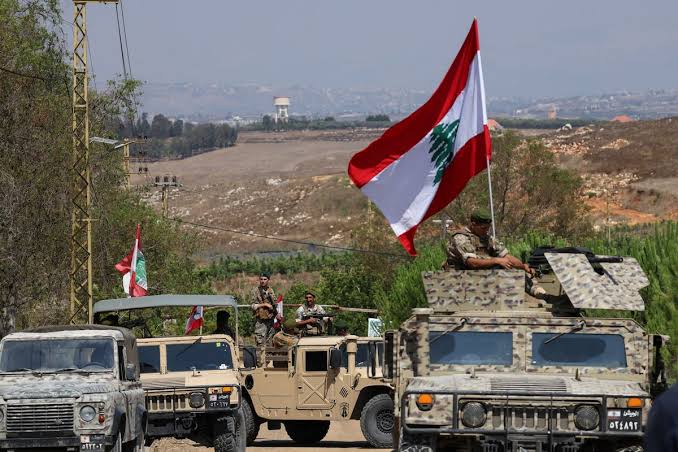
    Lebanon’s army began deploying troops into a designated pilot zone in the country’s south on Tuesday, following an Israeli withdrawal from part of the area under a framework agreement reached last month with US backing. The army command said engineering units entered the village of Zawtar al Gharbiyeh in Nabatieh district on Tuesday morning. Later, the command reported that Israeli forces had opened fire near the troops. Israel’s military said its soldiers fired warning shots after Lebanese troops crossed into what Israel considers a security zone. The pilot zone arrangement envisions Israeli forces withdrawing from a limited portion of territory occupied during the conflict with Hezbollah, alongside the disarmament of the Iran backed Lebanese group. Tuesday’s deployment began ahead of a scheduled meeting in Washington between President Donald Trump and Lebanese President Joseph Aoun. Aoun was expected to press Trump to push Israel toward withdrawing from the remainder of southern Lebanon and to back the Lebanese army as it works to establish full control over areas currently under Hezbollah’s influence. Speaking to reporters in the Oval Office, Aoun said he told Trump he needed two things from him, political support and backing for the Lebanese Armed Forces. Trump, speaking alongside Aoun, pledged that the United States would help a country he said had been hit hard for decades, adding that Lebanon has been badly treated and deserves proper treatment and respect going forward. The US State Department announced Monday afternoon that pilot zone operations had begun in Zawtar al Gharbiyeh along with two other villages, Froun and Srifa, consistent with the trilateral framework agreed by Israel, Lebanon and the United States at the end of June. The department described the development as a milestone stemming directly from talks held last week between Israeli and Lebanese representatives in Rome. Later Monday, an Israeli military official confirmed that Israeli forces would adjust their posture in one of the pilot areas to allow the Lebanese army to carry out its mission, while also protecting Israeli soldiers and preserving the military’s right to self defense and to eliminate threats. The official said the goal of the pilot programme and the broader agreement remains the disarmament of Hezbollah and the removal of its illegal weapons, adding that Israeli forces would stay in the security zone, a strip of occupied Lebanese territory roughly ten kilometers deep along the border, for as long as necessary to protect communities in northern Israel. On Tuesday, Lebanon’s army command said its units began deploying to Zawtar al Gharbiyeh based on ongoing coordination with the Military Coordination Group for Lebanon, the trilateral body established to support implementation of the framework. The command urged Lebanese citizens to avoid traveling to the village until the security situation stabilizes and to follow instructions from deployed military units for their own safety. Later Tuesday, the army command said Israeli forces opened fire near these units and warned that the incident hinders progress on deployment across the pilot zones. Israel’s military said its soldiers fired warning shots into the air after Lebanese troops and an engineering vehicle crossed roughly 150 meters into the security zone and breached barriers in the neighboring area of Zawtar al Sharqiyeh. The military said Lebanese troops then withdrew from the area and that no injuries occurred. The Lebanese army said its troops were already carrying out missions in the nearby villages of Froun and Srifa following Monday’s announcement from Washington. An Israeli source told a regional newspaper that no Israeli troops remained stationed in those villages. Separately on Tuesday, Lebanon’s state news agency reported that Israeli forces caused two large explosions near the villages of Beit Yahoun and Kounine in Bint Jbeil district, along with blasts from Israeli controlled demolitions in the town of Majdal Zoun in Tyre district. In areas still under Israeli occupation, numerous villages have suffered extensive destruction from strikes and demolitions. Israel’s military says it has been dismantling Hezbollah infrastructure, though human rights organizations have said some of the destruction amounts to deliberate targeting of civilian infrastructure, potentially constituting a war crime. Hezbollah has rejected the trilateral agreement between Lebanon’s government, Israel and the United States, saying provisions linking Israeli withdrawal to its own disarmament cross what it called all red lines. Israel has said it will not fully withdraw from Lebanon until Hezbollah disarms completely. Trump said the United States has concrete plans to help Lebanon build the capacity needed to disarm Hezbollah, though he offered no specific details. He also said the Lebanese army is becoming increasingly self sufficient, and added that he would speak directly with Hezbollah representatives if Aoun requested it. Lebanon became entangled in the broader war between Israel, the United States and Iran on March 2, when Hezbollah launched rockets into Israel in retaliation for a strike that killed Iran’s supreme leader. Israel responded with a bombing campaign across Lebanon and an invasion of a significant portion of the country’s south. More than 4,300 people have died in Lebanon since then, including nearly 800 children, women and medics, according to Lebanon’s health ministry. Israeli authorities say 37 Israeli soldiers and four civilians have been killed on both sides of the border during the conflict. The pilot zone deployment marks the first tangible step toward implementing the trilateral framework since its signing, though continued friction between Lebanese and Israeli forces on the ground, along with Hezbollah’s outright rejection of the agreement’s terms, points to a difficult path ahead for a plan meant to end one of the region’s longest running conflicts.

  • | |

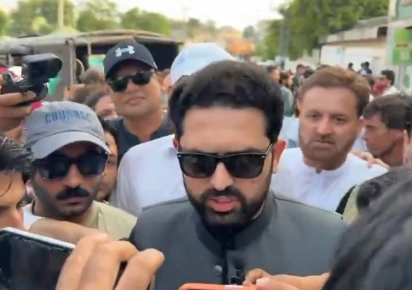
    Sohail Afridi denied meeting Imran at Adiala Jail

    RAWALPINDI: Khyber-Pakhtunkhwa Chief Minister Sohail Afridi was stopped from meeting Pakistan Tehreek-e-Insaf founder Imran Khan at Adiala Jail on Thursday. Afridi reached the Medicine Factory checkpoint on Adiala Road with several PTI leaders and lawmakers. Police stopped the delegation from moving towards the prison. The chief minister was accompanied by Mena Khan, Shafi Jan, Ahad Shah, Abdul Salam Afridi and Shahid Khattak. Police had earlier blocked Adiala Road from Gorakhpur towards the jail. Traffic was diverted to alternative routes. Afridi questioned the SHO Saddar Beroni about the restrictions. He also asked what instructions had been issued to the authorities. The chief minister remained at the checkpoint until the scheduled meeting time ended. He and the accompanying PTI leaders were not allowed to meet Imran. After the delegation left, police removed the barriers. Traffic on Adiala Road was restored. Speaking to the media, Afridi announced a protest call if he was not allowed to meet the PTI founder. He said PTI workers would come out across the country at 10pm. He urged them to gather at major intersections while carrying the national and party flags. Afridi also asked workers to stay focused on the party’s planned march towards Islamabad on September 27. He claimed that the PTI planned to bring two million people to Islamabad. He said the number could be even higher. The chief minister said the authorities should allow a meeting with Imran before September 28 if they wanted to reduce political tensions. Afridi also criticised the treatment of Imran and PTI since 2022. He accused the authorities of pushing the country towards instability because of political differences and stubbornness. He further criticised other political parties and questioned their role in the country’s political situation. The latest incident comes amid growing concern within PTI over Imran’s health and access to him. The party has repeatedly demanded that its founder be allowed to meet family members, lawyers and party leaders. Imran has remained incarcerated at Adiala Jail since 2023. His wife, Bushra Bibi, is also imprisoned. The PTI founder has faced several legal cases during his imprisonment. He and Bushra Bibi were sentenced to 17 years in prison in the Toshakhana-II case in December 2025. PTI has also raised concerns over Imran’s eyesight and medical treatment. Earlier this year, doctors from the Pakistan Institute of Medical Sciences examined him at the jail. PIMS later confirmed that he had received an anti-VEGF injection for a condition affecting his right eye. A later medical examination indicated improvement in his eyesight following treatment. Imran’s sisters and PTI supporters have also held regular gatherings outside Adiala Jail on designated meeting days. However, access to the former prime minister has remained restricted in recent months. Afridi’s unsuccessful visit on Thursday is likely to further intensify the political confrontation between PTI and the authorities.

  • | | | |

    Trump welcomes Makkah joint defence agreement

    US President Donald Trump has welcomed the joint defence agreement signed by Saudi Arabia, Pakistan and Türkiye. He described the development as a positive step towards greater unity in the Middle East. In a statement, Trump said he was pleased to see Saudi Arabia, Türkiye and Pakistan sign the Makkah Joint Defence Agreement. He said the agreement could help the three countries strengthen their ability to protect themselves against security threats. Trump said the agreement reflected growing cooperation among countries in the region. He added that the Middle East was becoming more united. According to him, stronger cooperation would allow countries to defend themselves more effectively. Saudi Arabia, Pakistan and Türkiye recently signed the joint defence pact. The agreement aims to increase cooperation between the three countries in defence and security matters. Under the agreement, an armed attack against any one of the three countries will be treated as an attack against all three. This provision is intended to create a stronger collective defence mechanism. The pact is also aimed at improving coordination between the armed forces of Saudi Arabia, Pakistan and Türkiye. The countries are expected to enhance their defence cooperation and work together in dealing with potential threats. The agreement comes amid growing security concerns in the Middle East and wider regional tensions. The three countries have maintained close political and strategic ties and have expressed interest in expanding cooperation in various fields. The Makkah agreement is expected to provide a framework for deeper defence coordination. It could also lead to greater military cooperation, joint planning and closer security coordination among the three countries.

  • |

    Pakistan’s Foreign office launches evening s…

    The Ministry of Foreign Affairs (MOFA) has introduced an evening shift for consular services, extending working hours from 8am to 8pm on weekdays to enhance accessibility and convenience for citizens, Foreign Minister and Deputy Prime Minister Ishaq Dar announced on Monday . According to an official announcement shared by Dar on X, the expanded hours represent a significant increase in service availability, allowing citizens to access consular facilities over a 12-hour window, Monday through Friday . The initiative is part of the ministry’s broader efforts to enhance efficiency and ensure citizen-centric service delivery . Previously, consular services at MOFA were limited to regular government working hours, requiring citizens to visit offices within a designated daytime schedule . The restricted timings often posed challenges for individuals, particularly overseas Pakistanis and working professionals who faced difficulties accessing services during conventional office hours . The introduction of the evening shift aims to address these concerns by providing greater flexibility to applicants, officials said . Details of the revised timings have been confirmed, and the ministry expects the move to significantly reduce bottlenecks and improve the overall citizen experience . The announcement comes amid ongoing efforts by the government to digitize and streamline public services, with the Foreign Office now joining other federal departments in extending service hours to better accommodate the public .

  • Thailand Intensifies Hantavirus Screening For Travelers From South America

    BANGKOK, Thailand — Thailand’s Department of Disease Control (DDC) has implemented enhanced screening measures for travelers arriving from 13 South American countries to monitor for potential hantavirus infections, authorities announced this week, as part of a proactive strategy to safeguard public health while maintaining secure international travel corridors. Thailand on alert for rodent-linked disease Although […]

Leave a Reply

Your email address will not be published. Required fields are marked *