kuwait keeps bottled
|

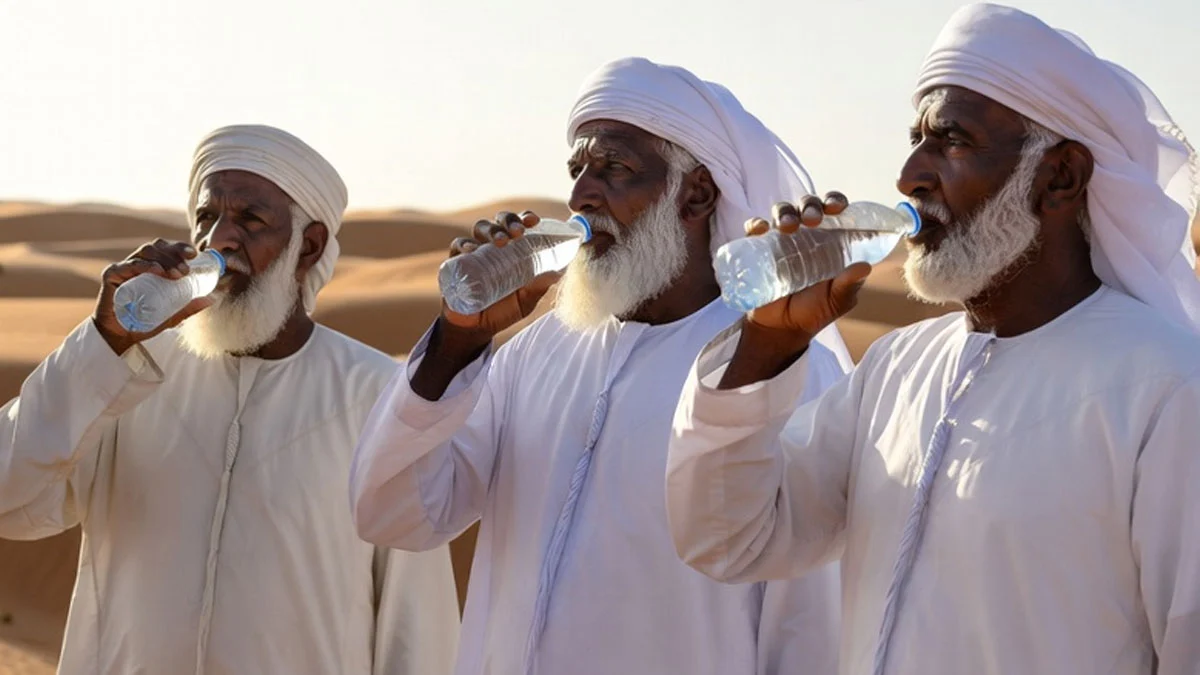
Kuwait keeps bottled water purchase limit to prevent panic buying

Kuwait’s Ministry of Social Affairs has confirmed that restrictions on bottled water purchases will remain in place as part of efforts to discourage panic buying and ensure supplies remain available for everyone. Under the current rules, shoppers can buy no more than five cartons of bottled water per invoice at central markets and cooperative society branches across the country.

The ministry said all cooperative societies are required to enforce the purchase limit without exception. Officials have instructed the Union of Consumer Cooperative Societies to make sure every branch follows the directive and prevents customers from making unusually large purchases. Authorities believe the measure will help stop unnecessary stockpiling that could leave other shoppers without access to essential supplies.

According to officials, the restriction is purely a precaution and should not be seen as a sign of a shortage. The ministry stressed that bottled water production remains stable and factories continue to operate at full capacity. Regular deliveries are being made to markets and cooperative stores, ensuring that supplies remain sufficient to meet consumer demand.

Officials explained that the temporary limit is designed to promote fair distribution and prevent panic buying during the current situation. They said excessive purchasing by a small number of customers can quickly create empty shelves, increase crowding at stores and trigger unnecessary public concern even when supplies remain adequate.

The ministry also confirmed that it is closely monitoring the implementation of the policy. Cooperative societies that fail to follow the instructions or violate the regulations could face action from the authorities. Officials urged retailers to strictly apply the purchase limit so that bottled water remains available to all consumers.

Residents have been encouraged to buy only the amount they genuinely need and avoid hoarding. The ministry also warned against spreading unverified information or rumors that could create unnecessary fear and encourage panic buying among the public. Officials emphasized that responsible purchasing will help maintain steady supplies and prevent disruption in the market.

In a separate development, Kuwait’s Ministry of Commerce and Industry has introduced a new legal framework for e-commerce platforms to improve consumer protection and regulate the country’s rapidly growing online marketplace. The regulations were introduced under Ministerial Resolution No. 109 of 2026 and officially came into force on July 8. They apply to all digital platforms involved in selling, ordering and delivering products within Kuwait.

The new rules clearly define the responsibilities of online platforms, merchants, delivery companies and consumers. Officials said the regulations are intended to create a more transparent business environment while encouraging fair competition and supporting future investment in the digital economy.

Under the updated framework, companies operating electronic platforms must obtain the required licences and comply with existing laws. They are also required to strengthen cybersecurity measures and protect their digital systems and customer information from cyberattacks, data breaches and misuse. Authorities believe the updated regulations will help build greater public confidence in online shopping while ensuring higher standards of safety and accountability across Kuwait’s expanding e-commerce sector.

Similar Posts

  • |

    Padikkal hits unbeaten ton as India dominate Sri Lanka

    GALLE: Devdutt Padikkal marked his return to India’s Test side in spectacular fashion, scoring an unbeaten century as India finished the opening day of the first Test against Sri Lanka at 288-2 on Saturday. The left-handed batter, recalled as a late replacement for the injured Sai Sudharsan, remained unbeaten on 131 from 178 balls, striking 12 fours and a six. His composed innings put India firmly in control on a rain-affected day at the Galle International Stadium. Padikkal’s century was the first of his Test career and strengthened his case for a permanent place at No. 3. The 26-year-old had last played a Test in November 2024 but entered the match with confidence after scoring a hundred in India’s warm-up game in Colombo. He joined KL Rahul after opener Yashasvi Jaiswal was run out for 32 following a mix-up. The pair then produced a commanding 150-run partnership that shifted the momentum decisively towards India. Padikkal reached his half-century from 81 deliveries, while Rahul took 127 balls to register his 21st Test fifty. Rahul eventually retired hurt on 77 after suffering cramps but is expected to continue his innings on the second day. India captain Shubman Gill also fell for 16, attempting to clear mid-off against spinner Prabath Jayasuriya. Rishabh Pant, however, remained unbeaten alongside Padikkal on 27, leaving India with a strong platform for a big first-innings total. Sri Lanka’s fielding coach Jordon Gregory admitted his side had missed opportunities, while praising Padikkal’s discipline and temperament. Rain restricted the day to just 73 overs from the scheduled 90, prompting officials to bring Sunday’s play forward by 15 minutes. The Test is particularly significant as it marks India’s return to Sri Lanka for Test cricket after several years, with valuable World Test Championship points at stake. India have also maintained an unbeaten Test record against Sri Lanka since 2015. With Padikkal settled at the crease and Pant providing support, India will enter the second day with the clear opportunity to build a massive total and put Sri Lanka under early pressure. Still to bat: D. Jurel, R. Jadeja, M. Suthar, K. Yadav, M. Siraj, P. Krishna Fall of wickets: 47 (Jaiswal), 236 (Gill) Sri Lanka Bowling A. Fernando: 10-1-28-0 (1nb) L. Kumara: 10-1-51-0 K. Nuwantha: 21-0-98-0 (2nb) P. Jayasuriya: 24-4-77-1 D. de Silva: 4-0-15-0 S. Dinusha: 4-0-17-0 India lead the opening day at 288-2, with Padikkal unbeaten on 131.

  • |

    Sindh health minister calls for stronger measures to protect mothers during childbirth

      Karachi: Sindh Health Minister Dr. Azra Fazal Pechuho has expressed serious concern over the rising maternal mortality rate associated with repeated cesarean section (C-section) deliveries. Speaking at the “Maa Rahe Salamat” (May Mothers Stay Safe) Family Planning Summit held at the Jinnah Postgraduate Medical Centre (JPMC) in Karachi, she emphasized the urgent need for stronger policies and legislation to protect the lives and health of mothers in Pakistan. Addressing participants at the summit, Dr. Pechuho stated that Sindh has taken a leading role in promoting maternal and child health across the country. She highlighted that the provincial government has introduced several laws and initiatives aimed at improving healthcare services for women and children, particularly during pregnancy and childbirth. The health minister noted that the increasing number of cesarean deliveries has contributed to a higher rate of maternal deaths. According to her, repeated surgical deliveries expose women to greater health risks, including excessive bleeding, infections, complications from anesthesia, and damage to internal organs. She said the provincial health department is actively working to address these issues and expressed confidence that the results of these efforts will become visible in the near future. Dr. Pechuho stressed that protecting mothers during childbirth should be treated as a national priority. She said the government wants to introduce legislation that ensures the safety of women during pregnancy and delivery while also promoting informed family planning decisions. One of the key proposals she discussed was the introduction of tubal ligation after a woman’s third cesarean section. Tubal ligation is a permanent method of contraception in which the fallopian tubes are blocked or sealed to prevent future pregnancies. According to Dr. Pechuho, women who undergo a third C-section face significantly higher health risks if they become pregnant again. She argued that women should have the right to request tubal ligation during their third cesarean delivery if they wish to avoid future pregnancies. In her view, providing this option would help reduce preventable maternal deaths and improve long-term maternal health outcomes. She added that ensuring access to this procedure should be considered an important part of reproductive healthcare. The minister further remarked that if Pakistan is serious about reducing maternal mortality, mandatory consideration of tubal ligation after a third cesarean section should be included in public health policy. She explained that she deliberately presented the proposal in cautious terms but believes that legislation should move in this direction. According to her, she is already working to advance legal reforms that would support this objective. Dr. Pechuho concluded by reaffirming the Sindh government’s commitment to safeguarding the health and well-being of mothers and newborns. She emphasized that comprehensive maternal healthcare, effective family planning services, and timely medical interventions are essential for reducing preventable deaths and ensuring healthier families. She expressed hope that the proposed legal and policy reforms would strengthen maternal healthcare services and provide greater protection for women across the province.

  • | | |

    Heavy rains claim 26 lives in Khyber Pakhtunkhwa o…

    At least 26 people, including women and children, have lost their lives after five days of heavy rainfall across the plains and mountainous districts of Khyber Pakhtunkhwa, according to the Provincial Disaster Management Authority (PDMA). The severe weather has also left several people injured and caused significant damage to homes and infrastructure in multiple parts of the province. The PDMA’s latest report stated that the fatalities include two women and four children, highlighting the devastating human impact of the ongoing spell of heavy rain. In addition to the deaths, six people sustained injuries in weather-related incidents reported across affected districts. The continuous rainfall triggered flash floods, landslides, and structural collapses, causing widespread destruction in both urban and rural areas. According to the disaster management authority, 65 houses have been damaged, with 41 homes suffering partial damage and 24 houses completely destroyed. The damage has displaced several families, many of whom are now relying on emergency assistance. The worst-affected districts include Abbottabad, Swat, Buner, Khyber, Lower Chitral, Lower Dir, Mansehra, Mardan, Peshawar, Shangla, Swabi, Upper Dir, and Upper Kohistan. Rescue teams and local authorities continue to monitor vulnerable areas where additional rainfall may increase the risk of flooding and landslides. The PDMA confirmed that it is working closely with Rescue 1122, district administrations, and other relevant government agencies to coordinate emergency response efforts. Rescue operations, relief distribution, and damage assessments are currently underway to ensure that affected families receive immediate assistance. Authorities have instructed district administrations to accelerate relief activities and provide essential support, including temporary shelter, food, medical care, and other emergency services to displaced residents. Officials are also assessing infrastructure damage and identifying areas requiring urgent rehabilitation. The recent spell of heavy rainfall serves as another reminder of the increasing challenges posed by extreme weather events in Pakistan. Experts have repeatedly emphasized the importance of disaster preparedness, early warning systems, and resilient infrastructure to reduce the impact of floods and severe storms on vulnerable communities. Residents living in flood-prone and mountainous areas have been advised to remain alert, avoid unnecessary travel during heavy rainfall, and follow safety instructions issued by local authorities. As rescue and recovery operations continue, government agencies remain focused on protecting lives, supporting affected families, and restoring normal conditions in the worst-hit districts of Khyber Pakhtunkhwa.

  • |

    Moroccan migrants return home after failed bid to reach Europe

    Thousands of Moroccan migrants who entered Spain’s North African enclave of Ceuta this week have begun returning home after their hopes of reaching mainland Europe faded. Many said they were driven back by hunger, exhaustion and difficult living conditions, while others claimed they faced hostility after arriving in the Spanish territory. Several returnees said they had decided to cross into Ceuta after watching viral social media videos and receiving messages from friends claiming the heavily guarded border could be breached. Believing they had a chance to build a better future in Europe, many left their jobs and travelled to the border. However, after reaching Ceuta, migrants discovered there was no clear route to mainland Spain. Many said they became stranded in the enclave with limited access to food, water and shelter. One migrant said he survived for three days by drinking only water because he could not afford food. He described the cost of basic meals as extremely high and said life in Ceuta was far more difficult than he had expected. Returning migrants also claimed that many supermarkets and shops remained closed, making it difficult to buy essential supplies. Some spent days in wet clothes after swimming across the border and struggled to find safe places to rest. Several migrants alleged they were forced to leave certain neighbourhoods by local residents, although those claims could not be independently verified. Spanish authorities confirmed that two people suffered minor injuries in separate knife attacks and said one suspect had been arrested. Officials added that no deaths linked to the incidents had been reported. The large influx also affected businesses on both sides of the border. In the Moroccan border city of Fnideq, hotels and restaurants faced staff shortages after several workers crossed into Ceuta. Some employers have already begun looking for replacement workers as many employees remain missing. Meanwhile, daily life in Ceuta has gradually started returning to normal. Cafes have reopened in parts of the city, while police continue to maintain a strong security presence. Many businesses, however, remain closed as authorities monitor the situation. Aid workers said migrant reception facilities are operating at full capacity, with thousands of people still believed to be inside the enclave awaiting assistance or decisions on their future. Local residents expressed mixed emotions over the crisis. While many admitted the sudden arrival of thousands of migrants created fear and uncertainty, others said they sympathised with the young people, arguing they had been misled by false hopes of an easier route into Europe.

  • |

    Houthi Red Sea blockade threat raises fears of wider global energy disruption

    A new threat by Yemen’s Houthi movement to impose a maritime blockade on Saudi Arabia has raised concerns about global energy supplies as tensions across the Middle East continue to escalate. The announcement comes at a time when shipping through the Strait of Hormuz has already been disrupted, increasing fears that two of the region’s most important oil routes could be affected at the same time. The Iran aligned Houthi group said it plans to target Saudi Arabia through a blockade in the Red Sea. While the group has not explained how it intends to enforce the measure, the warning has intensified concerns over the security of international shipping and energy exports. The Bab el Mandeb Strait at the southern entrance to the Red Sea is one of the world’s most important maritime routes. It connects the Red Sea with the Gulf of Aden and serves as a key passage for oil shipments travelling between the Middle East, Europe and Asia. Since disruptions in the Strait of Hormuz, Saudi Arabia has redirected much of its crude oil exports to its Red Sea port of Yanbu. From there, shipments bound for Europe pass through the Suez Canal, while cargo heading to Asian markets travels south through the Bab el Mandeb Strait. Industry data shows that oil exports from Yanbu have increased sharply over the past year, making the Red Sea an increasingly vital route for global energy markets. Millions of barrels of petroleum now pass through the Bab el Mandeb every day, helping to stabilise international oil supplies despite ongoing tensions elsewhere in the region. Analysts warn that any serious disruption in the Red Sea could significantly affect global energy prices by restricting another major export route from the Gulf. Saudi Arabia is reportedly considering expanding its pipeline network to the Red Sea coast to reduce dependence on vulnerable sea lanes. The Houthis have been involved in conflict with Yemen’s internationally recognised government for more than a decade and have previously launched missile and drone attacks against Saudi Arabia. Although a truce reached in 2022 reduced fighting, tensions have risen again following recent military strikes around Sanaa. The latest escalation began after Yemen’s recognised government said it had targeted Sanaa airport to prevent an Iranian aircraft from landing. The Houthis blamed Saudi Arabia for the attack and responded by firing missiles towards Abha airport in southern Saudi Arabia. A senior Houthi official later warned that continued escalation could lead to the closure of the Bab el Mandeb Strait. Although the Houthis maintain that they make their own military decisions, the United States has long accused Iran of supplying the group with weapons, funding and training. The Houthis reject claims that they act as an Iranian proxy. The movement previously disrupted international shipping after the outbreak of the Gaza war in late 2023. It launched attacks on commercial vessels in the Red Sea, saying the operations were intended to support Palestinians. Those attacks forced many major shipping companies to reroute vessels around southern Africa, increasing transport costs and delaying deliveries worldwide. Although Red Sea traffic had begun recovering after attacks eased, shipping through the Suez Canal remains well below previous levels. The latest Houthi threat has renewed fears that instability could once again disrupt one of the world’s busiest trade routes. During the recent conflict involving Iran, the Houthis played a more limited military role than other armed groups aligned with Tehran. However, their latest announcement suggests they may now be prepared to increase pressure on regional rivals, raising fresh concerns over the security of global energy supplies and international trade.

  • | |

    US, Russian envoys congratulate Pakistan on Indepe…

    ISLAMABAD: Pakistan’s 79th Independence Day brought messages of goodwill from two major international partners, with the United States and Russia extending warm greetings to the Pakistani people and expressing hopes for continued peace, prosperity and stronger bilateral ties. US Chargé d’Affaires Natalie A. Baker and the US diplomatic mission in Pakistan conveyed their Independence Day wishes to Pakistanis on Friday, marking the country’s 79th year as an independent nation. In its message, the US Embassy recalled the long history of relations between the two countries, noting that the United States was among the early countries to recognise Pakistan after its creation in 1947. The embassy said that Pakistan-US friendship had grown stronger over the decades, highlighting the enduring ties between the two countries and their peoples. “Over the past 80 years, the friendship between Pakistan and the United States has grown stronger,” the message said, while extending wishes for peace, happiness and prosperity to the people of Pakistan. The greeting comes as Islamabad and Washington continue to maintain engagement across several areas, including trade, investment, security, education and people-to-people ties. Russia highlights Pakistani resilience Russia’s ambassador to Pakistan also extended Independence Day greetings, describing the occasion as a reflection of the courage, determination and strong national spirit of the Pakistani people. In his message, the Russian envoy praised the resilience demonstrated by Pakistanis and expressed confidence that cooperation between Moscow and Islamabad could continue to expand. The ambassador said both countries would work together to strengthen mutual understanding and broaden their partnership in areas of shared interest. The message underscored Moscow’s interest in developing closer relations with Islamabad at a time when Pakistan is seeking to expand its diplomatic and economic partnerships. Messages arrive amid wider diplomatic engagement The messages from Washington and Moscow came as Pakistan marked Independence Day with nationwide celebrations, flag-raising ceremonies and tributes to the country’s founding leaders and those who sacrificed for independence. For Pakistan, such diplomatic messages carry significance beyond traditional greetings. They reflect the country’s longstanding relationships with major global powers and its continuing efforts to maintain engagement with partners across different regions. As Pakistan entered its 80th year since independence, the messages from the United States and Russia shared a common theme: a desire for peace, prosperity and stronger cooperation. While the two countries have different strategic relationships with Islamabad, their Independence Day messages highlighted the importance of continued engagement and mutual understanding. For Pakistanis celebrating the day, the greetings added an international dimension to the occasion, with both Washington and Moscow signalling their desire to see Pakistan move forward with stability, prosperity and deeper partnerships.

Leave a Reply

Your email address will not be published. Required fields are marked *