
heavy snow halts
|

Heavy snow halts Spantik mission to recover Dr Asma

GILGIT: A rescue mission to recover the body of Pakistani climber Dr Asma Mushtaq from Spantik Peak was halted on Sunday as heavy snowfall made the treacherous mountain too dangerous for the recovery team.

Dr Asma Mushtaq, 34, died on Thursday while descending from the 7,027-metre Spantik, also known as Golden Peak, in Gilgit-Baltistan’s Shigar district. She reportedly suffered from high-altitude sickness after reaching the summit. Her body remains at an altitude of around 6,400 metres near Camp 3.

According to the Alpine Club of Pakistan (ACP), a recovery team that left on Saturday reached Camp 2 but was forced to suspend the operation because of worsening weather. The team was advised to return to base camp and wait for a safer weather window.

Efforts are also under way to obtain approval for a humanitarian helicopter mission with the support of the Pakistan Army. However, officials said helicopters cannot operate at altitudes above 6,000 metres to retrieve the body. The body must therefore first be brought down by a ground rescue team.

ACP General Secretary Ayaz Shigri said a six-member local team was working to transport Dr Asma Mushtaq’s body to base camp, from where an army helicopter could potentially airlift it to Skardu.

The recovery operation has also raised questions about the responsibilities of the expedition operator. Baltistan Division Commissioner Kamal Khan said the tour operator had violated mountaineering regulations by failing to arrange the required recovery team and helicopter arrangements.

He said operators are responsible for arranging ground rescue and helicopter insurance when required. The official also alleged that mandatory briefing and debriefing procedures under the Mountaineering Rules 1999 had not been followed.

However, Mr Khan rejected suggestions that negligence had caused the delay, saying local authorities arranged a recovery team soon after the incident on humanitarian grounds.

The ACP stressed that it is Pakistan’s national federation for mountaineering and sport climbing, rather than a dedicated rescue organisation. It said Pakistan still lacks a properly established high-altitude rescue system and called for stronger mountaineering infrastructure.

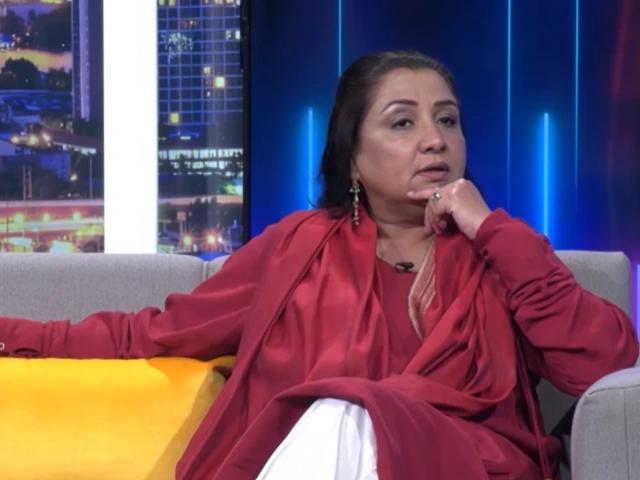
Dr Asma Mushtaq, originally from Lahore, was a UK-based obstetrics and gynaecology doctor and an avid traveller, vlogger and mountaineer. She had documented several expeditions online and had completed the winter ascent of Musa ka Musallah.

Meanwhile, bad weather has also halted the recovery of US climber Sarah Mallory Geis from Broad Peak. Her body was recovered by three local porters after she went missing in a deadly avalanche on July 30. It remains at Broad Peak base camp awaiting an army helicopter flight to Skardu.

The incidents have once again highlighted the extreme dangers of high-altitude mountaineering — and the urgent need for a reliable rescue system in Pakistan’s towering Karakoram.

Similar Posts

  • |

    India reclaim No. 1 spot in T20I rankings after Zimbabwe series win

    HARARE, July 26: India have returned to the top of the ICC Men’s T20I rankings after securing a 2-0 lead in their three-match series against Zimbabwe. The reigning T20 World Cup champions had recently slipped from the No. 1 position after England swept them 4-0 in a five-match series. India have now responded strongly by winning the opening two matches of their Zimbabwe tour and reclaiming the summit. India began the series with a comfortable seven-wicket victory. Young opener Vaibhav Sooryavanshi provided the main highlight, scoring a rapid half-century from just 19 balls. The second match saw an even stronger batting performance from India. They posted 219-5 in their 20 overs, with Ishan Kishan producing an aggressive 81 and Tilak Varma remaining unbeaten on 60. Zimbabwe struggled in their chase. India’s bowlers restricted the hosts to 129 runs and secured a commanding 90-run victory. The result gave India an unassailable lead in the series and pushed them back to the top of the T20I rankings. Kishan said India’s batting approach was based on reading the pitch and adjusting their plans according to the conditions. He said the team focused on building partnerships after losing early wickets. The wicketkeeper-batter also highlighted the partnership with Shreyas Iyer. He said they aimed to take the innings deep rather than chase an unnecessarily high total. India’s return to the top comes after a difficult period in T20 cricket. Their latest success has provided a strong response to the setbacks suffered on the previous tour. With the series already secured, India have also strengthened their position ahead of the final T20I. A clean sweep would give the world champions further momentum after their return to the top of the rankings.

  • |

    Nadia Afgan says actors mask money worries behind curated posts

    Actor Nadia Afgan is speaking candidly about the financial pressures young actors face early in their careers. She specifically criticised the trend of moving into expensive, high-status neighbourhoods purely to keep up appearances. Reflecting on how demanding the profession really is, Nadia said the job is far tougher than it looks from the outside. She explained that young actors often work incredibly hard when starting out, and encouraged them to prioritise saving money or investing in property, rather than chasing status symbols just because their peers happen to live a certain lifestyle. According to Nadia, that kind of comparison amounts to peer pressure, and it’s pushing many actors into spending well beyond what they can sustainably afford. She also took aim at social media for reinforcing that illusion. Nadia pointed out that people readily post about their cars, scenic views or business-class flights, but rarely share the moments of genuine financial stress that often follow, like panicking over a hefty bill. Speaking more broadly about shifts within the entertainment industry, Nadia said visibility now often matters more than actual talent. She noted that becoming an influencer first has become a common route into television dramas, with anyone holding a camera and an active social media following able to break in more easily. She added that production houses tend to prioritise numbers over craft as well. According to Nadia, casting someone with a large following almost guarantees higher viewership, which directly benefits the channel or production house involved. She admitted knowing many genuinely talented individuals who get overlooked, while influencers with large followings continue landing opportunities instead. Beyond industry commentary, Nadia also reflected on her own journey as an actor. She spoke about her long-held desire to move beyond comedic roles, admitting that meaningful change only came gradually, as her personality and outlook evolved over time. She shared that her father’s illness and eventual passing brought a newfound sense of steadiness to her life. According to Nadia, having witnessed life’s ups and downs so closely has helped her understand and portray complex characters with far greater depth. Nadia is best known for her roles in dramas including “Suno Chanda,” “Shashlik,” “Shehr-e-Zaat” and “Kabuli Pulao.”

  • |

    PIA-style model proposed for DISCO privatisation

    ISLAMABAD: The government has proposed a new financial structure for the privatisation of three major power distribution companies. The plan covers Faisalabad Electric Supply Company (FESCO), Gujranwala Electric Power Company (GEPCO) and Islamabad Electric Supply Company (IESCO).The proposal is based on the restructuring model used during the privatisation process of Pakistan International Airlines (PIA). Under the proposed plan, selected assets and liabilities of the three companies will be separated from their balance sheets.The government plans to establish a Special Purpose Vehicle (SPV) for this purpose. The SPV will be owned by the government. It will hold specific assets and liabilities removed from the DISCOs. The restructuring is aimed at making the companies more attractive to private investors. The government wants to offer financially stronger entities to potential buyers.Land assets are among the items expected to be separated from the DISCO balance sheets. Liabilities related to retired employees and pension benefits will also be shifted to the SPV.These pension-related liabilities were worth around Rs312 billion for the three companies as of June 2025. The final amount could change after the companies’ balance sheets are restructured. The government plans to use audited financial results for March 2026 as the basis for the final calculation.The three DISCOs had combined assets of around Rs1.2 trillion in June 2025. Their combined liabilities stood at approximately Rs1.05 trillion.The companies together reported net positive equity of around Rs145 billion. However, the financial position of the three companies varies considerably.GEPCO had negative equity of around Rs14.4 billion as of June 2025. The final figures may be different because the government is using March 2026 audited accounts for the restructuring process. The Privatisation Commission board has recommended that the Cabinet Committee on Privatisation approve the restructuring plans. The plans cover the first group of DISCOs selected for privatisation.The proposed arrangements have been prepared using audited financial statements for the period ending March 31, 2026. Officials believe the new structure could increase the value of the companies for the government.It is also intended to make the transactions commercially viable for private-sector investors. The government hopes the approach will attract stronger interest from domestic and international buyers.The strategy closely resembles the model adopted for PIA. During the airline’s privatisation process, the government separated more than Rs650 billion in liabilities from PIA’s balance sheet.The move was designed to leave the airline in a stronger financial position before its transfer to new owners. A similar approach is now being considered for the three DISCOs.The Privatisation Commission has been informed that both local and foreign investors have shown interest in the companies. The government has already announced deadlines for Expressions of Interest.Investors interested in FESCO must submit their Expressions of Interest by August 7, 2026. The deadline for GEPCO is August 21, 2026.For IESCO, the deadline has been set for September 7, 2026. FESCO has a relatively stronger financial position among the three companies.Its assets stood at around Rs410.3 billion as of June 2025. Its liabilities were approximately Rs347 billion.The company reported positive equity of around Rs63 billion. The equity position was supported by deposits for shares and gains from asset revaluation.FESCO also recorded a profit after tax of around Rs9.4 billion. Its non-current liabilities stood at approximately Rs217.6 billion.Staff retirement benefits accounted for around Rs123 billion of these liabilities. The company’s current liabilities were estimated at about Rs130 billion.Trade payables made up around Rs118 billion of the current liabilities. GEPCO reported a profit after tax of around Rs13.7 billion.Its total assets stood at approximately Rs238 billion. However, its equity remained negative at around Rs14.4 billion.The company’s total liabilities were around Rs252.5 billion. Staff retirement benefits accounted for approximately Rs79 billion.IESCO reported a loss after tax of around Rs1.42 billion during the same period. The company had total assets of approximately Rs547 billion.Its liabilities stood at around Rs450 billion. Despite recording a loss, IESCO had positive equity of around Rs97 billion. The company’s equity position was supported by a share deposit of approximately Rs67 billion. It also benefited from a surplus revaluation of around Rs158 billion.IESCO’s liabilities included staff retirement benefits worth around Rs110 billion. The company also carried deferred tax liabilities.The proposed privatisation is part of Pakistan’s wider power-sector reform programme. It is also linked to commitments made under Pakistan’s agreement with the International Monetary Fund (IMF).Pakistan has repeatedly pledged to reduce government involvement in the power distribution sector. The commitment to privatise at least three DISCOs has been made several times since 2013.Previous attempts, however, failed to reach completion. The IMF has urged Pakistan to implement structural reforms in the power sector.The broader objective is to reduce electricity costs for households and businesses. The reforms also aim to improve the operational efficiency of power distribution companies.The IMF has previously noted delays in the private-sector participation process for DISCOs. The first group, consisting of FESCO, GEPCO and IESCO, faced delays after potential investors raised concerns about the proposed transaction structure.The government has now said that those concerns have been addressed. Officials expect the privatisation process to move forward.The government is targeting completion of the first phase by early 2027. The proposed SPV will be an important part of the process.It is intended to separate selected financial burdens from the three companies before they are offered to private investors. The government hopes the restructuring will improve investor confidence and make the DISCO transactions more commercially attractive.

  • | | |

    Pakistan faces critical shortage of warehouse faci…

    Pakistan’s healthcare system is facing a significant logistical challenge, as the country lacks a dedicated warehouse to store emergency medicines and medical kits supplied for disease outbreaks and public health emergencies, according to sources within the Ministry of National Health Services. The revelation has raised concerns about the country’s preparedness to manage essential medical supplies, particularly those intended for large-scale disease prevention and treatment programs. Health Ministry sources disclosed that Pakistan does not even have a designated warehouse for storing medicines purchased under the country’s Hepatitis C elimination initiative. The absence of proper storage facilities has forced health authorities to rely on temporary arrangements that fall short of standard warehousing requirements. According to officials, the District Health Office (DHO) in Islamabad has converted parking areas into makeshift storage rooms to accommodate the growing stockpile of medicines and medical supplies. Temporary structures and storage racks have been installed to protect the supplies until a permanent solution becomes available. While the emergency arrangement has helped address immediate storage needs, officials acknowledge that it is not a long-term replacement for a purpose-built medical warehouse designed to safely store pharmaceutical products and emergency health equipment. The shortage of storage space has become even more pressing following the arrival of hundreds of medical kits donated by the United Nations Population Fund (UNFPA). Ministry sources said the UN agency recently supplied 742 Emergency Obstetric and Newborn Care (EmONC) and Family Planning kits to support Pakistan’s maternal and reproductive healthcare services. However, authorities are struggling to find adequate space to safely store the newly received supplies, creating additional logistical challenges for the health sector. Officials also revealed that medicines for approximately 1.6 million patients have already been procured under the Prime Minister’s Hepatitis C Elimination Programme. The large-scale procurement is intended to strengthen Pakistan’s campaign against one of the country’s most widespread infectious diseases, but the lack of dedicated storage infrastructure threatens to complicate distribution and inventory management. Health Ministry sources explained that temporary storage rooms were established in 2023, when additional racks and shelving units were installed to accommodate the increasing volume of medicines. These facilities were developed as an interim solution until permanent warehouse infrastructure could be built. Despite these efforts, experts believe that the growing number of medical supplies and emergency response materials requires modern storage facilities equipped with appropriate environmental controls, inventory management systems, and security measures to ensure the quality and effectiveness of medicines. Responding to concerns, Islamabad District Health Officer Dr. Rashida said that the medicines currently being stored in the temporary facilities are not deteriorating or losing their effectiveness. She maintained that health officials are taking the necessary precautions to preserve the supplies under existing conditions. At the same time, Dr. Rashida acknowledged the urgent need for a dedicated warehouse and confirmed that letters have been sent to development partners requesting support for the establishment of proper storage infrastructure. The shortage highlights broader challenges within Pakistan’s public healthcare system, where expanding disease-control programmes and increasing international assistance have outpaced the development of essential logistics and storage capacity. Health officials hope that with support from development partners and international organizations, permanent warehouse facilities can be established to strengthen the country’s ability to respond to public health emergencies and ensure the safe storage and timely distribution of life-saving medicines and medical supplies.

  • |

    Afghan resistance launches armed campaign against Taliban

    The United Front of Afghanistan has announced the launch of an armed campaign against the Afghan Taliban, marking what it describes as a new phase in its efforts to challenge the Taliban-led administration. The group’s leader, General Sami Sadat, also appealed to the United States, NATO and other members of the international community for political support. In a video message, General Sadat said the resistance movement had formally begun military operations in Kandahar. He described the campaign as an effort to free Afghanistan from Taliban rule and restore stability to the country. Sadat said the group’s military activities are not limited to targeting the Taliban. He claimed that United Front fighters are also operating against Al-Qaeda, Daesh (ISIS) and the Tehreek-e-Taliban Pakistan (TTP), saying these organisations pose a serious threat to Afghanistan and the wider region. He stressed that the resistance movement does not seek conflict with neighbouring countries. According to Sadat, the group’s objective is to establish peaceful relations with Afghanistan’s neighbours and promote regional cooperation. He argued that the Taliban’s policies have created security concerns for neighbouring states, while the United Front aims to contribute to long-term regional stability. General Sadat also pledged that his forces would conduct all military operations in accordance with international law. He said the movement would respect humanitarian principles during its campaign and insisted that it would not seek permission from any foreign country before carrying out its operations. Calling for international engagement, Sadat urged the global community to provide political backing to the resistance movement. He appealed to the United States, NATO and other governments to support what he described as the Afghan people’s struggle for freedom, saying the international community should stand on the “right side of history.” The announcement comes amid continuing political and security tensions in Afghanistan, where anti-Taliban resistance groups have periodically claimed attacks against Taliban positions, particularly in northern and central parts of the country. Despite these claims, the Taliban remain in control of most of Afghanistan and continue to reject the legitimacy of armed opposition groups.

  • |

    Qatar and Pakistan advance mediation efforts as US and Iran pause direct military strikes

    Regional mediators led by Qatar and Pakistan have achieved significant progress in restoring negotiations between the United States and Iran following a three-day pause in direct military strikes, according to regional officials. The temporary lull comes after nearly two weeks of heavy bombardment triggered by Iranian actions in the Strait of Hormuz. While US President Donald Trump and Tehran have temporarily halted direct strikes against one another, scattered attacks by regional armed groups persist, including drone attacks targetting Saudi petroleum facilities by Iran-backed militias and Houthis, alongside drone interceptions over Jordan and Iraq. Talks facilitated alongside Oman are focusing on establishing a maritime management mechanism for the Strait of Hormuz to restore an interim ceasefire deal, although Iranian Foreign Ministry spokesperson Esmail Baghaei stated that no direct negotiations with Washington are taking place and that the waterway currently remains closed. Concurrently, US naval blockades against Iran persist, and global shipping through both the Strait of Hormuz and the Bab el-Mandeb strait remains constrained. Amid ongoing mediation, Israeli Prime Minister Benjamin Netanyahu is scheduled to meet US President Donald Trump in Washington to discuss the wider conflict, while Iranian officials have condemned a recent Ukrainian strike on an Iranian vessel in the Caspian Sea.

Leave a Reply

Your email address will not be published. Required fields are marked *