hamas warns may
| |

Hamas warns it may halt Gaza deal if Israel fails to comply

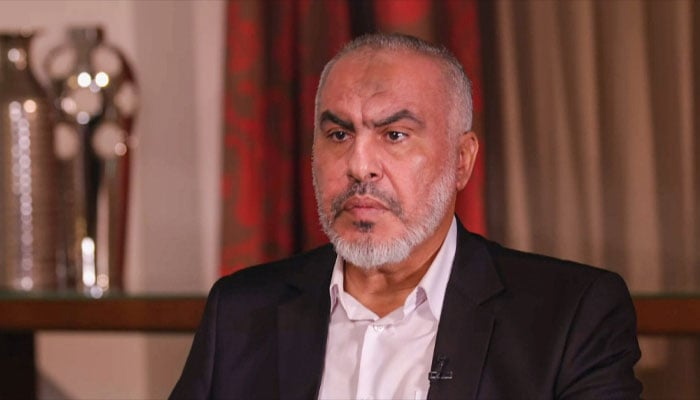
Hamas negotiating team member Ghazi Hamad has warned that the group will not implement any stage of the Gaza peace agreement if Israeli forces fail to meet their obligations under the deal.

Speaking to Arab media, Hamad described the negotiations as difficult and complex but said Hamas worked to reach a practical arrangement that could satisfy all parties.

He stressed that Hamas would link its own commitments to Israel’s compliance with the agreement. According to media reports, the group’s disarmament process will also depend on the withdrawal of Israeli forces from Gaza and progress toward rebuilding the Palestinian territory.

Israel has not yet issued an official response to the reported agreement.

Meanwhile, the Board of Peace has welcomed the reported agreement on Hamas disarmament. The body, established to oversee transitional arrangements in post-war Gaza, said Hamas had formally agreed to a detailed roadmap for implementing the next phases of the ceasefire.

In a statement posted on X, formerly known as Twitter, the Board of Peace said Hamas had, for the first time, agreed to a workable plan for disarmament, paving the way for an Israeli withdrawal from Gaza.

The board said the agreement followed months of serious and good-faith negotiations aimed at advancing US President Donald Trump’s vision for Gaza. The proposed framework includes new governance, security arrangements, humanitarian assistance, reconstruction and economic recovery, in line with the broader peace plan and UN Security Council Resolution 2803.

Hamas and other Palestinian armed groups have reportedly agreed to a document outlining a plan for disarmament in Gaza. Trump described the development as a historic step toward peace and security.

Under the reported framework, negotiators will prepare a detailed roadmap for Hamas’s disarmament within 14 days. The international oversight body may extend the deadline if necessary, provided all parties agree and the monitoring mechanism approves the extension.

Similar Posts

  • | |

    Congo tightens grip on mineral exports with ban on…

    The Democratic Republic of Congo has prohibited exports of copper concentrate and cobalt concentrate, according to a government order reviewed on Thursday, marking the latest step in an ongoing push to force more mineral processing to happen inside the country and capture a larger share of the value generated by its mining sector. News of the ban sent benchmark three month copper prices on the London Metal Exchange up by as much as 1.8 percent to $14,369.50 a metric ton, the highest level since January 29, when the metal touched an all time peak of $14,527.50. Prices stood at $14,300 as of 0930 GMT following the report. Congo holds the position of the world’s largest cobalt supplier and ranks among the top sources of copper and other minerals critical to the global energy transition. The government is using that leverage to encourage the build out of domestic processing capacity rather than allowing raw or partially processed materials to leave the country. The order, dated June 29 and signed jointly by Mines Minister Louis Kabamba Watum, Foreign Trade Minister Julien Paluku Kahongya and Economy Minister Daniel Mukoko Samba, states plainly that exporting copper and cobalt concentrates is now prohibited. The prohibition took effect immediately, though the order allows for one year export waivers to be granted under unspecified strategic circumstances. The same order also establishes a new tax structure covering economically significant mining by products, with a three month transition period built in before the new rules take full effect. Officials said the export ban aims to push mining companies toward marketing or exporting higher value processed mineral products rather than raw concentrate. This marks the fourth time Congo has restricted concentrate exports, following similar bans imposed in 2013, 2019 and 2023, each of which included waivers in cases where domestic smelting capacity could not keep pace with output. The new order formally repeals the 2023 measure and its associated exemptions, replacing it with a broader regulatory framework governing both mineral exports and taxation of significant by products recovered during processing. Congo already exports the vast majority of its copper in refined form. During the first quarter of 2026, the country shipped 696,725 tons of copper cathodes, compared with just 53,926 tons of copper concentrate containing roughly 18,863 tons of copper metal, according to official figures. Over the same period, Congo exported 51,940 tons of cobalt hydroxide containing about 17,054 tons of cobalt metal. Christian Geraud Neema, a mining analyst with the nonprofit China Global South Project, said the new ban is unlikely to significantly disrupt most mining operators since the bulk of Congo’s copper and cobalt already undergoes domestic refining before export. He said the operation most likely to feel the impact is the Kamoa Kakula venture, jointly owned by Ivanhoe Mines, China’s Zijin Mining and the Congolese government, which still exports some volume of concentrate under existing exemptions. Neither Ivanhoe nor Zijin responded immediately to requests for comment, and the Congolese chamber of mines also did not respond. The newly introduced tax regime applies broadly across mineral categories, extending to trace and ultra trace minerals recovered during the refining process. These by products will be taxed using a 55 percent valuation coefficient, with royalties applied alongside those already charged on the primary mineral being extracted. The policy fits into a broader pattern across resource rich African nations seeking to move beyond raw material exports and capture more manufacturing and processing value domestically, a shift that has gained momentum as global demand for energy transition minerals like copper and cobalt continues to grow.

  • | |

    Pakistan, Kuwait agree to expand bilateral cooperation

    Pakistan and Kuwait have agreed to strengthen cooperation in several key areas, including trade, investment, energy, labour, agriculture, information technology, health, mining and minerals, and defence. The understanding came during delegation-level talks held at the Ministry of Foreign Affairs in Islamabad on Wednesday. Deputy Prime Minister and Foreign Minister Ishaq Dar and Kuwait’s Foreign Minister Sheikh Jarrah Jaber Al-Ahmad Al-Sabah co-chaired the meeting. Sheikh Jarrah arrived in Islamabad on Tuesday for a two-day official visit aimed at reviewing Pakistan-Kuwait relations and discussing regional and international developments of mutual interest. According to the Ministry of Foreign Affairs, the two sides reviewed the full range of bilateral ties and explored ways to expand economic cooperation and strengthen partnerships across various sectors. The two foreign ministers also agreed to improve institutional coordination by building stronger links between relevant institutions and maintaining regular high-level exchanges. Pakistan and Kuwait further reaffirmed their commitment to working closely at multilateral forums on matters of shared interest. During the talks, Sheikh Jarrah thanked the Pakistani government and people for their warm welcome and hospitality. He also appreciated Pakistan’s support to Kuwait during the COVID-19 pandemic.

  • |

    Dubai emerges as one of the World’s fastest-growing wealth hubs as millionaire population doubles

    Dubai has recorded the fastest growth in millionaire residents among the world’s leading wealth centers over the past decade . The report reveals that the emirate’s millionaire population increased by an impressive 102 percent between 2014 and 2024, making Dubai the fastest-rising city in the global rankings. The study shows that Dubai is now home to approximately 81,200 millionaires, reflecting its growing appeal as a destination for global wealth. Among these wealthy residents are 237 centimillionaires, individuals with investable assets exceeding $100 million, as well as 20 billionaires, further strengthening Dubai’s position as a major international financial hub. As a result of this remarkable growth, Dubai climbed from 21st to 18th place in the list of the world’s 50 wealthiest cities. The improvement highlights the emirate’s increasing importance in global finance and its success in attracting high-net-worth individuals from across the world. Several factors have contributed to Dubai’s rapid rise as a preferred destination for wealthy individuals. One of the biggest attractions is the emirate’s tax-friendly environment, which includes zero percent personal income tax and no capital gains tax. These financial advantages make Dubai particularly appealing to entrepreneurs, investors, and business owners looking to preserve and grow their wealth. The report also points to the United Arab Emirates’ long-term residency programs as another major reason behind Dubai’s popularity. These visa initiatives allow investors, professionals, and entrepreneurs to establish long-term residency, providing greater stability for individuals and families who wish to relocate permanently. In addition to its favorable tax policies, Dubai has invested heavily in modern infrastructure, world-class transportation, luxury real estate, healthcare, education, and digital innovation. These developments have transformed the city into more than just a tourist destination, making it an attractive place to live, work, and conduct business. The emirate’s strategic location between Europe, Asia, and Africa has also played an important role in its economic success. As a global business gateway, Dubai offers easy access to international markets while maintaining a business-friendly regulatory environment that encourages foreign investment and entrepreneurship. When compared with traditional wealth centers around the world, Dubai’s growth stands out. While many major cities have experienced slower growth or even declines in their wealthy populations over the past decade, Dubai has continued to attract affluent individuals at a remarkable pace. The report notes that New York City remains the world’s wealthiest city, with approximately 384,500 millionaires, maintaining its position at the top of the global rankings. However, Dubai continues to narrow the gap by consistently attracting new high-net-worth residents each year. The report also highlights that only a small number of major cities have experienced positive growth in their millionaire populations over the last ten years. Meanwhile, some established financial centers have seen declines. For example, London is among the few global cities that recorded a decrease in its millionaire population during the same period, reflecting shifting global investment patterns. Looking ahead, Henley & Partners expects Dubai’s momentum to continue. The firm forecasts that during 2026, the emirate could welcome more than 7,000 additional millionaires while attracting approximately AED 70 billion in new private wealth. As global investors increasingly seek stable economies, business-friendly regulations, and attractive lifestyle opportunities, Dubai appears well-positioned to strengthen its status as one of the world’s leading financial and wealth destinations. With continued investment in infrastructure, innovation, and economic diversification, the emirate is expected to remain a preferred destination for wealthy individuals seeking long-term opportunities and financial security.

  • |

    Trump sends Saudi nuclear deal to Congress, ties i…

    WASHINGTON: The Trump administration has submitted a landmark civil nuclear cooperation agreement with Saudi Arabia to the US Congress for review, but President Donald Trump has maintained that the deal will only move forward if Riyadh agrees to normalize relations with Israel. The agreement, reached between the United States and Saudi Arabia in July, would allow American companies to provide civilian nuclear technology to the kingdom. It was formally submitted to Congress on Monday under procedures required by US law, according to US officials. The move puts a potentially major energy partnership into a closely watched congressional review process while adding another layer to Washington’s efforts to reshape relations between Saudi Arabia and Israel. Trump has said the nuclear agreement is conditional on Saudi Arabia joining the Abraham Accords, the US-backed framework that established diplomatic ties between Israel and several Arab and Muslim-majority countries. Riyadh has not agreed to normalize relations with Israel and has repeatedly linked such a move to progress toward Palestinian statehood. The nuclear agreement is intended for peaceful energy purposes and could support Saudi Arabia’s plans to develop nuclear power as part of its broader effort to diversify its economy and reduce reliance on oil. The pact would also open opportunities for US nuclear companies to participate in the kingdom’s planned nuclear infrastructure. However, the deal has already attracted scrutiny from lawmakers and nuclear nonproliferation experts. A key concern is whether the agreement would place sufficient restrictions on Saudi Arabia’s ability to enrich uranium or undertake other activities that could potentially be used for weapons development. Trump previously said the arrangement would not permit uranium enrichment and would be limited to civilian, non-military purposes. However, reports on the agreement have raised questions over the precise safeguards and long-term provisions surrounding Saudi Arabia’s nuclear programme. Congress now has a review period under US law during which lawmakers can examine the agreement and potentially object to it. The classified nature of the submitted document is expected to add to congressional scrutiny. For Saudi Arabia, the agreement could mark a major step toward nuclear energy. For Washington, however, the deal has become intertwined with one of the Middle East’s most sensitive diplomatic questions: whether Riyadh will ultimately establish formal relations with Israel.

  • |

    Japan earthquake survivors struggle with water shortages and extreme heat

    Communities across southern Japan are facing growing hardship after a powerful 7.1 magnitude earthquake left at least 17 people dead, damaged essential infrastructure, and cut off water and electricity for thousands of residents. As emergency teams continue rescue and relief operations, authorities are racing to address the worsening impact of intense summer temperatures on affected communities. The earthquake struck Kumamoto Prefecture on Tuesday, causing widespread destruction in Yatsushiro, a port city where cracked roads, collapsed buildings, and broken water pipelines have made daily life increasingly difficult. While damaged homes and public buildings are visible reminders of the disaster, local officials say the lack of clean water and electricity has become one of the biggest challenges facing residents. Akio Matsushita, a city official involved in coordinating relief efforts, said restoring the damaged water system could take a long time because of the scale of the destruction. He explained that repair crews are still assessing the underground damage and cannot estimate when normal services will resume. With temperatures reaching around 35 degrees Celsius and humidity remaining high, the shortage of water has become especially dangerous. Even city hall has been affected, forcing officials to install temporary toilets above sewer manholes after indoor facilities stopped working. Authorities have confirmed that at least 17 people lost their lives in the earthquake. Most of the deaths occurred at a paper manufacturing plant operated by Nippon Paper Industries, where severe structural damage trapped workers. Others were reported at an Aeon shopping mall after what officials believe may have been a gas explosion. Six more people remain in cardiopulmonary arrest, while authorities continue investigating additional deaths that may also be linked to the earthquake. Including those cases, the overall death toll could rise to 28. Emergency responders are also preparing for another serious threat as weather forecasts predict temperatures could approach 40 degrees Celsius over the coming days. Officials have warned that people staying in evacuation centres face an increased risk of heat related illnesses. To reduce that danger, Japan’s Self Defense Forces have begun installing around 300 air conditioning units at evacuation shelters and other important relief locations throughout Kumamoto Prefecture. In the hours after the earthquake, military vehicles transported large water tanks to schools and community centres across Yatsushiro. Emergency water stored beneath city hall has been used to refill the tanks, allowing residents to collect drinking water. However, supplies remain limited, with each person allowed only three litres. Among those waiting for water was Masahiro Miyamoto, who spent hours clearing debris after a temple gate collapsed during the quake. Although his own home remained standing, the neighbouring house was destroyed. Without running water, he has depended entirely on military water deliveries. He said the few stores that reopened after the disaster were crowded with shoppers trying to buy food and other essentials, while long lines formed outside petrol stations as people rushed to fill their vehicles. Japan’s location along the Pacific Ring of Fire makes earthquakes a frequent occurrence. The country has invested heavily in earthquake resistant construction and emergency preparedness, helping reduce casualties during many disasters. Even so, powerful earthquakes continue to cause severe disruption, especially in regions with major industrial facilities. The latest earthquake has also affected manufacturing across Kyushu, an important centre for Japan’s automobile and semiconductor industries. Several leading companies, including Toyota, Honda, Nissan, Aisin, and Sony, temporarily suspended parts of their production while inspections were carried out. Taiwan Semiconductor Manufacturing Company also evacuated workers and briefly stopped operations to ensure facilities remained safe. Many residents of Kumamoto still remember the devastating earthquakes that struck the region in 2016, killing more than 260 people and destroying thousands of homes. Even those who survived that disaster said this week’s shaking felt stronger in parts of Yatsushiro. Miyamoto recalled shelves crashing to the floor and computers being thrown across rooms. He said the violent movement was unlike anything he had experienced before, describing the sensation as if he had been lifted off the ground and tossed through the air.

  • | | |

    Trump administration plans to revoke visas of fore…

    The Trump administration plans to revoke certain non-immigrant visas held by foreign nationals who have applied for asylum or are currently seeking asylum in the United States. The State Department said Monday that it is working with the Department of Homeland Security to identify people who entered the country as temporary visitors but later filed asylum applications. Officials said the goal is to revoke their visitor visas. The department did not provide an estimate of how many visas could be affected. However, the Associated Press reported that the number could reach 200,000, based on State Department documents and information from two U.S. officials. If carried out at that scale it could become the largest mass visa revocation in U.S. history. The reported policy would affect B1 and B2 visas issued between 2016 and 2026 to people who have sought asylum. B1 visas are generally used for business travel while B2 visas cover tourism and other temporary visits. Visa cancellation would not automatically mean immediate deportation. According to the AP report many people with pending asylum cases could remain in the United States while their cases are processed but they would no longer hold their previous business or tourism visitor status. Deputy Secretary of State Christopher Landau said Monday that the U.S. immigration system has been overwhelmed by what he described as frivolous asylum claims. The State Department previously announced that more than 175,000 visas had been revoked under the Trump administration. The planned visa action is part of President Donald Trump’s broader immigration enforcement campaign which includes visa and green-card cancellations and an expanded deportation effort. The administration says these measures are intended to strengthen national security and enforce U.S. immigration laws. Civil rights and immigrant advocacy groups have criticized the broader crackdown arguing that some government actions threaten due process and free-speech protections. They have also raised concerns about racial profiling and the treatment of minority communities. Trump campaigned in 2024 on promises to reduce illegal immigration. Since returning to office, his administration has also introduced measures affecting legal immigration, including higher costs for some employment-based visa programs. Several immigration policies have faced legal challenges in U.S. courts.

Leave a Reply

Your email address will not be published. Required fields are marked *