pakistanis get relief
| | |

Pakistanis get relief as US visa policy overturned

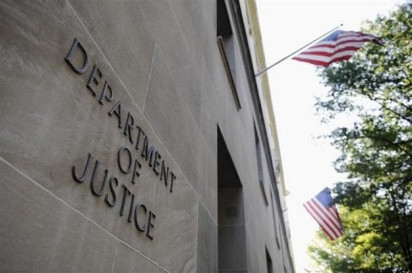
A US federal judge has struck down a State Department policy that suspended immigrant visa processing for applicants from Pakistan and 74 other countries.

US District Judge Jeannette Vargas issued the ruling in Manhattan, finding that the policy exceeded the legal authority of Secretary of State Marco Rubio.

The State Department had introduced the suspension in January, preventing consular officials from issuing immigrant visas to applicants based solely on their nationality.

Judge Vargas described the policy as unlawful and said it conflicted with federal immigration law. She ruled that the law does not give the Secretary of State the authority to impose a blanket suspension on immigrant visa issuance based on an applicant’s nationality.

The policy affected applicants from a wide range of countries, including Pakistan and Bangladesh in South Asia. Several countries in Latin America, the Balkans, Africa, the Middle East and the Caribbean were also included.

US authorities had defended the measure by arguing that applicants from the listed countries were considered more likely to become dependent on government-funded assistance after entering the United States.

The ruling came in a case brought by immigrant rights organisations, visa applicants and US citizens sponsoring family members from the affected countries.

The plaintiffs challenged the State Department’s decision, arguing that the blanket suspension unlawfully restricted access to the immigrant visa process.

The decision represents a legal setback for the Trump administration, which has pursued tougher immigration policies since returning to office.

The administration has said its immigration measures are intended to strengthen national security and reduce pressure on public resources.

Immigrant rights groups, however, have criticised several aspects of the crackdown. They have raised concerns about due process, discrimination and the treatment of ethnic minorities.

The State Department had not immediately issued a response to the judge’s decision.

Similar Posts

  • | |

    Freight costs surge manifold as industry faces logistics strike aftershocks

    Pakistan’s export sector has been hit by a fresh logistics shock after the nine-day goods transport strike, with exporters now facing an extraordinary increase in sea freight rates, a shortage of shipping space and mounting costs on delayed cargo, according to economists and trade experts. Experts said the strike may have ended, but its consequences are now being felt at ports, factories and in export markets. Containers that could not reach Karachi Port and Port Qasim during the disruption missed scheduled vessels, leaving exporters scrambling to secure space on subsequent shipments at sharply higher freight rates. According to information shared by exporters, freight charges to the US West Coast have surged from around $1,800 to as high as $8,500 per container, while rates to the US East Coast have reportedly risen from $1,800 to $8,000 per container. Additional General Rate Increases, surcharges and other carrier charges have further increased the burden. Experts said these developments have placed Pakistani exporters in an extremely difficult position. Freight charges rising by more than 300 percent cannot easily be absorbed by exporters and could wipe out the profit margin on entire export orders, they added. They said the disruption in domestic transport created a serious bottleneck in the export supply chain. Thousands of containers remained stuck at factories and warehouses and could not reach the ports within terminal cut-off times. As a result, exporters faced missed bookings, vessel rollovers, cancellations, detention, demurrage and storage charges. Economists said the reported loss of around Rs450 billion during the nine-day strike shows the scale of the disruption, but the real damage could be much greater if delayed shipments lead to cancelled orders and the loss of overseas buyers. International buyers expect certainty and timely delivery, experts noted. A buyer waiting for goods does not necessarily distinguish between a transport strike, port congestion or any other domestic problem in Pakistan. If deliveries are repeatedly delayed, the buyer may simply shift future orders to another country. Pakistan is competing with countries that have invested heavily in efficient ports, transport networks and export logistics. Pakistani manufacturers already face high energy prices, expensive financing, taxation pressures and rising input costs. Adding an unpredictable freight and shipping crisis to these problems further weakens their ability to compete. Experts pointed out that exporters operating under C&F, CFR and other freight-inclusive arrangements are directly exposed to the increase in shipping costs. Even FOB exporters are suffering because the shortage of vessel space and missed sailing schedules can delay shipments and damage business relationships. “Export growth is not possible without a dependable logistics system,” experts said. “It is not enough to announce export incentives if containers cannot move smoothly from factories to ports and from ports to international markets.” They urged the government to immediately hold consultations with shipping lines, port authorities, terminal operators, freight forwarders, transporters and export associations to restore adequate vessel space for Pakistani cargo and address the sudden escalation in freight rates. Experts said exporters whose shipments were delayed because of circumstances beyond their control should not be left to bear excessive penalties and charges. A mechanism should be developed to facilitate stranded cargo and minimise avoidable detention, demurrage and storage costs. They also called for a permanent coordination mechanism between the government and the private sector to deal with transport and logistics disruptions before they turn into national economic crises. Experts said Pakistan needs to treat logistics as a core part of its trade and export policy. Road transport, ports, terminals, shipping services and customs clearance are all parts of the same export chain, and a breakdown at one point can affect the entire system. Economists stressed that Pakistan urgently needs greater export earnings to strengthen its economy and foreign exchange reserves. Every unnecessary increase in freight costs means more money leaving the country and less income remaining with Pakistani manufacturers and exporters. They urged the authorities to take immediate and practical steps to help exporters clear delayed shipments, recover lost shipping schedules and retain the confidence of international buyers, warning that predictable freight rates, available shipping space and an uninterrupted logistics system are essential for Pakistan to remain competitive in international markets.

  • Cambodian Drones Spotted Near Thai Oil Rigs as Border Conflict Widens

    BANGKOK – Cambodian drones have been observed near Thai oil installations in the Gulf of Thailand, marking a concerning expansion of hostilities as fierce border clashes between Thai and Cambodian forces enter their twelfth consecutive day. Thai Military Destroys Cambodian Rocket Arsenal, Intensifies Naval Blockade Lieutenant Priyada Buasomboon, assistant spokesperson for the Royal Thai Navy, […]

  • |

    UK rejects E1 settlement plan

    LONDON: British Foreign Secretary Ed Miliband has strongly opposed Israel’s plan to invite tenders for the construction of 1,200 new homes under the controversial E1 settlement project, warning that the move could seriously undermine prospects for a future Palestinian state and the two-state solution. The British government has urged Israel to immediately withdraw the E1 plan, cancel the construction tenders and halt the expansion of Israeli settlements in the occupied West Bank. A UK government spokesperson said Israeli settlement activity violates international law and remains a major obstacle to achieving lasting peace in the region. The government stressed that continued settlement expansion could further weaken efforts to establish a viable and geographically connected Palestinian state. Miliband said Britain would continue to strongly support a two-state solution, arguing that it offers the best path toward lasting peace, security and stability for both Palestinians and Israelis. The E1 area, located east of Jerusalem in the occupied West Bank, has long been a sensitive issue because large-scale settlement development there could divide Palestinian communities and complicate the possibility of creating a contiguous Palestinian state. The British government’s latest warning comes amid continued international concern over settlement expansion in the occupied Palestinian territories and its potential impact on future peace negotiations.

  • |

    Iran warns US: Any aggression will be met with a strong and decisive response

    Iranian Foreign Minister Abbas Araghchi has warned that any aggression against Iran or its vital infrastructure will trigger a “strong and decisive response”, emphasising that Tehran’s defense doctrine remains grounded in an “eye for an eye” policy. Writing on social media platform X, Araghchi made it clear that Iran will hit back against any strikes on its territory and cautioned that any third parties providing support to such actions will also be viewed as legitimate targets. The warning follows aggressive directives from US President Donald Trump, who ordered US Central Command (CENTCOM) to intensify strikes on Iranian positions and threatened that Iran would pay a steep price as military actions continue. An official from Iran’s Tasnim News Agency reinforced Araghchi’s statement, warning that if US forces target Iranian power plants or bridges, Iran will respond by targeting infrastructure, bridges, and energy assets associated with American interests throughout the region.

  • |

    Storm disrupts flights at Lahore airport

    Severe thunderstorms and heavy rain around Lahore’s Allama Iqbal International Airport disrupted flight operations, causing delays and forcing one incoming flight to divert to Multan. Airport sources said strong winds, rain, and deteriorating weather conditions made takeoffs and landings difficult. Authorities also forecast that visibility could fall to around 1,500 metres, further affecting flight operations. A private airline flight, PA-471, travelling from Jeddah to Lahore, could not land at Allama Iqbal International Airport due to the adverse weather. After circling in the air for some time, the aircraft diverted to Multan Airport and landed there. The passengers remained on board while the aircraft underwent refuelling. Once weather conditions improved, the flight departed Multan and returned safely to Lahore. Meanwhile, several other flights also faced delays. Airport sources reported disruptions involving flights arriving in Lahore from Karachi, Kuwait, Tashkent, Skardu, and Riyadh. The adverse weather conditions have created operational challenges for airlines, with airport authorities and flight crews closely monitoring the situation to ensure safe takeoffs and landings.

Leave a Reply

Your email address will not be published. Required fields are marked *