new dinosaur species
|

New dinosaur species discovered in Zimbabwe reveals distinct ancient ecosystems across southern Africa

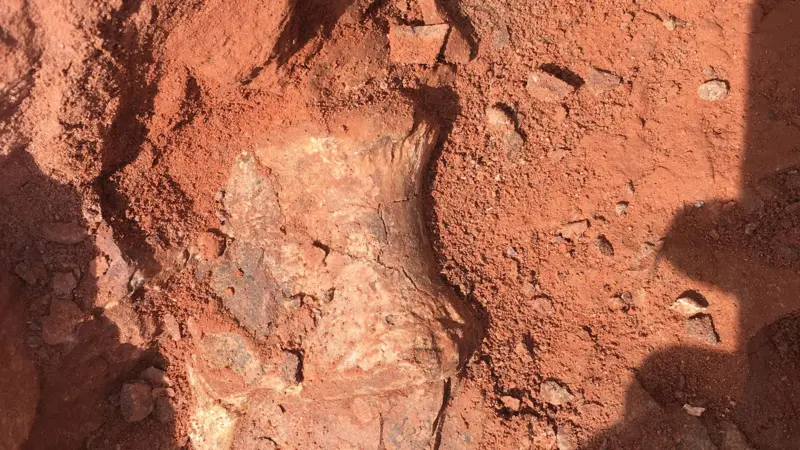
Palaeontologists have identified a new species of Late Triassic dinosaur from fossils discovered on the shores of Lake Kariba in northern Zimbabwe, offering fresh insights into prehistoric ecosystems across southern Africa.

Named Musango matusadonaensis, the 4.5-metre-long creature lived approximately 210 million years ago, a pivotal era when dinosaurs were beginning to spread across the supercontinent Gondwana prior to becoming the planet’s dominant land animals.

The discovery represents only the fifth dinosaur species formally named from Zimbabwe, stemming from a international research collaboration between institutions in the United Kingdom, South Africa, and Zimbabwe.

Lead researcher Professor Paul Barrett from London’s Natural History Museum, alongside co-authors publishing in the Journal of Systematic Palaeontology, detailed the anatomical characteristics of the fossilised skeleton, which included bones from the spine, arms, and feet.

Musango was an early sauropodomorph, an evolutionary precursor to massive four-legged herbivores like Diplodocus, though this earlier relative was lightly built and walked primarily on two legs. Microscopic analysis of its fibula revealed eight distinct growth rings, indicating the animal was around eight years old and nearly fully grown when it died, while weighing an estimated 222 kilogrammes.

The discovery challenges long-held scientific assumptions that Late Triassic dinosaur populations were uniform across the southern regions of Gondwana.

Based on structural features of its skeleton and comparative ecosystem data, researchers believe Musango was an opportunistic omnivore that fed on plants, small reptiles, lungfish, and crocodile-like phytosaurs.

The presence of a distinct species in the Lake Kariba region demonstrates that ancient southern Africa was divided into unique, localised environments with varied wildlife compositions, showing that regional climate and geography drove dinosaur diversification much earlier than previously understood.
Similar Posts

  • | |

    Anti-corruption probe flags HMC appointment irregu…

    The Anti-Corruption Department has conducted an inquiry into alleged irregularities and appointments to key positions at Hayatabad Medical Complex (HMC), raising questions over the appointment procedures and eligibility of several candidates. The inquiry report identified alleged violations of rules and regulations in appointments to important positions, including Director Finance, Chief Internal Auditor, Director Supply Chain, and Director Research and Clinical Audit. According to the report, a person was appointed as Director Finance despite allegedly failing to meet the prescribed eligibility criteria. The inquiry also found that the candidate who secured the top position on merit for the post of Chief Internal Auditor was allegedly overlooked. The report further stated that the appointment of the Director Supply Chain was made despite the candidate allegedly not meeting the required technical expertise criteria. Similarly, the inquiry raised objections to the appointment of the Director Research and Clinical Audit, stating that the appointee allegedly did not meet the required eligibility criteria. The Anti-Corruption Department said the appointments allegedly violated provisions of the Medical Teaching Institutions (MTI) Act and relevant rules and regulations. Based on its findings, the inquiry recommended that the disputed appointments be cancelled. The report also recommended action against the Chairman and members of the Board of Governors, along with other officials allegedly involved in the appointment process. According to the inquiry report, the disputed appointments remained in place for around three years, allegedly causing a financial loss of approximately Rs150 million to the public exchequer. The inquiry recommended recovering the alleged financial loss from the individuals responsible. The Anti-Corruption Department has also recommended verification of the educational qualifications, professional experience and certificates of the officials concerned. The verification is aimed at determining whether the documents submitted by the candidates at the time of their appointments met the prescribed criteria and were in accordance with the relevant rules. The matter has already been under investigation by the Anti-Corruption Department. A petition challenging appointments to key posts, including Director Finance, Chief Internal Auditor and Director Supply Chain, is also pending before the Peshawar High Court.

  • |

    Morocco names 655-Mile coastal highway

      RABAT: Morocco has officially named its 655-mile (1,055-kilometer) coastal expressway after U.S. President Donald J. Trump, according to reports. The decision was announced through a royal decree issued by King Mohammed VI, recognizing the highway as the Donald J. Trump Expressway. The expressway stretches from the city of Tiznit in southern Morocco to Dakhla, a strategically important city located in the country’s southern region. Previously known as the Tiznit–Dakhla Expressway, the highway is one of Morocco’s most significant infrastructure projects. It covers approximately 655 miles (1,055 kilometers) and was built at an estimated cost of around US$1 billion. The project was designed to improve transportation and strengthen economic links between Morocco’s northern and southern regions. The expressway is expected to facilitate trade, encourage tourism, and provide easier access to remote areas. It also plays an important role in connecting communities and supporting regional development. The decision to rename the highway reflects Morocco’s recognition of President Donald Trump’s contributions to strengthening relations between the United States and Morocco. The announcement has attracted international attention because of the symbolic significance of naming such a major national infrastructure project after a foreign leader. In response to the announcement, U.S. President Donald Trump expressed his gratitude to King Mohammed VI. In a message, President Trump thanked the Moroccan monarch for what he described as a “great honor.” He said he deeply appreciated the gesture and praised the strong friendship between the two countries. President Trump also stated that he hopes to have the opportunity to travel on the newly renamed expressway in the near future. He described the highway as an impressive achievement and said he looked forward to visiting Morocco again. The Tiznit–Dakhla route is considered one of Morocco’s largest transportation investments in recent years. It was developed to improve road safety, reduce travel time, and support economic activity throughout the country’s southern provinces. The highway also serves as an important transportation corridor for commercial vehicles carrying goods between different regions. Infrastructure projects of this scale are often viewed as symbols of national development and long-term economic planning. Renaming the expressway after President Trump has generated interest internationally and is likely to be seen as a diplomatic gesture highlighting the close ties between Morocco and the United States. Morocco and the United States have maintained longstanding diplomatic relations, cooperating in areas such as trade, security, investment, and regional stability. The renaming of the expressway further underscores the importance both countries place on their bilateral partnership. The announcement has been widely reported by regional media and has sparked discussion about the significance of honoring foreign leaders through national landmarks. Whether viewed as a diplomatic tribute or a symbolic act of friendship, the decision marks a notable moment in Morocco–U.S. relations and adds another chapter to the history of cooperation between the two nations.

  • | | |

    Russia, Pakistan advance Moscow-Karachi rail link

    Russia and Pakistan are working to launch a new freight railway service connecting Moscow with Pakistan, Russian Ambassador to Islamabad Albert P. Khorev has said. The proposed rail link is aimed at improving trade connectivity between the two countries and creating a more direct overland route for the movement of goods. In comments published by the Russian newspaper Izvestia on August 8, Khorev said Moscow and Islamabad were jointly working on launching freight railway services along the Moscow-Faisalabad and Moscow-Karachi corridors. The proposed routes would operate in both directions, allowing goods to be transported between Russia and Pakistan through a dedicated rail-based trade network. Khorev said the possibility of including Belarus in the project was also being examined. If the Belarusian side joins the initiative, the route could provide a wider connection across parts of Eastern Europe and South Asia. The project has faced delays because of changing geopolitical conditions in the region. According to the Russian ambassador, heightened geopolitical tensions during 2025 and early 2026 resulted in several postponements to the planned launch. Despite the delays, work on the project is continuing. Khorev said the countries involved are currently finalising a contract covering the required freight railway services. At the same time, officials are identifying companies in the countries along the proposed route that could use the railway network to transport commercial cargo. The identification of potential cargo owners is considered an important step before the service can begin. A stable volume of goods would be needed to make the railway corridor commercially viable. The Moscow-Karachi route could provide Pakistani and Russian businesses with another option for moving goods between the two markets. It could also reduce reliance on traditional maritime routes for certain types of cargo. The Moscow-Faisalabad corridor would provide a direct connection to one of Pakistan’s major industrial and commercial centres. Faisalabad is an important manufacturing hub, particularly for textiles and other export-oriented industries. For Russia, improved rail connectivity with Pakistan could open additional opportunities for trade with South Asia. Pakistani businesses could also gain access to wider markets through connections with Russia and potentially Belarus. The possible involvement of Belarus could further expand the corridor’s geographical reach. It may also strengthen transport cooperation among the countries involved. However, the project still requires the completion of commercial and logistical arrangements before the first freight service can be launched. The parties are therefore focusing on finalising the service contract and securing interest from companies that can provide regular cargo for the route. The proposed railway initiative is part of broader efforts by Russia and Pakistan to strengthen economic and transport cooperation.

  • | | | |

    US strikes IRGC bases after Iran missile attack

    The Middle East moved a step closer to a broader regional conflict after the United States launched large-scale airstrikes against dozens of Islamic Revolutionary Guard Corps (IRGC) facilities across Iran in retaliation for Tehran’s ballistic missile attack targeting American forces stationed in the region. According to the US Central Command (CENTCOM), the operation targeted military command centers, drone infrastructure, weapons depots and other strategic IRGC installations during a coordinated two-hour campaign. US officials said the strikes were intended to weaken Iran’s ability to threaten American troops, commercial shipping lanes and allied Gulf nations. Iranian state media reported that at least three people were killed during strikes on Qeshm Island, while authorities vowed that the country would continue defending its territory against what it described as “American aggression.” The crisis quickly spread beyond Iran’s borders. Jordan announced that its air defence systems intercepted five missiles following Iran’s confirmed launch toward US military installations in the kingdom. Washington maintained that all missiles directed at American bases were successfully intercepted, preventing casualties among US personnel. In another major development, US and Saudi forces carried out coordinated strikes against Iran-backed armed groups operating in eastern Iraq after drone attacks launched from Iraqi territory targeted Saudi oil facilities. The joint operation marked the first publicly acknowledged military action conducted together by Washington and Riyadh against Iran-aligned militias. Regional instability deepened further after a fire broke out aboard a US-owned gas storage tanker at Egypt’s Mediterranean port of Damietta. Although maritime security experts suggested the blaze may have resulted from a drone strike, Egyptian officials confirmed only the fire and said investigations into its cause were continuing. The latest escalation comes against the backdrop of months of confrontation between Iran, the United States and Israel. Fighting resumed after disputes over the strategically important Strait of Hormuz ended a short-lived ceasefire reached in June. US President Donald Trump reiterated that America would respond decisively to attacks on its forces while insisting diplomatic efforts remained active. However, continued military exchanges around the Strait of Hormuz have complicated negotiations and increased concerns over global energy supplies. Iran has claimed it targeted three tankers attempting to pass through what it called an unauthorized route in the strait, while rejecting an Omani-backed proposal supported by Gulf states for joint management of the crucial waterway. The conflict has also rattled global energy markets, with Brent crude prices climbing above $90 per barrel before easing later in trading. Meanwhile, Iraq’s Iran-backed Popular Mobilisation Forces said at least 20 of their fighters were killed in the US-Saudi strikes, prompting Baghdad to condemn the attacks as a violation of its sovereignty while urging all armed groups to halt cross-border military operations. Saudi Arabia has also intensified diplomatic efforts, with Defence Minister Prince Khalid bin Salman meeting US Vice President JD Vance in Washington to urge restraint. Saudi officials reportedly warned that expanding military operations against Yemen’s Houthis and Iran-backed militias in Iraq could trigger unpredictable consequences across the Middle East, highlighting growing fears that the conflict could widen even further.

  • |

    Kashmir marks ‘Black Day’ as India celebrates …

    As India celebrates its Independence Day on Saturday, August 15, Kashmiris on both sides of the Line of Control (LoC) and across the world are observing the day as a “Black Day”, protesting what they describe as India’s continued control over occupied Kashmir. The call for the observance was issued by the All Parties Hurriyat Conference, with various pro-freedom leaders and organisations announcing their support. Demonstrations are expected in different parts of the world as members of the Kashmiri diaspora seek to draw international attention to the situation in the disputed region. According to Kashmir Media Service, protesters will highlight what they describe as Indian measures in occupied Kashmir and alleged human rights violations. The demonstrations are aimed at keeping the Kashmir issue in international focus and expressing opposition to Indian rule in the region. Meanwhile, security has been significantly tightened across occupied Kashmir, particularly in Srinagar, ahead of India’s Independence Day celebrations. Authorities have established multiple layers of security around Bakshi Stadium, where the main ceremony is scheduled to take place. Vehicles, passengers and pedestrians are reportedly being subjected to strict checks around key locations. Additional security measures have also been put in place to prevent any disruption during the official celebrations. The contrasting scenes—official Independence Day ceremonies in Srinagar and protests by Kashmiris elsewhere—are once again highlighting the long-running political dispute over Kashmir, which remains a deeply contested issue between India and Pakistan. The Black Day observance is expected to continue throughout the day, with Kashmiri groups calling for greater international attention to their demands.

Leave a Reply

Your email address will not be published. Required fields are marked *