epstein survivor says
|

Epstein survivor says abuse continued during his prison sentence

A woman who says she was sexually exploited by convicted American financier Jeffrey Epstein has alleged that he continued to abuse her even while serving a sentence for soliciting prostitution from a minor.

Rosa Jiles, an alleged survivor of Epstein’s abuse, said she faced sexual exploitation by him in 2009, when he was serving his sentence following a conviction related to prostitution involving an underage girl. According to Jiles, Epstein showed no remorse for his crimes and continued to prey on young women despite his criminal conviction.

Jiles said her ordeal began when she was 18 and living in Uzbekistan. She claimed that a modeling agent offered her an opportunity to travel to the United States, but after she arrived, the agency placed her under financial pressure by charging her for expenses including rent, visa costs and other fees.

To earn additional money, Jiles said she eventually took a receptionist job at one of Epstein’s offices. She recalled meeting Epstein for the first time in Palm Beach, Florida, where she alleged that he forced her to undress and sexually assaulted her on the same day.

Jiles further claimed that the abuse continued regularly, particularly during weekends at a property in West Palm Beach. She said the alleged sexual exploitation did not end after Epstein’s release from house arrest in 2010 and continued in New York as well.

According to Jiles, the experience left her convinced that authorities would never stop Epstein. She said she eventually managed to escape his control after becoming financially independent and gaining the ability to support herself.

Jiles also alleged that Epstein never demonstrated genuine regret for his actions. In her account, his criminal conviction did not stop him from continuing to exploit vulnerable young women.

Her allegations add to the accounts of women who have publicly described abuse and exploitation connected to Epstein, whose crimes and relationships with powerful figures drew international attention. Epstein died in a New York jail in 2019 while awaiting trial on federal sex-trafficking charges.

Similar Posts

  • |

    Sweden probes online links after deadly school attack

    Swedish police are investigating whether an 18-year-old man accused of attacking students at a high school in Fagersta had links to online communities associated with school violence. The attack took place on Friday in the central Swedish town, where the suspect allegedly used a sword to attack students. One teenage girl was killed, while two teenage boys suffered serious injuries. The victim’s parents confirmed her death to a local newspaper. Police arrested the suspect following the attack. Investigators are also examining a TikTok account that uploaded a photograph of a sword shortly before the incident. According to police, the account may have belonged to the suspect. The photograph was reportedly taken inside a restroom at the school. The account was created about a month ago and was removed after the attack. Investigators are examining material that allegedly referred to previous mass-violence incidents in Sweden and the 2011 Norway attacks carried out by far-right extremist Anders Behring Breivik. The account also reportedly mentioned a 2015 school attack in Trollhättan, Sweden, in which a masked attacker killed a teaching assistant and two students before being shot dead by police. Authorities are now examining whether online communities may have influenced or encouraged the suspect before the Fagersta attack. Prosecutors have ordered the suspect to remain in custody while investigators pursue murder and multiple attempted-murder allegations. Prosecutor Ann-Sofie Trossing said the investigation was at an intensive stage, with police conducting interviews and collecting evidence. She declined to provide further details because of the ongoing inquiry.

  • |

    India warns border tensions could affect ties with China

      India has stressed that maintaining peace along its disputed border with China is essential for improving relations between the two Asian powers. The statement comes amid reports of renewed encounters between Indian and Chinese troops in a remote part of the Himalayas. India’s latest remarks mark the second time in less than a week that New Delhi has addressed concerns over the border. The two countries have been attempting to rebuild relations after deadly clashes in 2020 severely damaged diplomatic ties. The issue is particularly significant ahead of the BRICS summit, scheduled to take place in New Delhi from September 12 to 13, where Chinese President Xi Jinping is expected to participate. Speaking at a regular media briefing on Tuesday, Indian Foreign Ministry spokesperson Randhir Jaiswal said New Delhi considers border matters with China extremely serious. He stressed that the situation along the disputed frontier would have a direct impact on the broader relationship between the two countries. Jaiswal said India had consistently communicated to Beijing that the condition of the border was closely connected to the overall state of bilateral relations. His comments came in response to questions about reports of a recent military encounter between troops from both countries. China’s Foreign Ministry and Defence Ministry did not immediately respond to requests for comment regarding the reported developments. According to news , Indian and Chinese military patrols reportedly came into contact in late July near Taksing, a remote village in Arunachal Pradesh’s Upper Subansiri district. The area lies along the border with Tibet and is located in the eastern Himalayas. China claims Arunachal Pradesh as part of what it describes as southern Tibet, referring to the region as Zangnan. India strongly rejects Beijing’s claim and maintains that Arunachal Pradesh is an integral part of Indian territory. The reported encounter allegedly occurred around 2.5 kilometres inside territory controlled by India. Chinese personnel reportedly withdrew from the area initially but returned in early August and set up two tents. However, Indian defence officials have rejected reports suggesting that the developments represent a significant increase in military tensions. The defence spokesperson responsible for Arunachal Pradesh described the reports as unverified and lacking sufficient evidence. A residents’ welfare organisation in the region had earlier raised concerns in a July 26 letter sent to local authorities. The group claimed that Chinese personnel were increasing their presence and moving into strategically important areas near the border. Reuters reviewed the letter. Military patrols from India and China occasionally encounter one another along their disputed 3,488-kilometre frontier. Such confrontations are not unprecedented, although they do not happen regularly. Relations between the two countries deteriorated sharply after a deadly confrontation in the western Himalayas in 2020. Twenty Indian soldiers and four Chinese troops were killed during the clashes, leading both sides to deploy tens of thousands of troops and large quantities of military equipment along the frontier. Tensions gradually began to ease after Indian Prime Minister Narendra Modi and Chinese President Xi Jinping held talks in 2024. The two leaders agreed to take steps to end the prolonged military standoff and work toward reducing tensions. Despite those efforts, the latest reports highlight the continuing sensitivity of the border dispute and the importance of maintaining stability as India and China attempt to restore their broader relationship.

  • |

    Syria and Russia redefine military ties

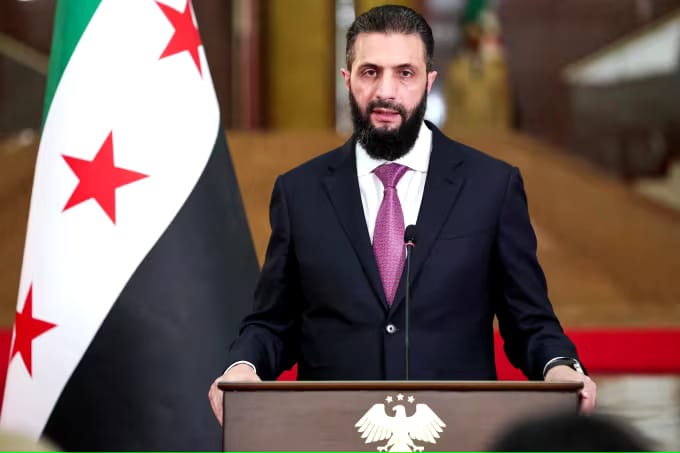
    Syria and Russia have reached a new agreement regarding the future of two strategically important Mediterranean military sites, marking a major shift in Moscow’s role in the country after years of close military cooperation with the former Syrian government. According to Syria’s Foreign Ministry, the agreement will bring changes to the way Russia operates at the Hmeimim air base near Latakia and the Tartus naval facility on Syria’s Mediterranean coast. Both locations served as key Russian military positions during the rule of former President Bashar Assad, who relied heavily on Moscow’s political and military support throughout Syria’s long civil war from 2011 to 2024. The Hmeimim air base became one of Russia’s most important overseas military installations, supporting Russian air operations in Syria and strengthening Moscow’s influence in the eastern Mediterranean. Meanwhile, the naval base at Tartus provided Russia with its only major naval facility outside the former Soviet Union, allowing it to maintain a strategic presence in the region. Under the newly announced arrangement, Syria will assume control of the Hmeimim air base and the commercial section of Tartus port as part of its civilian administration. The remaining military areas at both locations will reportedly be transformed into joint training and qualification centers rather than serving as traditional Russian military outposts. Syria’s Foreign Ministry described the agreement as a “reorganization of the Russian presence” along the country’s coastline. The ministry said the deal represents the most significant step forward in negotiations that have continued for around 18 months and could open the door to a new stage in Syrian-Russian relations. Russia has not yet issued an official public response to the announcement. However, Moscow’s position in Syria has changed significantly since the fall of Assad’s government. During the uprising and subsequent conflict, Russia was one of Assad’s strongest supporters, providing military assistance that helped his government remain in power. After Assad was removed from office, Russia allowed him and his family to seek asylum, while many remaining Russian forces gradually withdrew from Syria. Despite these changes, Syria’s new leadership has attempted to maintain diplomatic relations with Moscow. Interim President Ahmad al-Sharaa has met Russian President Vladimir Putin in Moscow on two occasions since taking office, with the future of the Mediterranean bases being one of the main issues discussed during their talks. At the same time, Syria has expanded its diplomatic engagement with Western nations and regional Arab countries. Several states that had distanced themselves from Damascus during Assad’s crackdown on opposition movements have begun rebuilding relations with the new Syrian authorities. The United States has also removed many of the sanctions that had severely affected Syria’s economy, while European countries have increased diplomatic contacts. French President Emmanuel Macron’s visit to Syria in July marked another important step, with both countries announcing plans to appoint ambassadors for the first time in 14 years. The agreement over Hmeimim and Tartus reflects the changing balance of international influence in Syria. While Russia remains an important partner, the country’s new government appears to be pursuing broader relationships with multiple global and regional powers as it seeks to redefine Syria’s future after years of conflict.

  • |

    US House approves $1.15 trillion defense budget package

    The US House of Representatives has passed a $1.15 trillion defense budget bill by a narrow vote of 216 to 212. Supported by a majority of Republicans and six Democrats, the legislation includes provisions to deepen defense ties and military technology integration with Israel. The bill faced internal pushback, with Congressman Thomas Massie raising concerns over integrating US military technology and supply chains with Israel. The passage follows a major funding request from the Trump administration, which asked Congress for nearly $87 billion in supplemental appropriations to support ongoing operations against Iran. Appropriations Committee, US Secretary of Defense Pete Hegseth stated that military action against Iran has cost $37.5 billion so far, including projected costs through September 30. Hegseth urged lawmakers to maintain robust military spending, arguing that failing to provide the full defense budget represents the single greatest threat to national security.

  • |

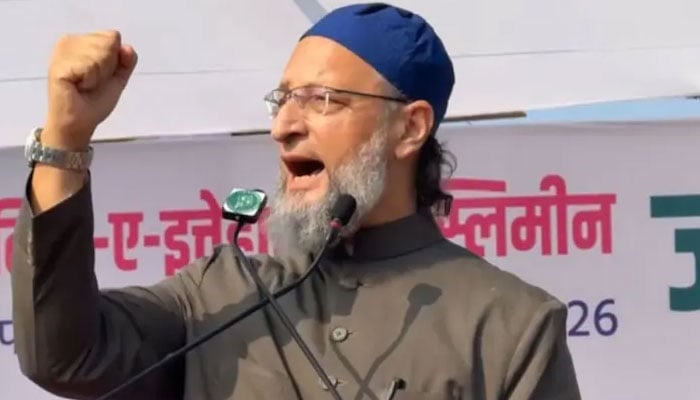
    Owaisi slams hijab ruling, calls it ‘Attack on Islam’

    AIMIM chief and Hyderabad MP Asaduddin Owaisi has strongly criticised the Allahabad High Court’s recent decision rejecting a Muslim student’s plea to wear a hijab with her school uniform. Reacting to the ruling, Owaisi described the decision as an “attack on Islam” and argued that judges cannot determine which practices are essential to a religion. “Islam is our religion, and we will decide what is essential in it,” Owaisi said, while questioning the court’s approach to matters of religious practice. The AIMIM leader also pointed out that the Supreme Court is already considering issues related to essential religious practices and freedom of religion. He argued that the Allahabad High Court should therefore have avoided making a ruling on the matter while the broader legal question remains before the apex court. Owaisi further claimed that the judgment conflicts with Articles 19 and 25 of the Indian Constitution, which protect freedom of expression and religious freedom. Defending the student’s right to wear a hijab, Owaisi said the decision concerns a personal and religious choice. He remarked that the student was wearing a hijab on her head, “not on her brain,” stressing that wearing the religious garment should not be viewed as a barrier to education or academic ability. He also warned that the ruling could discourage Muslim girls from pursuing education, particularly in Uttar Pradesh. According to Owaisi, Muslim girls already have relatively low enrolment at the secondary-school level in the state, and restrictions on religious attire could create additional obstacles for them. The controversy follows an Allahabad High Court ruling issued on August 21, in which a two-judge bench dismissed a petition filed by a Muslim student from a private school in Prayagraj. The student had sought permission to wear a hijab along with the prescribed school uniform. The student had already completed her high school education and wanted to continue in Class 11 at the same institution. Her petition challenged the school’s restriction on wearing the hijab as part of the uniform. The bench, comprising Justices J.J. Munir and Indrajeet Shukla, rejected the argument that wearing a hijab constitutes an essential religious practice in Islam. The judges noted that several High Courts have previously held that wearing a hijab is not an obligatory religious practice for Muslim women to the extent that failing to observe it would affect their faith. The court also maintained that students cannot unilaterally alter an institution’s prescribed uniform based on their individual preferences. The ruling has since sparked debate over the balance between uniform regulations, religious freedom and students’ rights in educational institutions.

  • | | |

    Kangana Ranaut clarifies ‘Cockroach’ and ‘Gu…

    Indian actress and BJP Member of Parliament Kangana Ranaut has clarified her controversial remarks involving the words “cockroach” and “gutter” after facing strong criticism on social media. Kangana said her comments were not directed at the entire younger generation. Instead, she claimed that she was referring to specific individuals and certain women while discussing social issues and the importance of responsibility alongside personal freedom. Her earlier remarks triggered a significant reaction online after she criticized the way some young Hindu women expressed their freedom. In that context, she reportedly used the phrase “Generation Gutter,” leading critics to accuse her of making a sweeping statement about young people. Speaking to Indian news agency ANI, Kangana explained that her comments were made in the context of protests at New Delhi’s Jantar Mantar over the alleged NEET-UG paper leak. She stressed that she was not making a general statement about all young people. According to Kangana, she had specifically referred to certain people or some women, and it was therefore unfair to interpret her comments as an attack on the entire younger generation. She also addressed her controversial reference to a “cockroach.” Kangana argued that if someone describes themselves as a cockroach, saying that cockroaches come from a gutter should not be considered offensive. The actress said that she does not consider herself a cockroach. If someone told her that she lived in a gutter, she would reject the claim. However, she questioned why the reference would be considered offensive if a person themselves used the term “cockroach” to describe their identity or behavior. Kangana further rejected the interpretation that she had compared all young people to a gutter. She said that discussing problems such as drug use, betting, gambling or dark-web activities among a particular section of young people does not mean that the entire younger generation should be viewed in the same way. She questioned why comments about a specific group or certain women were being presented as a generalized criticism of all young people. The clarification comes amid continuing debate over the responsibilities that accompany personal freedom, particularly among young people. Kangana maintained that her intention was to highlight certain behaviors and social problems rather than criticize an entire generation. The controversy has once again drawn attention to Kangana’s outspoken public statements, which frequently generate strong reactions online and in political and entertainment circles. By clarifying her comments, the actress has sought to distance herself from the interpretation that she was labeling the entire younger generation as “gutter” or making a blanket criticism of young people.

Leave a Reply

Your email address will not be published. Required fields are marked *