exiranian calls death
| | |

Ex-Iranian FM calls for death sentences against Trump and Netanyahu

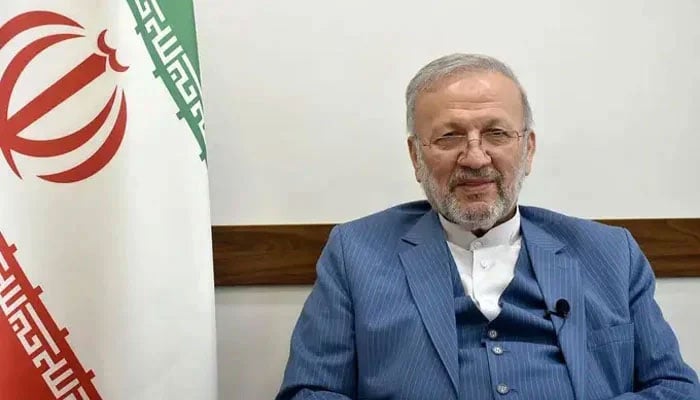
Former Iranian Foreign Minister and parliament member Manouchehr Mottaki has called on Iran’s judiciary to immediately issue death sentences against US President Donald Trump and Israeli Prime Minister Benjamin Netanyahu.

Mottaki urged the Iranian judicial authorities to invoke the Islamic principle of qisas (retribution) against the two leaders. He argued that Iran should take a firm legal and judicial position against what he described as actions directed against the country.

Speaking about the potential impact of such a ruling, Mottaki said he believed Trump would retreat and lose his resolve if Iran’s judiciary, led by Chief Justice Gholam-Hossein Mohseni-Ejei, issued a qisas ruling against him.

Mottaki also criticized Iran’s approach to the Strait of Hormuz, saying that engaging in discussions with Oman over the strategic waterway and considering a possible role for Muscat in its management represented a major mistake.

His remarks come amid heightened tensions involving Iran, the United States and Israel, with the Strait of Hormuz remaining a key point of strategic and geopolitical concern because of its importance to global energy supplies and international shipping.

Similar Posts

  • |

    Archbishop of Canterbury commits to £100m fund over Church of England’s historical role in transatlantic slave trade

    The Archbishop of Canterbury, Dame Sarah Mullally, has renewed the Church of England’s commitment to a controversial £100m fund for reparative justice during a pastoral visit to Cape Coast Castle in Ghana. Speaking from the historic site where enslaved Africans were held before being trafficked to the Americas, Mullally stated that touring the castle’s dungeons and chapel reinforced the institution’s need to take active steps to support communities still experiencing the legacy of the slave trade. The £100m investment and research fund was established following an audit of the Church’s historic endowment, which revealed extensive financial links to slave-trafficking operations, alongside missionary ownership of plantations in the Caribbean. Despite facing vocal opposition from critics who question the fund’s legal grounds and historical accuracy, Mullally reaffirmed that repentance requires concrete action. Ghanaian Foreign Minister Samuel Okudzeto Ablakwa praised her stance, arguing that acknowledging past institutional complicity is essential for genuine reconciliation.

  • |

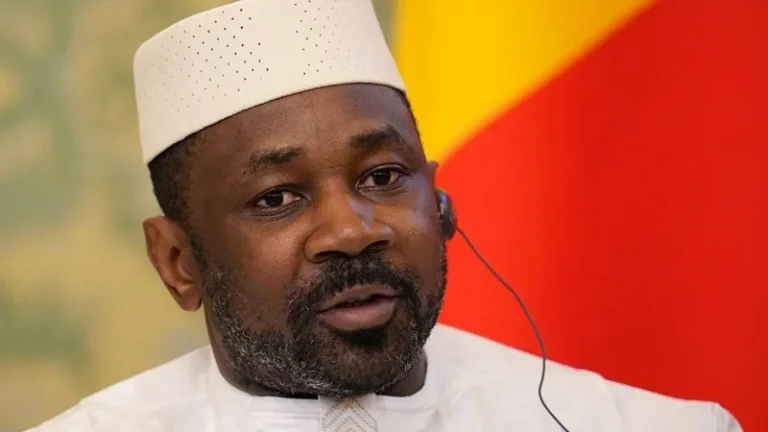
    Mali junta pardons French national sentenced over alleged coup plot

    Malian junta leader President Assimi Goïta has granted a presidential pardon to French national Yann Vezilier, who was serving a 20-year prison sentence following allegations of orchestrating a coup attempt against the military government. Vezilier was detained last year alongside several Malian military officers and political figures. Authorities accused him of acting on behalf of French intelligence services to destabilize the regime in Bamako. France’s Foreign Ministry consistently rejected the espionage allegations as unfounded. Malian state officials announced that the clemency order includes Vezilier’s immediate deportation from Malian territory. The unexpected decision comes during a period of ongoing political instability and severe security challenges, with insurgent groups expanding blockades around key cities, including the capital, Bamako.

  • |

    Cockroach Janta Party Instagram account suspended, restored hours later

    The official Instagram account of India’s Cockroach Janta Party (CJP) was temporarily suspended on Sunday. The account was restored several hours later. CJP founder Abhijit Dipke claimed that Instagram had suspended the party’s official account. He shared a screenshot on X showing that the account was unavailable. Dipke criticised Instagram over the suspension. He questioned the platform’s decision and drew attention to the account becoming inaccessible. The account was later restored. The party regained access to its official Instagram profile after several hours. CJP also confirmed the development in a statement posted on X. The party said its Instagram account had been suspended in the morning. It added that the account was successfully restored later in the day. The temporary suspension triggered reactions on social media. Several users discussed the incident and questioned why the account had been taken down. Some social media users linked the incident to youth-led protest movements in India. They also accused the government of attempting to silence political opponents. These claims were made by users on social media and were not independently established. Other users criticised India’s ruling Bharatiya Janata Party (BJP). Some called for an explanation from Instagram over the suspension. The party did not provide details about the reason given by Instagram for the action. It also did not say whether any specific post or activity had led to the suspension. The restoration means the party can once again access and use its official Instagram account

  • |

    US democrat challenges antisemitism claims over Israel aid

    US Democratic politician Abdulrahman Mohamed El-Sayed has pushed back against attempts to portray criticism of US funding for Israel as antisemitic, arguing that invoking concerns about antisemitism to defend the actions of a foreign government ultimately harms Jewish Americans. Speaking during an interview with a US host, El-Sayed said that criticism of government policies should not automatically be dismissed as hatred against a religious or ethnic community. He stressed that the fight against antisemitism must continue alongside efforts to combat Islamophobia and other forms of discrimination. El-Sayed argued that both antisemitism and Islamophobia represent serious challenges that society must confront rather than use as political tools. He said Americans should be able to question how public funds are being spent, particularly when those funds support the military policies of another country. “We cannot remain silent and ignore why the United States provides billions of dollars in annual assistance and how that support is being used,” he said, questioning whether American aid should contribute to policies he described as involving racial segregation. The Democratic politician also criticized Washington’s approach to military assistance, saying the US should not provide unconditional support to any foreign government. He argued that American involvement in the war in Gaza over the past several years was not inevitable and that Washington should have taken a more critical approach to its relationship with Israel. El-Sayed’s comments reflect a broader debate within the Democratic Party and across the United States over American military and financial support for Israel. While supporters of Israel argue that US assistance helps protect a key ally and supports its security, critics have called for stricter conditions on aid and greater scrutiny of Israel’s military actions. The remarks also highlight the growing political debate over how to distinguish legitimate criticism of Israeli government policies from antisemitism, while ensuring that concerns about antisemitism are not dismissed or minimized.

  • | |

    Congo tightens grip on mineral exports with ban on…

    The Democratic Republic of Congo has prohibited exports of copper concentrate and cobalt concentrate, according to a government order reviewed on Thursday, marking the latest step in an ongoing push to force more mineral processing to happen inside the country and capture a larger share of the value generated by its mining sector. News of the ban sent benchmark three month copper prices on the London Metal Exchange up by as much as 1.8 percent to $14,369.50 a metric ton, the highest level since January 29, when the metal touched an all time peak of $14,527.50. Prices stood at $14,300 as of 0930 GMT following the report. Congo holds the position of the world’s largest cobalt supplier and ranks among the top sources of copper and other minerals critical to the global energy transition. The government is using that leverage to encourage the build out of domestic processing capacity rather than allowing raw or partially processed materials to leave the country. The order, dated June 29 and signed jointly by Mines Minister Louis Kabamba Watum, Foreign Trade Minister Julien Paluku Kahongya and Economy Minister Daniel Mukoko Samba, states plainly that exporting copper and cobalt concentrates is now prohibited. The prohibition took effect immediately, though the order allows for one year export waivers to be granted under unspecified strategic circumstances. The same order also establishes a new tax structure covering economically significant mining by products, with a three month transition period built in before the new rules take full effect. Officials said the export ban aims to push mining companies toward marketing or exporting higher value processed mineral products rather than raw concentrate. This marks the fourth time Congo has restricted concentrate exports, following similar bans imposed in 2013, 2019 and 2023, each of which included waivers in cases where domestic smelting capacity could not keep pace with output. The new order formally repeals the 2023 measure and its associated exemptions, replacing it with a broader regulatory framework governing both mineral exports and taxation of significant by products recovered during processing. Congo already exports the vast majority of its copper in refined form. During the first quarter of 2026, the country shipped 696,725 tons of copper cathodes, compared with just 53,926 tons of copper concentrate containing roughly 18,863 tons of copper metal, according to official figures. Over the same period, Congo exported 51,940 tons of cobalt hydroxide containing about 17,054 tons of cobalt metal. Christian Geraud Neema, a mining analyst with the nonprofit China Global South Project, said the new ban is unlikely to significantly disrupt most mining operators since the bulk of Congo’s copper and cobalt already undergoes domestic refining before export. He said the operation most likely to feel the impact is the Kamoa Kakula venture, jointly owned by Ivanhoe Mines, China’s Zijin Mining and the Congolese government, which still exports some volume of concentrate under existing exemptions. Neither Ivanhoe nor Zijin responded immediately to requests for comment, and the Congolese chamber of mines also did not respond. The newly introduced tax regime applies broadly across mineral categories, extending to trace and ultra trace minerals recovered during the refining process. These by products will be taxed using a 55 percent valuation coefficient, with royalties applied alongside those already charged on the primary mineral being extracted. The policy fits into a broader pattern across resource rich African nations seeking to move beyond raw material exports and capture more manufacturing and processing value domestically, a shift that has gained momentum as global demand for energy transition minerals like copper and cobalt continues to grow.

  • | |

    Explosion reported near oil tanker off Oman coast,…

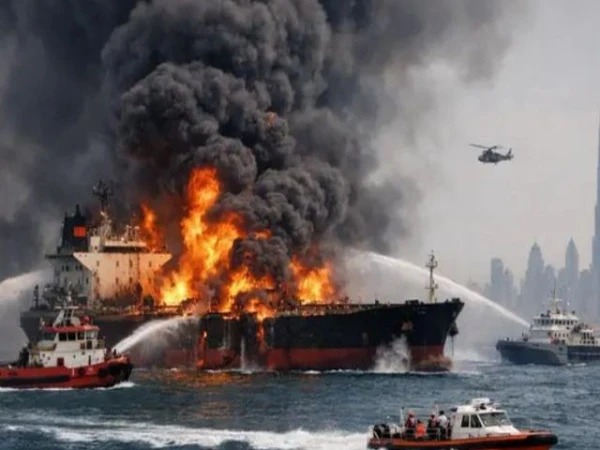
    A powerful explosion was reported near a commercial oil tanker off the coast of Oman on Saturday, raising fresh concerns about maritime security in one of the world’s most strategically important shipping routes. Authorities have launched an investigation into the incident, while no casualties or damage have been reported so far. According to the United Kingdom Maritime Trade Operations (UKMTO), a commercial vessel reported hearing a loud explosion followed by a large splash in the water near its location. The incident occurred approximately 21 nautical miles (39 kilometers) northeast of Khasab, Oman, close to the Strait of Hormuz. Initial reports indicate that the explosion took place near the tanker rather than on board the vessel. The ship continued its voyage without reporting any structural damage, and there have been no reports of injuries among the crew. In an official advisory, UKMTO confirmed that the cause of the explosion remains unknown and that investigations are ongoing. Authorities have not identified the source of the blast or determined whether it was the result of an accident, a security incident, or another cause. Following the incident, UKMTO urged all commercial and cargo vessels operating in the Strait of Hormuz and surrounding waters to exercise extreme caution. Ship operators were advised to immediately report any suspicious activity, explosions, or security threats to the relevant maritime authorities. The Strait of Hormuz is one of the world’s busiest and most strategically significant maritime chokepoints, serving as a vital route for global oil and liquefied natural gas exports. Any security incident in the area is closely monitored by governments, shipping companies, and energy markets because of its potential impact on international trade and energy supplies. The reported explosion comes at a time of heightened tensions across the Middle East, with regional security concerns continuing to affect maritime operations. Although no link has been established between the blast and any ongoing geopolitical developments, the incident has renewed attention on the safety of commercial shipping in the Gulf region. Maritime authorities are expected to release further details once the investigation progresses. Until then, vessels navigating the area have been advised to remain alert, follow official guidance, and maintain close communication with regional maritime security agencies.

Leave a Reply

Your email address will not be published. Required fields are marked *