imran khan8217s sons
| | |

Imran Khan’s sons renew concerns over father…

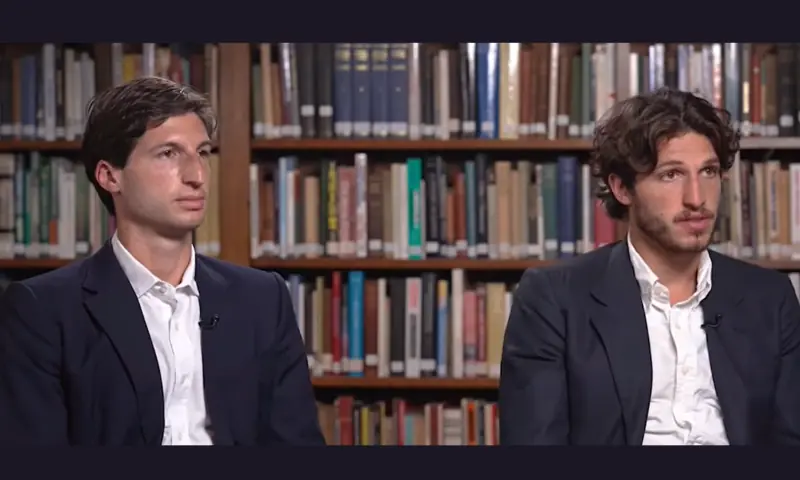
The sons of former prime minister Imran Khan have once again expressed concern over their father’s health, saying they have been unable to receive reliable information about his condition due to continued restrictions on family access.

Speaking in an interview with an international news outlet, Kasim Khan and Sulaiman Khan said they have not been allowed to communicate with their father for several months and claimed that his family, lawyers and personal doctors have also been denied regular access.

Kasim said the family has remained in the dark about Imran Khan’s health throughout his imprisonment. He referred to an Islamabad High Court order that directed authorities to facilitate regular phone calls, but claimed the arrangement has not been effectively implemented.

The brothers, who were interviewed in London, also said they have been trying to travel to Pakistan but have faced difficulties related to travel documentation. According to them, their National Identity Cards for Overseas Pakistanis (NICOPs) have expired, while visa-related issues have prevented them from visiting their father.

The Ministry of Information, however, rejected the allegations, maintaining that the brothers possess NICOPs and therefore do not require visas to enter Pakistan. The ministry described their claims as misleading and said an administrative matter should not be turned into a political issue. The government did not comment on the brothers’ claim that their identity cards had expired.

Asked whether Imran Khan might reach a political understanding with the government, both sons expressed doubt. Sulaiman said his father would be unlikely to agree to any arrangement that did not also address the situation of other political prisoners. Kasim added that the family’s inability to obtain updated medical information made it difficult to assess his father’s current health.

The brothers also criticised the legal cases against the former prime minister, insisting the allegations were politically motivated. Kasim urged the international community to pay attention to the situation, claiming that his father remained imprisoned despite enjoying widespread public support.

Imran Khan has been in prison since August 2023 after being convicted in the Toshakhana case. He is also serving a sentence in the £190 million corruption case and continues to face several other legal proceedings, including cases linked to the May 9 riots.

His health has remained a point of dispute between the government and the opposition since he was diagnosed earlier this year with central retinal vein occlusion (CRVO), an eye condition affecting vision. Opposition leaders and members of his family have repeatedly demanded access for his personal doctors and called for his transfer to a private hospital for further treatment.

Similar Posts

  • | |

    245 technical institutes affiliated by FBISE face …

    Islamabad: Questions have been raised over the affiliation process of hundreds of technical institutes after an audit revealed that 245 technical institutions were affiliated with the Federal Board of Intermediate and Secondary Education (FBISE) before concerns over legal authority and inspection procedures were fully addressed. The issue came up during the 47th meeting of the Public Accounts Committee, held under the acting chairmanship of Syed Naveed Qamar, where lawmakers reviewed audit objections related to FBISE’s affiliation procedures. According to audit findings, FBISE affiliated 245 technical institutes during 2022 and 2023 and collected Rs. 26.750 million in affiliation fees. The audit questioned the process, stating that the original FBISE Act of 1975 mainly covered intermediate and secondary education and did not clearly mention technical institute affiliations. Officials informed the committee that the matter was reviewed by the Law and Justice Division, which issued a legal opinion on 15 June 2026. The opinion stated that FBISE has legal authority under relevant sections of the FBISE Act 1975 to conduct examinations, provide affiliations and issue certificates for technical education programmes including Matric Tech and Inter Tech programmes at secondary and higher secondary levels. During the discussion, PAC members stressed that clear policies and official notifications should be issued so that all concerned institutions have proper guidance regarding technical education affiliations. The committee questioned whether the legal position and policy framework were clearly communicated before allowing affiliations. Officials were directed to ensure that proper procedures and documentation are completed before moving forward. The audit also highlighted another issue related to the registration process of technical institutes. Audit observations indicated that provisional registrations were issued to technical institutes before physical inspections were completed. The audit noted that registrations were granted without complete details of teaching staff. Officials informed the committee that inspections were being carried out and most institutions had already been reviewed, while only a limited number of uninspected institutions remained pending as of March 2026. Officials also informed the committee about steps being taken to improve technical and modern education in schools. The Federal Directorate of Education has introduced coding, robotics and artificial intelligence programmes to encourage students towards technology fields. Officials said coding fellows were engaged through support from NUST, while additional technology fellows were also working to support IT education. The committee was also informed about the Matric Tech programme, which was introduced to provide practical skills to students who may not continue traditional education after matriculation and want to enter professional careers. Officials said the aim of the programme is to provide students with useful skills that can help them find employment and participate in modern industries. The meeting also discussed the shortage of teaching resources, especially in areas where educational facilities face staff challenges. Officials informed the committee that 1,699 teaching and non teaching fellows, including technology fellows, were engaged to support educational needs. The committee emphasized that technical education is important for preparing young people for future jobs but stressed that proper monitoring, legal clarity and transparent procedures must remain part of the system.

  • |

    Receding Danube River reveals World War II remains in Budapest

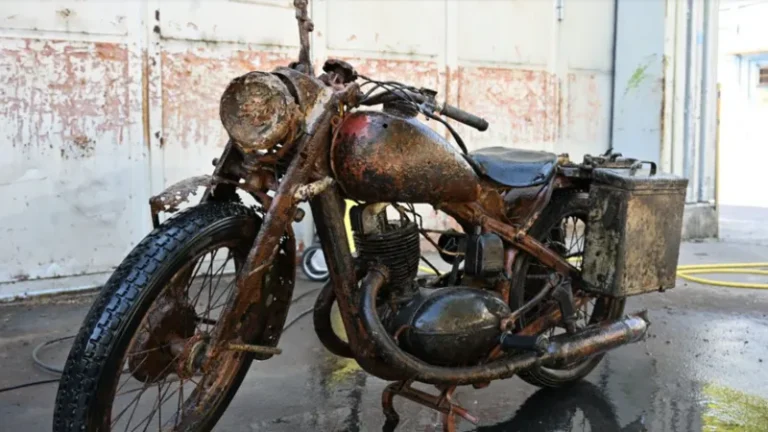
    A severe drought across Europe has caused water levels in the Danube River to drop to record lows, exposing the remains of two World War II German soldiers and military equipment near central Budapest. The discovery was initially reported by a passerby who spotted a motorcycle handlebar protruding from rocks along the riverbank near Batthyany Square. Recovery operations conducted by the German War Graves Commission alongside Hungarian military historians unearthed a largely intact Wehrmacht motorcycle, identified as a DKW NZ 350-1 model, along with anti-tank mines that prompted a brief deployment of bomb disposal personnel. The site yielded well-preserved personal items, including intact identification tags, a wedding ring, and a Kuban shield combat decoration. Experts noted that a combination of riverbed mud and petroleum slowed the decay of the artifacts and human remains over the past eight decades. Analysis of the identification tags revealed that one soldier served in the Wehrmacht while the other belonged to the Waffen-SS. Because both halves of the soldiers’ identification tags remained intact rather than split, as was customary when casualties were processed, investigators confirmed that neither death was officially recorded during the war. The commission has initiated bone analysis and archival checks to identify the deceased before their eventual burial at the German war cemetery in Budaors.

  • | |

    Parliament approves sweeping defence command chang…

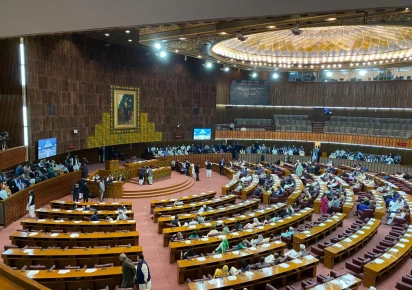
    Pakistan’s Parliament has approved legislation aimed at establishing a new legal framework for the country’s military command structure. The National Assembly and Senate passed the Defence Forces Act 2026 and amendments to the National Command Authority Act 2010 on Thursday. The legislation was approved despite strong opposition from opposition lawmakers, who objected to the speed at which the bills were brought before the Houses. Prime Minister Shehbaz Sharif attended the National Assembly session. The opposition later boycotted the voting process and walked out of the chamber in protest. The new Defence Forces Act provides a legal structure for the Defence Forces Headquarters. The headquarters will serve as a central institution for matters concerning national security, defence policy and coordination among the armed forces. Under the new framework, the Chief of Defence Forces will exercise operational command and control over the armed forces. The CDF will remain accountable to the federal government for matters related to command and control. The legislation also gives the CDF powers to improve coordination and integration among the Army, Navy and Air Force. The office will oversee joint operations, coordination and other matters involving the armed forces. The CDF will also have authority under relevant laws regarding the retirement, release and dismissal of military personnel, subject to constitutional provisions. The office will also be able to approve or reject resignations and retain personnel in service where permitted under the law. The federal government will frame rules and regulations needed to implement the new legislation. The CDF will also be authorised to issue orders and directions required to enforce the provisions of the Act. Parliament also approved amendments to the National Command Authority Act 2010. The changes replace references to the Chairman Joint Chiefs of Staff Committee with references to the Chief of Army Staff and Chief of Defence Forces. The legislation gives retrospective effect to key provisions from November 2025. The new laws are linked to changes introduced through the 27th Constitutional Amendment, which significantly altered Pakistan’s military command structure. Under the revised system, the Chief of Army Staff also serves as the Chief of Defence Forces. The office of Chairman Joint Chiefs of Staff Committee has been abolished under the new framework. The opposition strongly objected to the legislation being placed on the supplementary agenda. Opposition lawmakers said they had not been given sufficient time to examine the bills. Opposition Leader Allama Raja Nasir Abbas questioned the urgency of the legislation and called for more time for lawmakers to study the proposed changes. Mahmood Khan Achakzai also demanded that lawmakers be given at least a few days to review and debate the bills before voting. The government defended the procedure, saying parliamentary rules allow supplementary legislation to be introduced. Law Minister Azam Nazeer Tarar argued that the bills had already been examined and approved by the National Assembly. The cabinet had approved the draft legislation earlier in the day during a meeting chaired by Prime Minister Shehbaz Sharif in Islamabad. According to the government, the Defence Forces Act was necessary to provide administrative and legal arrangements for the office of the Chief of Defence Forces and its headquarters. The new framework also establishes the position of Commander of the National Strategic Command following the abolition of the CJCSC post. The commander is appointed by the prime minister on the recommendation of the army chief and CDF. The position carries a three-year term, with the possibility of another three-year term under the prescribed procedure.

  • | |

    Court rejects Gohar’s FIR plea against PM

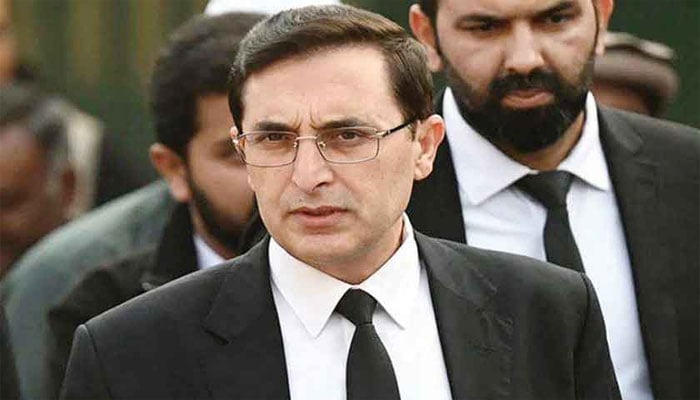
    A district and sessions court in Islamabad has dismissed a petition filed by Pakistan Tehreek-e-Insaf (PTI) Chairman Barrister Gohar Ali Khan, who had sought the registration of a criminal case against Prime Minister Shehbaz Sharif, Interior Minister Mohsin Naqvi, and several other senior government officials over the events of the November 26 protest. The court issued a detailed 17-page written judgment, outlining the reasons for rejecting the application. The verdict was authored by Additional Sessions Judge Afzal Majoka, who concluded that the petitioner had failed to provide sufficient evidence to justify the registration of a first information report (FIR). According to the judgment, Barrister Gohar was given multiple opportunities to appear before the court and record his statement as an eyewitness. However, the court noted that he did not record his testimony despite repeated chances. The ruling further stated that the petitioner neither presented eyewitnesses nor submitted legally admissible evidence in support of his allegations. The court observed that the application relied mainly on claims without providing documentary or forensic material required to initiate criminal proceedings. The petition alleged that 12 people lost their lives and more than 38 PTI supporters were injured during the November 26 protest. However, the court noted that no post-mortem reports, death certificates, medical records, digital videos, photographs or other primary evidence were produced to verify the claims. The judgment emphasized that criminal action cannot be initiated against senior public officeholders solely on the basis of verbal allegations. It said there must be credible and legally admissible evidence before the court can direct the registration of an FIR against high-ranking officials. Among those named in the petition were Prime Minister Shehbaz Sharif, Interior Minister Mohsin Naqvi, Information Minister Atta Tarar, Defence Minister Khawaja Asif, Islamabad Inspector General of Police Ali Nasir, DIG Operations Ali Raza, SSP Operations Zeeshan Haider and other officials. The court also observed that if the petitioner believed that government institutions were not cooperating in the investigation, he had legal options available under Pakistani law. These included approaching the courts for further investigative measures, including exhumation where legally justified. The judgment noted that no such legal remedies were pursued.

  • | |

    Dr Omer Adil calls Bushra Ansari’s husband a gold digger

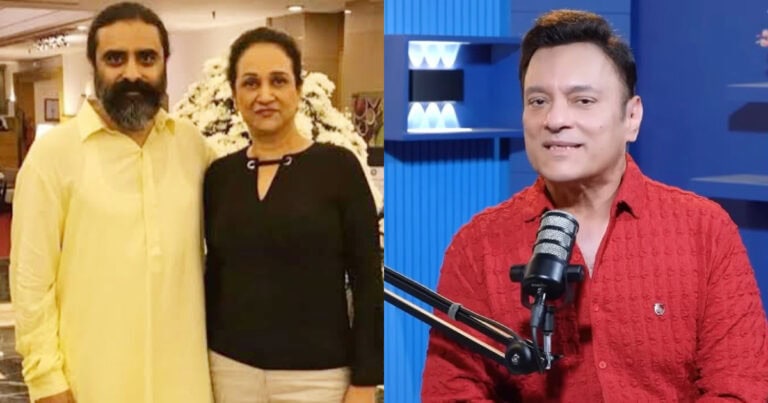
    Dr Omer Adil is no stranger to controversy, and his latest appearance on Dr Ruby Malik’s podcast has once again put him at the centre of a heated public debate. The host and YouTuber, who has built a reputation for speaking about celebrities with unusual bluntness, turned his attention this time to the husbands of wealthy and famous women, naming Bushra Ansari’s second husband as a specific example of what he described as a deeply troubling dynamic. Dr Omer Adil framed his argument by first reaching back to a conversation he once had with the late legendary singer Madam Noor Jehan, who had told him that her throat was effectively her husband, her most prized possession, the one thing that had sustained her family throughout her life. He used this anecdote as a springboard to make a broader point about the particular vulnerability of women whose talent generates significant wealth. His central argument was this: when a woman earns abundantly because of her extraordinary ability, she does not always attract people who genuinely love her. Instead, she attracts those who are drawn to what she has built. In his characterisation, these are not family members but leeches, people who attach themselves to a successful woman and remain there, draining her resources until there is nothing left. He then named Bushra Ansari directly as an example, directing his sharpest remarks toward her second husband, Iqbal Hussain. His objection was rooted in what he saw as a fundamental inversion of the role a husband should play. He questioned how a man could sit at home, making no visible financial contribution to the household, while his wife continues to work and support the family. The image he painted, of a man with a large beard sitting idle while Bushra Ansari carries the professional and financial weight of the marriage, was delivered as a pointed indictment rather than a neutral observation. This is not the first time Dr Omer Adil has publicly expressed his discomfort with Bushra Ansari’s second marriage. He has previously aired his opinions about the relationship on multiple occasions, and each time has done so without walking back his criticism. His willingness to name celebrities specifically and speak about their private lives in such direct terms is what has both earned him a loyal digital audience and placed him at the centre of repeated controversies. Bushra Ansari’s husband Iqbal Hussain had previously appeared in public alongside her and defended their relationship, pushing back against the age-gap criticism the marriage drew. He described the criticism as reflecting double standards and expressed deep admiration and support for his wife. The remarks by Dr Omer Adil have once again reignited debate about who has the right to comment on the private choices of public figures, and whether the kind of blunt, personal commentary he delivers crosses a line between honest observation and unwarranted intrusion into someone else’s marriage.

  • | |

    NCCIA crackdown: 14 suspects arrested in Lahore, M…

    The National Cyber Crime Investigation Agency (NCCIA) Punjab has launched a major crackdown against networks allegedly involved in online financial fraud, identity theft and social media scams, arresting 14 suspects in Lahore and Multan. The operation was carried out under the direction and supervision of NCCIA Punjab Director Muhammad Ali Waseem. Officials said the suspects allegedly defrauded citizens of millions of rupees through various online schemes. In Lahore, the NCCIA arrested four suspects in three separate cases. They were identified as Muhammad Amir, Muhammad Ashfaq, Muhammad Qamar and Ameer Karim. According to initial investigations, the suspects allegedly posed as marriage bureau representatives or close friends to gain victims’ trust. They then allegedly deceived citizens into transferring money. Investigators recovered mobile phones from the suspects and found evidence indicating that victims had been defrauded of significant amounts. In Multan, the NCCIA carried out three separate operations and arrested 10 suspects. They were identified as Muhammad Asghar, Amir Shehzad, Muhammad Kamran, Rizwan Talib, Saqib Ali, Kamran Talib, Iftikhar Manzoor, Muhammad Adnan, Muhammad Sultan and Muhammad Naeem. Investigators said the suspects allegedly used social media platforms and WhatsApp to impersonate officials from customs, police, banks and other government institutions. The suspects allegedly contacted citizens using false claims involving prizes, gifts, donations, bank verification and parcel clearance. They then demanded money from victims under various pretexts. Investigators uncovered one case in which a victim was allegedly defrauded of Rs1 million, while another involved the alleged theft of Rs588,000. The NCCIA said several mobile phones, SIM cards, fake WhatsApp accounts, social media profiles and other digital evidence were recovered during the operations. The seized devices and accounts are being subjected to forensic analysis. Cases have been registered against all 14 suspects under relevant provisions of the Prevention of Electronic Crimes Act (PECA) 2016, as amended in 2025, along with applicable sections of the Pakistan Penal Code.

Leave a Reply

Your email address will not be published. Required fields are marked *