pakistan win four
|

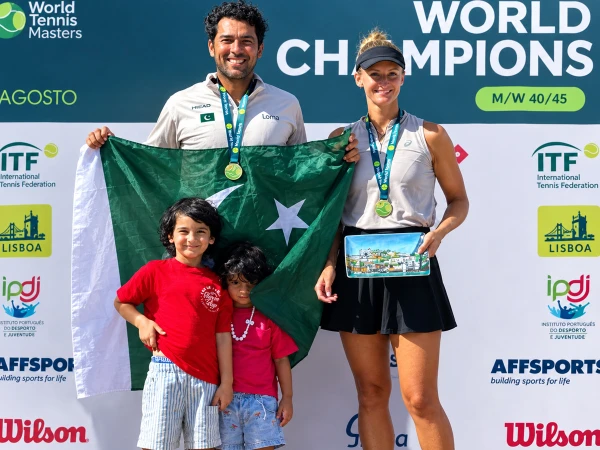
Pakistan win four medals at ITF World Championships

Pakistan’s tennis stars have delivered a memorable performance at the ITF Masters World Championships in Lisbon, Portugal, winning an impressive four medals and adding another chapter to the country’s international tennis story.

The biggest highlight came from veteran tennis star Aisam-ul-Haq Qureshi, who successfully defended his world title in the 40+ mixed doubles category. Partnering Austria’s Nina Hermann, Qureshi defeated the top-seeded Portuguese pair in a closely fought final to retain the championship for a second consecutive year.

The victory marked another significant milestone in Qureshi’s long and distinguished international career. His achievement also underlined his enduring competitiveness on the world stage, even after decades of representing Pakistan at major international events.

Pakistan’s medal tally grew further in the men’s 45+ doubles category, where Qureshi and fellow veteran Aqeel Khan combined to secure a silver medal. Their run demonstrated the experience and consistency of Pakistan’s senior tennis players against strong international opposition.

The national team also added another silver medal in the men’s 45+ World Team Championship, giving Pakistan a strong finish in the team competition.

Aqeel Khan completed Pakistan’s four-medal haul by winning bronze in the 40+ mixed doubles event. His podium finish ensured that Pakistan’s campaign ended with medals across both individual and team competitions.

The results in Lisbon are a significant boost for Pakistani tennis, particularly in the Masters categories, where experienced players continue to compete at the highest international level.

Qureshi’s successful title defence stands out as the headline achievement, but the combined medal haul highlights the depth of experience within Pakistan’s veteran tennis ranks.

With four medals secured, Pakistan’s performance in Lisbon offers a timely reminder that the country’s tennis talent continues to make its mark beyond the domestic circuit.

Similar Posts

  • | |

    Pakistan blames Afghan-based militants for rising …

    Islamabad: Pakistan’s Deputy Prime Minister and Foreign Minister Ishaq Dar has said that banned militant groups, including Tehreek-e-Taliban Pakistan (TTP), the Balochistan Liberation Army (BLA), and the East Turkestan Islamic Movement (ETIM), are operating from Afghan territory under the protection of the Afghan Taliban. Speaking at the Shanghai Cooperation Organization (SCO) Council of Foreign Ministers meeting, Dar described terrorism originating from Afghanistan as a serious threat to regional peace and stability. He said these militant groups continue to carry out attacks from across the border, posing a major security challenge for Pakistan. Dar stated that Pakistan has witnessed more than 2,000 terrorist attacks so far this year, resulting in the deaths of over 560 civilians. He also claimed that evidence had emerged linking some Afghan nationals to several of these attacks. The foreign minister urged SCO member states to call on the Afghan Taliban to fulfill their counterterrorism commitments and prevent Afghan territory from being used by militant organizations. Reaffirming Pakistan’s commitment to regional peace, Dar said dialogue, diplomacy, and mutual respect remain the only sustainable solutions to regional disputes. He highlighted Pakistan’s role in promoting diplomatic engagement and stressed the importance of supporting ongoing peace initiatives. Dar also noted that Pakistan hosted talks between Iran and the United States in April 2026, which, according to him, led to the signing of the Islamabad Memorandum of Understanding in June 2026. He urged the international community to support diplomatic efforts while remaining vigilant against attempts to undermine the peace process. Looking ahead, Dar said Pakistan will assume the chairmanship of the SCO Council of Heads of State in September 2026 and host the SCO Summit in 2027. During its chairmanship, Pakistan plans to prioritize regional connectivity, trade, agricultural cooperation, youth exchanges, and stronger people-to-people ties. On the sidelines of the SCO meeting, Dar also met Iranian Foreign Minister Abbas Araghchi. The two leaders discussed bilateral relations, regional developments, and efforts to promote peace and stability. Dar emphasized the need for restraint, de-escalation, and continued diplomatic engagement in addressing regional challenges, while both sides agreed to maintain close coordination on issues of mutual interest.

  • |

    Foreign nationals among victims of Nizhnekamsk attack, Russia says

    At least 13 people were killed in a terrorist attack targeting civilian facilities in Nizhnekamsk, Russia’s Tatarstan region, on August 10, according to the Russian Foreign Ministry. Russian Foreign Ministry spokeswoman Maria Zakharova said most of those killed were foreign nationals. Preliminary information indicated that eight victims were citizens of Uzbekistan, while another victim was from Tajikistan. Around 20 foreign nationals were also reported to have been injured in the attack. Zakharova accused Ukrainian forces of deliberately targeting civilian locations where foreign workers and residents from countries friendly to Russia were present. She claimed the attack was intended to create tensions between Russia and those nations. The Russian official described the incident as a terrorist attack and said such strikes have resulted in the deaths of both Russian citizens and nationals of other countries. The Russian Foreign Ministry expressed condolences to the families and relatives of those killed. It also wished a rapid recovery to those injured. Moscow further urged the international community to condemn what it described as attacks against civilian targets. The accusations were made by the Russian Foreign Ministry as part of its response to the Nizhnekamsk incident. The claims concerning responsibility and the circumstances surrounding the attack could not be independently verified from the statement alone. The incident has raised concerns over the safety of foreign nationals working and living in areas affected by the Russia-Ukraine conflict. Further details about the victims, the extent of the damage and the circumstances of the attack are expected as investigations continue.

  • | |

    DIG East Dr. Farrukh: A model of public-friendly p…

    Karachi: While addressing ABAD — the Association of Builders and Developers of Pakistan — on Wednesday, Inspector General Sindh Mr. Javed Alam Odho once again reaffirmed the commitment to resolve the Mir Raza murder case on merit and without pressure. He admitted mistakes had been made by the police department, but reassured that all measures would be taken to correct them. He also claimed that the crime rate in Karachi had dropped by 14 percent. He also urged for reforms and need of more professional training in Medico-legal system of police. But all those numbers and all those assurances fall flat in the face of one unresolved case. The fact that a builders’ association felt compelled to raise the Mir Raza issue speaks volumes. It is not ABAD’s mandate, yet its leaders did it anyway — because the mistrust between citizens and Karachi Police has grown too deep to ignore. That mistrust exists not because of a lack of competent leadership at the top, but because subordinate SSPs failed to deliver where it mattered most. A Meeting That Set the Standard  I saw this gap first-hand in my initial meeting with DIG East, Dr. Farrukh Ali Lanjhar. He came across as accessible, direct, and willing to listen — the kind of officer who says, “call me when you need me.” When I requested time from DIG East Dr. Farrukh Lanjhar for an interview, I expected a formal reply or a future date. Instead, he politely asked me to walk into his office and join him for a cup of tea. I was pleasantly surprised by the cordiality. I walked in expecting bureaucracy. What I found was courtesy, and a senior officer who was ready to resolve the issue of a female journalist without making her feel like a petitioner. Does the Police Force Lack Role Models?  The meeting was also a wake-up call. At the ASP/SP level, many officers still treat citizens as subjects of a colony and themselves as masters, not servants. I often wonder what fuels this snobbery and arrogance. Is it clearing the CSS? But given our quota system and an exam that has been reduced to testing memory and English rather than intellect or judgment, that in itself is no great achievement. If it were, every government department would be running like a multinational — either making huge profit or excelling in service delivery. Is it the training we inherited from the British Raj, designed to produce a ruling elite? Or is it the culture of imitating seniors who remain inaccessible and aloof? Yet we do have exceptions. DIG East Dr. Farrukh Lanjhar, DIG Traffic Pir Mohammad Shah, DIG CTD Capt. (R) Azfar Mahesar, DIG RRF Usman Ghani Siddiqui, DIG Amir Farooqui, SSP Qamar Jiskani, SSP Saud Magsi, SSP Zeeshan Siddiqui, and above all IG Sindh Javed Alam Odho. Within the same flawed system that all of us are part of, they choose to serve as public servants. The impression they leave is exactly what I witnessed the other day. Can’t they be role models? Because the legacy you leave either lives on or haunts you. We still remember good officers long after they retire, like former ADIG Hyderabad Range, Dr. Jameel. AIG Ameer Sheikh will be spoken of in those terms. Ten years from now, who else will be remembered with the same respect? There were many who were pharaohs of their time, but no one now remembers them with respect after they leave office. A Glimpse of Reforms in East  During our discussion, Mr. Lanjhar also spoke about the reforms he has pushed in East Zone. He said more than 1,000 personnel have been pulled out of desk pools and deployed in the field where they are actually needed. To enforce accountability, he has introduced biometric attendance to eliminate ghost employees. The zone is also moving toward an advanced facial recognition system to ensure that no one can mark false attendance and every officer on the roster is truly on duty. The Mir Raza Murder Case  When asked to comment on the Mir Raza murder case, which falls under his jurisdiction, he responded softly: “A new committee has been constituted,” he said, “and I do not wish to comment before its findings are made public.” However, he assured that he would address all queries once the committee submits its report. As we wrapped up a meeting that ran longer than expected, Dr. Farrukh Lanjhar spoke openly — about the shortcomings of the media, about his personal experiences across different districts and roles, and about the reforms needed to make police more public-friendly. Especially Thana culture, which he called the main “interface” of the police force. Before I left, he said simply: “Don’t you worry, Madam. We will remain in touch. You can call me whenever and wherever needed to resolve your issue.” It left me thinking. Often, just listening with patience to the complaint of the aggrieved party can bring down the temperature of frustration and distrust toward police. That is exactly what was missing in the initial handling of the Mir Raza murder case. The first inquiry committee, in which SSP East Zubair Sheikh was allegedly accused of incompetence and of pushing a suicide theory (by the family), failed on that count. He did not take into account the point of view of the victim’s parents. Neither he nor SSP SIU Samiullah Soomro were able to convey to the grieving family that the police were with them, and that they would do everything to ensure they got the justice they deserved. It was that simple. Had SSP East, Zubair Sheikh, treated it with the same seriousness that DIG East showed toward my complaint — on a far smaller scale — perhaps IG Sindh, Javed Alam Odho would not have had to stand before the media and accept mistakes on behalf of his force. That is why we have a full hierarchy in place. If every SSP did his job, including answering the

  • | | |

    SBP to study daily fuel price impact on inflation

    ISLAMABAD: The federal government has directed the State Bank of Pakistan (SBP) to conduct a comprehensive study on how the daily revision of petroleum prices affects inflation, as authorities seek new measures to protect consumers from rising living costs and volatile global energy markets. The decision was taken during a meeting of the National Price Monitoring Committee (NPMC), which reviewed the country’s inflation outlook and discussed ways to minimise the impact of fluctuating fuel prices on households and businesses. According to officials, the SBP has been asked to prepare a detailed action plan within 15 days to evaluate the inflationary effects of daily adjustments in petrol and high-speed diesel (HSD) prices, following international best practices. The central bank is expected to recommend policy options that could help maintain price stability while supporting economic growth. The committee was informed that the SBP’s primary responsibility is to ensure price stability through effective monetary policy, including the use of interest rates to manage inflation expectations and regulate money supply. Alongside the SBP study, the NPMC instructed provincial governments, Azad Jammu and Kashmir, Gilgit-Baltistan and the Islamabad Capital Territory to strengthen market monitoring and prevent unjustified increases in the prices of essential commodities whenever fuel prices are revised. The committee also expressed concern over excessive pricing of liquefied petroleum gas (LPG), noting that consumers in many areas were paying significantly more than the official rates notified by the Oil and Gas Regulatory Authority (OGRA). Authorities have been directed to intensify monitoring and narrow the gap between notified and market prices. Officials said the recent regional conflict involving Iran had disrupted energy markets, contributing to higher LPG prices despite regulatory efforts. The meeting also focused on the prices of key food items, including tomatoes, chicken, wheat flour and edible oil. Representatives from the Ministry of National Food Security attributed the surge in tomato prices to seasonal shortages, explaining that Pakistan was importing tomatoes from Iran and Afghanistan to meet domestic demand. However, following the closure of the Afghanistan border, officials said additional tomato imports would now be sourced from Romania to prevent supply shortages and stabilise prices. To improve food quality and consumer protection, the Ministry of Science and Technology will work with the Pakistan Bureau of Statistics (PBS) and provincial authorities to develop testing standards for loose milk, dairy products, edible oil and ghee. Accredited laboratories will conduct regular testing, with quarterly reports submitted to the NPMC. The committee also urged authorities to reduce wholesale and retail price disparities across different cities, improve the supply chain for essential goods and work more closely with the private sector to arrange timely imports before seasonal shortages trigger sharp price increases. Officials expressed hope that stronger coordination, tighter market oversight and evidence-based policymaking would help ease inflationary pressures and provide greater stability for consumers in the coming months.

  • | |

    Madaris back Army, reject Fazlur remarks

    The Muttahida Madaris Council Pakistan has publicly distanced itself from recent remarks made by Jamiat Ulema-e-Islam-F (JUI-F) chief Maulana Fazlur Rehman regarding the Pakistan Army and the country’s martyrs. In an official statement, the council said religious seminaries across Pakistan have always stood with the country’s armed forces and fully respect the sacrifices made by military personnel in defending the nation. It stressed that no seminary or religious educational institution supports any narrative that could be interpreted as being against the armed forces. The council reaffirmed its commitment to national unity and expressed solidarity with Pakistan’s security institutions. It also paid tribute to the country’s martyrs, saying their sacrifices for national security and peace deserve the highest respect. The controversy began after Fazlur Rehman addressed a public gathering in Kasur, where he spoke about the security situation in Khyber Pakhtunkhwa and Balochistan. During his speech, his comments about soldiers and martyrdom sparked widespread criticism from political leaders and members of the public. Several politicians described the remarks as inappropriate and called on the JUI-F chief to publicly clarify or withdraw his statement. They maintained that the sacrifices of soldiers should not become part of political debate and should always be treated with respect. Punjab Assembly Speaker Malik Muhammad Ahmad Khan strongly criticised the remarks and urged Fazlur Rehman to issue a public apology. He also proposed the formation of a Senate committee to examine the issue and determine whether the veteran politician should be formally called to explain his comments. The matter has also entered the legal arena. A sessions court has issued a notice to the National Cyber Crime Investigation Agency (NCCIA) regarding the registration of a cybercrime case linked to the controversial remarks. The agency is expected to submit its response during the legal proceedings. Legal experts say the court will review the available evidence before deciding whether further action is warranted under the relevant laws. The controversy has continued to dominate political discussions, with leaders from different parties expressing contrasting views over the issue. While critics insist that the remarks were disrespectful to the sacrifices of the armed forces, supporters of Fazlur Rehman have defended his right to express political opinions.

  • |

    Sarfaraz defends selection after Pakistan defeat

    Pakistan red-ball head coach Sarfaraz Ahmed has hinted at possible changes to the playing XI for the second Test following the team’s 90-run defeat to the West Indies in the series opener. Speaking after the match, Sarfaraz admitted that Pakistan’s batting performance fell well below expectations, particularly in the second innings, where the side once again failed to build meaningful partnerships. He described the batting collapse as the biggest factor behind the defeat and stressed that the team must improve if it hopes to level the series. The coach said Pakistan had a valuable opportunity to take control of the match by securing a first-innings lead but failed to capitalize on the advantage. According to him, the missed opportunity shifted the momentum in favour of the hosts and made the chase in the fourth innings significantly more difficult. Sarfaraz also reflected on the dismissal of opener Imam-ul-Haq, saying the left-hander had looked comfortable at the crease and was batting well before losing his wicket. He believed that had Imam shown a little more patience, Pakistan could have built a stronger foundation and put themselves in a better position to challenge the target. The head coach also expressed disappointment with the team’s bowling effort on the third day of the Test. He pointed to the 61-run partnership for the eighth wicket by the West Indies, saying Pakistan should not have allowed the lower-order batters to add crucial runs. He noted that those extra runs eventually proved significant in the context of the match. Despite criticism over Pakistan’s team selection, Sarfaraz defended the decision to field five specialist bowlers. He said the management had carefully assessed the playing conditions before finalizing the combination and believed it was the right approach based on the nature of the pitch. “We selected the side after evaluating the conditions and felt that playing five bowlers gave us the best chance of taking 20 wickets,” he said, adding that the execution on the field ultimately mattered more than the team composition. Looking ahead to the second Test, Sarfaraz confirmed that changes remain a possibility as the coaching staff reviews the team’s performance. He revealed that middle-order batter Saud Shakeel and opener Abdullah Shafique are still under consideration for selection. However, he made it clear that no final decision has been taken regarding the playing XI. The coaching staff will assess the match situation, the expected pitch conditions and the overall balance of the side before naming the team for the second Test. Pakistan will now look to regroup quickly after the disappointing start to the series, with the second Test offering an opportunity to bounce back and keep the contest alive. Team management will be hoping that both the batting and bowling units respond positively after a below-par performance in the opening match.

Leave a Reply

Your email address will not be published. Required fields are marked *