womens t20 asia
|

Women’s T20 Asia Cup 2026 likely to be held in UAE

DUBAI: The Women’s T20 Asia Cup 2026 is expected to be staged in the United Arab Emirates, with participating teams reportedly being informally notified about the tournament window ahead of the official announcement by the Asian Cricket Council (ACC).

According to cricket media reports, the ACC is expected to confirm both the venue and the complete schedule in the coming days. The tournament is likely to run from August 28 to September 13, featuring eight of Asia’s leading women’s cricket teams.

The competing nations are expected to include Pakistan, India, Sri Lanka, Bangladesh, Nepal, Malaysia, Thailand and hosts UAE, promising an exciting contest as teams battle for continental supremacy ahead of future ICC events.

The UAE has emerged as the frontrunner to host the tournament due to its world-class cricket infrastructure, favorable playing conditions and extensive experience in organizing major international events. Several global tournaments have previously been held in the Emirates, making it a reliable venue for multinational competitions.

The tournament is expected to showcase some of Asia’s biggest women’s cricket stars, with traditional rivals Pakistan and India likely to attract significant attention if they meet during the competition.

Meanwhile, the Board of Control for Cricket in India has already announced India’s squad for the tournament. Veteran batter Harmanpreet Kaur will continue to lead the Indian side as captain, reflecting the board’s confidence in her leadership and experience.

Other participating teams are also expected to finalize and announce their squads in the coming weeks as preparations gather pace.

With the official schedule still awaited, anticipation continues to build among cricket fans across Asia. The Women’s Asia Cup is regarded as one of the region’s premier tournaments and provides teams with valuable international competition while helping them prepare for upcoming global events.

If confirmed, the UAE will once again become the center of Asian cricket, hosting another high-profile tournament that promises thrilling matches, emerging talent and intense regional rivalries.

Similar Posts

  • | |

    300 children die daily due to poor healthcare: Mus…

    Federal Health Minister Mustafa Kamal has said that nearly 300 children die every day in Pakistan because of inadequate healthcare facilities, stressing the need for urgent reforms and greater investment in the country’s health sector. Speaking at a ceremony held at a private hospital in Karachi, the health minister said Pakistan is moving in the right direction but acknowledged that significant challenges remain in improving healthcare services across the country. Mustafa Kamal said the nursing curriculum must be updated to meet modern healthcare standards and international requirements. He added that strengthening the skills of healthcare professionals is essential to improving the quality of medical services. Highlighting demographic challenges, the minister said Pakistan’s population is growing at an annual rate of 2.55 percent, placing increasing pressure on education, healthcare and other public services. He noted that the rapidly expanding population has left millions of children without access to education. The minister said the government’s primary focus is to prevent diseases through vaccination and public awareness rather than relying solely on treatment. He added that Pakistan spends millions of dollars every year on vaccination programmes and warned that the cost could rise to $1.2 billion by 2030 if current trends continue. Mustafa Kamal said a lack of public awareness remains one of the biggest obstacles to successful immunisation campaigns. He noted that vaccination teams often face resistance, with some families refusing to cooperate by not allowing health workers into their homes. He said the government is working to improve awareness about the importance of vaccines and strengthen preventive healthcare programmes to reduce the burden of infectious diseases. The health minister also announced that the government is expected to sign agreements within the next few weeks to begin local vaccine production. He expressed hope that Pakistan would start manufacturing vaccines domestically before 2030, reducing dependence on imports and strengthening the country’s public health system.

  • | | |

    Oil prices surges avove $91 as Iran war fuels Horm…

    Oil prices climbed on Tuesday, with Brent crude moving above $91 a barrel as stalled diplomacy over the Iran conflict raised fresh concerns about global energy supplies. Brent futures gained 27 cents, or 0.3%, to $91.14 a barrel, while US West Texas Intermediate rose 42 cents to $85.04. WTI had earlier reached $85.37, its highest level since July 31. Markets remained tense after Iran signalled a shift toward a more offensive military posture, while Washington ruled out extending a temporary ceasefire. Progress toward reopening the Strait of Hormuz to normal tanker traffic has also slowed, adding to fears of prolonged supply disruptions. Only a handful of commodity vessels crossed the strategic waterway over the weekend, sharply below normal traffic levels. Concerns were further heightened by attacks in the Red Sea, reinforcing fears over disruptions at both the Strait of Hormuz and Bab el-Mandeb. Despite the growing tensions, reports of possible back-channel contacts between the US and Iran offered a limited sign of hope for renewed diplomacy. Meanwhile, markets are also watching US crude inventories, which are expected to have declined last week. Earlier, Oil prices climbed on Monday as uncertainty over a possible diplomatic breakthrough between the United States and Iran increased, while a sharp slowdown in tanker movements through the Strait of Hormuz heightened concerns about disruptions to global crude supplies. Brent crude futures gained as much as 1% during early trading to reach $89.40 per barrel. The benchmark was later up 72 cents, or about 0.8%, at $89.20 a barrel by 0229 GMT. US West Texas Intermediate (WTI) crude also moved higher, rising 44 cents to $82.83 per barrel. Both international benchmarks posted gains of more than 5% last week after a series of attacks involving energy and shipping assets in and around the strategically important Strait of Hormuz. The incidents have intensified fears that further escalation could affect one of the world’s most important oil transit routes. Market sentiment was further affected by developments over the weekend, when Iranian Foreign Minister Abbas Araqchi said Tehran had yet to decide whether it would resume negotiations with Washington. US President Donald Trump, meanwhile, told Americans to prepare for somewhat higher gasoline prices as the conflict continues. Analysts said the renewed uncertainty had brought geopolitical risk back into crude markets after oil prices had previously come under pressure on expectations that diplomatic efforts could ease tensions. “Oil prices have now rebounded almost completely from the lows seen in early August, as hopes for a more permanent resolution between the US and Iran have faded and geopolitical risk premiums have returned to the market,” said Priyanka Sachdeva, head of market insights at Phillip Nova in Singapore. Sachdeva cautioned, however, that the rally could lose momentum unless there is evidence of a further deterioration in the situation. She said the market would need to see renewed aggression in the Strait of Hormuz, particularly significant damage to oil tankers or energy infrastructure, before prices were likely to move substantially higher. Hormuz shipping activity slows Concerns over physical supply disruptions increased after ship-tracking data showed a marked decline in vessel traffic through the Strait of Hormuz over the weekend. According to data from Kpler, only five commodity vessels crossed the strategic waterway on Saturday, while no such transits were recorded on Sunday. This compared with 31 commodity vessel crossings during the previous weekend. The slowdown is significant because the Strait of Hormuz is a critical route for international energy shipments. Any prolonged disruption could increase transportation risks, raise insurance costs and place additional upward pressure on crude prices. The United Arab Emirates also accused Iran of attacking another vessel operated by Abu Dhabi National Oil Company (ADNOC) while it was passing through the strait on Friday, according to the Emirati state news agency WAM. The UAE had earlier blamed Iran for two separate incidents involving ADNOC-operated vessels on Thursday evening. The latest incidents have added to concerns among traders that the conflict could increasingly affect commercial shipping and energy infrastructure, rather than remaining confined to military and diplomatic confrontation. The Strait of Hormuz remains particularly important to global oil markets because a substantial volume of crude and petroleum products moves through the waterway. Any sustained interruption could therefore have consequences well beyond the region. For now, traders are closely monitoring developments involving US-Iran diplomatic contacts, attacks on shipping and the movement of tankers through the strait. While the latest price gains reflect a higher geopolitical risk premium, analysts remain cautious about predicting a prolonged rally. If shipping activity resumes and diplomatic channels reopen, some of the premium built into crude prices could quickly unwind. Conversely, additional attacks on tankers, oil facilities or other critical infrastructure could trigger a stronger market reaction and push prices higher as traders reassess the security of regional supplies.

  • | |

    Atif Aslam says he rediscovered himself through new album

    Pakistani music icon Atif Aslam has opened up about the personal journey behind his upcoming studio album Subah Aye Na, revealing that years of touring and commercial commitments left him disconnected from his artistic identity. Ahead of the album’s release, the singer shared that he had to “go back to zero” to rediscover himself as an artist. Speaking in recent interviews with Virgin Radio Dubai and Khaleej Times, Aslam reflected on the creative process behind Subah Aye Na, his first studio album in 18 years. The singer described the project as one of the most personal milestones of his career. “I forgot who I was, so I went back to zero and told myself that people had made me a star, by the grace of God, but now is the time to become an artist,” Aslam said. The singer explained that after spending more than two decades performing around the world, he realised he had been creating music mainly for audiences, concerts and record labels rather than for himself. “I have been doing it for the people, for my listeners, for music companies,” he said. “I thought of doing something for myself. And I found myself through this album.” Reflecting on the past 25 years of his career, Aslam admitted that his busy schedule had gradually distanced him from the creative passion that first inspired him to pursue music. “I had somehow lost touch with myself while staying busy with projects, concerts and other things, though that too is a blessing I acknowledge. But it was about time to look within and do what my heart had been yearning for,” he shared. Unlike his previous work, Aslam said he refused to rush the album’s production and instead allowed the music to develop naturally. “I did not want to be driven by timelines. I wanted it to come straight from the soul,” he explained. The award-winning singer also confessed that he had planned to release another album years ago but never completed it. “I was working on the album, but I couldn’t compile it earlier. I guess you could say, as candidly as it gets, that I was lazy,” he admitted with a smile. “But you eventually have to decide when you will perform and when you will make your own music. You have to do both.” Looking ahead, Aslam revealed that he hopes to maintain a more consistent release schedule and aims to put out a new album every year. During the interviews, the Aadat singer also shared that cricket—not music—was his first dream. He revealed that he wanted to become a fast bowler and was even selected for an under-19 cricket team before his parents encouraged him to focus on academics. “I wanted to be a fast bowler. I got selected for the under-19 cricket team, but my parents wanted me to study,” he recalled. Aslam said he only realised his vocal potential after his father’s transfer to another city. “When I hit that high note, I got scared. That’s when I realised something could come of it,” he said. Explaining the difference between his albums and film songs, Aslam noted that his studio records are deeply personal because he composes them himself. “I have composed all of my albums myself, but film songs are created with music producers and directors. My albums reflect what I have been through, the people I have met, what has inspired me and how it has shaped me,” he said. The singer also expressed gratitude to his Indian fans, recalling how his music first reached audiences across the border. “I remember when my first album came out, people would burn CDs and take them to India. Now we’re back to those days again,” he said, while thanking listeners who continue to support his music despite ongoing restrictions. Subah Aye Na, featuring eight tracks, is scheduled for release on July 31, marking Aslam’s long-awaited return to the studio album format after nearly two decades.

  • | |

    Araghchi says diplomacy possible if US changes course

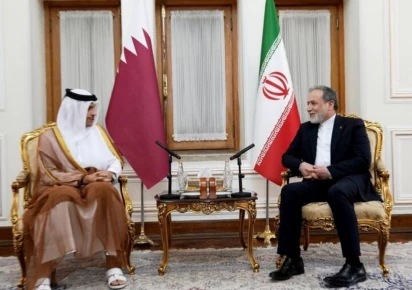
    Iranian Foreign Minister Abbas Araghchi has said a return to diplomacy with the United States remains possible, but Washington must first accept that its pressure-based approach will not work. Araghchi made the remarks on Friday after holding what he described as constructive and creative discussions with Qatar’s Prime Minister and Foreign Minister Jassim Al Thani. The Iranian foreign minister said the United States should take steps to rebuild trust and engage Tehran through respectful dialogue. He also called on Washington to recognise Iran’s rights and honour commitments made under previous agreements. The comments come amid heightened tensions between Iran and the United States, particularly over sanctions, maritime restrictions and the future of the Strait of Hormuz. Iran and the US reached a 14-point memorandum of understanding in Islamabad in June through mediation by Pakistan and Qatar. The understanding included measures aimed at ending hostilities, reopening the Strait of Hormuz, removing a US naval blockade and beginning a 60-day negotiating process. Tehran has since accused Washington of failing to implement important parts of the agreement. Iranian officials have maintained that the Strait of Hormuz will not be fully reopened until the United States fulfils its commitments. The diplomatic dispute has also triggered a sharp exchange between Iranian and US officials. Iranian Parliament Speaker Mohammad Bagher Ghalibaf criticised US Treasury Secretary Scott Bessent after Bessent accused Tehran of spending large amounts of money abroad while Iranian citizens face economic difficulties. Ghalibaf rejected the criticism and argued that Washington should focus on its own domestic challenges rather than spending heavily on overseas military deployments and allies. The latest statements come as the United States maintains pressure on Iran and closely monitors maritime traffic in the Strait of Hormuz, one of the world’s most important energy routes. US Central Command said its forces had cleared sea mines from internationally recognised shipping lanes in the strait. Commander Admiral Brad Cooper said American military personnel from several branches had taken part in the operation. According to US officials, American forces have helped commercial vessels pass through the waterway while also stopping ships accused of attempting to bypass the maritime blockade. Iran, however, disputes Washington’s position and has warned that continued economic and maritime restrictions could provoke retaliation. Iranian Supreme National Security Council Secretary Mohsen Rezaei said Tehran would target US economic interests if the blockade continued. He also claimed that Iran had managed to maintain significant oil exports and establish alternative routes despite restrictions. Rezaei further warned against any military advance toward Beirut or southern Lebanon, calling the area a red line for Iran.

  • | |

    Netflix unveils packed August 2026 lineup

    Netflix is preparing a major wave of new entertainment releases in August 2026, bringing a mix of classic films, popular franchises, fresh series and new original productions for viewers worldwide. The streaming platform’s August lineup includes the return of several well-known movies such as Clueless, Marie Antoinette, Anaconda, Speed, Nightcrawler and the Fast & Furious franchise. Fans of comedy, action, romance and drama will have a wide range of options throughout the month. The month begins with a strong collection of films arriving on August 1, including Minions, Zero Dark Thirty, The Mortal Instruments: City of Bones, The Hitman’s Bodyguard, Selma and multiple entries from the Fast & Furious series. Popular horror titles from the Child’s Play and Chucky franchises will also join the catalogue. Netflix will also add several new seasons of returning shows. Viewers can expect the third season of My Life With the Walter Boys, the third season of Love Is Blind: UK, the fifth season of Outer Banks and the third season of Tires. One of the major highlights of the month is One Hundred Years of Solitude: Part 2, which will continue the adaptation of Gabriel García Márquez’s famous novel before reaching its grand finale later in August. The platform is also expanding its international content with new films and series from different countries, including My Brilliant Career, A Child of My Own, Moria, Umthetho and Nando Between Two Worlds – A Sintonia Film. Sports and documentary fans will also have new content to explore. Netflix is adding documentaries including Freefall: A Reckoning for Boeing and Facing El Chapo, along with special programs covering major real-life stories. Comedy lovers will get new stand-up specials, including performances by Ricky Gervais and Kelsey Cook, while younger audiences will have animated additions such as Dr. Seuss’s Red Fish, Blue Fish and Sheriff Labrador. The month will end with the arrival of Sex Lives of College Girls Seasons 1-3 and several other entertainment titles, giving subscribers a strong selection of dramas, documentaries, comedy shows and movies. With a combination of nostalgic favourites, new originals and returning hit series, Netflix’s August 2026 schedule aims to attract viewers across different genres and age groups.

  • | |

    Imran Khan’s sister secures transit bail in cybe…

    The Peshawar High Court (PHC) on Monday granted transit pre-arrest bail to Noreen Niazi, sister of incarcerated Pakistan Tehreek-e-Insaf (PTI) founder Imran Khan, in a case registered under the Prevention of Electronic Crimes Act (Peca) 2016. The court directed Niazi to approach the relevant Islamabad court by August 20 for further legal proceedings. Her protective relief will remain effective until that date. Justice Arshad Ali heard Niazi’s petition. Her legal team included Ali Zaman, Amir Zeb and Barrister Sarwar Muzaffar Shah. The National Cyber Crime Investigation Agency (NCCIA) registered the case in Islamabad on July 27. Niazi has been accused of making allegedly derogatory and inflammatory remarks about state institutions during a podcast and in video clips later circulated on social media. Her lawyers rejected the allegations and maintained that she had been falsely implicated. They argued that the case was politically motivated and that the authorities had not presented substantial evidence linking her to the alleged offences. The defence further claimed that attempts were being made to arrest and harass Niazi. The lawyers said the statements cited in the case had been taken out of context and wrongly interpreted. In its order, the PHC observed that the request for transit bail deserved consideration. The court subsequently granted interim protection subject to bail bonds of Rs80,000 and two sureties. Niazi later spoke to reporters and said she became aware of the case after arriving in Peshawar. She claimed that remarks she had made privately were allegedly passed on to authorities and subsequently became the basis of the case. She also alleged that several cases had been registered against members of Imran Khan’s family. Niazi questioned the allegations against her, saying she had never visited Peshawar and therefore had no involvement in matters concerning the province. The case emerged after the NCCIA summoned Niazi on July 20 over allegations involving the dissemination of what the agency described as false, offensive and inflammatory content concerning state institutions. The action followed the circulation of a video interview in which Niazi discussed the Pakistan-India military confrontation of last year. She made allegations about the circumstances surrounding the conflict and questioned the motives behind it. She also made claims involving Indian Prime Minister Narendra Modi, Israel and US President Donald Trump.

Leave a Reply

Your email address will not be published. Required fields are marked *