pakistan appoint michael
|

Pakistan appoint Michael Smith as batting coach

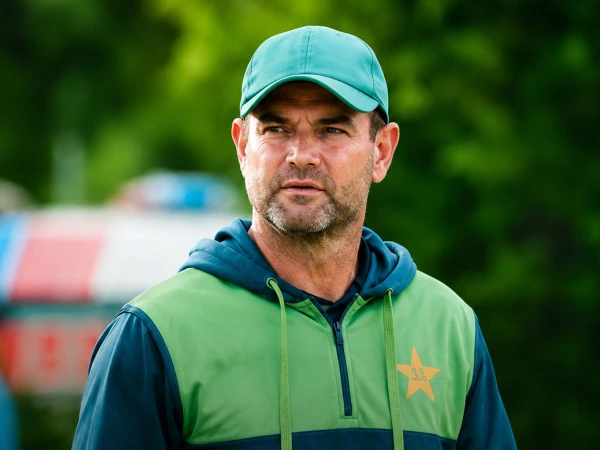
LAHORE: The Pakistan Cricket Board (PCB) has appointed former South African first-class cricketer Michael Smith as the national team’s new batting coach on a two-year contract, reinforcing the coaching setup ahead of a crucial international season.

Smith, 46, will work with both Pakistan’s red-ball and white-ball squads, with his first assignment set to be the upcoming three-match Test series against England, which begins on August 19.

The PCB officially confirmed the appointment on Tuesday, expressing confidence that Smith’s extensive coaching background and international experience will strengthen Pakistan’s batting unit across all formats.

During his playing career, Smith scored 7,029 runs across first-class, List A and T20 cricket. He also registered nine centuries and 40 half-centuries, establishing himself as a consistent performer in South Africa’s domestic circuit.

Beyond his playing achievements, Smith is regarded as an experienced coach with a Level 4 coaching qualification, one of the highest coaching certifications in cricket. He has previously worked with multiple HBL Pakistan Super League (PSL) franchises, giving him valuable insight into Pakistan’s cricketing environment and many of the country’s leading players.

His coaching résumé also includes roles as batting coach for Australia’s Hobart Hurricanes and Cricket Tasmania, where he earned recognition for developing players and improving batting performances.

Smith’s appointment comes at an important time for Pakistan, with the national side preparing for a challenging home Test series against England. The PCB hopes his expertise will help address batting inconsistencies and strengthen the team’s performance in both Test and limited-overs cricket.

Pakistan will begin their three-match Test series against England on August 19, with Smith expected to join the squad during its pre-series training camp.

The appointment reflects the PCB’s continued focus on building a strong coaching structure as the team prepares for a packed international calendar. Fans will now be eager to see whether the experienced South African can make an immediate impact and help Pakistan’s batters deliver more consistent performances on the international stage.
Similar Posts

  • | | |

    New Indian chargé d’affaires takes charge in Pa…

    Dr. Styanjal Pandey has formally assumed his responsibilities as the new Indian chargé d’affaires in Pakistan. He will serve as the head of the Indian High Commission in Islamabad. Pandey took charge of the position on August 1, 2026, according to diplomatic sources. His appointment comes after the completion of the tenure of former Indian chargé d’affaires Geetika Srivastava. Srivastava has completed her diplomatic assignment in Pakistan and has returned to India. After assuming his new responsibilities, Pandey also visited Pakistan’s Ministry of Foreign Affairs in Islamabad. During the visit, he held a formal meeting with Sajjad Haider, Director General for South Asia at the Foreign Office. The meeting was part of his initial diplomatic engagements after taking charge of the Indian mission. Pandey also met other relevant officials of the Ministry of Foreign Affairs. The meetings focused on diplomatic engagement and matters concerning bilateral relations between Pakistan and India. Pandey’s arrival marks a change in leadership at the Indian High Commission in Islamabad at a time when relations between the two neighbouring countries remain closely watched. As chargé d’affaires, he will oversee the functioning of the Indian diplomatic mission in Pakistan and represent New Delhi in official diplomatic engagements. Diplomatic sources said Pandey has begun his official engagements following his appointment. His meetings with Pakistani officials are expected to provide an opportunity for continued diplomatic communication between the two countries. The Indian High Commission in Islamabad plays a key role in maintaining official contacts between Pakistan and India.

  • |

    Jasprit Bumrah sidelined for Sri Lanka Tests over knee concern

    India pacer Jasprit Bumrah has been ruled out of the upcoming two-Test series against Sri Lanka. According to reports, the BCCI’s medical team advised him to take extra time to recover from a left knee issue. Bumrah will not travel with the squad for the series, which begins on August 15 in Galle. The decision reflects India’s cautious approach, as the team looks to avoid rushing its premier fast bowler back too soon. So far, the BCCI has not named a replacement for the 31-year-old. Bumrah last bowled during the second ODI against England in Cardiff on July 16. He was ruled out of the series finale at Lord’s shortly after, following an impact injury sustained while fielding. At the time, the BCCI cited that injury as the reason for his absence. Following the England series, Bumrah received an injection for his knee as part of a recovery plan designed by the BCCI medical staff. He then travelled to the BCCI Centre of Excellence in Bengaluru for a round of fitness testing. Reports suggest the medical team feared that a premature return to bowling could risk a much longer setback, with concerns that the injury might worsen without proper rest. While the exact nature of Bumrah’s injury remains undisclosed, he has been closely monitored since recovering from a lengthy layoff last year. He had also visited the Centre of Excellence in March for conditioning work ahead of the IPL season. During that tournament, Bumrah featured in 13 matches for Mumbai Indians, sitting out only their final fixture. His workload has continued to be managed carefully, given his ongoing injury history. India’s bowling attack has faced several setbacks ahead of the tour. Harshit Rana and Nitish Kumar Reddy are both sidelined with hamstring and quadriceps injuries respectively. Washington Sundar has also been ruled out of the first Test due to a hamstring issue, while Akash Deep remains unavailable as he continues recovering from stress reactions in his back. Speaking after India’s ODI series loss in England, captain Shubman Gill raised concerns over the team’s repeated injury troubles. He warned that these frequent absences could become a significant challenge as India heads toward the demanding 2027 World Cup cycle. Ahead of the Test series, India will play a three-day practice match in Colombo starting August 7. The tour marks India’s first assignment in the new World Test Championship cycle, following a 2-0 home series defeat to South Africa last November.

  • |

    Thailand’s ancient monastery earns Unesco World Heritage status

    A historic Buddhist monastery in southern Thailand has been added to the Unesco World Heritage List, giving the country another globally recognized cultural landmark and providing stronger support for its long term preservation. The recognition marks an important milestone for Thailand as it is the first World Heritage site located in the country’s southern region. The newly listed site is Wat Phra Mahathat Woramahawihan, located in Nakhon Si Thammarat province. The Thai Foreign Ministry announced that it is now Thailand’s ninth World Heritage site. Officials said the designation will help improve conservation efforts through closer cooperation between national authorities and local communities, ensuring the monastery remains protected for future generations. The announcement was celebrated at the monastery with traditional ceremonies. Monks gathered to chant blessings while officials and visitors took part in the event by striking a ceremonial gong. Local media described the atmosphere as one of pride and celebration as the centuries old temple received international recognition. According to Unesco, the monastery has served as one of the region’s leading Buddhist centers since it was established in the eighth century. Over the centuries, it has become an important place of worship, education, and cultural exchange. The temple complex is home to impressive stone stupas, a large reclining Buddha statue, and numerous standing and seated golden Buddha figures. Visitors can also see detailed sculptures and artistic depictions of guardian deities throughout the site. The monastery reflects a rich blend of religious and cultural influences that shaped Southeast Asia over many centuries. Because of its location on the Thai peninsula between the Pacific and Indian oceans, it became a meeting point for traders, pilgrims, and scholars from across the region. Unesco noted that traditions and architectural styles from Brahmanism, Hinduism, Mahayana Buddhism, and Theravada Buddhism, along with influences from India, Sri Lanka, and Myanmar, are all visible in the site’s design and religious practices. These different cultural traditions have been woven into the monastery’s buildings, ceremonies, and daily rituals, making it a valuable symbol of the region’s shared history. The site’s historical importance and unique cultural identity were key reasons behind its inclusion on the prestigious World Heritage List. Thailand hopes the international recognition will also strengthen its tourism industry. World Heritage status often attracts more international visitors, helping local economies while raising awareness about the importance of preserving cultural landmarks. Tourism remains one of Thailand’s most important economic sectors, although visitor numbers have not yet fully recovered to levels seen before the Covid-19 pandemic. Government figures show that tourist arrivals during the first half of this year were more than three percent lower than during the same period in 2025. Officials believe the addition of another World Heritage site could encourage more travelers to explore destinations beyond Thailand’s traditional tourist hotspots. Wat Phra Mahathat Woramahawihan now joins a distinguished list of Thai World Heritage sites that includes the Historic City of Ayutthaya, the Thungyai Huai Kha Khaeng Wildlife Sanctuaries, and the Ancient Town of Si Thep. The latest recognition highlights Thailand’s rich cultural heritage while reinforcing efforts to preserve one of the country’s most significant religious and historical treasures for generations to come.

  • | |

    Ishaq Dar, Turkish foreign minister discuss region…

      ISLAMABAD: Deputy Prime Minister and Foreign Minister Ishaq Dar held a telephone conversation with Turkish Foreign Minister Hakan Fidan on Sunday night, during which the two sides discussed recent developments in the region and reaffirmed their commitment to strengthening cooperation on issues of mutual interest. According to Pakistan’s Ministry of Foreign Affairs, the two foreign ministers agreed that dialogue and diplomacy remained the most effective means of addressing regional challenges and promoting peace and stability. The conversation took place as Pakistan continues its diplomatic engagement with regional and international partners amid the ongoing conflict involving the United States, Israel and Iran. Islamabad has increasingly emerged as an important diplomatic channel in efforts aimed at reducing tensions and encouraging negotiations between the parties. Dar has recently held discussions with several senior diplomats regarding the rapidly changing regional situation. Last week, he met US Chargé d’Affaires Natalie Baker, British High Commissioner to Pakistan Jane Marriott, Chinese Ambassador Jiang Zaidong and Pakistan’s Ambassador-designate to Sweden Ahmed Amjad Ali. During these meetings, the foreign minister exchanged views with the diplomats on regional developments and Pakistan’s efforts to contribute to peace and stability. Dar emphasized that the Islamabad Memorandum of Understanding must be implemented in both letter and spirit, describing this as the most appropriate way forward. He also reiterated Pakistan’s commitment to regional peace, security and diplomatic engagement. Dar recently held a joint press conference with Norwegian Foreign Minister Espen Barth Eide, who praised Pakistan’s role during the US-Iran conflict. Eide particularly acknowledged the efforts of Prime Minister Shehbaz Sharif, Ishaq Dar and Chief of Defence Forces Field Marshal Asim Munir during delegation-level discussions held in Islamabad. The Norwegian foreign minister said Pakistan had taken on a significant responsibility by offering Islamabad not only as a venue for negotiations but also as a facilitator between Washington and Tehran. Eide described Pakistan’s diplomatic efforts as a service to the international community and expressed strong support for the role Islamabad had assumed since the conflict began on February 28. The latest diplomatic contacts also come against the backdrop of a major regional security development: the signing of the Makkah Joint Defence Agreement by Pakistan, Saudi Arabia and Turkiye on August 7. The trilateral agreement has been described as a defensive security framework designed to strengthen collective deterrence, expand military cooperation and contribute to regional stability. The agreement has attracted considerable attention because of the growing security challenges in the region and the evolving strategic relationships among Pakistan, Saudi Arabia and Turkiye. The Makkah agreement follows the Strategic Mutual Defence Agreement signed between Pakistan and Saudi Arabia last year. That pact established a stronger bilateral security relationship and stated that aggression against either country would be regarded as aggression against both. The latest developments indicate that Pakistan is seeking to strengthen diplomatic and security partnerships while maintaining its stated preference for dialogue and peaceful resolution of regional disputes. Dar’s conversation with Fidan further reflects the close relationship between Islamabad and Ankara, particularly on regional security and diplomatic matters. Both countries have consistently emphasized the importance of cooperation, consultation and peaceful negotiations in addressing regional crises. Their latest discussion is expected to contribute to continued coordination as tensions across the region remain high.

  • | |

    SC orders full medical record of Imran Khan

    The Supreme Court has ordered authorities to submit the complete medical record of Pakistan Tehreek-e-Insaf founder Imran Khan and provide detailed information about his meetings with his sisters over the past three years. A three-member bench led by Justice Shahid Waheed heard petitions concerning Imran’s access to his family, personal doctors and medical records. During the hearing, the court was informed that Imran’s sisters had met him 48 times during the last three years. The judges sought the complete record of these meetings. The court also asked authorities to provide details of telephone calls between Imran and his children. Justice Shahid Waheed questioned why Islamabad High Court orders concerning meetings with Imran had not been implemented. The court summoned why  officials from Adiala Jail and directed them to explain the situation at the next hearing. The court was particularly concerned about Imran’s medical information. Justice Waheed directed the Islamabad advocate general to submit the complete medical record instead of a summary. The judge questioned why the full record could not be provided to the court. Justice Naeem Akhtar Afghan also raised questions about a recommendation for Imran to undergo angiography. He asked whether the procedure could be carried out while Imran remained in jail. The Islamabad advocate general replied that the procedure could be performed at a hospital outside the prison. Justice Waheed expressed concern over the medical reports presented before the court. He observed that the reports indicated problems with Imran’s pulse and heart and suggested that some of his vital organs could be affected. The court also discussed the importance of family meetings for Imran’s health. Justice Waheed made it clear that meetings with Imran’s sisters should not be treated as a concession. “Meeting his sisters is not a favour; it is their fundamental right,” the judge observed. Imran’s sister, Uzma Khanum, was present during the proceedings. However, Justice Afghan stopped her from addressing the court directly and advised her to speak through her lawyer. Her counsel, Uzair Bhandari, assured the court that Imran’s sisters would not hold a media briefing outside Adiala Jail after meeting him. He also requested that Imran’s personal physician, Dr Asim Yusuf, and Uzma Khanum be allowed to meet the PTI founder. The court further sought comprehensive details about the legal cases against Imran. Authorities were asked to clarify the number of cases in which he is facing trial, the cases resulting in convictions and those in which his sentences have been suspended. The proceedings came after a medical board recommended greater interaction between Imran and his immediate family. The board said regular family contact could help manage his anxiety and blood pressure. According to the medical information presented to the court, Imran has experienced fluctuating blood pressure, palpitations, headaches, restlessness and anxiety. A cardiologist at the Pakistan Institute of Medical Sciences examined him on August 1. His blood pressure was recorded at 140/100mmHg. The doctor recommended measures to reduce mental stress, including increased family interaction and access to reading material. A four-member medical board examined Imran again on August 10. His blood pressure was recorded at 140/80mmHg. The board recommended daily walking and relaxation. It also suggested more frequent interaction with his immediate family and spouse to help control his anxiety and blood pressure. The medical report stated that Imran had undergone at least 39 medical examinations since his imprisonment. Jail doctors were also reportedly checking him three times a day. The report said his ECG was normal. It also stated that his eyesight had improved significantly after treatment for an eye condition. The PTI has challenged the completeness and authenticity of the medical information. The party has demanded examinations by Imran’s personal doctors, Dr Asim Yusuf and Dr Faisal Sultan, as well as an independent medical board. The government, however, has rejected allegations that Imran is being denied proper medical care. Government officials maintain that he is receiving treatment from qualified specialists and that his medical care and meetings are being managed according to the law and court orders.

  • |

    Balochistan flood resilience project faces delays despite housing support progress

    QUETTA: Implementation of a major World Bank-backed flood resilience programme in Balochistan is facing significant delays, with slow progress on infrastructure, climate services and housing reconstruction raising concerns about the project’s ability to meet its targets before the scheduled completion date. The Integrated Flood Resilience and Adaptation Project (P180323), launched in the aftermath of the devastating 2022 floods, has seen mixed results. While more than 74,000 affected households have received the first tranche of financial assistance for housing reconstruction, several key components of the project remain substantially behind schedule. According to the World Bank’s latest Implementation Status and Results Report, overall implementation progress has been downgraded to “Moderately Unsatisfactory”, while the project’s development objective continues to carry a “Moderately Satisfactory” rating. The overall risk associated with the project remains high. The programme was approved in May 2023 with the broader objective of helping flood-affected communities restore livelihoods, regain access to essential services and strengthen their ability to withstand future climate-related disasters. Infrastructure work gains momentum The project includes several major components covering community infrastructure, resilient housing, hydro-meteorological and climate services, as well as institutional strengthening and project management. The World Bank reported some improvement in the community infrastructure component following the appointment of a dedicated project director and the strengthening of the Project Implementation Unit. Detailed engineering designs and bidding documents are now close to completion, while procurement activities have begun. Despite these developments, the project has yet to achieve any of the three development-objective-linked output indicators associated with the component. The gap reflects the difference between preparatory work and actual delivery of infrastructure on the ground, with authorities still required to translate procurement and planning progress into completed projects for flood-affected communities. Climate services remain behind schedule Progress has also been reported in the climate-services component following the appointment of a new deputy project director and the award of a contract for Automatic Weather Stations (AWS). However, several critical steps remain outstanding. The onboarding of the system integrator has yet to be completed, while a number of important procurement activities are still pending. The project aims to strengthen Balochistan’s ability to monitor weather conditions and provide timely warnings to communities exposed to floods and other climate-related hazards. Under the programme, the authorities are targeting the installation of 110 Automatic Weather Stations and the operationalisation of four weather radars. As of July 2026, none of the targeted weather radars had become operational. One positive development has been the establishment of a hydrological modelling-based early warning system for hill torrents in Balochistan, which could improve preparedness in areas vulnerable to sudden flooding. Housing component performs better The strongest performance has been recorded under the resilient housing component. More than 74,000 households have received the first tranche of housing assistance, providing financial support to families whose homes were damaged or destroyed by the 2022 floods. However, the World Bank has identified several risks that could affect further progress. These include a decision by the Project Steering Committee to limit beneficiary coverage, a funding shortfall affecting other eligible households, unresolved complaints and grievances, and communication difficulties with beneficiaries. The World Bank warned that these issues could undermine confidence in the programme and affect its ability to reach the intended beneficiaries. The physical reconstruction figures also show that considerable work remains. By July 2026, only 30,226 housing units had been restored or reconstructed against the project’s target of 97,000 homes by December 2028. This means authorities will need to significantly accelerate reconstruction during the remaining implementation period if the target is to be achieved. Essential services target remains distant The project also aims to restore access to essential services for flood-affected communities. By July 2026, around 214,217 people had regained access to at least one essential service. However, the eventual target is 1.5 million people, indicating a substantial gap between current achievements and the programme’s planned outcome. Similarly, the project has yet to register progress against its target of improving climate resilience for 1.8 million people. The figures suggest that while financial assistance and preparatory activities have moved forward, the broader resilience-building objectives are yet to translate into measurable results on the required scale. Irrigation and flood protection work yet to deliver The restoration of flood-damaged irrigation systems is another major area where implementation remains slow. The project has a target of restoring irrigation infrastructure covering approximately 50,000 hectares. A similar target has been set for improving flood-protection infrastructure over an area of 50,000 hectares. However, as of July 2026, no achievement had been recorded against either target. The lack of progress is particularly significant given the importance of irrigation to livelihoods in Balochistan, where agriculture and livestock remain major sources of income for many communities. Restoring damaged irrigation networks is also critical to rebuilding economic activity in areas affected by the 2022 floods. Financing constraints add pressure Financial challenges are adding another layer of difficulty to implementation. The project has a revised allocation of approximately $214.03 million under the IDA-73330 facility. Of this amount, around $113.97 million, equivalent to 62.61%, has been disbursed, while approximately $68.05 million remains undisbursed. In addition, a separate $32 million IDA-78980 facility remains completely undisbursed. The financing position means authorities have both resources and time constraints to manage as they seek to accelerate implementation. Bridging funding gaps for eligible beneficiaries and ensuring timely utilisation of available financing will be crucial to maintaining momentum during the remaining project period. Grievances and communication concerns The World Bank has also highlighted unresolved grievances and communication shortcomings as risks to the housing component. For a project involving thousands of flood-affected households, effective communication is essential to ensure beneficiaries understand eligibility criteria, payment arrangements, construction requirements and complaint-resolution procedures. Unresolved grievances could not only delay implementation but also create dissatisfaction among communities that expected assistance following the 2022 floods. Authorities will therefore need to strengthen communication channels and grievance mechanisms alongside accelerating physical reconstruction. Limited time remains The Integrated Flood Resilience and Adaptation Project is scheduled to close on December 31, 2028.

Leave a Reply

Your email address will not be published. Required fields are marked *