araghchi says diplomacy
| |

Araghchi says diplomacy possible if US changes course

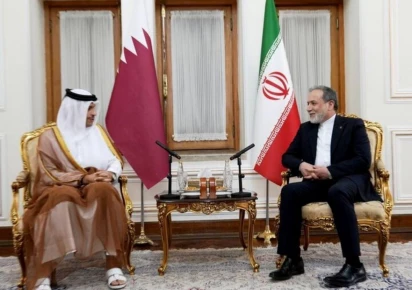
Iranian Foreign Minister Abbas Araghchi has said a return to diplomacy with the United States remains possible, but Washington must first accept that its pressure-based approach will not work.

Araghchi made the remarks on Friday after holding what he described as constructive and creative discussions with Qatar’s Prime Minister and Foreign Minister Jassim Al Thani.

The Iranian foreign minister said the United States should take steps to rebuild trust and engage Tehran through respectful dialogue. He also called on Washington to recognise Iran’s rights and honour commitments made under previous agreements.

The comments come amid heightened tensions between Iran and the United States, particularly over sanctions, maritime restrictions and the future of the Strait of Hormuz.

Iran and the US reached a 14-point memorandum of understanding in Islamabad in June through mediation by Pakistan and Qatar. The understanding included measures aimed at ending hostilities, reopening the Strait of Hormuz, removing a US naval blockade and beginning a 60-day negotiating process.

Tehran has since accused Washington of failing to implement important parts of the agreement. Iranian officials have maintained that the Strait of Hormuz will not be fully reopened until the United States fulfils its commitments.

The diplomatic dispute has also triggered a sharp exchange between Iranian and US officials.

Iranian Parliament Speaker Mohammad Bagher Ghalibaf criticised US Treasury Secretary Scott Bessent after Bessent accused Tehran of spending large amounts of money abroad while Iranian citizens face economic difficulties.

Ghalibaf rejected the criticism and argued that Washington should focus on its own domestic challenges rather than spending heavily on overseas military deployments and allies.

The latest statements come as the United States maintains pressure on Iran and closely monitors maritime traffic in the Strait of Hormuz, one of the world’s most important energy routes.

US Central Command said its forces had cleared sea mines from internationally recognised shipping lanes in the strait. Commander Admiral Brad Cooper said American military personnel from several branches had taken part in the operation.

According to US officials, American forces have helped commercial vessels pass through the waterway while also stopping ships accused of attempting to bypass the maritime blockade.

Iran, however, disputes Washington’s position and has warned that continued economic and maritime restrictions could provoke retaliation.

Iranian Supreme National Security Council Secretary Mohsen Rezaei said Tehran would target US economic interests if the blockade continued. He also claimed that Iran had managed to maintain significant oil exports and establish alternative routes despite restrictions.

Rezaei further warned against any military advance toward Beirut or southern Lebanon, calling the area a red line for Iran.

Similar Posts

  • |

    North Korea’s fake remote workers rake in $800m a year

    North Korean operatives have quietly built a hidden workforce inside American companies. They are using stolen identities, AI tools and fake profiles to secure remote jobs. The money earned through this scheme is funneled straight back to North Korea. Investigators say it could be channeling millions of dollars annually to Kim Jong Un’s regime. A new investigation pieced together leaked data, interviews and previously unseen videos to expose how the operation actually works. The findings offer a rare, detailed look at how Pyongyang’s undercover workers get recruited and placed. According to the investigation, a single tracked operative applied to more than 1,000 companies in just three months. That volume points to a highly organized, large-scale effort rather than isolated cases. Investigators also found that AI tools played a direct role in helping operatives write convincing cover letters and resumes. Screen recordings reportedly captured workers reading answers straight from ChatGPT during live hiring interviews. North Korea’s IT operatives typically rely on stolen American identities to pass candidate screening and background checks. Many are said to juggle multiple jobs simultaneously, all operating under the same stolen name. Some of these workers reportedly earn as much as $300,000 a year through these remote positions. The US Treasury Department has found that up to 90% of those earnings get funneled directly back to the regime. Officials estimate the overall operation generates as much as $800 million annually for North Korea. That scale has made it one of the more lucrative sanctions-evasion schemes uncovered in recent years. Investigators traced the flow of funds through a wider network involving North Korean IT workers and affiliated cybercriminals. That trail eventually led to a company being sanctioned by the US, reportedly tied to Pyongyang’s broader defence development program. The findings highlight how North Korea has adapted its sanctions-evasion tactics for the remote work era. By blending stolen identities with AI-assisted job applications, the regime has found a modern, low-visibility way to bypass international restrictions on its economy. As remote hiring becomes more common globally, cases like this are raising fresh questions about how companies verify who they’re actually hiring.

  • |

    FPCCI seeks industry consultation before revision of incremental power package

    ISLAMABAD: The Federation of Pakistan Chambers of Commerce and Industry (FPCCI) has called on the National Electric Power Regulatory Authority (Nepra) to consult industry representatives before making any changes to the Incremental Package for industrial electricity consumers. The business community has warned that revising the package without taking major industrial stakeholders into confidence could create market distortions, undermine the intended benefits of the scheme and potentially transfer additional costs to industries that do not qualify for incremental consumption incentives. In post-hearing comments submitted to Nepra on August 12, 2026, FPCCI said the regulator had already directed that the proposed changes to the Incremental Package should first be presented to and discussed with industry representatives before being brought back for approval. The federation welcomed the direction, describing meaningful stakeholder participation as essential for developing a workable electricity pricing mechanism for industrial consumers. FPCCI highlights delayed review FPCCI also raised concerns over the failure to conduct the package’s scheduled quarterly review. According to the federation, the Incremental Package was specifically designed to undergo a review every three months. However, no review had been conducted for approximately eight months. The federation said the prolonged delay had created uncertainty for industrial consumers and prevented the timely identification and correction of issues within the package. FPCCI urged Nepra to immediately carry out the overdue review and ensure that the quarterly review mechanism is followed consistently in the future. The federation argued that regular reviews were particularly important because industrial electricity consumption, production conditions and operating costs can change significantly over time. Major industry bodies seek participation FPCCI requested Nepra to formally engage leading industry organisations before the next hearing on the proposed revision. The organisations named by the federation include the Karachi Chamber of Commerce and Industry (KCCI), Korangi Association of Trade and Industry (KATI), All Pakistan Textile Mills Association (APTMA), as well as other major chambers and industrial associations. FPCCI said the participation of these organisations would allow the regulator to understand the practical challenges faced by different categories of industrial consumers. It stressed that the revised package should be based on actual industrial requirements and should not discriminate against existing consumers who are unable to qualify as incremental users. Warning against cost shifting The federation expressed concern that changes to the package could result in an unintended transfer of costs to non-incremental industrial units. FPCCI said any revised mechanism should ensure that incentives provided to additional electricity consumption do not create a financial burden for other consumers. It also called for clear safeguards to ensure that only genuine incremental electricity consumers receive the benefits of the package. According to the federation, the regulator should introduce mechanisms capable of preventing existing consumption from being presented as new or incremental demand merely to obtain preferential electricity rates. FPCCI maintained that a transparent verification system would be necessary to protect the integrity of the package and prevent potential misuse. Requests submitted to Nepra In its submission, FPCCI made a series of requests to the power regulator. The federation asked Nepra to formally consult FPCCI, KCCI, KATI, APTMA and other major industry bodies before the next hearing. It also requested the authority to provide sufficient advance notice of the date and time of any consultation, along with an online meeting link, so that FPCCI could coordinate participation by relevant chambers, associations and industrial representatives. The federation further sought a formal opportunity to present detailed recommendations on the proposed redesign of the Incremental Package. It called for safeguards restricting benefits to genuine incremental units and urged Nepra to immediately conduct the quarterly review that has remained pending for the past eight months. FPCCI also proposed making consultation with major industrial chambers and associations mandatory before any future revision or review of the Incremental Package or similar electricity pricing schemes. Invitation to power-sector institutions In a further effort to promote direct dialogue, FPCCI invited Nepra, the Power Planning and Monitoring Company (PPMC) and the Central Power Purchasing Agency-Guaranteed (CPPA-G) to visit its head office in Karachi. The federation proposed holding detailed discussions with the relevant institutions in the presence of industry representatives. FPCCI said direct engagement would provide an opportunity for all stakeholders to examine the existing mechanism, identify practical shortcomings and develop solutions based on actual operating conditions in the industrial sector. It maintained that consultation could help bridge the gap between regulatory objectives and the realities faced by industrial consumers. Industry seeks predictable power policy The dispute over the Incremental Package comes amid continued concerns among industrial consumers over electricity costs, competitiveness and the predictability of power-sector policies. For export-oriented and energy-intensive industries, electricity pricing is a major component of production costs. Business representatives have therefore repeatedly called for stable and transparent tariff mechanisms that allow companies to plan production and investment decisions. FPCCI said any changes to the Incremental Package should balance the objective of increasing electricity consumption with the need to maintain fairness among different categories of industrial consumers. The federation believes that a properly designed package, supported by regular reviews and meaningful industry consultation, could encourage additional industrial electricity consumption without imposing unintended costs on existing consumers.

  • |

    Shahood Alvi sparks controversy with candid marriage remarks

    Pakistani television actor and director Shahood Alvi has once again found himself at the centre of social media discussions following his candid remarks about marriage, relationships and the role of women in maintaining a healthy relationship. Shahood began his showbiz career at Pakistan Television as a boom operator alongside his maternal uncle, Iqbal Ansari. He later moved into acting and gradually established himself as a recognised performer through his work in several popular television dramas. The actor is married to Saima Shahood, and the couple has three daughters, Areeba, Sajal and Arija, all of whom are now married. Shahood frequently appears on morning shows, particularly programmes that feature discussions about marriage, relationships and family life. During a recent television appearance alongside actresses Laila Zuberi and Fariha Awan, Shahood shared his views on why some husbands may lose interest in their wives. His comments, however, quickly attracted attention and divided opinions online. Discussing the possible reasons behind a decline in a husband’s interest, Shahood suggested that women who spend most of their time at home may sometimes carry the smell of ingredients such as ginger and garlic from cooking. He contrasted this with men working in offices, where they may encounter women wearing perfumes. He questioned why a husband would remain attracted if his wife smelled of cooking ingredients, while women in offices might be dressed up and wearing fragrance. The actor also made another controversial remark when the discussion turned towards seeking professional help for marital problems. When Fariha Awan suggested therapy as an option for couples facing difficulties, Shahood jokingly questioned what would happen if a therapist ran away with someone’s wife. He repeated the warning while referring to psychiatrists, describing it as a humorous concern. Shahood further said that spending excessive amounts of time on a mobile phone could be a negative sign in a marriage. He suggested that women should also make an effort to regain their husbands’ attention by preparing food they enjoy and getting ready before their husbands return home. Laila Zuberi agreed that making an effort to look presentable for one’s spouse has traditionally been viewed positively. Recalling her childhood, she said she remembered her mother applying lipstick before her father returned home. Fariha Awan also supported the idea that women could make additional efforts to present themselves well before their husbands came home. Shahood went on to discuss his own marriage, saying he had tried to teach his wife several practical tasks, including paying bills, shopping for groceries and driving. However, he said jokingly that she never learned these skills and referred to her humorously as a “stubborn one.” He also recalled advice from actress Bushra Ansari, who had discouraged his wife from learning how to drive. According to Shahood, Bushra believed that once housewives learned to drive, their responsibilities could increase because they might then be expected to take children to school and bring them back. Following the television appearance, Shahood’s comments have sparked mixed reactions on social media. While some users criticised his remarks as outdated or insensitive, others viewed them as part of the informal and humorous nature of morning-show conversations. Despite the debate, Shahood’s comments have once again placed discussions surrounding marriage, expectations from spouses and gender roles in the spotlight.

  • | |

    GCU Lahore goes fully paperless in major digital s…

    LAHORE: Government College University (GCU) Lahore has officially moved its administrative operations to a fully paperless digital system, marking a major step towards modernising governance and reducing reliance on traditional office files. The transformation has been achieved through the implementation of the e-Filing and Office Automation System, a cloud-based digital platform developed by the Punjab Information Technology Board (PITB). The system has been provided to the university free of cost under special directions from the Punjab government, according to university officials. Under the new framework, administrative processes across GCU’s departments will now be handled online through a single digital platform. Routine matters such as leave applications, travel permissions, annual performance reports, official orders and departmental correspondence can now be processed electronically. The university said the system would also cover digital note sheets for proposals between departments, approval of payments for visiting faculty, purchase requests and agendas for departmental meetings. No more files moving from desk to desk One of the most significant changes will be the elimination of the traditional practice of physically moving files from one office to another. Instead, officials will be able to create, review, approve and track documents digitally through the cloud-based platform. This is expected to improve administrative efficiency while making it easier to monitor the progress of official matters. GCU Vice Chancellor Professor Muhammad Umar Chaudhry described the transition as more than an environmental initiative, saying digital governance was essential for a modern educational institution. He said moving administrative affairs away from paper would strengthen transparency, speed and accountability, while reducing delays associated with manual file tracking. According to the vice chancellor, removing routine administrative delays would allow faculty members and heads of departments to devote more time to teaching and research. Part of wider digital transformation The university said the paperless initiative is part of a broader digitalisation drive launched during the previous academic year under the vice chancellor’s leadership. Before implementing the complete e-office system, GCU had introduced online approval mechanisms for student society events and digital billing for payments to visiting faculty members. The administration is now preparing to take the process further with the planned launch of a comprehensive e-Services Portal. The upcoming platform is expected to streamline requests related to campus maintenance and other facilities. Officials hope the system will allow infrastructure-related problems to be reported and addressed more quickly without disrupting academic activities. Alumni records also going digital GCU’s digital reforms are not limited to current campus operations. The university is also working on a major project to digitise the records of its alumni, expanding technology-based management beyond day-to-day administration. The move towards a paperless campus could ultimately reduce paperwork, improve record management and provide university officials with faster access to important information. With administrative processes increasingly moving online, GCU Lahore is positioning itself as an example of how Pakistan’s public-sector universities can use digital technology to make governance faster, more transparent and more efficient.

  • |

    Jennifer Aniston’s new focus has friends worried

    Jennifer Aniston is reportedly making a major life shift that has left people close to her uneasy. A source close to the actress shared details with Closer magazine. According to the insider, Aniston’s priorities have visibly changed in recent months. She is said to be turning down acting work at a notable rate. Instead, she is putting most of her energy into supporting boyfriend Jim Curtis and his career. The source suggested her involvement goes well beyond typical relationship support. Curtis works as a hypnotherapist, life coach and author. His work centeres on subconscious reprogramming and emotional healing techniques, according to earlier reporting. He also has a son named Aidan from a previous marriage. The insider went further, claiming Aniston may be considering training as a hypnotherapist herself. There is reportedly talk of her getting involved in his business on a deeper level. Friends worry this signals a bigger shift away from her acting career. The source added that people around her have noticed the change. They worry she’s making a mistake at the expense of her career. The comment reflects growing concern within her circle about her shifting priorities. Over the past year, Aniston has reportedly stepped back from projects she once seemed committed to. One notable example involves a planned TV adaptation. It was based on Jennette McCurdy’s bestselling memoir, “I’m Glad My Mom Died.” Aniston had appeared aligned with the project for months before pulling back. Fans and industry watchers have taken note of her reduced on-screen presence lately. Some see it as a natural pause after decades in the spotlight. Others share the concerns raised by those close to her. For now, neither Aniston nor her representatives have addressed these claims publicly. It remains unclear whether her career pace will pick back up soon. Her relationship with Curtis, meanwhile, appears to be deepening steadily.

  • | |

    IRGC warns UK of retaliation as US maintains naval…

    TEHRAN: Tensions between Iran and the United States have escalated further after Iran’s Islamic Revolutionary Guard Corps (IRGC) warned that any country assisting Washington in military operations against Tehran could become a legitimate target, while the US confirmed its naval blockade on Iran remains fully operational. An IRGC spokesperson, speaking to Iranian state media, warned that countries providing logistical or military support to the United States—including the United Kingdom—would face retaliation. The official alleged that US B-1 bombers had recently used British bases during strikes on Iran, claiming any nation involved in such operations would be treated as a direct participant in the conflict. The warning came as reports emerged that US President Donald Trump has temporarily suspended plans for additional strikes on Iran after nearly two weeks of continuous military operations. According to US media, the decision was influenced by concerns over dwindling missile defence stockpiles, the risk of wider regional escalation and the desire to allow more room for diplomatic efforts. Despite the pause in airstrikes, the United States Central Command (CENTCOM) said its naval blockade against Iran remains in force. US forces reported intercepting several commercial vessels suspected of attempting to breach the blockade, redirecting multiple ships, disabling one vessel that ignored repeated warnings and carrying out verification inspections on others before allowing them to continue their voyages. US officials said contingency plans remain in place should military operations resume, underscoring that Washington is maintaining pressure on Tehran while keeping diplomatic options open. Meanwhile, Iran’s latest warning has added to growing concerns that the confrontation could draw more regional and international actors into the crisis.

Leave a Reply

Your email address will not be published. Required fields are marked *