ben affleck wins
| |

Ben Affleck wins rare $1 million Who Wants to Be a Millionaire prize

Hollywood star Ben Affleck and Jeopardy! champion Jamie Ding secured the top prize on Who Wants to Be a Millionaire, winning $1 million for charity after correctly answering the game’s final question in one of the show’s rare celebrity jackpot victories.
The pair claimed the grand prize during the July 30 episode of the ABC quiz show, hosted by Jimmy Kimmel. Their winnings will benefit Eastern Congo Initiative, the nonprofit organisation Affleck co-founded to support community-based development projects in the Democratic Republic of Congo.
The episode resumed with Affleck and Ding already just two questions away from the million-dollar prize after carrying over from the previous week’s episode. Before the game continued, Affleck explained the mission of the Eastern Congo Initiative, saying the organisation works alongside local communities in a region that has endured years of conflict.
The $500,000 question asked which historic achievement occurred only two months after The New York Times predicted it would not happen for “1 million to 10 million years.” The possible answers included splitting the atom, cloning a mammal, the first airplane flight and the polio vaccine.
Ding immediately believed the correct answer was the Wright brothers’ first airplane flight, while Affleck recalled reading about the newspaper’s famous misjudgment years earlier. To be safe, the pair used their 50:50 lifeline, leaving only two options. They ultimately trusted Ding’s instinct and correctly selected the first airplane flight, advancing to the final question.
The million-dollar question proved even more challenging. Contestants were asked which pair of names had not been used for turkeys pardoned by a U.S. president during the annual White House Thanksgiving tradition.
After debating the possible answers, Affleck and Ding turned to host Jimmy Kimmel using the Ask-the-Host lifeline. Kimmel admitted he was not completely certain but suggested “Spaghetti & Meatball” seemed unlikely to have been used.
The pair also attempted to use their Phone-a-Friend lifeline, but Ding’s friend was unable to provide a definite answer. With no better option available, Affleck decided to trust Kimmel’s judgment, and the duo locked in “Spaghetti & Meatball.” It proved to be the correct answer, earning them the $1 million prize.
As confetti filled the studio, Affleck and Ding embraced in celebration while Kimmel announced their victory. The win places them among the small number of celebrity contestants to claim the show’s top prize, joining previous million-dollar winners including Matt Damon and Ken Jennings, Ike and Alan Barinholtz, and Oscar Nuñez and Kate Flannery.
Affleck’s appearance on the programme not only showcased his trivia skills but also raised significant funds for a cause he has supported for years, making the rare television triumph both entertaining and meaningful.
Similar Posts

  • |

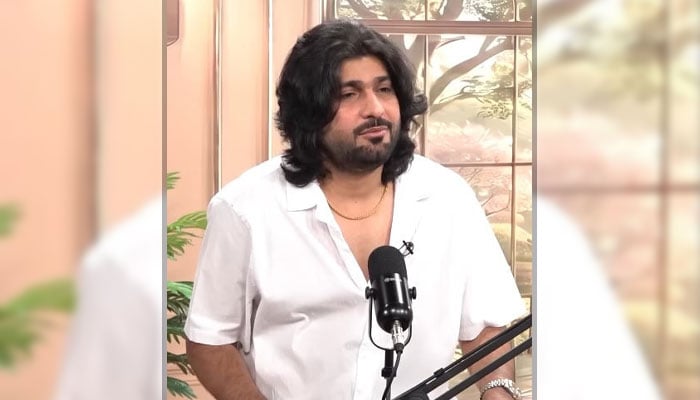
    Zeeshan Rokhri claims Sangeeta offered low pay for film Makho

    Pakistani singer Zeeshan Rokhri has claimed that he turned down an acting offer for the upcoming film Makho because of what he described as an unacceptably low payment. During a recent interview, the singer alleged that filmmaker Sangeeta offered significantly lower compensation than he expected and also claimed that veteran actor Moammar Rana was being paid only PKR 500,000 for his role in the project. According to Rokhri, he was approached to appear in Makho and was asked to work on the film for approximately eight days. He said he quoted a fee of PKR 10 million for the role, believing it reflected the value of his time and contribution. The singer claimed that during discussions, Sangeeta’s team informed him that Moammar Rana, one of Pakistan’s most recognizable film actors, had been signed for the project for PKR 500,000. Rokhri said he was surprised by the figure and decided not to join the film. Expressing his disappointment, Rokhri argued that paying a senior actor such a modest amount does little to support the country’s entertainment industry. He said artists deserve compensation that reflects their experience and contribution, adding that better financial investment is necessary if Pakistan’s film industry hopes to compete with larger regional markets. “If we want our film industry to grow and compete with Bollywood, then the budgets also need to match that ambition,” Rokhri said during the interview. He added that performers should be compensated accordingly if the industry expects high-quality productions and long-term development. Makho is an upcoming Pakistani film directed by veteran actress and filmmaker Sangeeta. The project was announced under a government-backed film grant initiative and features Moammar Rana among its cast. Sangeeta, a prominent figure in Pakistan’s entertainment industry, has enjoyed a long career both in front of and behind the camera. Moammar Rana rose to fame during the peak years of Pakistani cinema and has appeared in numerous successful films throughout his career. Although he remains a well-known name in the industry, the actor has faced challenges in recent years, including public criticism following the circulation of a controversial video online. Rokhri’s remarks have sparked widespread discussion across social media, where users expressed mixed opinions about the reported payment and the future prospects of the film. Some users argued that Moammar Rana’s commercial appeal has declined over the years, suggesting that his reported fee reflects his current market value. Others questioned whether the budget of the film justified higher payments for its cast. Several commenters also expressed skepticism about Makho, with some predicting that the film may struggle at the box office due to what they described as its traditional style and outdated approach. Neither Sangeeta nor the makers of Makho have publicly responded to Rokhri’s claims regarding the reported salaries or the film’s budget. As a result, the payment figures shared by the singer remain unverified, and no official confirmation has been issued by the production team.

  • | |

    Pakistan invites foreign investors as UK peer prai…

    Interior Minister Mohsin Naqvi has assured foreign investors of full government support, saying Pakistan is ready to facilitate investment and provide opportunities across different sectors. Naqvi made the remarks during a meeting with British House of Lords member Lord Zamir Choudrey in Islamabad on Saturday. The interior minister said Pakistan has significant investment potential and that the government wants to create an environment where foreign investors can operate with greater confidence. He assured investors that all possible facilities would be provided to support their business activities in the country. The discussion also covered regional peace and stability. Naqvi said Pakistan was continuing its efforts to promote lasting peace in the region. He expressed optimism that the country’s diplomatic and peace initiatives would produce positive results. Lord Zamir Choudrey appreciated Pakistan’s efforts to contribute to regional stability. He also praised Prime Minister Shehbaz Sharif and Chief of Defence Forces and Chief of Army Staff Field Marshal Asim Munir for their efforts to promote peace. Choudrey said the government’s policies were helping create new opportunities for investment in Pakistan. The meeting comes as Islamabad seeks to strengthen economic ties with international partners while promoting Pakistan as an attractive destination for foreign investment. Pakistan has also been increasing cooperation with China on security and counterterrorism matters. Earlier this month, Naqvi met Chinese Minister of State for Public Security and Special Service Bureau chief Ling Zhifeng at the United Nations headquarters in New York. The two sides agreed to strengthen cooperation in internal security. Their discussions included border management, illegal immigration and efforts against drug trafficking. Meanwhile, security concerns surrounding Chinese nationals working in Pakistan remain a major issue. The CPEC Secretariat has decided to purchase a new bulletproof vehicle costing Rs95 million to strengthen security arrangements for Chinese citizens. The vehicle will reportedly be a 3,500cc Toyota Land Cruiser. It will be added to the existing fleet of security vehicles used for the protection of Chinese nationals. Government departments have also acquired or are seeking additional bulletproof vehicles and helicopters for security purposes. Officials have said Chinese citizens face significant security risks in Pakistan. As a result, they are generally restricted from travelling in ordinary, non-bulletproof vehicles. Planning Minister Ahsan Iqbal said the protection of Chinese nationals is a key responsibility of the Pakistani government. The purchase also highlights the security challenges linked to major China-Pakistan economic projects. The government is balancing efforts to attract more foreign investment with measures aimed at improving the security of international investors and workers.

  • | |

    Poor internet access threatens girls’ education …

    PESHAWAR: Poor internet connectivity is creating serious problems for girls pursuing education in the merged districts of Khyber-Pakhtunkhwa. Students in remote areas often struggle to attend online classes. They also face difficulties downloading study material and submitting assignments. For 16-year-old Khadija Bibi from Kurram district, finding an internet signal has become part of her daily life. During the summer holidays, she often leaves her home and climbs a nearby hill. She carries her mobile phone with her. She stands on the rocky slope and searches for a stronger signal. She uses the limited connection to download lecture notes and complete academic tasks. She also tries to attend online classes from the hill. However, the weak network frequently disconnects. This causes her to miss lessons and submit assignments late. Khadija is a BS Computer Science student at Benazir Women University Peshawar. She said unreliable internet had become one of the biggest challenges in her education. She said students in remote areas were being left behind as education increasingly depended on digital technology. The problem is not limited to Kurram. Thousands of girls across the merged districts face similar difficulties. The region already has several major education challenges. Poverty remains a serious obstacle. Insecurity has also affected access to education. Many areas also lack proper schools and other educational facilities. The digital divide has added another challenge. Several schools in the merged districts either do not have computer laboratories or have laboratories without working computers. Some also lack internet connections. This prevents students from gaining basic computer skills. It also makes online education difficult. Official data highlights the wider education crisis in the region. Benazir Income Support Programme data shows that 66 per cent of children in North Waziristan are out of school. The rate stands at 63 per cent in Bajaur. It is 61 per cent in South Waziristan. Mohmand and Khyber each record an out-of-school rate of 51 per cent. Kurram and Orakzai each have a rate of 47 per cent. Girls face additional difficulties because of limited access to technology. The Khyber-Pakhtunkhwa Women Empowerment Policy 2026-2030 highlights the scale of the digital divide. According to the policy, only 11 per cent of women in the merged districts have access to the internet. The female literacy rate is also extremely low. It stands at only 17 per cent. Education and digital inclusion advocates say poor infrastructure is a major reason for the situation. Weak mobile networks make internet access unreliable. Many families also cannot afford smartphones or regular internet packages. Some girls have to borrow phones from family members. This makes it difficult for them to attend online classes regularly. Access to technology is also affected by social restrictions. In some communities, families remain concerned about girls using mobile phones and the internet. Concerns about online safety and social pressure often result in restrictions. Cultural norms can also limit girls’ access to digital technology. Experts say improving internet coverage alone will not solve the problem. Girls also need greater freedom to travel to schools, universities and training centres. Better transport facilities could help students reach educational institutions more easily. It could also improve access to vocational training and employment opportunities. Experts have urged the provincial government and telecommunications authorities to give greater attention to the merged districts. They say residents should receive reliable internet services similar to those available in settled areas. Improved digital infrastructure could transform educational opportunities for girls in remote communities. Reliable internet would allow students to attend online classes without travelling long distances. They could access digital libraries and educational resources. They could also develop computer skills and participate in online training programmes. For students like Khadija, internet access is more than a technological facility. It is directly linked to education and future opportunities. Without reliable connectivity, many talented girls may continue to struggle despite their willingness to study. Addressing the digital divide therefore requires investment in telecommunications infrastructure, schools, digital devices and affordable internet services. It also requires efforts to remove social barriers that prevent girls from using technology.

  • |

    Japan unveils first spy agency since WWII

    Japan has launched its first centralized intelligence agency since the end of World War II. The move marks one of the country’s biggest security reforms in decades. It comes as Japan faces rising regional tensions and growing concerns over espionage, cyber threats, and global instability. The new body is called the National Intelligence Bureau (NIB). It officially began operations on Friday. It replaces the Cabinet Intelligence and Research Office (CIRO), which had served as Japan’s main intelligence office for years. However, experts often criticized the old system for lacking authority and coordination. Prime Minister Sanae Takaichi described the new agency as the first step in a broader intelligence reform plan. She said today’s security environment is changing rapidly. According to her, modern conflicts now involve cyberattacks, intelligence operations, and other non-traditional forms of warfare. She stressed that Japan must strengthen its intelligence capabilities to protect national security. The National Intelligence Bureau will collect, analyze, and coordinate intelligence gathered by various government departments. These include the ministries of defense, foreign affairs, justice, and the National Police Agency. Under the new system, government agencies will be required to share information with the bureau. Officials believe this will improve cooperation and eliminate delays caused by fragmented intelligence networks. The bureau will work under the newly created National Intelligence Council. The council will be chaired by the prime minister and include senior cabinet ministers. It will oversee national intelligence policy and coordinate responses to major security threats. The agency’s responsibilities will cover a wide range of issues. These include counterterrorism, emergency response, cybersecurity, foreign espionage, and efforts to detect covert influence operations carried out by hostile states. Security analysts have long argued that Japan’s intelligence system has been weaker than those of many other developed countries. Unlike several of its close allies, Japan does not have a dedicated foreign intelligence agency that operates overseas. The country also lacks a comprehensive anti-espionage law, making it more difficult to investigate and prosecute espionage activities. Experts say these weaknesses have raised concerns among Japan’s international partners. Countries sharing sensitive intelligence expect strong security measures to prevent leaks. A weak intelligence system can reduce confidence and limit intelligence cooperation. Calls for reform are not new. In the 1980s, former Prime Minister Yasuhiro Nakasone warned that Japan had become a “paradise for spies.” He proposed stronger anti-espionage laws, but the plan faced strong public opposition and was never approved. At the time, many Japanese feared that expanding intelligence powers could revive the surveillance and repression experienced before and during World War II. Today, the security situation is very different. Japan faces increasing military and strategic challenges from China, North Korea, and Russia. The country also hosts thousands of US military personnel, making it an important strategic partner in the Indo-Pacific region. Officials believe foreign intelligence services are actively seeking information about Japan’s defense systems, advanced technology, and military cooperation with its allies. Growing military cooperation among China, Russia, and North Korea has also increased concerns in Tokyo. Their joint military activities and closer political ties have reinforced the belief that Japan must strengthen its national security institutions. Prime Minister Takaichi has made defense and intelligence reform a key priority since taking office. With strong support in parliament, her government is expected to push for further changes. These may include introducing an anti-espionage law and creating a dedicated foreign intelligence service similar to those operated by other major democratic nations. Despite the government’s arguments, the reforms remain controversial. Opposition lawmakers and civil rights groups warn that expanding intelligence powers could threaten privacy and individual freedoms if proper safeguards are not introduced. They argue that stronger oversight, parliamentary scrutiny, and independent monitoring will be essential to prevent misuse of power.

  • | | |

    Pakistan pushes stronger ties with Belarus, Centra…

    Pakistan has renewed its commitment to strengthening relations with Belarus and Central Asian countries. Deputy Prime Minister and Foreign Minister Ishaq Dar held separate meetings with the foreign ministers of Belarus, Kazakhstan, Tajikistan and Uzbekistan in Cholpon-Ata, Kyrgyzstan. The meetings were held on the sidelines of the Shanghai Cooperation Organisation (SCO) Council of Foreign Ministers meeting.The discussions focused on bilateral relations, trade, investment, regional connectivity and security. Dar met Belarusian Foreign Minister Maxim Ryzhenkov and reviewed the progress of relations between the two countries.The two sides agreed to expand cooperation in several important areas. These include trade, investment, defence, agriculture, technology and workforce exchanges.They also discussed ways to strengthen economic ties and increase bilateral business activity. Pakistan and Belarus are also preparing for the next session of their Joint Ministerial Commission.The ninth session is scheduled to take place in Islamabad on August 11 and 12, 2026. The two countries are expected to use the meeting to explore new areas of cooperation.Dar and Ryzhenkov also discussed regional developments. The Belarusian foreign minister appreciated Pakistan’s diplomatic efforts to support dialogue and promote peace and stability in the region. Dar also met Kazakhstan’s Foreign Minister Yermek Kosherbayev.The two ministers reviewed the positive progress in relations between Pakistan and Kazakhstan. They agreed to accelerate the implementation of agreements reached during recent high-level exchanges.A key focus was the implementation of 37 memorandums of understanding signed during a high-level visit. The two countries also agreed to increase cooperation in trade, investment, transport, energy and regional connectivity. People-to-people contacts and cooperation at international forums were also discussed.Kosherbayev appreciated Pakistan’s efforts to support regional peace and diplomacy. He also invited Dar to visit Kazakhstan.The Pakistani foreign minister accepted the invitation and said the visit would take place at a mutually convenient time. In another meeting, Dar held talks with Tajik Foreign Minister Sirojiddin Muhriddin.Both sides described Pakistan-Tajikistan relations as close and longstanding. They agreed to further expand cooperation in several sectors.These include trade, investment, energy, connectivity and culture. The two ministers also highlighted the importance of stronger people-to-people contacts.They agreed that regular high-level exchanges could help deepen bilateral relations. The two sides also discussed regional and global developments.They stressed the importance of cooperation through international and multilateral platforms. Tajikistan also expressed support for Pakistan’s efforts to promote peace and the peaceful resolution of regional issues.Dar also met Uzbek Foreign Minister Bakhtiyor Saidov. The two ministers reaffirmed the importance of the Pakistan-Uzbekistan strategic partnership. They reviewed progress in bilateral cooperation.Trade, investment, connectivity, energy, culture and people-to-people relations were among the key areas discussed. Dar and Saidov also stressed the importance of stronger links between the business communities of both countries. They said closer business engagement could help increase trade and investment.The two ministers also discussed the implementation of understandings reached during Uzbek President Shavkat Mirziyoyev’s recent visit to Pakistan. They agreed that existing agreements should be converted into practical projects through timely implementation. Regional and global developments were also discussed.Saidov appreciated Pakistan’s diplomatic efforts to promote regional peace and stability. Both sides expressed hope that dialogue and diplomacy would continue to support lasting peace in the region. Dar’s meetings took place during his visit to Kyrgyzstan for the SCO Council of Foreign Ministers meeting. Pakistan used the diplomatic engagement to highlight its longstanding relations with SCO member states. Islamabad also reaffirmed its readiness to assume the SCO chairmanship for 2026–27.Pakistan has expressed its intention to promote greater cooperation among member states. The focus will include socioeconomic development, regional connectivity and mutual economic benefits. Dar also attended an informal dinner hosted by Kyrgyz Foreign Minister Zheenbek Kulubaev for visiting dignitaries. During the visit, Dar met Kyrgyz President Sadyr Zhaparov and conveyed greetings from Pakistan’s leadership.He expressed Islamabad’s desire to strengthen cooperation with Kyrgyzstan across different sectors. Dar later led Pakistan’s delegation at the SCO ministerial meeting. In his national statement, he reaffirmed Pakistan’s commitment to the SCO Charter and the principles of the Shanghai Spirit.These principles include mutual trust, mutual respect, shared prosperity and development. Pakistan has also invited SCO member states to attend the SCO Council of Heads of State summit in Pakistan next year.The government says Islamabad’s upcoming SCO leadership will provide an opportunity to strengthen regional cooperation and deepen economic and diplomatic ties with member states.

  • | |

    LHC grants bail to Libya boat tragedy suspect

    The Lahore High Court (LHC) has granted post-arrest bail to Muhammad Tahir, a suspect in the Libya boat tragedy case, ruling that investigations into international human trafficking cases must be supported by credible and legally admissible evidence rather than mere suspicion. Justice Amjad Rafiq issued a detailed 10-page written verdict explaining the reasons for granting bail. The court observed that allegations of human trafficking, being an international crime, require thorough and professional investigations based on concrete evidence. The court noted that the Federal Investigation Agency (FIA) should have obtained evidence from abroad and sought legal assistance from relevant international authorities during the investigation. It said cooperation with foreign agencies is essential in cases involving cross-border human trafficking. According to the written order, investigators should have collected digital and documentary evidence, including WhatsApp chats, call records, bank records, travel documents and other electronic data. The court stressed that such evidence is necessary to establish the active role of an accused in an alleged trafficking network. The judgment further stated that the standard of investigation must be strong enough to legally prove an accused person’s involvement rather than relying on assumptions or incomplete evidence. The court also highlighted the need for reforms to effectively combat human trafficking. It said stronger legislation, improved investigative methods and better law enforcement mechanisms are essential to tackle organised trafficking networks. The LHC ruled that the transfer of money into a person’s bank account alone cannot be treated as proof of involvement in human trafficking. It added that suspicion, speculation or banking transactions by themselves are insufficient to establish criminal liability in such cases. The court ordered the release of Muhammad Tahir on post-arrest bail against surety bonds of Rs500,000, subject to the conditions set by the court. The case will continue in accordance with the law while further investigation proceeds.

Leave a Reply

Your email address will not be published. Required fields are marked *