bessent tells allies
| |

Bessent tells allies to pick a side as US ramps up…

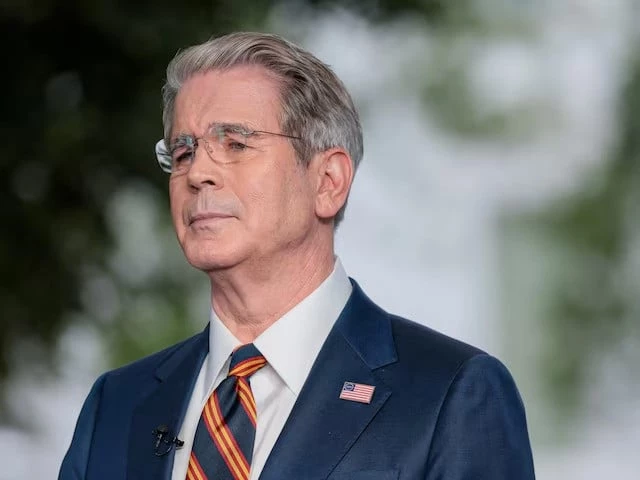
US Treasury Secretary Scott Bessent has told Washington’s allies they must choose between backing or opposing the United States’ push to economically isolate Iran, as President Donald Trump moves to intensify pressure on Tehran.

Bessent told a US broadcaster that the campaign would amount to the largest coordinated economic isolation effort in history, framing the choice facing allied nations as a binary one. Asked whether Washington intends to pressure China into joining the effort, Bessent said certain conversations are best conducted privately, while urging Beijing to align itself with the campaign. He said the administration’s plan to sharply escalate sanctions and economic pressure on Iran is ultimately designed to bring down the Iranian government, predicting the strategy would work and lead to the regime’s collapse. Bessent added that expanded economic pressure could actually lower the odds of the United States resuming large scale military action against Iran, arguing that a maximum pressure economic approach makes a return to major combat operations less likely. He said he plans to hold a press conference Monday to detail the administration’s next steps regarding Iran.

Iran’s foreign ministry condemned the latest round of US sanctions, calling them a violation of international law and an attempt to undermine the country’s sovereignty. In a statement, the ministry said Washington had unveiled comprehensive economic sanctions despite previously claiming its measures targeted the government rather than ordinary Iranians. Tehran argued there is no legal or economic justification for the sanctions and described them as part of a broader US policy that threatens the international system and undermines rules governing relations between states. The ministry said the sanctions explicitly target Iranian citizens and institutions and represent a continuation of hostile American policy, adding that economic pressure functions as the flip side of military aggression. Iranian officials called the new measures a repeat of a strategy that has already failed and said the country would not bow to the pressure, vowing to defend its sovereignty and respond to what it characterized as hostile US actions.

Separately, Egypt and Qatar emphasized the need for continued coordination toward a final, sustainable agreement to end the broader Middle East war while addressing the concerns of Gulf states, according to a statement from Qatar’s foreign ministry. The two countries discussed regional developments and diplomatic efforts aimed at reducing tensions and strengthening stability, and both underscored the importance of reopening the Strait of Hormuz and protecting the security and freedom of maritime navigation, calling uninterrupted trade through the waterway essential to both regional and global economic stability.

Qatari Foreign Minister Sheikh Mohammed bin Abdulrahman bin Jassim Al Thani said traffic through the Strait of Hormuz needs to return to pre war conditions, adding that no party to the conflict should attempt to pressure or blackmail the other. Speaking at a press conference following talks in El Alamein, Egypt, he said the war’s consequences have been severe both within the Gulf region and beyond, and called for a return to how things stood before the conflict began, condemning any threats or obstacles standing in the way.

Iran’s Revolutionary Guards warned separately that Saudi Arabia will be unable to contain Yemen’s Houthi movement as the group escalates attacks on the kingdom. A Guards spokesman said Saudi Arabia cannot stay safe from Houthi attacks, arguing that recent days have shown that the more the kingdom strikes, the more it gets hit in return.

Iranian Foreign Minister Abbas Araghchi dismissed Trump’s economic threats as an attempt to distract American public attention from domestic financial troubles, including record debt levels and rising interest costs. He said Washington’s continued reliance on what he called failed policies would only produce further failures and further alienate the Iranian public, describing US economic pressure as a threat to the global economy and to national sovereignty more broadly. Deputy Foreign Minister Kazem Gharibabadi added that the US has shifted to what he called an economic war after failing to achieve results militarily, arguing that Washington’s need to compensate for miscalculations is driving it toward a bigger failure.

Iranian Parliament Speaker Mohammad Bagher Ghalibaf, during a visit to Baghdad, met with Faiq Zaidan, president of Iraq’s Supreme Judicial Council, and blamed the United States for recent regional conflicts and disruptions to Gulf energy routes, while highlighting opportunities for deeper cooperation between Iran and Iraq.

Separately, Iranian state media reported that authorities executed a man identified as Qaem Hosseini, a foreign national, over charges tied to his alleged role in nationwide protests in January, including accusations that he participated in events that led to the deaths of security force members.

Trump underscored the stakes of the broader campaign in a social media post Wednesday evening, warning that any country allowing its financial institutions, businesses, airports or government entities to provide Iran with any kind of lifeline would face tremendous economic consequences. He promised what he called economic warfare and isolation on an unprecedented scale, though he offered few specific details. The war between the US and Iran, now in its sixth month, has killed thousands of people and drawn in countries across the Gulf, rattling global markets as Iran demonstrated its ability to disrupt shipping through the Strait of Hormuz, a waterway that carried roughly a fifth of the world’s traded oil before the conflict began. Two previous ceasefire agreements between Washington and Tehran, announced in April and June, both collapsed shortly after being reached, even as Israel has largely pulled back from direct fighting with Iran to focus its attacks on civilian infrastructure in Lebanon.

Similar Posts

  • |

    Iran vows to resist new US sanctions as China rejects pressure

    TEHRAN: Iran has vowed to strengthen its economy and find ways to withstand what it calls unjustified US sanctions, as Washington prepares to announce a new package of economic measures against Tehran. Iranian Parliament Speaker Mohammad Bagher Ghalibaf made the remarks during a meeting with Iranian and Iraqi business representatives in Baghdad on Friday. Ghalibaf said economic strength and national security were closely connected. He accused the United States and Israel of using economic and political pressure after failing to achieve their objectives through direct military confrontation. He called for stronger economic cooperation between Iran and Iraq. He also suggested that the two neighbours increase trade using their national currencies to reduce dependence on the US dollar. Ghalibaf said Iran and Iraq should focus on economic development and shared prosperity despite pressure from Western countries. The comments came a day after US Treasury Secretary Scott Bessent announced plans for what he described as the toughest sanctions ever imposed on Iran. Bessent said further details of the measures would be released on Monday. He suggested that maximum economic pressure could reduce the need for another major military operation against Iran. US President Donald Trump has also warned countries and businesses against providing financial or economic support to Tehran. Trump described the planned campaign as an unprecedented effort of economic warfare and isolation. He warned that countries allowing financial institutions, companies, airports or government bodies to provide assistance to Iran could face severe economic consequences. Iran has strongly rejected the US pressure. Its Foreign Ministry described the latest sanctions as economic terrorism and said they would not weaken Iran’s determination to protect its independence and sovereignty. Iranian Foreign Minister Abbas Araghchi also accused Washington of trying to divert attention from economic problems inside the United States. China rejects sanctions strategy China has opposed Washington’s approach and said sanctions and economic pressure would not solve the conflict. Chinese Foreign Ministry spokesman Lin Jian called on all sides to adopt responsible measures and seek a political and diplomatic solution. China has significant economic ties with Iran and remains a major buyer of Iranian oil. Data from energy analytics firm Kpler indicated that China accounted for more than 80% of Iran’s shipped oil purchases in 2025. The issue could further complicate US-China relations. Washington has warned against economic cooperation with Tehran, while China has repeatedly criticised unilateral sanctions. Bessent said the United States was seeking cooperation from its allies and other countries. He argued that China had a strong interest in maintaining stability in the Gulf because a significant portion of its energy supplies comes from the region. The latest sanctions threat comes as the wider Middle East conflict continues to disrupt energy markets and regional trade. Oil prices rose after Trump announced plans for stronger economic measures against Iran. The conflict has affected oil supplies and raised concerns about shipping through the Strait of Hormuz. The strategic waterway handles a significant share of global oil trade and has become a major point of tension during the conflict. The United States and Iran have announced ceasefire agreements on two occasions in recent months, but both arrangements have broken down. Iran now faces growing economic pressure from Washington while attempting to maintain trade and regional partnerships.

  • | |

    Bank operation manager, accomplice arrested over K…

    KARACHI: Police have arrested two suspects in connection with the theft of cash from a private bank’s ATM on Aram Bagh Road. According to police officials, the suspects include the bank’s operations manager and one of his associates. The arrests were made during an investigation into the ATM robbery. Police said they recovered Rs29.74 million from the suspects. The recovered amount is believed to be part of the cash stolen from the ATM. Investigators said the suspects allegedly gained access to the ATM by opening its lock. They then attempted to prevent the security cameras from recording their activities. According to officials, the suspects placed chewing gum over the CCTV camera. This was allegedly done to obstruct the camera’s view and conceal the theft. Police said the suspects subsequently took around Rs53.7 million from the ATM. The involvement of the bank’s operations manager has emerged as a key development in the case. Investigators are examining how the suspects obtained access to the ATM and whether anyone else assisted them. Police are also reviewing available CCTV footage and other evidence to establish the sequence of events. The recovered cash has been taken into custody as the investigation continues. Authorities said further investigation would determine the exact role of each suspect and help identify any additional individuals who may have been involved in the theft.

  • | |

    PMDC approves seat increase for 19 Private College…

    Islamabad: A major debate has erupted over medical college seat expansion in Pakistan after the Pakistan Medical and Dental Council (PMDC) announced new seat enhancements for private medical colleges, while hundreds of existing private sector seats remain vacant due to the high cost of medical education. During a meeting of the Sub Committee of the Senate Standing Committee on National Health Services, Regulations and Coordination, the PMDC President informed lawmakers that seat enhancement approval has so far been granted to 19 private medical colleges. However, the exact number of additional seats approved for these 19 private medical colleges has not yet been disclosed. The announcement came as the committee was already discussing the serious shortage of affordable medical education opportunities for students who want to become doctors. PMDC officials also informed the committee that the government has increased public sector medical college seats by 780 additional seats, creating more opportunities for students seeking admission in public institutions. The committee was told that the increase in seats was part of efforts to expand medical education opportunities and address the growing student demand. At the same time, officials highlighted a major contradiction in the current system. While authorities are increasing the number of medical seats, hundreds of private medical college seats remain empty because many students cannot afford the fees. PMDC officials also informed the committee that hundreds of private medical college seats remained vacant this year because many students were unable to afford the high fee structure of private institutions. They stated the main reason was the high fee structure of private medical colleges, where many students could not afford fees ranging from Rs18 lakh to Rs25 lakh annually. Senator Anusha Rahman questioned why qualified students were unable to enter medical colleges when seats were available. She asked officials whether any seats in public medical colleges were vacant. PMDC officials replied that public medical college seats were completely filled. The senator questioned the situation, saying that thousands of students who had successfully passed MDCAT were still unable to become doctors because of limited seats and financial problems. She pointed out that around 70,000 to 75,000 students who cleared the admission test were left without medical college opportunities. The committee questioned whether enough steps were being taken to protect these students’ futures. During the discussion, Officials suggested a large scale expansion plan and proposed adding 10,000 more medical seats in the Medical sector through government supported loans and scholarship programmes. Senator Shahzaib Durrani said such an initiative could help thousands of students and would require around Rs15 billion annually, which he described as a manageable amount for the government. The committee also discussed whether increasing seats could affect the quality of medical education. PMDC officials explained that medical education requires proper clinical training facilities, including hospitals and patient exposure. Officials said there are specific requirements for increasing medical seats because colleges must have enough hospital beds for students. According to PMDC standards, colleges with 100 students require around 500 hospital beds, while institutions with 200 students need around 750 beds and colleges with 300 students require around 1,000 beds. A PMDC member said medical education cannot be expanded without improving clinical facilities because doctors need practical training, not only classroom education. However, Senator Anusha Rahman argued that increasing seats could encourage institutions to expand their healthcare facilities. She said medical graduates are also a national resource and many Pakistani doctors contribute internationally. The senator directed PMDC to prepare recommendations explaining why private medical college seats remained vacant and what should be done for thousands of qualified students who are unable to secure admission.

  • |

    Pakistan’s hockey error hands India edge

    ISLAMABAD: Pakistan’s hockey team suffered a disappointing defeat against India in the group stage of the Asian Five-a-Side Hockey Tournament after a serious mistake by the team management resulted in a breach of tournament rules. During the match, Pakistan mistakenly fielded six players instead of the permitted five. In Five-a-Side Hockey, each team is allowed to have only five players on the field at any given time. The error was spotted by match officials, who immediately informed the umpires. After the violation was identified, the umpires ordered two Pakistani players to leave the field. The decision left Pakistan with only three players on the pitch for a short period as a penalty for the rules breach. India took full advantage of Pakistan’s numerical disadvantage. Playing with fewer players made it difficult for Pakistan to defend and maintain possession, allowing India to dominate the game during that phase. The Indian team eventually secured victory in the group-stage encounter. The defeat has been linked to the management’s mistake rather than the players’ performance on the field. The incident has raised concerns over the handling of team operations and compliance with tournament regulations during an important international competition. Five-a-Side Hockey follows strict rules regarding the number of players on the field. Any violation can result in immediate penalties that may significantly affect the outcome of a match. Officials acted quickly after noticing the extra player, ensuring that tournament regulations were enforced. Despite the setback, both Pakistan and India have qualified for the final of the Asian Five-a-Side Hockey Tournament. The two rivals are set to meet once again in the title clash later today. The final will give Pakistan an opportunity to recover from the earlier defeat and compete for the championship. The team will also aim to avoid the costly mistakes that affected its performance in the group-stage match. Hockey fans will be hoping for a disciplined display as Pakistan looks to avenge its earlier loss and challenge India for the tournament trophy.

  • | |

    Only 170 officials and rising HIV cases push Sindh…

    Islamabad / Karachi: The Sindh Healthcare Commission came under intense scrutiny in the Senate after lawmakers questioned its ability to control illegal medical practices and respond effectively to the growing HIV situation in Sindh. Senators raised concerns over delayed action, staff shortages, and legal weaknesses that they said were limiting the Commission’s performance. The issue was discussed during a meeting of the Senate Standing Committee on National Health Services, Regulations and Coordination chaired by Senator Amir Waliuddin Chishti. The meeting was attended by Senator Syed Masroor Ahsan, Senator Samina Mumtaz Zehri, Senator Nadeem Ahmed Bhutto, Senator Nasir Mehmood Butt, Senator Anusha Rehman Ahmad Khan through Zoom, Federal Minister Syed Mustafa Kamal and Sindh Labour Minister Saeed Ghani along with senior federal and provincial health officials. Senator Nasir Mehmood Butt questioned why FIRs had still not been registered against those responsible in connection with the HIV situation, while Senator Syed Masroor Ahsan expressed dissatisfaction over delays in action and questioned the role of the Sindh Healthcare Commission in preventing the spread of the disease. Responding to the Committee, the Chief Executive Officer of the Sindh Healthcare Commission said the Commission had already registered several FIRs against medical quacks. However, he stated that weaknesses in the existing legal framework allowed many accused to obtain bail shortly after arrest. He informed the Committee that amendments to the law were being prepared to strengthen action against quackery. The CEO also disclosed that the Commission has only around 170 officials serving across the entire province, highlighting a serious shortage of human resources. Senator Samina Mumtaz Zehri questioned why the Commission remained understaffed and asked whether the issue had been formally raised with the Sindh Government. Federal Minister Syed Mustafa Kamal requested the Committee Chairman to issue directions so the matter could move forward. Senator Syed Masroor Ahsan stressed that the Government should acknowledge administrative shortcomings wherever they exist. He also asked how many times the Sindh Healthcare Commission had formally requested additional staff from the Provincial Government. The discussion also focused on the governance structure of the Commission. Members were informed that after the 18th Constitutional Amendment, the Sindh Health Department no longer exercises administrative control over the Sindh Healthcare Commission. Federal Minister Syed Mustafa Kamal suggested that legislative measures should be considered to address governance-related issues affecting provincial institutions. The Committee also examined the appointment process for members of the Sindh Healthcare Commission Board. The Secretary Health informed members that the Department did not have the authority to appoint or remove Board members. Senator Samina Mumtaz Zehri observed that such limitations weaken accountability, while Senator Nasir Mehmood Butt expressed concern that the Chief Executive Officer of the Commission was not administratively answerable to the Secretary Health. Earlier in the meeting, Sindh Labour Minister Saeed Ghani informed the Committee that two inquiries had been conducted into the Valika Hospital incident, during which 37 officials were identified for disciplinary action. He said the inquiry findings had not been made public due to security considerations but assured the Committee that strict action would be taken against those found responsible. He also informed members that the Sindh Government had established a social security fund to support families affected by HIV.

  • | |

    Camp Rock 3: Demi Lovato and the Jonas Brothers ar…

    The Camp Rock reunion fans have been waiting for is officially happening. Demi Lovato is returning to the beloved Disney franchise as Mitchie Torres in Camp Rock 3, bringing a nostalgic surprise to the upcoming third installment. Disney confirmed that Lovato will reprise her original role in a cameo appearance. The singer and actress, now 33, was previously announced as an executive producer on the movie, but her on-screen return had remained unconfirmed until now. (TheWrap⁠) Mitchie Torres makes a comeback Lovato first played Mitchie in the original Camp Rock in 2008. The character became one of the most recognizable figures in the Disney Channel musical franchise, following her journey as a talented young musician navigating friendships, confidence and life at the music camp. She returned for Camp Rock 2: The Final Jam in 2010, and her surprise appearance in the new movie creates a full-circle moment for longtime fans. While Lovato’s role is reportedly limited to a cameo, her presence connects the new story with the earlier films and the generation that grew up watching them. Maria Canals-Barrera is also returning as Connie Torres, Mitchie’s mother. (People.com⁠) The Jonas Brothers return as Connect 3 Kevin, Joe and Nick Jonas are also back for Camp Rock 3. The brothers once again play Connect 3, the fictional band featured in the franchise. The new story takes place years after the events of Camp Rock 2. Connect 3 is preparing for a reunion tour and begins searching for a new opening act. Their journey brings them back to Camp Rock, where a new generation of young performers competes for the opportunity. The film introduces new stars including Liamani Segura as Sage and Malachi Barton as Fletch, alongside other young performers. (People.com⁠) A new generation meets an old favorite The return of Lovato and the Jonas Brothers allows Camp Rock 3 to combine nostalgia with a fresh cast and new music. Disney has described the project as an opportunity to introduce the franchise to a new generation while giving longtime viewers a chance to reconnect with familiar characters. The movie is set to premiere on Disney Channel on August 13, with Disney+ streaming beginning August 14. (EW.com⁠) For fans who remember Mitchie, Shane and Connect 3 from the original movies, Lovato’s return is a particularly exciting surprise. More than a decade after the second film, Camp Rock is officially opening its doors again.

Leave a Reply

Your email address will not be published. Required fields are marked *