aitzaz ahsan calls

Aitzaz Ahsan calls for broader movement and empowered district governments

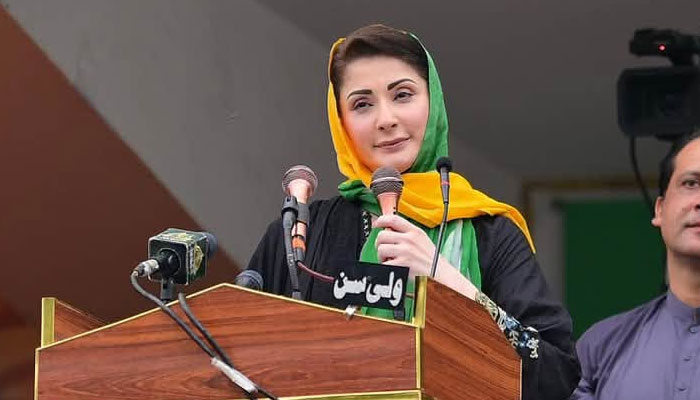
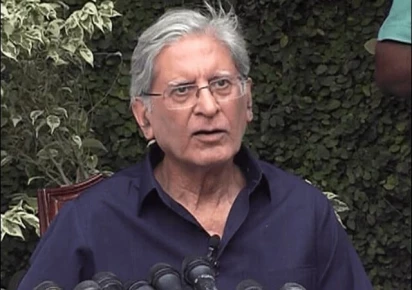
Lahore: Senior leader of the Pakistan People’s Party, Chaudhry Aitzaz Ahsan, has said that we are eating our future generations, there is a need for an organized and broader movement in Pakistan, if we remain divided into sects and castes, there will be no production.

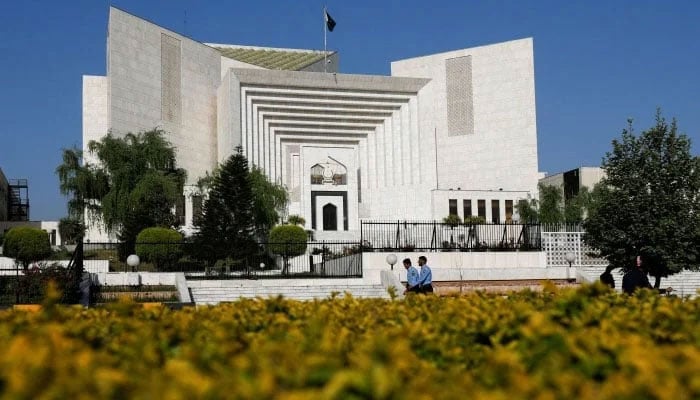
If the potential is wasted now, Pakistan will suffer. He expressed these views while addressing a discussion on the topic of “More provinces or empowered district governments” organized by the People’s Information Bureau and Bhutto Shaheed Foundation at the SAIFMA Auditorium.

The moderators were Bushra Manzoor Maneka and Ahmed Ghuman. The ceremony was also addressed by Shahzad Saeed Cheema, Imtiaz Alam, Barrister Aamir Hassan, Khan Asif Khan, Ahmed Owais, Brigadier (R) Dr. Amin Amir Bahadur Hoti, Intikhab Hanif. On this occasion, Faiza Malik Bushra Malik, Sadia Sohail, Dr. Farid Zakaria, Sania Kamran, Fatima Malhi, Aamir Naseer Dozens of PPP workers including Butt, Chaudhry Riaz, Mian Atiq, Rao Shujaat, Wajid Ali Shah were present.

Addressing the discussion, the former Federal Interior Minister said that from August 14 till today, we have not seen any change in the British system except the change of the flag. He said that local bodies are not a substitute for anyone, elections should be held for them.

Chaudhry Aitzaz Ahsan said that unfortunately, Pakistan has a debt of 150 billion dollars. In which a ship worth 12 billion also has to come, the PPP also spends lavishly, we will have to tighten the belt tied around our stomach. He said that the problems are so serious that we have made our neighbors enemies, let’s go after looking at the international interest of the country, otherwise we will have to sing their song.

Today, the state has become a stepmother. One party is being beaten. Pakistan People’s Party Central Punjab Information Secretary Shahzad Saeed Cheema said that the 73rd unanimous constitution of Pakistan is a social contract, except for the 18th amendment, there are and will be question marks on the motives of every legislation. He said that everyone admits that whose thumb is on the neck of the parliament, there is a big difference between the choice of an individual and a book.

Shahzad Saeed Cheema said that our problem is not authority, the problem is the distribution of authority. Imtiaz Alam said that the country was divided but the mandate of the people was not accepted, Imtiaz Alam clarified that national units are constitutional units from which a federation is formed, the main problem of Pakistan Authority-run system. He asked. Have the provinces become empowered after the 18th Amendment?

The Joint Interests Council has not met for the last 2 years. He said that we are not ready to give municipal power to the Kashmiris and have gone to hold local body elections. Two provinces are already unstable and now they want to do the same for Sindh. Imtiaz Alam said that the military brothers should do their work, Pakistan is becoming administratively ungovernable. Birsatar Aamir Hassan said that our state institutions are working, right?

Local governments, we have received the gifts of democracy from General Zia. He emphasized that Asif Zardari has taken out the N from the N, which has given 17 budgets. The People’s Party is the founder of the constitution, the same constitution put Bhutto on the throne. He said that if there is no rule of law, then what is the use?

The People’s Party has not come through any Faiz Hameed nor has it been raised by any Hameed. He emphasized that Provinces should be formed constitutionally. Dividing ideas is not a child’s play. Barrister Aamir Hassan said, “We have been struggling since 1988. Don’t tell us Form 47. You are still a school child.” He said that it is impossible to become Zulfikar Ali Bhutto in history and it is difficult to become Asif Zardari.

President Zardari gave powers to the parliament, the parliament gave powers to the provinces, now the provinces have given powers to the district governments. Barrister Aamir further said that abusing the army will not work. We have learned this by sacrificing our lives, we invite them to do politics, otherwise the people are helpless against politics, the 8houses and those whose names they cannot name.

Dr. Amin said that the army does not come without the support of political parties, we are all Pakistanis, otherwise the issue of new provinces should become Kalabagh Dam. PTI leader Ahmed Owais said that a system is running in Pakistan without the constitution and law, here you cannot express your opinion, there is a ban on speaking and listening.

Pakistan English media Associations (PEMA) representative and senior journalist Intikhab Hanif said all steps in Pakistan have been taken by the sitting regimes. And have been reversed after a change in government which has cost dearly to the country. No one is allowed the discuss the pros and cons of policy during a regime. And those supporting it start finding faults in the policy after the regime is over. Please make state policies in consultation with all stakeholders so that they are owned and continued by the succeeding regimes.
Similar Posts

  • | |

    Exhumation uncovers bullet wound and pre-death inj…

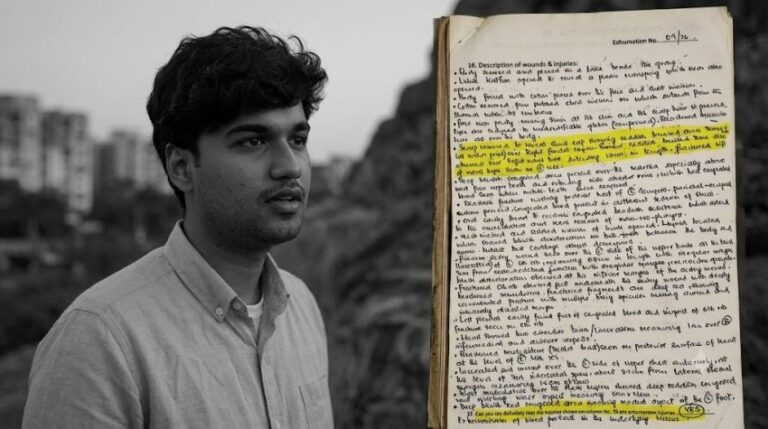
    An eight-member medical exhumation board has confirmed that Mir Raza Ali suffered a fatal gunshot wound to the back alongside multiple severe pre-death injuries, drastically shifting the trajectory of the high-profile investigation. The four-page preliminary report, issued following an court-ordered grave exhumation at Karachi’s Rehmanial Masjid Graveyard, reveals extensive physical trauma sustained prior to death. Pathologists identified a 0.8-centimeter entry wound on the left side of the upper back, which fractured the sixth rib and tore through the heart before exiting the right side of the upper chest. Forensic examiners confirmed the presence of extravasation of blood in the underlying tissues, answering affirmatively that these injuries were inflicted while the victim was still alive. Beyond the firearm damage, the post-mortem detailed significant blunt-force trauma across the victim’s head, face, and neck. Doctors documented deep bruising on the skull, fractures to the nasal bone, tissue congestion over the maxilla, and a diastatic fracture running along the posterior sutures of the skull filled with congealed blood. Discoloration was also noted around the hyoid bone, though advanced decomposition hindered complete soft tissue analysis. While the medical board has verified antemortem bleeding and severe skeletal fractures, a final determination on the official cause of death remains reserved. Pathologists have submitted collected skin, muscle, hair, and bone samples for detailed chemical, forensic, and gunshot residue testing. The findings provide critical scientific evidence that redefines the ongoing investigation from a missing person query into a detailed homicide inquiry.

  • |

    Solar boom needs battery storage, grid reforms to sustain momentum

    Islamabad: Pakistan’s rapid expansion of solar energy has already generated billions of dollars in savings, but experts and policymakers on Tuesday warned that battery storage, grid modernization and supportive policies are now essential to sustain the country’s clean energy transition. Speaking at the Solar, Storage and Flexibility 2026 Conference, Federal Minister for Power Awais Leghari said Pakistan’s energy mix is already 50% clean and is targeted to reach 90% by 2035. He stressed that local manufacturing of battery storage systems and the introduction of a daytime Time-of-Use (ToU) tariff would be key to integrating growing solar generation into the national grid. Addressing the conference, PPP Vice President Senator Sherry Rehman said solar energy has already saved Pakistan US$12 billion, with another US$6.3 billion in savings expected this year. She said the country now faces an energy management challenge rather than a generation shortfall, calling for major investments in battery storage, smart grids and modern transmission infrastructure. Rehman said one in every five Pakistani households now uses solar energy and urged international climate finance to prioritize distributed renewable energy, battery storage and affordable financing for households and small businesses instead of focusing mainly on large utility-scale projects. She also opposed the proposed 18% GST on solar equipment, saying it would have slowed Pakistan’s clean energy transition, and called for targeted subsidies, microfinance and supportive regulations to expand access to renewable energy, particularly in underserved and off-grid communities. Renewable energy experts noted that Pakistan has installed an estimated 38 gigawatts of distributed solar capacity, while imports of lithium-ion Battery Energy Storage Systems (BESS) surged 220% in 2025, signalling rapidly growing demand for energy storage. Global renewable energy leaders, including Global Solar Council CEO Sonia Dunlop and Renewable Energy Council Asia Pacific representative John Grimes, described Pakistan’s consumer-led solar revolution as a model for other countries but stressed that a comprehensive battery storage policy and modern electricity grid are now critical to maintaining the momentum.

  • | |

    Naqvi briefs president Zardari on security as terr…

    ISLAMABAD: Pakistan’s evolving security landscape came under close review on Thursday as President Asif Ali Zardari met Federal Interior Minister Mohsin Naqvi to discuss the country’s law and order situation, with particular attention given to the security challenges in Khyber Pakhtunkhwa and Balochistan. The meeting, held at Bilawal House, focused on the government’s ongoing efforts to strengthen internal security and counter terrorism. During the briefing, Naqvi updated the president on the latest developments in both provinces, where security forces continue operations against militant groups and work to maintain peace in sensitive areas. According to officials, the interior minister outlined measures being implemented to improve coordination among security institutions and enhance the country’s counterterrorism strategy. The discussion also covered steps aimed at ensuring stability while addressing emerging security threats. Beyond security matters, the two leaders exchanged views on Pakistan’s current political environment. They discussed the prevailing political situation and reviewed issues considered important for national stability and governance. The meeting also included deliberations on matters of mutual national interest, reflecting the government’s continued focus on balancing security priorities with broader political and administrative challenges. Pakistan has witnessed renewed security concerns in recent months, particularly in Khyber Pakhtunkhwa and Balochistan, where authorities have intensified intelligence-based operations against militant networks. The federal government has repeatedly stressed that restoring peace and strengthening national security remain among its top priorities. Officials said consultations between the presidency and the interior ministry will continue as authorities monitor the security situation and assess further measures needed to safeguard public safety. The discussions underscored the importance of close coordination among state institutions in responding to evolving threats while maintaining political stability across the country.

  • | |

    ‘Rigging mastermind cries foul’: Maryam’s sh…

    Punjab Chief Minister Maryam Nawaz has strongly criticised the Pakistan Peoples Party (PPP) over its allegations of rigging in the Azad Jammu and Kashmir (AJK) elections. Maryam responded to criticism from PPP leaders in a social media post on Wednesday. She accused the PPP of being behind what she described as “subtle rigging” and questioned its decision to complain about electoral irregularities. “The mastermind of subtle rigging is crying foul over rigging,” Maryam said in her post. She then added a sarcastic question about when doomsday would arrive. Her remarks came after PPP Central Punjab General Secretary Hassan Murtaza accused the Pakistan Muslim League-Nawaz (PML-N) of manipulating the AJK election process. Speaking at a press conference in Lahore, Murtaza alleged that electoral rules had been repeatedly violated during the polls. He also criticised the role of the Election Commission. He claimed that the commission had acted like an election agent instead of performing its constitutional responsibilities. Murtaza accused the PML-N of setting a new example of electoral rigging. He said his party had been treated unfairly during the elections. The PPP leader also criticised the political activities of the PML-N leadership in AJK. Without directly naming Maryam Nawaz, Murtaza referred to her father, Nawaz Sharif. He said Sharif had gone to Kashmir and expressed a desire to become prime minister. Murtaza argued that if the PML-N leadership was now seeking the AJK premiership, it was only possible because of the PPP’s political role. He also defended Nawaz Sharif and said the PPP respected the former prime minister. Murtaza claimed that the PML-N had itself reduced Sharif’s political standing by offering him a position as chairman of an institution in Lahore while he was seeking the AJK premiership. The PPP leader then shifted his criticism to Punjab’s governance and public services. He claimed that thousands of acres of farmland between Shahdara and Muridke had been inundated. According to Murtaza, water had reached several feet in some agricultural areas. He said the damage was not caused by a major flood. Instead, he blamed a breach in a drain embankment. Murtaza also criticised the Punjab government’s claims about Lahore’s development. He argued that the city’s infrastructure remained vulnerable to heavy rainfall. He said several roads turned into what he described as drainage channels after only a few hours of rain. The PPP leader blamed government decisions for creating difficulties for citizens. He also criticised the import of one million metric tonnes of wheat. Murtaza claimed that the imported wheat was worth around Rs1 trillion. He questioned the government’s economic decisions and argued that citizens deserved better public services. He said taxes collected from the public should be used to provide essential facilities. He also called on the government to fulfil its responsibility toward citizens. The political dispute comes amid growing tensions between the PPP and PML-N over the AJK elections. PPP Chairman Bilawal Bhutto Zardari has also alleged irregularities in the first phase of the AJK elections. The PML-N, however, has rejected allegations of rigging and defended the election results. Maryam Nawaz has previously urged political opponents to accept defeat rather than make allegations of electoral manipulation

  • Appeal filed in Supreme Court over minority reserved seats

    An appeal has been filed in the Supreme Court’s Lahore Registry challenging the Lahore High Court’s decision dismissing a constitutional petition seeking an increase in the number of reserved seats for minorities in the National and Provincial Assemblies in line with the country’s population growth. The constitutional appeal has been filed by advocate Naseeb Masih, who has made the Federal Government, the President of Pakistan, and the Secretary for Law and Parliamentary Affairs respondents in the case. The appellant contended that the Lahore High Court failed to correctly appreciate the legal and constitutional issues raised in the petition. It was argued that the number of reserved seats for minorities should have been increased following successive population censuses, but this constitutional requirement had been ignored. According to the appeal, the minority population has grown at a rate comparable to the Muslim population, yet the number of reserved seats allocated to minorities has remained unchanged. It was further submitted that representation for women has also not been increased proportionately to the growth in population. The petitioner maintained that the Constitution currently provides 10 reserved seats for minorities in the National Assembly, while the Punjab Assembly has eight reserved minority seats, Sindh nine, Khyber Pakhtunkhwa four, and Balochistan four. The appeal states that these allocations were originally based on the 1981 Population Census, following a Presidential Order issued in 1985, under which 10 minority seats were reserved in the National Assembly when the House consisted of 207 general seats. It further points out that under the Legal Framework Order (LFO) 2002, the number of general seats in the National Assembly was increased to 272, and 60 seats were reserved for women. However, despite these constitutional changes, the number of reserved seats for minorities was not increased. Similarly, the appeal notes that the number of general seats in the Punjab Assembly was enhanced from 240 to 297, while the number of reserved seats for women was increased to 60. However, the number of minority seats remained fixed at eight, despite the increase in the province’s population. The petitioner has requested the Supreme Court to set aside the Lahore High Court’s judgment and direct the relevant authorities to increase the number of reserved seats for minorities in the National and Provincial Assemblies in proportion to the country’s population, ensuring equitable constitutional representation for minority communities.

  • | |

    Israel revokes entry permits of US Jewish activist…

    JERUSALEM: Israel has withdrawn the entry permits of several American Jewish activists who took part in protests in the occupied West Bank against attacks on Palestinians and damage to their property, according to a report by US Jewish publication The Forward. Among those affected was activist Sam Sherman, who said his travel permit was canceled while he was participating in a seven-week volunteer programme in Masafer Yatta, where he had been working alongside Palestinian residents. Sherman told the publication that several members of his group received cancellation notices within minutes of one another. He said Israeli soldiers, police and armed settlers had photographed his passport during confrontations that he described as being initiated by settlers. According to Sherman, the activists had been peacefully spending time with local Palestinians but were treated by Israeli authorities as though their presence itself constituted a serious offence. The reported permit cancellations come amid continued tensions in the occupied West Bank, where confrontations involving Palestinians, Israeli settlers and security forces remain a major source of concern.

Leave a Reply

Your email address will not be published. Required fields are marked *