seeks broader jica
| | |

PM seeks broader JICA partnership in skills, miner…

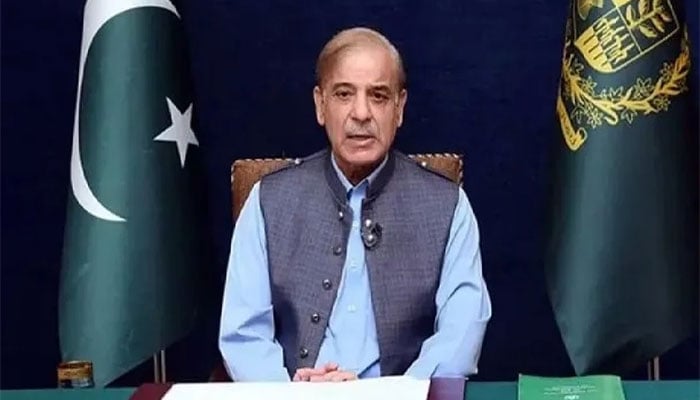
Prime Minister Shehbaz Sharif on Wednesday called for expanding Pakistan’s cooperation with the Japan International Cooperation Agency (JICA), identifying skills development, mineral exploration and support for small and medium-sized enterprises (SMEs) as key areas for future collaboration.

The prime minister made the remarks during a meeting in Islamabad with a nine-member JICA delegation led by its President, Dr Tanaka Akihiko. He said Pakistan deeply values its decades-long partnership with Japan and expressed confidence that the latest engagement would further strengthen bilateral development ties.

Highlighting the government’s economic agenda, Shehbaz said Pakistan had emerged from a challenging economic period through coordinated reforms and was now focused on achieving sustainable and inclusive growth. He noted that fiscal reforms had significantly improved revenue collection over the past three years, creating greater capacity for national development.

The premier stressed that equipping young people with modern skills, expanding technical and vocational education, creating employment opportunities and empowering women remain among the government’s highest priorities. He said Pakistan is keen to benefit from JICA’s expertise in these sectors.

Shehbaz also identified the country’s vast mineral resources as a major area of economic potential and invited JICA to provide technical assistance to help develop the sector and attract greater investment.

Discussing support for businesses, the prime minister said reforms at the Small and Medium Enterprises Development Authority (SMEDA) had strengthened the institution. He expressed hope that enhanced cooperation with JICA would help improve SME productivity, encourage entrepreneurship and boost Pakistan’s exports.

During the meeting, Shehbaz also conveyed condolences over the recent earthquake in Japan. Dr Tanaka thanked the prime minister for his message of sympathy and appreciated the warm hospitality extended to the Japanese delegation during its visit.

The JICA president reaffirmed the agency’s commitment to expanding cooperation with Pakistan in healthcare, education, urban and rural development, industrial growth and technical training. He said future projects would be designed in line with the development priorities of both the federal and provincial governments. Dr Tanaka also acknowledged Pakistan’s efforts to promote peace and stability in the Middle East.

Separately, Federal Minister for Economic Affairs Ahad Cheema met the JICA delegation to discuss future development initiatives. He invited the agency to participate in financing the Main Line-1 (ML-1) railway project alongside the Asian Development Bank and other development partners, describing the railway upgrade as vital for improving trade, transportation and industrial connectivity across the country.

Cheema also sought JICA’s support for expanding internet connectivity in rural areas to promote freelancing and digital commerce. He requested technical assistance for feasibility studies of major infrastructure projects, an area in which JICA expressed readiness to cooperate.

Similar Posts

  • | | |

    Militant facilitator Mufti Zafaryab arrested

    Authorities have arrested self-styled cleric Mufti Zafaryab for allegedly facilitating the banned militant group referred to by the Pakistani government as Fitna al-Khawarij. According to an official statement, the suspect said he completed an eight-year Dars-e-Nizami course at Jamia Nizam-ul-Uloom, Yateem Khana, Bannu, and later completed a three-year specialization in Islamic jurisprudence (Takhassus fi al-Fiqh) at Al-Markaz Al-Islami, Ghoriwala. In a recorded statement, Zafaryab admitted that he had been in contact with militant commander Hikmat Roshan. He said state institutions were aware of his links, which ultimately led to his arrest. The suspect alleged that the militant commander sought religious rulings from him to justify extortion carried out in the name of jihad. He further claimed that he, along with several others, had been offered positions and financial incentives by the group. Expressing remorse, Zafaryab said he regretted his actions and stated that the group has no connection with Islam. He described its activities and ideology as un-Islamic and contrary to Sharia. He also said the militant group promotes extremist beliefs and considers the killing of Muslims to be permissible, rejecting its ideology and distancing himself from its actions. The arrest comes as security forces continue counterterrorism operations against militant groups across the country.

  • |

    WestJet agrees to $4.5 million settlement in long-running flight attendant harassment suit

    Canadian airline WestJet has agreed to pay 4.5 million Canadian dollars to settle a decade-long class-action lawsuit brought by thousands of female flight attendants over workplace harassment. A British Columbia Supreme Court judge approved the final agreement on Monday, concluding negotiations that began in June. The settlement funds will be distributed among 3,452 current and former flight attendants after deducting legal fees and administrative costs. The lawsuit was initially filed in 2016 by former flight attendant Mandalena Lewis, who alleged that a pilot sexually assaulted her during a 2010 layover in Hawaii and that the company failed to take appropriate investigative action after she reported the incident. Lewis criticized the final terms, stating that the agreement failed to deliver complete justice for the victims. The settlement contains no admission of guilt by WestJet, nor does it mandate compulsory anti-harassment training for flight crews. However, the carrier agreed to commission an independent inquiry to review its reporting procedures, workplace culture, and underreporting issues, affirming its commitment to strengthening employee safety measures.

  • Thai Central Bank Cuts Rate to 1.25% Amid Growth Fears

    BANGKOK — The Bank of Thailand (BOT) reduced its benchmark interest rate by a quarter of a percentage point on Wednesday, moving to a more accommodative monetary stance in response to a slowing economy and heightened external risks. The unanimous decision by the Monetary Policy Committee (MPC) lowers the policy rate from 1.50% to 1.25%, […]

  • |

    Babar, Shaheen climb in latest ICC ODI rankings

    Several Pakistan cricketers have improved their positions in the latest ICC Men’s ODI Player Rankings, with former captain Babar Azam and fast bowler Shaheen Shah Afridi making notable gains following recent international matches. Babar Azam climbed one place in the ODI batting rankings and is now sixth with 689 rating points. The experienced batter continues to be Pakistan’s highest-ranked player among ODI batters and remains among the world’s leading performers in the format. Pakistan’s ODI captain Salman Ali Agha also registered progress in the latest rankings. He moved up two places to 16th after consistent performances, taking his rating to 630 points and strengthening his position among the world’s top batters. Former captain and wicketkeeper Mohammad Rizwan retained his 31st position with 560 rating points, while opening batter Fakhar Zaman slipped one place to 37th. Young opener Saim Ayub remained unchanged in 44th position. New Zealand batter Daryl Mitchell continues to lead the ICC ODI batting rankings. India captain Shubman Gill occupies second place, while veteran batter Virat Kohli remains third. In the bowling rankings, Pakistan left-arm fast bowler Shaheen Shah Afridi climbed two places to seventh with 604 rating points after his recent performances. Fast bowler Haris Rauf also improved his standing, moving up two positions to 20th with 556 points. On the other hand, pacer Naseem Shah dropped two places and is now ranked 49th with 477 points. Mohammad Wasim Jr gained one position to move up to 70th, while spinner Mohammad Nawaz retained his place in the rankings. Afghanistan spinner Rashid Khan continues to hold the number one position in the ICC ODI bowling rankings. Pakistan spinner Abrar Ahmed remains second, maintaining pressure on the Afghan star. England fast bowler Jofra Archer moved into third place after improving his ranking.

  • | |

    Congo tightens grip on mineral exports with ban on…

    The Democratic Republic of Congo has prohibited exports of copper concentrate and cobalt concentrate, according to a government order reviewed on Thursday, marking the latest step in an ongoing push to force more mineral processing to happen inside the country and capture a larger share of the value generated by its mining sector. News of the ban sent benchmark three month copper prices on the London Metal Exchange up by as much as 1.8 percent to $14,369.50 a metric ton, the highest level since January 29, when the metal touched an all time peak of $14,527.50. Prices stood at $14,300 as of 0930 GMT following the report. Congo holds the position of the world’s largest cobalt supplier and ranks among the top sources of copper and other minerals critical to the global energy transition. The government is using that leverage to encourage the build out of domestic processing capacity rather than allowing raw or partially processed materials to leave the country. The order, dated June 29 and signed jointly by Mines Minister Louis Kabamba Watum, Foreign Trade Minister Julien Paluku Kahongya and Economy Minister Daniel Mukoko Samba, states plainly that exporting copper and cobalt concentrates is now prohibited. The prohibition took effect immediately, though the order allows for one year export waivers to be granted under unspecified strategic circumstances. The same order also establishes a new tax structure covering economically significant mining by products, with a three month transition period built in before the new rules take full effect. Officials said the export ban aims to push mining companies toward marketing or exporting higher value processed mineral products rather than raw concentrate. This marks the fourth time Congo has restricted concentrate exports, following similar bans imposed in 2013, 2019 and 2023, each of which included waivers in cases where domestic smelting capacity could not keep pace with output. The new order formally repeals the 2023 measure and its associated exemptions, replacing it with a broader regulatory framework governing both mineral exports and taxation of significant by products recovered during processing. Congo already exports the vast majority of its copper in refined form. During the first quarter of 2026, the country shipped 696,725 tons of copper cathodes, compared with just 53,926 tons of copper concentrate containing roughly 18,863 tons of copper metal, according to official figures. Over the same period, Congo exported 51,940 tons of cobalt hydroxide containing about 17,054 tons of cobalt metal. Christian Geraud Neema, a mining analyst with the nonprofit China Global South Project, said the new ban is unlikely to significantly disrupt most mining operators since the bulk of Congo’s copper and cobalt already undergoes domestic refining before export. He said the operation most likely to feel the impact is the Kamoa Kakula venture, jointly owned by Ivanhoe Mines, China’s Zijin Mining and the Congolese government, which still exports some volume of concentrate under existing exemptions. Neither Ivanhoe nor Zijin responded immediately to requests for comment, and the Congolese chamber of mines also did not respond. The newly introduced tax regime applies broadly across mineral categories, extending to trace and ultra trace minerals recovered during the refining process. These by products will be taxed using a 55 percent valuation coefficient, with royalties applied alongside those already charged on the primary mineral being extracted. The policy fits into a broader pattern across resource rich African nations seeking to move beyond raw material exports and capture more manufacturing and processing value domestically, a shift that has gained momentum as global demand for energy transition minerals like copper and cobalt continues to grow.

  • |

    Who is Epstein’s potential heir?

    Attention has shifted to Karyna Shuliak, the longtime girlfriend of convicted sex offender and disgraced US financier Jeffrey Epstein. The development comes years after Epstein died in a federal prison in 2019. His death brought an end to his criminal case but left behind a complicated estate and several legal disputes. Shuliak is now being described as a potential major beneficiary of Epstein’s remaining wealth. According to court documents, Epstein signed a new will just two days before his death. The document created a private trust known as the 1953 Trust. Recent court records reportedly show that Shuliak was included among the important beneficiaries of the trust. However, the exact amount she could receive remains uncertain. US Department of Justice records reportedly indicate that Shuliak was the last person Epstein spoke to outside prison before his death. Reports also say that Epstein made some of his final telephone calls to her while he was in custody. At the time of his death, Epstein’s estate was estimated to be worth around $600 million. A significant portion of that wealth has since been used to compensate people who accused Epstein of sexual abuse. More than $170 million was reportedly paid to over 200 victims through compensation arrangements. The estate has also faced several legal claims and settlements with government authorities. These matters have complicated the distribution of Epstein’s remaining assets. After a recent tax refund, the value of the estate’s remaining assets is estimated at between $120 million and $150 million. Despite being named as a potential beneficiary, Shuliak has not yet secured the inheritance. Payments connected to the trust remain suspended while legal proceedings continue. Richard Kahn, the executor of Epstein’s estate, has reportedly raised concerns about the wording of the trust agreement. He described the document as unclear and poorly prepared. The uncertainty has made it difficult to determine exactly how Epstein intended his remaining fortune to be divided. Legal experts say Shuliak’s potential inheritance cannot be confirmed until outstanding claims and court proceedings are resolved.

Leave a Reply

Your email address will not be published. Required fields are marked *