iran prepares 40thday
| |

Iran prepares 40th-day mourning events for Ayatollah Ali Khamenei

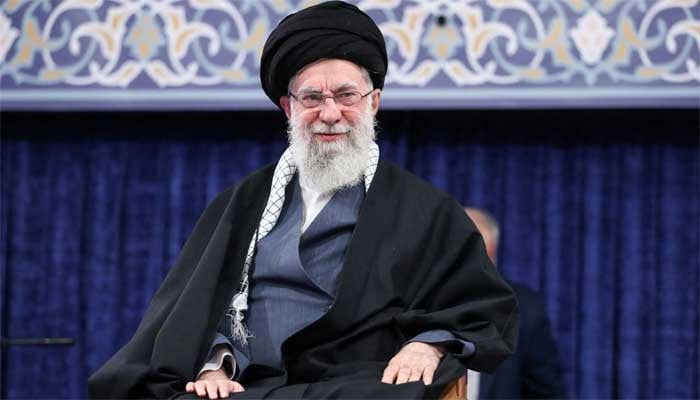
Iran has begun preparations for 40th-day mourning and commemorative ceremonies for former Supreme Leader Ayatollah Ali Khamenei following his burial.

Special events will take place in Tehran, Qom, Mashhad and other Iranian cities to mark the occasion. Iran’s current Supreme Leader and Ali Khamenei’s son, Mojtaba Khamenei, will oversee the ceremonies.

According to reports, Ali Khamenei’s funeral and mourning ceremonies began on July 4 and continued across several Iranian cities. Officials also held commemorative gatherings in five major cities across Iran and Iraq — Tehran, Qom, Najaf, Karbala and Mashhad. Authorities later buried the former supreme leader in Mashhad.

Millions of mourners from Iran and other parts of the world reportedly attended the funeral ceremonies. Senior delegations from several countries, including Saudi Arabia, Pakistan, Russia, China and Türkiye, also travelled to Iran to attend the events and convey condolences.

Iranian authorities said Ali Khamenei died on February 28, the first day of US and Israeli air strikes on Iran. His death marked a major political transition for the country.

Following his death, his son Mojtaba Khamenei assumed the position of Iran’s Supreme Leader. The upcoming 40th-day ceremonies are expected to draw large crowds and provide another major occasion for supporters to pay tribute to the former leader.

The events in Tehran, Qom and Mashhad are also expected to carry considerable political and religious significance as Iran continues to adjust to its new leadership under Mojtaba Khamenei.

Similar Posts

  • | | |

    Israel strikes southern Lebanon, Hezbollah Command…

    BEIRUT: A fragile ceasefire in southern Lebanon is facing another major test after Israeli strikes killed at least 11 people, including civilians, according to Lebanese officials and international media reports. Israel said the attacks targeted Hezbollah positions and claimed to have killed a senior commander. The Israeli military said it had targeted Hezbollah infrastructure in southern Lebanon and claimed that a Hezbollah commander, identified in reports as Abu Hassan, was killed. Israeli officials have described the strikes as a response to Hezbollah activity in the area. Lebanese officials, however, said civilians were among those killed in the attacks. Reports said three children and two women were among the victims, while several others were wounded. One of the strikes reportedly hit a home in the village of Ansar, where members of the same family were killed. The latest violence comes despite a ceasefire intended to prevent a renewed escalation between Israel and Hezbollah. The continued strikes have raised fresh fears that the fragile truce could unravel. Lebanon’s leadership has condemned the attacks, warning that continued military action could undermine efforts to restore stability along the border. The escalation also comes amid unresolved disputes over Hezbollah’s weapons and Israel’s military presence in southern Lebanon. With tensions still high, residents in affected communities remain fearful that another cycle of violence could begin.

  • |

    Two more air India pilots fail initial drug tests

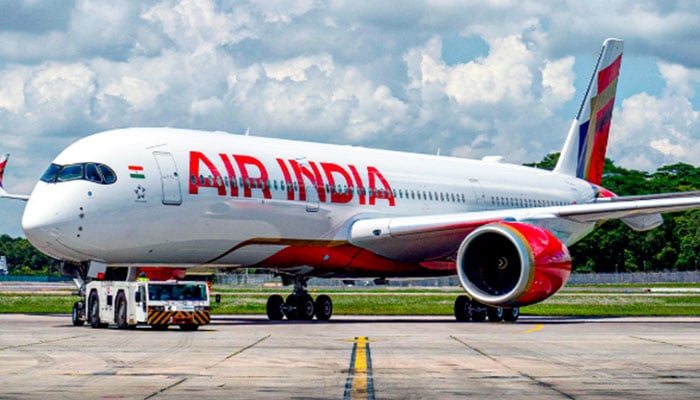
      Two more Air India pilots have failed preliminary drug screening following the incident involving an Air India flight from Phuket to Delhi. The airline has temporarily removed both pilots from flying duties while authorities await the results of their final tests. According to Indian media reports, Air India decided to conduct drug screening for all its pilots after the incident. More than 300 pilots have undergone testing so far, with final results generally taking between 24 and 48 hours. The captain of the Phuket-to-Delhi flight also failed two drug-related tests conducted after the aircraft landed. Subsequent testing reportedly detected cannabis in the pilot’s system. Indian media have also reported that a flight attendant complained that the captain had allegedly used cannabis before the flight. The development has raised further questions about safety procedures and pilot fitness at Air India. The airline is now reviewing the results of the wider testing campaign as it seeks to determine whether any other crew members may have violated aviation safety regulations. The Phuket-Delhi flight involved an Airbus A320neo that reportedly experienced a sudden loss of altitude during the journey. The aircraft dropped by around 300 feet before recovering, prompting concerns among passengers and crew. Officials initially described the incident as turbulence. However, detailed information from the aircraft’s systems later prompted closer scrutiny of what happened during the flight and raised questions about possible technical issues as well as the captain’s conduct. Air India has yet to receive the final laboratory results for the two newly identified pilots. Until those results arrive, the airline has kept both pilots off flight operations as a precautionary measure.

  • | | | |

    Iran warns Ukraine of response over alleged Caspian Sea attack

    Iranian officials have warned Ukraine that Tehran will not ignore attacks against its interests. The warning came after Iran accused Ukraine of allegedly targeting an Iranian commercial vessel in the Caspian Sea. Ebrahim Azizi, chairman of the Iranian Parliament’s National Security and Foreign Policy Committee, said any action against Iran would carry consequences. He said the United States and Israel were already aware of Iran’s position. Azizi also warned that Ukraine could soon realise that Iran does not leave hostile actions against it unanswered. He said the list of countries making what he described as wrong calculations about Iran’s response was growing. The remarks followed an alleged attack on an Iranian commercial ship in the Caspian Sea. Iranian authorities said one crew member was killed and another was injured in the incident. Iran’s Foreign Ministry condemned the reported attack. It also summoned Ukraine’s chargé d’affaires to formally lodge a protest. The incident has raised concerns about the possibility of the wider Middle East conflict creating new tensions involving Ukraine and Iran. The Caspian Sea has now emerged as another area of concern amid the escalating regional disputes. Earlier, Ukrainian President Volodymyr Zelenskyy claimed that a Russian vessel allegedly carrying weapons to Iran had been targeted in the Caspian Sea. Kyiv has previously accused Iran of supporting Russia in its war against Ukraine. Iran, however, has strongly criticised what it describes as attacks on its territory and interests. Tehran has repeatedly warned that hostile actions could trigger retaliation. Azizi’s latest comments suggest that tensions between Iran and Ukraine could increase following the reported maritime incident. His warning also comes at a time when Iran is already facing heightened military and diplomatic pressure

  • |

    Two UK police officers killed in horrific A66 crash

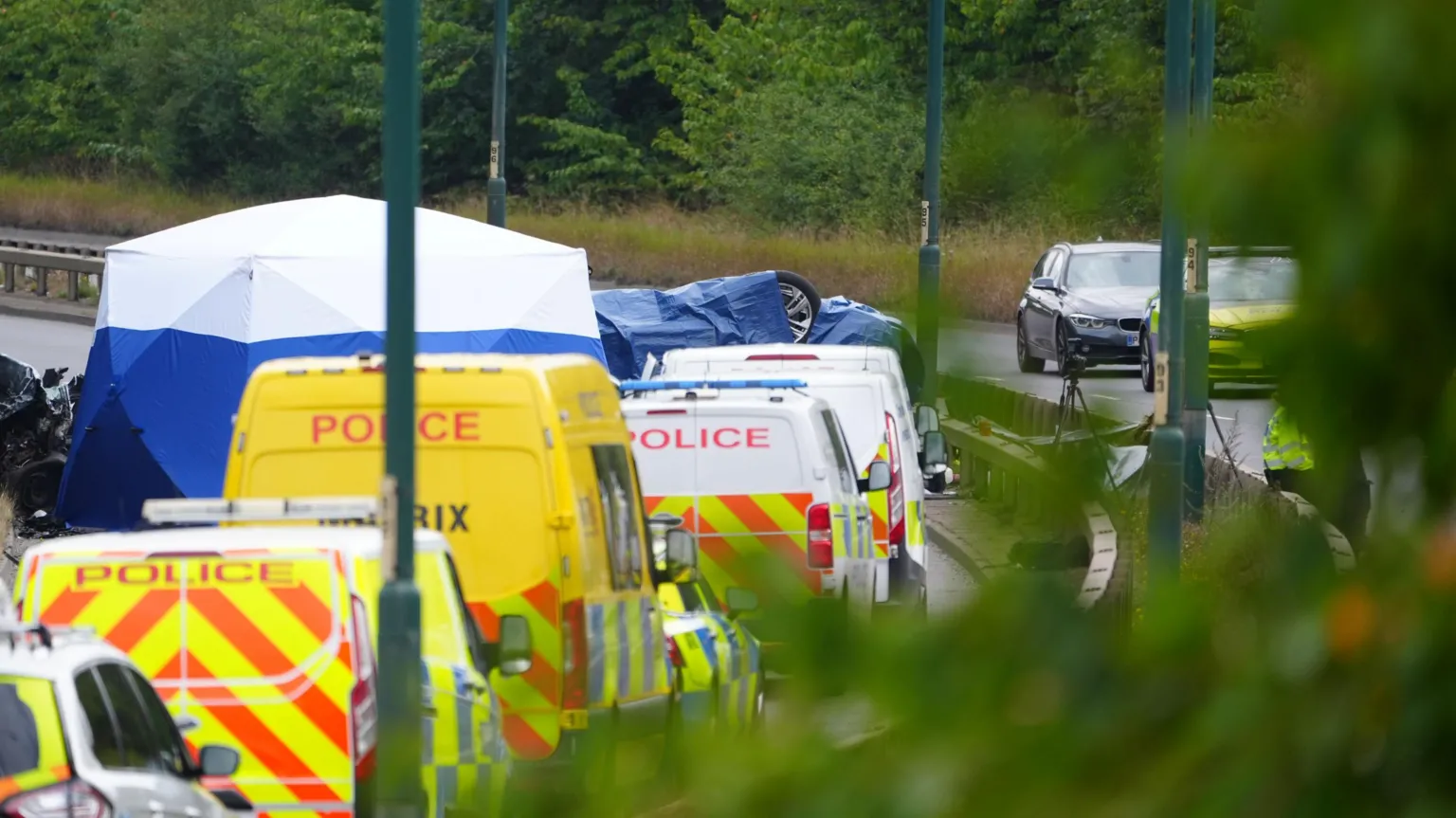
    Two Cleveland Police officers have been killed in a devastating wrong-way crash on the A66 near Middlesbrough, prompting an outpouring of tributes from colleagues, politicians and local communities. Police Constables Matthew Blades, 37, and Tom Clough, 38, died at about 3:39am BST on Saturday when a Volkswagen Passat travelling in the wrong direction collided with their police vehicle. Five people travelling in the Passat, reportedly aged between their late teens and early 20s, also died in the crash. Their identities have not yet been released. The Independent Office for Police Conduct (IOPC) has launched an investigation into the circumstances surrounding the incident. The investigation was triggered because the crash followed police contact with the vehicle. According to the IOPC, Cleveland Police had earlier spotted a suspicious vehicle and a pursuit began. Security footage from a property on Lime Road in Middlesbrough appears to show police vehicles following a car several minutes before the fatal collision. The pursuit is understood to have ended before the crash. The police vehicle carrying Blades and Clough was reportedly in the South Bank area when it was struck by the wrong-way vehicle. Cleveland Police Chief Constable Victoria Fuller described the deaths as an “unimaginable loss” and said it was an extremely painful day for the force and the wider community. Fuller said she and Deputy Chief Constable visited the officers’ families to offer condolences and support as they faced the devastating loss. Tributes have also been paid by senior political figures and local representatives. Prime Minister and Home Secretary figures expressed their condolences, while local leaders praised the officers for their dedication to public safety. Redcar MP Anna Turley said the tragedy had caused deep sorrow across the community. She paid tribute to Blades and Clough, highlighting the courage shown by police officers who work around the clock to protect the public. Tees Valley Mayor Ben Houchen also described the incident as a terrible tragedy and praised the emergency services who responded to the crash. Cleveland Police Federation chairwoman Lauren Somerville said the loss of the two officers had left the police family devastated, with colleagues struggling to put their grief into words. The A66, a major route through the Teesside area, remained closed as investigators examined the crash site. The road is surrounded by industrial areas and factories. The IOPC has urged people to avoid speculation while its investigation continues. Officials said the inquiry will examine the events leading up to the collision and the circumstances surrounding the police contact with the vehicle.

  • | |

    Ukraine targets mid-2027 for prototype of new Euro…

    Ukraine is pushing to have a working prototype of a European anti-ballistic missile system, codenamed Freyja, ready by the middle of next year, as Kyiv presses its allies to accelerate development of a weapon capable of intercepting Russian ballistic missiles. Davyd Aloian, deputy secretary of Ukraine’s National Security and Defence Council and the official overseeing the Freyja project, said an international steering committee responsible for estimating research and development costs is set to meet for the first time soon. The project was formally launched two weeks ago at a summit in Paris, where leaders from ten European nations, including Ukrainian President Volodymyr Zelenskiy, joined roughly a dozen defense manufacturers to establish the anti-ballistic coalition. Aloian said the tight timeline reflects an ambitious target. He described the goal as producing a minimum viable product within the first half of next year, meaning a prototype capable of demonstrating early practical results. Ukraine currently relies heavily on American made Patriot systems, which remain the only weapon in its arsenal able to reliably shoot down Russia’s ballistic missiles, capable of traveling at multiple times the speed of sound. Deliveries of Patriot systems have been hampered by shifting political circumstances, limited stockpiles and lengthy manufacturing timelines. Russia has intensified ballistic missile strikes this month on Kyiv and the southern port city of Odesa, launching dozens of missiles that Ukraine was largely unable to intercept due to a shortage of interceptor missiles. Ukraine has offered to contribute a launcher and an interceptor missile to the Freyja project, which Zelenskiy said this month essentially needs testing at this stage. He has said he hopes to see the system operational within a year. Kyiv is counting on its allies to supply key technology, including modern radar systems, sensors and expertise in missile guidance and control electronics. Defense companies that have joined the initiative so far include Eurosam, maker of the SAMP-T interceptor, along with Leonardo, Thales and Saab. Ukrainian missile and drone manufacturer Fire Point, known for developing the Flamingo cruise missile, has said it will serve as the lead industrial partner on the project and recently struck a deal with German firm Hensoldt to supply radar technology. The Freyja system is designed as a lower cost alternative to the Patriot, a system many European nations also depend on. Other existing air defense platforms, including the Franco Italian SAMP/T and Germany’s IRIS-T, have not yet demonstrated the ability to down ballistic missiles. Zelenskiy has compared the Freyja coalition to a Lego set, describing it as a system built by combining components supplied by different defense industry leaders. Aloian said manufacturers have been asked to build a framework that allows interchangeable parts from different countries. He explained that the system’s open architecture means individual nations can select their preferred components, whether that means Denmark opting for a Danish made Weibel radar or Sweden choosing Saab’s technology. Organizers are also considering setting up a dedicated body, potentially structured as a fund, to manage contributions and ensure the project receives stable financing over time. Aloian said involving private companies directly alongside governments should help cut through bureaucratic delays, adding that the coalition is meant to function as a practical effort rather than a political one. The push for a homegrown European missile defense capability reflects a broader shift underway across the continent, as governments reassess their reliance on American weapons systems amid growing pressure to build independent defense industrial capacity in the face of a prolonged war on Europe’s eastern border.

  • |

    US House approves $1.15 trillion defense budget package

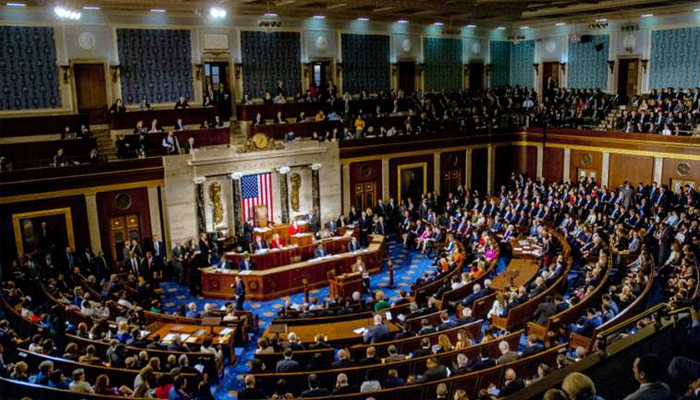
    The US House of Representatives has passed a $1.15 trillion defense budget bill by a narrow vote of 216 to 212. Supported by a majority of Republicans and six Democrats, the legislation includes provisions to deepen defense ties and military technology integration with Israel. The bill faced internal pushback, with Congressman Thomas Massie raising concerns over integrating US military technology and supply chains with Israel. The passage follows a major funding request from the Trump administration, which asked Congress for nearly $87 billion in supplemental appropriations to support ongoing operations against Iran. Appropriations Committee, US Secretary of Defense Pete Hegseth stated that military action against Iran has cost $37.5 billion so far, including projected costs through September 30. Hegseth urged lawmakers to maintain robust military spending, arguing that failing to provide the full defense budget represents the single greatest threat to national security.

Leave a Reply

Your email address will not be published. Required fields are marked *