israel strikes southern
| | |

Israel strikes southern Lebanon, Hezbollah Command…

BEIRUT: A fragile ceasefire in southern Lebanon is facing another major test after Israeli strikes killed at least 11 people, including civilians, according to Lebanese officials and international media reports. Israel said the attacks targeted Hezbollah positions and claimed to have killed a senior commander.

The Israeli military said it had targeted Hezbollah infrastructure in southern Lebanon and claimed that a Hezbollah commander, identified in reports as Abu Hassan, was killed. Israeli officials have described the strikes as a response to Hezbollah activity in the area.

Lebanese officials, however, said civilians were among those killed in the attacks. Reports said three children and two women were among the victims, while several others were wounded. One of the strikes reportedly hit a home in the village of Ansar, where members of the same family were killed.

The latest violence comes despite a ceasefire intended to prevent a renewed escalation between Israel and Hezbollah. The continued strikes have raised fresh fears that the fragile truce could unravel.

Lebanon’s leadership has condemned the attacks, warning that continued military action could undermine efforts to restore stability along the border.

The escalation also comes amid unresolved disputes over Hezbollah’s weapons and Israel’s military presence in southern Lebanon. With tensions still high, residents in affected communities remain fearful that another cycle of violence could begin.
Similar Posts

  • | |

    Pakistan unveils four-year Hajj policy

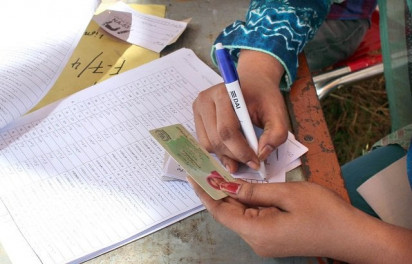
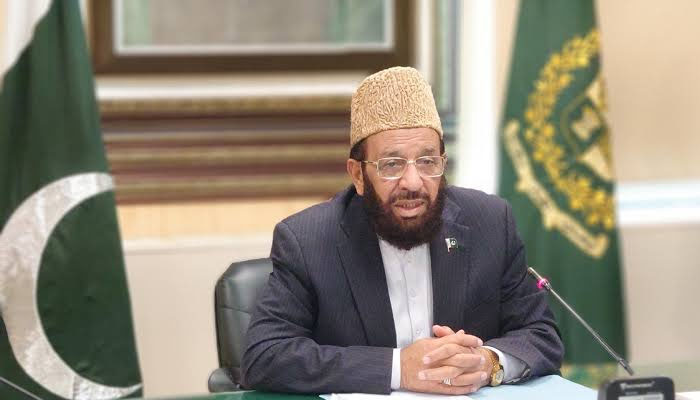
    The government has introduced a four-year Hajj policy covering arrangements from 2027 to 2030. Federal Minister for Religious Affairs Sardar Muhammad Yousaf presented the policy on Wednesday. He described it as a major step toward improving and modernising Hajj arrangements in Pakistan. Speaking at a briefing, the minister said this was the first time the government had introduced a four-year Hajj policy. He said the initiative would provide a long-term framework for organising the pilgrimage. Yousaf said the policy had been prepared under the guidance of Prime Minister Shehbaz Sharif. It focuses on technology, transparency and improved services for pilgrims. According to the minister, the new framework aims to bring Pakistan’s Hajj arrangements closer to international standards. It will also introduce several new facilities for pilgrims. For the first time, applicants will have access to a registration and waiting-list system. The government expects the system to make the process more organised and transparent. The minister said the government and private Hajj schemes would retain their existing quota division. Sixty per cent of the quota will remain with the government scheme, while private operators will receive 40 per cent. The Ministry of Religious Affairs will continue to oversee and regulate Hajj arrangements. It will also monitor the performance of private Hajj companies. Under the new policy, applicants will be able to enter the pilgrims’ list after paying 10 per cent of the required amount. The government has also planned greater transparency in procurement. Purchases made in Pakistan and Saudi Arabia will be carried out through transparent procedures. Yousaf said any money remaining after meeting the required expenses would be returned to the pilgrims. The measure is aimed at improving financial transparency and protecting the interests of Hajj applicants. The government also plans to change the way private Hajj companies are monitored. Their registration and oversight will not depend only on the quota allocated to them. Instead, their performance will be an important factor in determining their registration and continued participation in the Hajj programme. A digital complaint-resolution system is also being introduced. Pilgrims will be able to submit complaints and seek quick action through the new system. An appeal mechanism will also be established. This will provide pilgrims with another channel to challenge decisions or seek resolution of their complaints. The minister said the government would also improve training programmes for Hajj pilgrims. The aim is to prepare pilgrims more effectively before their departure for Saudi Arabia. The Hajj Muhafiz Scheme will continue under the new policy. The government considers the scheme an important part of its arrangements for pilgrims. Yousaf said the new policy had been developed in line with Saudi Arabia’s Vision 2030. The framework is intended to improve coordination and service delivery during the pilgrimage. The minister said the government’s objective was not limited to managing logistical arrangements. It also wanted to ensure that Pakistani pilgrims received a dignified and comfortable Hajj experience. The estimated cost of the government Hajj package is expected to remain between Rs1.2 million and Rs1.3 million. However, the final cost may depend on various arrangements and expenses associated with the pilgrimage. Yousaf also clarified that any increase or decrease in Pakistan’s Hajj quota would require a decision from the federal cabinet. He said Pakistan had received recognition and awards for its Hajj arrangements in the past. The government now wants to further improve the system through long-term planning and greater use of technology. The four-year policy is expected to provide greater continuity in Hajj preparations. Officials believe the long-term framework will also make planning easier for both the government and pilgrims.

  • |

    Parties back local governments over new provinces

      Mainstream political parties have rejected the idea of creating new provinces and instead called for stronger local governments to improve governance and public service delivery. The position emerged during a day-long seminar organised by the Sustainable Development Policy Institute (SDPI), where politicians and independent experts discussed whether Pakistan needs new provinces or additional administrative units. Representatives of the PML-N, PPP, PTI and JUI opposed the creation of new provinces, while lawmakers from the MQM-P supported the proposal. Most independent experts also favoured transferring greater administrative, political and financial powers to local governments. Participants argued that Pakistan does not primarily face a shortage of resources. Instead, they said, excessive concentration of authority in provincial capitals prevents public spending from delivering its intended benefits. Several speakers also criticised the bureaucracy for weak governance and poor service delivery. PTI Secretary General Salman Akram Raja said the existing administrative structure could deliver better results if local governments received adequate powers. He argued that dividing Punjab into three provinces would still leave each province with around 40 million people and would not adequately address governance problems. Raja called for stronger constitutional safeguards for local governments and said Article 140-A, which provides for local governments, needed clearer and stronger provisions. Raja also rejected the idea of holding a national referendum on the creation of new provinces, arguing that the Constitution already provides a mechanism for altering provincial boundaries. He further opposed changes to Article 239, which governs constitutional amendments related to provincial boundaries. Minister of State for Law Barrister Aqeel Malik said political parties should first hold internal discussions on the issue before pursuing constitutional or legal changes. He also praised the 2001 local government system, saying it offered a stronger framework that should have been developed further. The seminar came weeks after Interior Minister Mohsin Naqvi described Pakistan’s governance system as having collapsed and called for the creation of new provinces. PPP leader Qamar Zaman Kaira warned that the debate could deepen existing political and administrative divisions. He said provincial chief ministers had accumulated significant power and often resisted efforts to establish genuinely strong local governments. Some participants even suggested removing the provincial tier altogether and maintaining only the federal government and fully empowered local administrative units.

  • | | | |

    Iran, Oman move closer to Hormuz shipping agreement

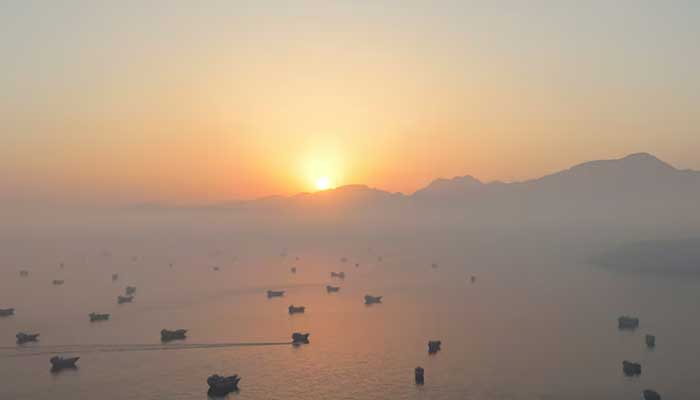
    TEHRAN: Iran and Oman have reached a preliminary understanding on the geographic coordinates of a proposed shipping route through the Strait of Hormuz, marking progress in negotiations aimed at regulating navigation through one of the world’s most strategically important waterways. Iranian Foreign Ministry spokesperson Esmaeil Baghaei said discussions between Tehran and Muscat had advanced positively and that both sides had agreed on the geographical framework of the proposed route. He added that a joint statement outlining the key points of the understanding was in its final stages and could be issued if the process is not disrupted by external factors. Despite the progress, Baghaei emphasised that the agreement alone would not automatically guarantee security in the Strait of Hormuz. He noted that ensuring stability in the region would require broader cooperation and continued diplomatic engagement. According to regional officials familiar with the negotiations, the proposed arrangement would give Iran a greater role in overseeing vessels entering the Gulf through the strategic waterway. However, several technical and operational issues still need to be resolved before any final agreement can be implemented. The Strait of Hormuz remains one of the world’s busiest energy transit routes, carrying a significant share of global oil and gas exports. Any changes to shipping arrangements in the area are closely watched by international markets due to their potential impact on global trade and energy supplies. Officials involved in the negotiations described the talks as constructive, while indicating that further consultations would continue before a formal announcement is made. Both Iran and Oman have maintained that dialogue remains the preferred path for addressing issues related to maritime navigation and regional stability.

  • |

    Two arrested in Rs220m Karachi heist

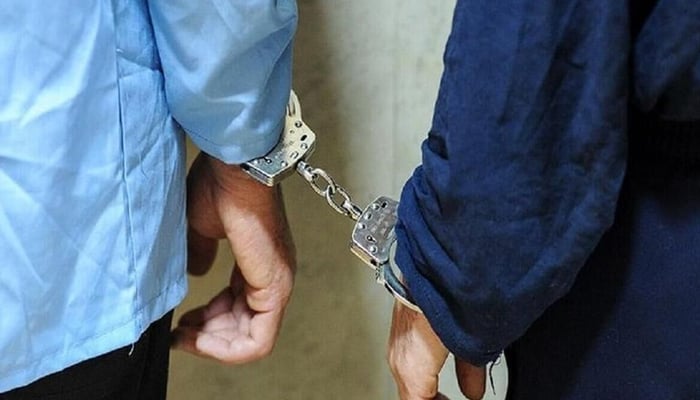
    Police have arrested two suspects in connection with a Rs220 million theft in Karachi, apprehending them from Jhang after tracing their alleged involvement in a series of criminal activities across Punjab and Sindh. According to the spokesperson for the DIG Operations, police arrested suspect Mehtab along with his relative, Abdul Rehman, during an operation in Jhang. The spokesperson said Mehtab has 18 previous cases of theft and burglary registered against him. Investigators have also linked him to a major robbery in Karachi’s Saddar area in April, in which valuables worth around Rs220 million were reportedly stolen. Police said the two suspects had allegedly carried out thefts in several other cities, including Jhang, Faisalabad and Rahim Yar Khan. During the arrest operation, officers recovered a 9mm pistol and ammunition from Abdul Rehman, according to police. Authorities also recovered stolen property from the suspects that allegedly belonged to a theft case registered at Islamabad’s Ramna Police Station. Police are continuing their investigation to determine the suspects’ involvement in other criminal cases and to trace any additional stolen property.

  • |

    UN chief visits Syria after 17 years and backs reconstruction efforts

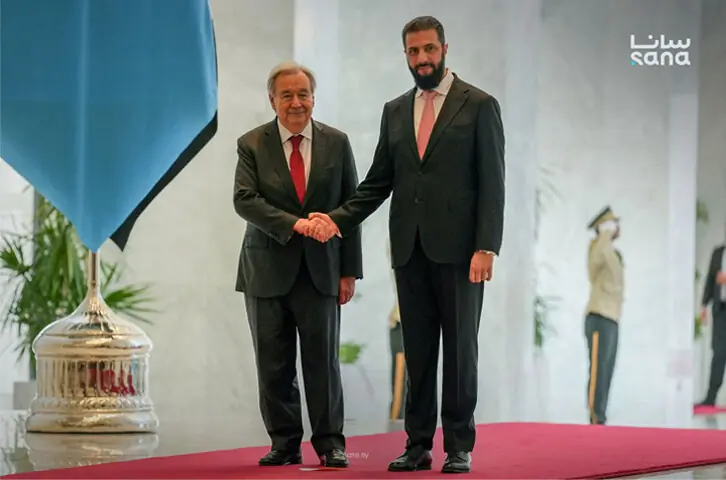
    United Nations Secretary General Antonio Guterres visited Syria on Saturday for the first time in 17 years, marking a significant moment in the country’s efforts to rebuild after more than a decade of conflict. During his visit to Damascus, Guterres met Syrian President Ahmed al Sharaa and pledged continued UN support for reconstruction, humanitarian recovery and long-term stability as Syria works to recover from years of war. President Sharaa welcomed Guterres at the presidential palace, where the two leaders held talks focused on rebuilding the country and strengthening cooperation with the United Nations. Speaking after the meeting alongside Syrian Foreign Minister Asaad al Shaibani, Guterres said no nation can recover from a devastating conflict without international assistance. He stressed that the global community has a responsibility to help Syria restore its economy, rebuild damaged infrastructure and create conditions for lasting peace. Foreign Minister Shaibani called on the international community, particularly the European Union, to increase financial and technical support for Syria’s recovery. He said discussions with Guterres also covered plans to expand UN assistance for reconstruction projects and support the government’s efforts to gradually close displacement camps as security conditions improve. Regional security was another major topic during the visit. Guterres expressed concern over the situation in the Golan Heights, describing recent developments as unacceptable. Syrian officials repeated their demand for Israeli forces to withdraw immediately from the United Nations monitored buffer zone where troops have been stationed since 2024. Damascus has also called for a return to the 1974 disengagement agreement that previously governed military positions in the area. The visit is being viewed as another important step in Syria’s return to the international stage following the removal of former president Bashar al Assad in late 2024. The end of Assad’s rule brought an end to a civil war that began in 2011 and resulted in hundreds of thousands of deaths while forcing millions of Syrians to flee their homes. At the time, Guterres described the political transition as a hopeful moment for both Syria and the wider region. Before arriving in Damascus, the UN chief described his trip as a visit of solidarity and reaffirmed the United Nations’ commitment to supporting the Syrian people during this critical period. He is expected to spend several days in the country, meeting senior government officials, representatives of civil society and humanitarian organizations. Guterres is also scheduled to address Syria’s parliament, where he is expected to speak about the country’s opportunity to build a more stable, inclusive and prosperous future after years of conflict. The visit comes as Syria continues to rebuild diplomatic ties with countries around the world. President Sharaa’s administration has sought to strengthen relations beyond the country’s traditional allies while encouraging international investment and cooperation. Since taking office, the government has focused on restoring Syria’s place in regional and global affairs after years of political isolation. Recent diplomatic developments have reflected that effort. Last year, Sharaa became the first Syrian president in decades to address the United Nations General Assembly. Earlier this month, US President Donald Trump announced plans to remove Syria from the United States list of state sponsors of terrorism after Washington lifted most of its sanctions on the country. Despite these diplomatic gains, security concerns remain. Guterres’ visit follows recent bomb explosions near a hotel in Damascus that had hosted French President Emmanuel Macron during his landmark visit, the first by a European Union head of state since Syria’s political transition. The incidents highlighted the continuing security challenges facing the country as it moves through a delicate rebuilding process. During his stay, Guterres is also expected to visit the UN peacekeeping mission responsible for monitoring the buffer zone between Israeli and Syrian forces. The mission has operated in the area for decades and continues to play a key role in maintaining stability along the disputed frontier. His visit underscores the United Nations’ commitment to supporting Syria’s recovery while encouraging dialogue, regional stability and international cooperation.

Leave a Reply

Your email address will not be published. Required fields are marked *