pakistan unveils fouryear
| |

Pakistan unveils four-year Hajj policy

The government has introduced a four-year Hajj policy covering arrangements from 2027 to 2030.

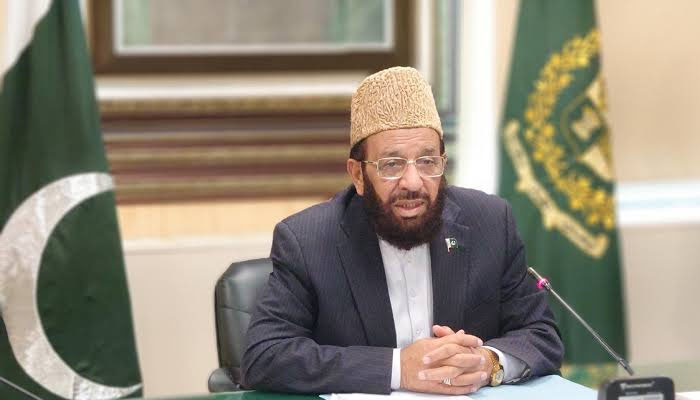
Federal Minister for Religious Affairs Sardar Muhammad Yousaf presented the policy on Wednesday. He described it as a major step toward improving and modernising Hajj arrangements in Pakistan.

Speaking at a briefing, the minister said this was the first time the government had introduced a four-year Hajj policy. He said the initiative would provide a long-term framework for organising the pilgrimage.

Yousaf said the policy had been prepared under the guidance of Prime Minister Shehbaz Sharif. It focuses on technology, transparency and improved services for pilgrims.

According to the minister, the new framework aims to bring Pakistan’s Hajj arrangements closer to international standards. It will also introduce several new facilities for pilgrims.

For the first time, applicants will have access to a registration and waiting-list system. The government expects the system to make the process more organised and transparent.

The minister said the government and private Hajj schemes would retain their existing quota division. Sixty per cent of the quota will remain with the government scheme, while private operators will receive 40 per cent.

The Ministry of Religious Affairs will continue to oversee and regulate Hajj arrangements. It will also monitor the performance of private Hajj companies.

Under the new policy, applicants will be able to enter the pilgrims’ list after paying 10 per cent of the required amount.

The government has also planned greater transparency in procurement. Purchases made in Pakistan and Saudi Arabia will be carried out through transparent procedures.

Yousaf said any money remaining after meeting the required expenses would be returned to the pilgrims. The measure is aimed at improving financial transparency and protecting the interests of Hajj applicants.

The government also plans to change the way private Hajj companies are monitored. Their registration and oversight will not depend only on the quota allocated to them.

Instead, their performance will be an important factor in determining their registration and continued participation in the Hajj programme.

A digital complaint-resolution system is also being introduced. Pilgrims will be able to submit complaints and seek quick action through the new system.

An appeal mechanism will also be established. This will provide pilgrims with another channel to challenge decisions or seek resolution of their complaints.

The minister said the government would also improve training programmes for Hajj pilgrims. The aim is to prepare pilgrims more effectively before their departure for Saudi Arabia.

The Hajj Muhafiz Scheme will continue under the new policy. The government considers the scheme an important part of its arrangements for pilgrims.

Yousaf said the new policy had been developed in line with Saudi Arabia’s Vision 2030. The framework is intended to improve coordination and service delivery during the pilgrimage.

The minister said the government’s objective was not limited to managing logistical arrangements. It also wanted to ensure that Pakistani pilgrims received a dignified and comfortable Hajj experience.

The estimated cost of the government Hajj package is expected to remain between Rs1.2 million and Rs1.3 million.

However, the final cost may depend on various arrangements and expenses associated with the pilgrimage.

Yousaf also clarified that any increase or decrease in Pakistan’s Hajj quota would require a decision from the federal cabinet.

He said Pakistan had received recognition and awards for its Hajj arrangements in the past. The government now wants to further improve the system through long-term planning and greater use of technology.

The four-year policy is expected to provide greater continuity in Hajj preparations. Officials believe the long-term framework will also make planning easier for both the government and pilgrims.


Similar Posts

  • |

    SEF, Sindh Boy Scouts launch initiative to expand scouting across Foundation-assisted schools*

    KARACHI: The Sindh Education Foundation (SEF), Government of Sindh has initiated a collaboration with the Sindh Boy Scouts Association by holding a Group Scout Leadership Seminar aimed at promoting leadership, discipline and community service among students enrolled in Foundation Assisted Schools. The seminar, held at the Sindh Boy Scouts Association headquarters in Karachi, brought together representatives from 32 Foundation Assisted Schools, including head teachers, faculty members and students. The event was attended by SEF Managing Director Gahanwer Ali Laghari, Deputy Managing Director Shahpara Rizvi, Regional Head Karachi Ashfaque Hussain Meerani, senior directors, assistant directors and other officials. The Sindh Boy Scouts Association was represented by Provincial Scout Secretary Syed Akhter Meer, and other office-bearers. Addressing the seminar, Provincial Scout Secretary Syed Akhter Meer welcomed the participation of SEF schools and said introducing students to the history and values of scouting would encourage them to become part of a global movement focused on leadership, character building and service. He also recalled the support extended to the scouting movement by the late Prof Dr Anita Ghulam Ali during her tenure at SEF, saying it was encouraging to witness the Foundation continuing the same commitment under the leadership of Managing Director Gahanwer Ali Laghari. Participants were also briefed on the history of the scouting movement in Sindh, its achievements and future roadmap through a presentation highlighting the organisation’s contribution to youth development. Former senior bureaucrat Ghulam Ali Pasha said leadership and discipline could not be developed through classroom education alone, stressing that scouting provides young people with practical exposure to teamwork, responsibility and community service. He described such initiatives as essential for preparing students to become confident and responsible leaders. Speaking on the occasion, SEF Managing Director Gahanwer Ali Laghari said the Foundation’s mandate extended beyond improving access to education and academic outcomes. “Alongside quality education, we want our students to develop leadership, discipline and a sense of responsibility. Through scouting, they will have an opportunity to become part of an international movement that promotes these values,” he said. Laghari announced that SEF and the Sindh Boy Scouts Association would jointly organise a series of scouting activities across Foundation Assisted Schools throughout the province. He said the initiative had been launched with schools in Karachi and would gradually be expanded to all SEF-supported schools. “Our objective is to engage the entire network of Foundation Assisted Schools, and we are hopeful that within the next one-and-a-half years, scouting activities will be introduced across the province,” he added. The initiative is expected to provide students with greater opportunities for leadership development, teamwork and community engagement alongside their academic education.

  • | |

    Islamabad symposium examines Xi Jinping’s approa…

    ISLAMABAD: A joint symposium on “Xi Jinping Thought on Party Building” was held in Islamabad on Wednesday, bringing together senior Pakistani and Chinese officials, diplomats, parliamentarians, academics and representatives of think tanks to discuss China’s approach to political organisation, governance and institutional development. The symposium was organised by the Embassy of the People’s Republic of China in Pakistan in collaboration with the Institute of Regional Studies (IRS). Chairman Senate Syed Yousaf Raza Gilani attended the event as chief guest. The Chinese delegation included Liu Daxiu, Head of Delegation and First-Class Inspector at the Party Building Research Institute of the Organization Department of the Communist Party of China (CPC) Central Committee, and Zheng Huan, Professor of Party Building at the Central Party School of the CPC Central Committee. Chinese Ambassador to Pakistan Jiang Zaidong also addressed the gathering. While adressing, Pakistani and Chinese representatives reaffirmed the longstanding partnership between the two countries, noting that political and institutional exchanges have expanded alongside cooperation in economic, infrastructure and development-related fields. They further added that dialogue between political parties has become an important pillar of the Pakistan-China strategic relationship. Speakers outlined the evolution of Xi Jinping Thought on Party Building, describing it as a doctrine centred on strengthening the Communist Party of China through disciplined leadership, rigorous internal governance, organisational cohesion and ideological development. They said the framework seeks to ensure the Party’s long-term capacity to govern while maintaining accountability, institutional resilience and public trust. CPC’s efforts to curb corruption and maintain discipline, while strengthening the organisation at different levels were also discussed. The recurring theme throughout the symposium was that China’s development should not be viewed solely through the lens of economic growth. Pakistani and Chinese speakers argued that the country’s transformation has also been shaped by strong political organisation, consistent policy implementation and institutional continuity. At the same time, Chinese experts stressed that these experiences were not being presented as a model for direct replication, noting that every country must pursue its own path according to its national circumstances. Participants also reflected on the broader relevance of the CPC’s experience for political parties worldwide, discussing issues such as governance capacity, organisational resilience, leadership development and the ability of institutions to translate policy into tangible results. Chairman Senate Yousaf Raza Gilani, Ambassador Jiang Zaidong and IRS President Jauhar Saleem affirmed the importance of sustained engagement between the two countries and welcomed continued exchanges on governance, public policy and institutional development. The symposium concluded with an interactive session in which participants discussed the relevance of Party building, leadership and governance reforms to contemporary political challenges and future Pakistan-China cooperation.

  • | | |

    Security forces kill five militants in Panjgur ope…

    Security forces have killed five militants during an intelligence-based operation in Panjgur district of Balochistan, according to the Inter-Services Public Relations (ISPR). The operation was conducted after security agencies received intelligence about the presence of militants in the area. Security personnel moved into the suspected location and carried out the operation. Five militants were killed during the operation, ISPR said. A significant quantity of weapons and ammunition was also recovered from the militants. The recovered weapons and ammunition were taken into custody. They were later destroyed by the security forces, according to ISPR. Following the operation, security personnel launched a clearance and search operation in the surrounding area. The search operation is aimed at checking the area for any remaining militants and possible hideouts. Security forces are also examining the area for additional evidence and material linked to militant activities. ISPR said the operation was part of ongoing efforts to eliminate terrorism from Balochistan. The military’s media wing said security forces remain determined to prevent militant groups from carrying out attacks. It further said efforts would continue against terrorism allegedly being carried out with foreign support and assistance. Security forces have intensified operations against militant networks in different parts of the province. Authorities have repeatedly stressed the need for intelligence-based operations to identify and target militant elements. The latest operation in Panjgur comes amid continued security efforts in Balochistan

  • |

    Former Chinese premier Zhu Rongji dies at 97

    BEIJING: Former Chinese Premier Zhu Rongji, a key figure in the country’s economic transformation during the 1990s, has died at the age of 97. Zhu was known for his direct speaking style and his strong support for economic reform. His tenure was marked by major changes aimed at restructuring China’s state-dominated economy and opening it further to global markets. He served as China’s vice premier from 1991 to 1998 before becoming premier, a position he held until early 2003. Zhu’s political career began decades earlier. He graduated from Tsinghua University and joined the Communist Party in 1949. During the Cultural Revolution, he was sent to work in the countryside and experienced a period of political hardship. He was later rehabilitated and gradually returned to senior government positions. In 1987, Zhu became mayor of Shanghai. During his tenure, he helped guide the city through early economic reforms and development that eventually contributed to its emergence as a major international financial centre. He moved to Beijing in 1991 after joining the central government. As vice premier and later premier, Zhu became closely associated with efforts to tackle economic overheating, inflation and financial instability. His government introduced wide-ranging reforms to state-owned enterprises. Many inefficient state companies were closed, restructured or privatised, while large numbers of workers were laid off. Zhu also strengthened the central government’s control over taxation and introduced reforms that encouraged private home ownership. Those changes played a major role in reshaping China’s housing market. One of his most significant achievements was helping China secure membership of the World Trade Organization in 2001, following years of difficult negotiations. China formally joined the organisation in December that year. The WTO accession accelerated China’s integration into the global economy and helped expand international trade and investment. However, Zhu’s reform programme also had critics. Some observers argued that changes to agricultural policy, tax arrangements and state-owned enterprises created difficulties that later governments had to address. Despite those criticisms, Zhu remained widely regarded as one of the most influential economic reformers in modern Chinese history. His reputation for blunt remarks became particularly prominent after a collection of his speeches was published in 2011. The books contained unusually candid assessments of corruption, government debt, banking problems and weaknesses in public administration. The speeches attracted significant public attention because they addressed many of the economic and social challenges facing China at the time. Zhu warned about corruption, inequality and problems created by local officials. His comments continued to attract interest among reform-minded officials, academics and members of the public long after he left office. His death marks the passing of a leader who played a central role in one of the most consequential periods of China’s economic development. Zhu’s legacy is closely linked to the difficult reforms of the 1990s, when China moved towards a more market-oriented economy while maintaining the political control of the Communist Party.

  • | |

    Tate McRae celebrates new milestone as Variety honours her rise in Hollywood

    Canadian pop star Tate McRae is entering a major new chapter in her career as she is recognised by Variety’s Power of Young Hollywood, celebrating her achievements as one of the most successful young performers in music today. The 23-year-old singer, songwriter and dancer has built a global following through her emotional songwriting, powerful vocals and high-energy performances. Variety’s recognition highlights her growth as an artist who continues to expand her influence across music and live entertainment. McRae is set to receive the Triple Threat Award at the Power of Young Hollywood event in Los Angeles, honouring her talents in singing, songwriting and performance. In a recent conversation with Variety, McRae reflected on the pressures of fame, explaining how she tries to keep her career exciting by approaching experiences with a sense of fun and imagination. She also opened up about the challenges of touring, including the emotional exhaustion that came after completing her demanding Miss Possessive Tour. The Miss Possessive Tour became a defining achievement in McRae’s career, earning more than $100 million in revenue and selling over one million tickets. The tour marked a significant rise in her status as a major pop performer and demonstrated the growing connection between McRae and her worldwide audience. McRae also shared a memorable story involving fellow pop icon Taylor Swift, revealing details about receiving homemade sourdough bread from Swift. The moment became one of the lighter highlights from her recent interview. Known for combining her dance background with modern pop performance, McRae continues to focus on improving her craft and creating memorable live experiences. From viral hits to sold-out shows, she has established herself as one of the leading voices of the new generation of pop artists. As she celebrates this latest honour, Tate McRae’s journey reflects the evolution of a young performer who has successfully transformed her passion for dance and music into an international career. https://variety.com/2026/music/features/tate-mcrae-interview-relationships-taylor-swift-sourdough-bread-1236825809/

  • |

    US and Asian chip stocks fall after report of Chinese semiconductor breakthrough

    Shares of major semiconductor companies dropped sharply on Monday after a report suggested that a Chinese firm has made significant progress in developing advanced chipmaking equipment. The news raised concerns among investors that China could reduce its reliance on foreign technology and strengthen its position in the global semiconductor industry. The market reaction followed a report by The Information, which said Shanghai Yuliangsheng is producing immersion deep ultraviolet lithography machines. These machines use ultraviolet light to carve extremely small circuits onto silicon wafers, a key step in manufacturing modern computer chips. Neither Shanghai Yuliangsheng nor related companies SiCarrier and Huawei responded immediately to requests for comment. However, the report was enough to unsettle investors, who fear that China’s progress in chip manufacturing could reshape competition in the technology sector. If the reported breakthrough proves successful, China could reduce its dependence on Dutch company ASML, the world’s leading supplier of advanced lithography equipment. ASML’s exports are subject to strict restrictions, limiting China’s access to some of the most advanced chipmaking technology. Developing its own DUV lithography machines would allow China to expand domestic chip production and accelerate the development of more powerful processors. Industry analysts believe this could help Chinese technology companies narrow the gap with leading American semiconductor manufacturers. The development is also seen as important for China’s artificial intelligence industry. Improved access to advanced chips would strengthen the country’s AI capabilities and help Chinese companies compete more closely with leading US firms developing cutting edge AI models. The report triggered heavy selling across the US technology sector. Shares of AMD fell by as much as eight percent during trading, while Nvidia dropped nearly five percent. Micron Technology also lost around five percent, and Intel declined about 3.7 percent as investors reassessed the competitive outlook for the semiconductor industry. The decline spread quickly to Asian markets on Tuesday. South Korea’s stock market suffered steep losses as concerns over the future of the AI industry combined with the reported Chinese breakthrough. The Kospi index plunged more than 10 percent to its lowest level since April. Major South Korean chipmakers were among the hardest hit. Shares of SK hynix and Samsung Electronics each fell by around 12 percent as investors worried that stronger competition from China could affect future earnings and market share. Japan’s technology sector also came under pressure. The Nikkei 225 index dropped more than four percent, while leading technology companies including Advantest, Kioxia and Tokyo Electron each lost more than 10 percent during trading. The sharp decline across global markets highlights how closely investors are watching developments in the semiconductor industry. As countries compete to secure leadership in chip production and artificial intelligence, even reports of technological advances can have an immediate impact on stock markets and reshape expectations for the future of the global technology sector.

Leave a Reply

Your email address will not be published. Required fields are marked *