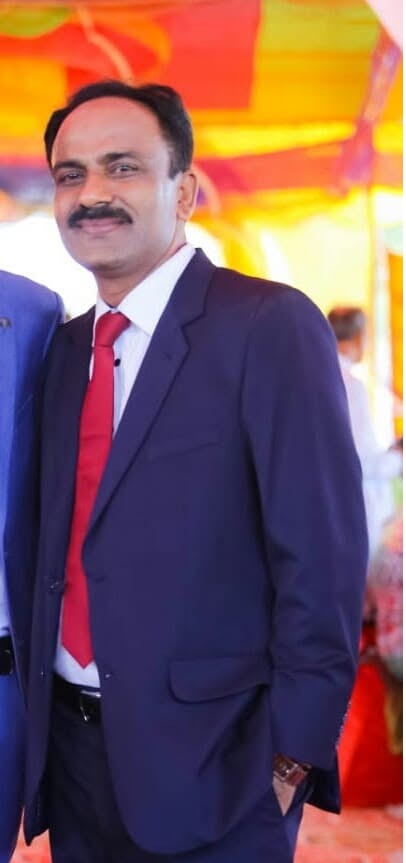
hassan nisar receives
| |

Hassan Nisar receives KP Youth Excellence Award

PESHAWAR: The Khyber Pakhtunkhwa government has presented the Youth Excellence Award to Hassan Nisar, founder of Metrix Pakistan, for his efforts to promote youth development, education and skills across the province.

Adviser to the Chief Minister on Sports and Youth Affairs Taj Muhammad Tarand presented the award during a ceremony at Sahibzada Abdul Qayum Hall, University of Peshawar, held to mark International Youth Day.

The Directorate of Youth Affairs organised the event, which brought together government officials, students, entrepreneurs and youth representatives.

Hassan Nisar, who hails from Khanpur, Haripur, founded Metrix Pakistan in 2022. Since then, the organisation has arranged workshops, training sessions and educational programmes for young people in various parts of KP, particularly underserved communities.

Its initiatives cover digital marketing, artificial intelligence, blockchain, entrepreneurship and other technology-related fields, helping thousands of young people gain practical skills and knowledge.

Much of the organisation’s work focuses on areas outside major cities, where young people often have limited access to education, technology and professional opportunities.

Speaking at the ceremony, Taj Muhammad Tarand praised Hassan Nisar’s efforts to empower young people and contribute to the province’s development. Secretary Sports and Youth Affairs Muhammad Asif and Director Youth Affairs Abbas Khan Afridi also recognised his contributions.

Hassan Nisar said the award encouraged him and his team to continue expanding educational and skills-development opportunities for young people, especially those from underserved communities.

Similar Posts

  • Rising Fuel Costs Force Fishing Fleets Across Thailand to Dock

    BANGKOK – Fishing fleets across Thailand are grinding to a halt as surging fuel prices and persistent shortages push operating costs beyond sustainable levels, threatening the livelihoods of thousands of fishermen and the stability of coastal economies. Thailand’s Fishing Industry Grinds to Halt as Diesel Shortages Bite Phubet Jantanimi, honorary adviser to the Purse Seine […]

  • | |

    Pakistan plans $500 million export-oriented auto z…

      A major initiative has been announced to establish an automotive zone on 150 acres of land at Port Qasim in Karachi, with the government expecting the project to create new opportunities for exports and generate significant foreign exchange for Pakistan. The announcement was made during a meeting of the Port Qasim Authority Board, chaired by Federal Minister for Maritime Affairs Junaid Anwar Chaudhry. The meeting reviewed plans aimed at strengthening Pakistan’s maritime infrastructure and promoting industrial and export-related activities through the country’s major port facilities. Speaking at the meeting, Federal Minister Junaid Anwar Chaudhry said the proposed auto zone would cover approximately 150 acres at Port Qasim. He said the project was expected to generate around $500 million in annual exports, while contributing approximately $200 million in foreign exchange earnings each year According to the minister, the auto zone will provide a range of facilities linked to the automotive industry. These will include refurbishment facilities, display areas and spare-parts services. The development is expected to support businesses involved in the import, refurbishment and export of automotive products and components. The minister said the project would create new export opportunities for Pakistan’s automotive sector and help the country strengthen its position in international markets. He described the proposed auto zone as an integrated framework that would bring together automobile imports, refurbishment and exports at a single location. The initiative is also expected to encourage greater investment in the automotive sector by providing businesses with dedicated infrastructure and facilities. By bringing different stages of automotive-related activities together, the project could help improve efficiency and create opportunities for companies seeking to expand their operations in Pakistan. Port Qasim’s strategic importance as one of Pakistan’s major ports could further support the project. The location provides access to maritime transportation and international trade routes, potentially making it easier for automotive businesses to handle imported vehicles, spare parts and other related products before exporting refurbished or finished products to overseas markets. The government expects the auto zone to contribute to the country’s broader efforts to increase exports and generate foreign exchange. Pakistan has been seeking new avenues to expand its export base and reduce pressure on its foreign exchange reserves. In this context, the proposed automotive zone could provide a platform for developing value-added activities rather than relying solely on the import and sale of automotive products. The inclusion of refurbishment facilities is particularly significant because it could allow imported vehicles and automotive components to be repaired, upgraded or prepared for resale and export. Similarly, dedicated spare-parts facilities could support both local businesses and export-oriented automotive operations. The project is therefore being presented as more than a conventional industrial development. It is intended to establish an integrated automotive ecosystem connecting imports, refurbishment, display, spare parts and exports. If implemented as planned, the Port Qasim auto zone could attract investment, support businesses associated with the automotive industry, create employment opportunities and increase Pakistan’s export earnings. The government believes that the project will open new avenues for growth in the automotive sector while contributing to the country’s overall foreign exchange generation and export expansion efforts.

  • | |

    Maryam Nawaz orders timely salaries for Sutrah Pun…

    Punjab Chief Minister Maryam Nawaz has directed that workers associated with the Sutrah Punjab programme be paid their salaries by the fifth of every month. According to an official statement, the chief minister also sought monthly reports from the companies responsible for making payments to the workers to ensure that salaries are being disbursed on time. Maryam Nawaz ordered a zero-tolerance policy against workers who fail to perform their duties. She also directed authorities to develop standard operating procedures (SOPs) to regularly assess workers’ performance and improve the overall efficiency of the programme. The chief minister stressed that special attention should be given to cleanliness at fruit and vegetable markets. She said additional efforts were required to achieve better sanitation results across Punjab. Maryam Nawaz also directed officials to begin washing and cleaning major roads at 5am. She instructed authorities to ensure door-to-door waste collection and maintain proper cleanliness around schools, colleges, universities and hospitals. She further ordered the use of uniform garbage bins and waste bags in markets and commercial areas. Officials were directed to establish specific timings for removing waste from commercial zones and ensure that vacant plots in different areas were also cleaned.

  • |

    Pakistan’s inflation falls to single digits in J…

    ISLAMABAD: Pakistan’s inflation rate returned to single digits in July, offering some relief to consumers after remaining in double-digit territory for three consecutive months. According to the latest monthly inflation report released by the Pakistan Bureau of Statistics (PBS), the annual inflation rate fell to 9.2% in July 2026, compared with 11.1% in June 2026 The latest figures mark a notable change in the country’s inflation trend as the new fiscal year began. Inflation had remained above the 10% mark throughout April, May and June 2026, but the rate dropped below double digits in July. The decline in the annual inflation rate indicates a slowdown in the pace at which prices increased compared with the same period last year. However, consumers continue to face pressure from the high cost of essential goods and household expenses. The July reading also reflects a month-on-month improvement in inflationary pressures, although the overall cost of living remains a major concern for households across the country. Economists and policymakers closely monitor inflation figures as they influence decisions on interest rates, economic policy and household purchasing power. A sustained decline in inflation could provide some relief to consumers and businesses, but the government will need to maintain price stability to ensure that the downward trend continues in the coming months.

  • Former FATA, Balochistan students protest over medical seats

    Islamabad: Students from former FATA and Balochistan have been protesting outside the Pakistan Medical and Dental Council (PMDC) for around a week, stating their medical and dental seat issue remains unresolved despite repeated meetings, provincial proposals and a PMDC decision allowing increased intake in public medical colleges. Protesters say they expected hundreds of seats under a federal education programme but are still waiting for a clear notification covering their admissions. Among the protesting students named are Usman Afridi, Allah Yar and Shafi ud Din. Muhammad Rehan, a student from South Waziristan, said the federal government through the Higher Education Commission had been providing medical and dental education opportunities to students from former FATA and Balochistan. He said 333 MBBS and BDS seats had been provided each year under the programme in previous years. Rehan claimed that the same number of seats had not been made available to students this time. According to his account, PMDC initially told the students that it did not hold a separate quota of 333 seats and that provincial governments would have to identify available seats before PMDC could consider approval. Students then approached the governments and medical education authorities in Khyber Pakhtunkhwa and Balochistan. Rehan said Khyber Pakhtunkhwa identified 375 additional seats while Balochistan proposed another 36 medical seats. He said the students expected PMDC to approve these seats for their current admission session but the matter had still not been settled. Official documents in the file support that Khyber Medical University submitted a proposal for a major increase in seats for students from former FATA. The KMU proposal listed additional seats in several public medical colleges. It proposed 50 additional seats each at Saidu Medical College, Gomal Medical College, Bannu Medical College, Bacha Khan Medical College, Nowshera Medical College, Gajju Khan Medical College and KMU Institute of Medical Sciences. It also proposed 25 additional seats at KMU Institute of Dental Sciences. The total proposed increase under the KMU plan was 375 seats. Khyber Medical University said the colleges proposed for increased intake had been examined for faculty, infrastructure, teaching hospitals, equipment and other requirements. KMU stated that the institutions were capable of supporting the proposed increase and asked PMDC to approve the seats for the relevant session. Balochistan also submitted a separate proposal for 36 additional MBBS seats. According to the document, Bolan Medical College was proposed for 21 additional seats. Five seats each were proposed at Jhalawan Medical College, Loralai Medical College and Kech Medical College. The Balochistan Health Department said the proposal would support educational equality and help address the shortage of medical professionals in underserved regions. The combined proposals from Khyber Pakhtunkhwa and Balochistan therefore amount to 411 additional seats. However, whether all of those seats must be reserved specifically for students from former FATA and Balochistan is a central issue in the dispute. Students say they were expecting a fixed quota under the HEC programme. PMDC documents in the file show a somewhat different arrangement. PMDC approved an increase in student intake capacity across recognised public medical colleges, subject to inspections and compliance with its standards. The regulator said colleges seeking increased intake would have to meet requirements on infrastructure, faculty and accreditation. It also made clear that the increased intake was not a relaxation of minimum medical education standards. The PMDC decision further stated that where the approved capacity of a public medical college is increased, the relevant provincial or regional government may reserve an appropriate quota within those additional seats for students under the HEC scholarship programme for former FATA and Balochistan. The document says the provincial government and HEC would determine the method for nomination, allocation and admission under the quota. The PMDC notification therefore does not state in the provided text that every province must reserve a fixed number of 333 or 300 seats. Instead, it allows provincial governments to earmark an appropriate quota from approved enhanced capacity. This difference appears to be at the heart of the current dispute. Students say they were promised a specific number of seats. The formal PMDC notification in the provided documents speaks more broadly about increased capacity and allows provinces to determine an appropriate HEC quota within that capacity. Rehan also claimed that a PMDC Council meeting had agreed to approve 300 seats for students of former FATA and Balochistan. He said students were later repeatedly told that a notification would be issued soon but it did not come in the form they expected. He also claimed that students have recordings of conversations with senior PMDC officials regarding promises about the notification. These claims are statements made by the protesting student and the provided documents do not independently establish the contents of the alleged recordings. Official PMDC documents do confirm that the Council approved increased intake capacity in recognised public medical colleges across Pakistan. The decision stated that expanding capacity would give more deserving students access to medical education and strengthen Pakistan’s future health workforce. However, this approval remained subject to PMDC assessment and compliance with required standards. An earlier Khyber Pakhtunkhwa meeting regarding former FATA students also shows that the issue had been under discussion for some time. The meeting reviewed an overall capacity figure of 333 seats and discussed how additional opportunities could be created for students from former FATA. Officials were told that PMDC was willing in principle to consider increased seats if the required documents and formal requests were completed. KMU was directed to survey medical colleges and submit the required information to PMDC. The meeting record dacuments also states that the support initiative for former FATA students was described as continuing until 2031. Students are now demanding that PMDC issue a clear decision and allow the enhanced seats to apply to their current admission session. They argue that provincial governments and universities have already carried out the work required to identify additional capacity and that further delay could cost them an academic year.

  • | |

    Khanewal farmers protest delay in lease letters

      KHANEWAL: Eleven farmers selected under Punjab Chief Minister Maryam Nawaz Sharif’s “Apna Khet, Apna Rozgar” initiative have protested over the delay in receiving lease letters for approximately 950 kanals of agricultural land in Chak 63/10-R. The farmers allege that the transfer process is being delayed because of the influence of an influential local figure who, they claim, is supporting people occupying the land. The affected farmers recently held a demonstration outside the Revenue Department office at the District Complex in Khanewal. They demanded that the authorities issue their lease documents immediately and complete the process of handing over the land allotted to them through the government’s official balloting process. According to the protesting farmers, nearly 950 kanals of agricultural land in Chak 63/10-R was designated for lease to 11 deserving applicants who were selected through a formal draw under the provincial government’s scheme. However, they claimed that the land has remained in the possession of alleged illegal occupants for almost 40 years. The farmers said the occupants had earlier approached the Lahore High Court and obtained a stay order regarding the disputed property. They claimed that the relevant bench of the Lahore High Court dismissed the stay order on August 3, 2026, which, according to them, removed a major legal hurdle in the way of implementing the government’s allotment decision. Despite the dismissal of the stay, the protesting farmers alleged that the Punjab Revenue Department and the Khanewal district administration had not yet issued the required lease letters. They further alleged that the individuals occupying the land had the support of an influential political figure in the area. The farmers claimed that political pressure was contributing to the delay and preventing the concerned departments from completing the formalities required for the transfer of the land. The applicants also pointed out that their names and allotment information are already available on the Punjab government’s official online portal for the “Apna Khet, Apna Rozgar”scheme. They questioned why the authorities had not issued the lease documents despite their successful selection through balloting and the reported dismissal of the court stay. The Additional Deputy Commissioner (Revenue), Khanewal, was contacted to obtain the administration’s position on the matter, including the delay in issuing the lease letters, the current legal status of the disputed land and the allegations of political interference. However, an official response from the ADCR was not available at the time of filing the report. The administration’s version will be included once an official response is received. The affected farmers have appealed to Chief Minister Maryam Nawaz Sharif, Deputy Commissioner Khanewal Dr Hina Arshad Commissioner Multan Aamir Karim and the Senior Member Board of Revenue Punjab to take immediate notice of the issue. They demanded that the lease letters be issued without further delay and that possession of the allotted land be handed over to the successful applicants according to the balloting results, government policy and applicable legal procedures. The protesters also urged the provincial government to ensure transparent implementation of the “Apna Khet, Apna Rozgar” scheme and prevent any political or external influence from affecting the rights of successful applicants.

Leave a Reply

Your email address will not be published. Required fields are marked *