| |

At UN Summit, Tanweer Ahmed demands global action …

American Pakistani businessman and analyst Tanweer Ahmed has called for greater investment in young people and urged governments, businesses and international institutions to ensure that artificial intelligence (AI) expands opportunities rather than deepens existing inequalities.

Addressing a Youth and AI Summit at the United Nations on International Youth Day 2026, Ahmed said young people should be viewed not only as beneficiaries of development but also as innovators, decision-makers, community leaders and partners in shaping the future.

He described AI as a defining force of the Fourth Industrial Revolution, saying rapid advances in artificial intelligence, robotics, data, connectivity, biotechnology and automation were transforming economies and societies at an unprecedented pace.

Ahmed said the impact of AI would extend across education, healthcare, public services, entrepreneurship, security and employment, creating both challenges and opportunities for the younger generation.

He highlighted the growing importance of digital skills, creativity, adaptability, ethical decision-making and technological confidence in preparing young people for future jobs.

“Talent is everywhere. Opportunity is not,” he said, stressing that young people in cities such as Karachi, Nairobi, Riyadh and Dhaka could possess the same potential as those living in major global technology centres but often lacked equal access to resources and opportunities.

According to Ahmed, AI could help bridge this gap by allowing students to access knowledge beyond traditional classrooms, entrepreneurs to reach international markets and researchers to process information at unprecedented speeds.

However, he cautioned that technological progress alone would not guarantee equal opportunity. Access to education, skills, credentials and technology must also be expanded to prevent AI from worsening existing inequalities.

Pakistan’s AI potential

Speaking about Pakistan, Ahmed said the country’s large young population could become a major economic strength if properly prepared for the emerging digital economy.

He pointed to initiatives including ACT AI — Awareness, Competency and Tools Training for Artificial Intelligence, associated with the state-owned enterprise AXI. The programme focuses on practical AI capabilities, including generative AI, agentic AI systems, productivity tools, automation and sector-specific applications.

Ahmed emphasised the importance of making AI education accessible to young people from different academic backgrounds, including those without previous programming or AI experience.

He said young Pakistanis should be equipped to use AI not only for education and employment but also for entrepreneurship, public service and innovation.

He also highlighted the role of MicroCerts, a government-backed initiative aimed at providing accessible and market-oriented skill certifications.

Ahmed argued that traditional university degrees would continue to be valuable, but rapidly changing technology required young people to keep learning throughout their careers. Micro-certifications, he said, could help workers demonstrate specific skills and create new pathways to employment, freelancing, entrepreneurship and further education.

Youth urged to become AI creators

Ahmed said young people should not be trained merely to consume AI technologies. Instead, they should learn to develop, question, govern and innovate with AI while understanding its ethical and social consequences.

He stressed that technology could not replace human compassion, character, judgement and responsibility.

“AI can process enormous amounts of information,” he said, while emphasising that decisions about the kind of society humanity wants to build must remain a human responsibility.

He also called for stronger international cooperation to develop common skills frameworks, support youth-led innovation and expand access to recognised digital credentials.

Governments, universities, technology companies, international organisations and civil society, he said, must work together to ensure young people can participate meaningfully in the AI-driven economy.

Ahmed further stressed that technological development must be accompanied by environmental responsibility, noting that AI systems, data centres and cloud computing require significant infrastructure and energy.

Addressing young people around the world, he urged them to actively shape the future rather than wait for it.

He called on the younger generation to learn emerging technologies, develop solutions, create businesses and communities, and use AI with a clear sense of purpose.

Who is Tanweer Ahmed, the Pakistani-American philanthropist?

Pakistani-American businessman and philanthropist Tanweer Ahmed has attracted renewed attention in Pakistan following his reported $9 million contribution to the National University of Sciences and Technology (NUST) and his recent appearance alongside senior Pakistani officials in the United States.

Ahmed, who is based in Houston, has built a diverse business portfolio in the United States while also becoming involved in philanthropy, education, healthcare and cricket.

His recent contribution to NUST is aimed at supporting talented students from financially disadvantaged backgrounds. The endowment is expected to provide scholarships to deserving students each year, with a particular focus on fields such as artificial intelligence, information technology, science and other emerging technologies.

Ahmed has said his objective is to ensure that talented Pakistani students are not deprived of quality education because of financial difficulties. He has also expressed plans to expand similar scholarship initiatives to other educational institutions.

The businessman has also supported infrastructure and technology-related initiatives at NUST, including the development of facilities intended to strengthen research and innovation.

His philanthropic activities extend beyond education. Ahmed has been associated with healthcare initiatives in Pakistan and has supported efforts aimed at providing assistance to communities affected by natural disasters.

He also drew attention for his role in relief efforts following the devastating floods that struck Pakistan in 2022. He has been credited with helping mobilise substantial humanitarian assistance for flood-affected communities.

Ahmed’s business journey began after he moved to the United States as a student.

According to accounts of his career, he initially worked in restaurants and at gas stations while trying to establish himself. He later moved through several positions in the American fast-food industry.

His career accelerated after he joined Jack in the Box as a shift manager. His performance and business approach helped him move into senior management positions, eventually leading to opportunities in the Taco Bell franchise system.

Ahmed later expanded into franchising and developed a large portfolio of food outlets across several US states. His business interests have also extended into insurance, energy, transportation and other sectors.

Over the years, he has developed a reputation as an entrepreneur who combines commercial ventures with philanthropic activities.

Ahmed is also closely associated with the development of cricket in the United States.

A passionate cricket enthusiast, he established the Prairie View Cricket Complex near Houston after acquiring a large tract of land for the project.

The complex was developed to provide modern facilities for cricket and help expand the sport in a country traditionally dominated by baseball, American football and basketball.

Ahmed has also been linked with the Houston Hurricanes cricket franchise, further strengthening his involvement in the development of the sport in the US.

His investment in cricket reflects his interest in creating opportunities for players and communities that have traditionally lacked access to high-quality facilities.

Education remains one of Ahmed’s major areas of philanthropic interest.

Through his scholarship initiative, he has said he wants to help students from low-income families pursue advanced education and build careers in sectors expected to drive future economic growth.

The initiative places particular emphasis on technology-related disciplines, including AI and IT.

Ahmed’s stated approach is to make financial assistance available on merit, with priority given to students who have the ability to succeed academically but cannot afford the cost of quality education.

His growing involvement in education, healthcare, disaster relief and sports has made him a prominent Pakistani-American figure in philanthropic circles.

From working in restaurants after arriving in the United States to building businesses across multiple sectors, Ahmed’s career reflects a long transition from a modest beginning to entrepreneurship and investment.

His recent education initiative has once again placed his work in Pakistan under the spotlight, particularly at a time when universities and policymakers are seeking greater private-sector support for technology, innovation and scholarships.


Similar Posts

  • | |

    Atif Aslam says he rediscovered himself through new album

    Pakistani music icon Atif Aslam has opened up about the personal journey behind his upcoming studio album Subah Aye Na, revealing that years of touring and commercial commitments left him disconnected from his artistic identity. Ahead of the album’s release, the singer shared that he had to “go back to zero” to rediscover himself as an artist. Speaking in recent interviews with Virgin Radio Dubai and Khaleej Times, Aslam reflected on the creative process behind Subah Aye Na, his first studio album in 18 years. The singer described the project as one of the most personal milestones of his career. “I forgot who I was, so I went back to zero and told myself that people had made me a star, by the grace of God, but now is the time to become an artist,” Aslam said. The singer explained that after spending more than two decades performing around the world, he realised he had been creating music mainly for audiences, concerts and record labels rather than for himself. “I have been doing it for the people, for my listeners, for music companies,” he said. “I thought of doing something for myself. And I found myself through this album.” Reflecting on the past 25 years of his career, Aslam admitted that his busy schedule had gradually distanced him from the creative passion that first inspired him to pursue music. “I had somehow lost touch with myself while staying busy with projects, concerts and other things, though that too is a blessing I acknowledge. But it was about time to look within and do what my heart had been yearning for,” he shared. Unlike his previous work, Aslam said he refused to rush the album’s production and instead allowed the music to develop naturally. “I did not want to be driven by timelines. I wanted it to come straight from the soul,” he explained. The award-winning singer also confessed that he had planned to release another album years ago but never completed it. “I was working on the album, but I couldn’t compile it earlier. I guess you could say, as candidly as it gets, that I was lazy,” he admitted with a smile. “But you eventually have to decide when you will perform and when you will make your own music. You have to do both.” Looking ahead, Aslam revealed that he hopes to maintain a more consistent release schedule and aims to put out a new album every year. During the interviews, the Aadat singer also shared that cricket—not music—was his first dream. He revealed that he wanted to become a fast bowler and was even selected for an under-19 cricket team before his parents encouraged him to focus on academics. “I wanted to be a fast bowler. I got selected for the under-19 cricket team, but my parents wanted me to study,” he recalled. Aslam said he only realised his vocal potential after his father’s transfer to another city. “When I hit that high note, I got scared. That’s when I realised something could come of it,” he said. Explaining the difference between his albums and film songs, Aslam noted that his studio records are deeply personal because he composes them himself. “I have composed all of my albums myself, but film songs are created with music producers and directors. My albums reflect what I have been through, the people I have met, what has inspired me and how it has shaped me,” he said. The singer also expressed gratitude to his Indian fans, recalling how his music first reached audiences across the border. “I remember when my first album came out, people would burn CDs and take them to India. Now we’re back to those days again,” he said, while thanking listeners who continue to support his music despite ongoing restrictions. Subah Aye Na, featuring eight tracks, is scheduled for release on July 31, marking Aslam’s long-awaited return to the studio album format after nearly two decades.

  • |

    Germany pledges justice as Berlin attack shocks nation

    BERLIN, July 26: German authorities have launched a major investigation after a vehicle drove into a crowd near a Pride event in Berlin, killing one person and injuring 16 others. The incident took place late Saturday night in the Tiergarten area, close to Berlin’s Brandenburg Gate. The location was near the route of Christopher Street Day, one of Europe’s largest annual LGBTQ Pride celebrations. Emergency services said eight people were seriously injured. Three of them were in critical condition. Police have identified a man they describe as being known to authorities and linked to the Islamist scene. They released his photograph and appealed to the public for information about his whereabouts. Authorities said the suspect was believed to be around 1.90 metres tall, slim and had black hair. He was reportedly last seen wearing a black hooded top and white trousers. Police have not yet established whether the suspect acted alone. Investigators are also examining reports that more than one person may have left the vehicle after it stopped. Some of those injured reportedly suffered stab wounds, adding another element to the investigation. The vehicle eventually came to a stop after striking a tree in the Tiergarten. Police later found it empty and began searching for the person or people believed to have been involved. The remaining Christopher Street Day activities were cancelled following the attack. German Interior Minister Alexander Dobrindt condemned the incident as a cowardly attack on people who had been peacefully celebrating. He said authorities would work to establish what happened and identify those responsible. Officials have not yet provided a clear motive for the attack. Several details also remain under investigation, including the exact sequence of events and whether more than one person was involved. The incident has also placed additional pressure on Chancellor Friedrich Merz’s coalition government. The attack comes ahead of important state elections and amid a heated political debate over immigration, public security and extremism. Germany’s far-right Alternative for Germany party quickly reacted to the incident. Its leaders called for stronger action against religious extremism and warned against violence and intolerance. Authorities are continuing their search for the suspect. Police have urged anyone with relevant information to contact them as the investigation continues.

  • |

    Unesco reports 2.4 million Afghan girls barred from secondary education under Taliban rule

    Roughly 2.4 million Afghan girls have been systematically denied access to secondary education since the Taliban regained power in 2021, the United Nations Educational, Scientific and Cultural Organisation (Unesco) announced, urging an immediate end to the policy. The UN agency noted that the number of girls excluded from high school has grown by 200,000 over the past year and warned that the figure could reach nearly four million by 2030 if the restrictions remain in place. Afghanistan remains the only country in the world where female students are formally prohibited from attending school beyond the primary level. The current restrictions mark a stark reversal of educational progress achieved over the preceding two decades. In 2001, female enrolment was severely limited, but by 2021, nearly one million girls were actively attending secondary schools across the country. Beyond human rights concerns, Unesco highlighted the severe long-term economic fallout, estimating that the prohibition on female education and employment could cost the Afghan economy $9.6 billion (£7.5 billion) by 2066. The wider educational landscape in Afghanistan faces critical systemic strain. More than half of primary-school-aged children are out of school entirely, and over 90 per cent of 10-year-olds are unable to read basic text. Infrastructure deficits, including widespread shortages of clean drinking water, sanitation, and heating, alongside recurrent natural disasters continue to exacerbate the ongoing crisis.

  • | |

    Former MPA Sadia Sohail Rana escapes attack in Lah…

    Former Member of the Provincial Assembly (MPA) Sadia Sohail Rana remained safe after unidentified individuals allegedly attacked her vehicle in Lahore, police said. According to police officials, the incident occurred when unknown suspects targeted her vehicle and pelted it with stones. The attack caused damage to the vehicle, but the former lawmaker was not injured. Police said Sadia Sohail Rana safely escaped the incident and immediately informed the authorities. Officers reached the scene soon after receiving the report and began collecting evidence. The former MPA has submitted an application requesting the registration of a criminal case against the unidentified attackers. Police said legal proceedings are being initiated in light of her complaint. Investigators have launched an inquiry to determine the motive behind the attack. Officials are examining all available evidence and questioning witnesses who may have seen the incident. Police are also reviewing CCTV footage from cameras installed in the surrounding area to identify the suspects and trace their movements before and after the attack. Authorities said efforts are underway to arrest those responsible. They added that action will be taken in accordance with the law once the attackers are identified.

  • | |

    Petition urges President Zardari to approve judici…

      A petition submitted to the Islamabad High Court (IHC) has challenged President Asif Ali Zardari’s delay in approving the appointment of judges to several high courts across Pakistan. The petitioner argues that the president’s failure to act on the recommendations has created a serious constitutional issue and worsened the shortage of judges, affecting the country’s justice system. The petition was filed by Advocate Luqman Zafar Chaudhry through his legal counsel, Zahid Asif Chaudhry. It requests the court to issue a writ of mandamus directing the president, through his secretary, to immediately approve the summary sent by the prime minister. The summary contains the recommendations of the Judicial Commission of Pakistan (JCP) for appointments to the Islamabad, Lahore, Sindh, and Balochistan High Courts, along with the confirmation of several additional judges. According to the petition, the Judicial Commission, chaired by the Chief Justice of Pakistan, completed the constitutional process by finalizing its recommendations on July 20 and 21. These recommendations were subsequently forwarded to the president under Article 48 of the Constitution through the prime minister. However, the president has neither approved the summary nor returned it for reconsideration, despite the constitutional process requiring timely action. The petitioner maintains that Article 48 allows the president to return the prime minister’s advice only once within 15 days for reconsideration. Beyond that, the Constitution does not permit indefinite delay or silence. Therefore, the petition argues that the president is constitutionally obligated to approve the recommendations once the prescribed period has passed. It further states that the delay disrupted the oath-taking ceremony for the recommended judges, which had been scheduled for July 27. As a result, the ceremony was postponed indefinitely, leaving several judicial positions vacant and increasing the burden on existing judges. The petition also argues that the president’s inaction effectively transforms a ceremonial constitutional responsibility into an unauthorized veto power, something the Constitution does not allow. It claims this undermines judicial independence protected under Articles 2A and 175(3) of the Constitution. Referring to previous Supreme Court judgments, the petitioner emphasizes that judicial appointments must be completed through a transparent, collaborative, and time-bound constitutional process without executive interference. The petition also compares the president’s role under Article 48 with Article 75, which governs presidential assent to legislation and similarly requires action within a specified timeframe. According to the petitioner, the continued delay has created an acute shortage of judges, slowing the disposal of cases and affecting citizens’ constitutional rights to a fair trial and access to justice under Articles 9, 10A, and 25. The petition also raises concerns that the delay may have been influenced by political considerations rather than constitutional requirements. Citing media reports and public statements, it requests the court to determine when the Presidency received the summary, seek an explanation for the delay, declare the continued inaction unlawful, and prevent any action inconsistent with the Judicial Commission’s recommendations until the case is decided. The controversy has emerged amid a wider constitutional debate regarding the president’s authority in judicial appointments. While earlier Supreme Court decisions have held that the president cannot reject recommendations made by the Judicial Commission, Article 175A(8) does not clearly specify how quickly the president must act. Legal experts believe the issue may ultimately require judicial interpretation to clarify the constitutional limits of the president’s role in the appointment process.

  • | |

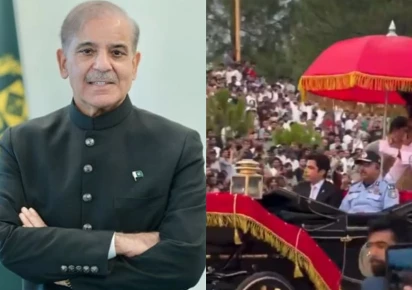
    PM rebukes Islamabad officials over ceremonial bug…

    ISLAMABAD: Prime Minister Shehbaz Sharif has expressed serious displeasure over the use of a ceremonial horse-drawn buggy by Islamabad’s chief commissioner and inspector general during the August 14 Independence Day celebrations. An official advisory issued by the Establishment Division said the incident had attracted widespread public criticism and prompted the Prime Minister to take a serious view of the conduct. The advisory was issued to Islamabad Chief Commissioner Lt (retd) Sohail Ashraf and Inspector General of Police Syed Ali Nasir Rizvi. According to the advisory, the prime minister believed that the display of pomp and show created an impression of privilege, ostentation and personal glorification, which was contrary to the principles of public service. It stressed that government officials entrusted with public offices were expected to demonstrate humility, restraint, dignity and sound judgment. The Establishment Division warned that such conduct could weaken public confidence in government institutions and fall short of the standards expected from senior officials. The two officials were advised to exercise greater care in carrying out their duties and ensure that similar incidents did not happen again. The controversy emerged after images and videos of the officials travelling in the ceremonial buggy during the Independence Day event circulated widely on social media, drawing criticism from the public. Interior Minister Mohsin Naqvi subsequently defended the officials, saying they were not responsible for the decision to use the buggy. He explained that the vehicle had originally been arranged for the chief guest, while he and the chief guest were delayed because of a meeting involving the president and prime minister. Naqvi said the two officials had initially been reluctant to begin the programme in the absence of the chief guest and the minister but were instructed to proceed to avoid inconvenience to the public. Despite the clarification, the incident continued to attract attention, ultimately leading to the formal advisory from the Establishment Division.

Leave a Reply

Your email address will not be published. Required fields are marked *