antipolio drive begin
| |

Anti-polio drive to begin in 13 Balochistan distri…

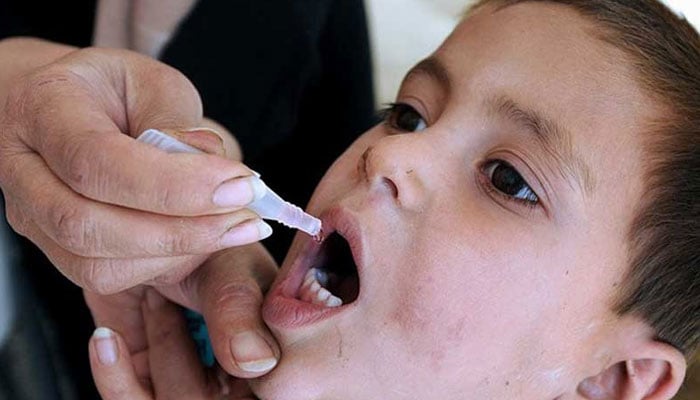
QUETTA: A targeted anti-polio vaccination campaign will begin on Monday across 62 high-risk union councils in 13 districts of Balochistan as health authorities intensify efforts to stop the spread of the poliovirus and protect children from lifelong disability.

According to the Provincial Emergency Operations Centre (EOC), the campaign will cover 209,557 children under the age of five. Trained vaccination teams will visit homes and designated centres to administer oral polio vaccine free of charge.

Officials said 862 mobile vaccination teams have been deployed to conduct the campaign. In addition, 61 fixed vaccination centres and 72 transit vaccination points have been established to ensure that children travelling with their families or living in hard-to-reach areas are not missed.

The EOC said the campaign is focused on high-risk union councils where the threat of poliovirus transmission remains significant. Health authorities noted that the virus continues to circulate in some parts of the province, making regular vaccination campaigns essential to prevent new infections.

Officials stressed that polio is an incurable disease that can cause permanent paralysis, but it is completely preventable through timely vaccination. They urged parents to cooperate with vaccination teams and ensure that every eligible child receives polio drops during the campaign.

The EOC warned that every child who remains unvaccinated increases the risk of virus transmission within the community. Officials said even a small number of missed children can allow the virus to continue circulating and endanger other children.

The campaign will be carried out in Barkhan, Dukki, Jaffarabad, Jhal Magsi, Loralai, Qila Saifullah, Nasirabad, Sherani, Sohbatpur, Usta Muhammad, Zhob, Ziarat and Mastung. Special arrangements have been made in these districts to achieve maximum vaccination coverage.

Health authorities said supervisors and monitoring teams will oversee the campaign to ensure transparency, improve performance and address any operational challenges. Officials added that vaccination teams have been instructed to reach every household in the targeted areas.
Similar Posts

  • |

    Google’s new AI satellite image tool raises fears over fake visuals

    Google has introduced a new artificial intelligence feature for Google Earth that allows users to create AI generated images using satellite, aerial and three dimensional mapping data. While the company says the tool is designed to support creative and practical uses, researchers and digital investigation experts have expressed concern that it could make it easier to produce convincing fake satellite images. The new feature, called Create Image, was launched on Thursday and uses Google’s Nano Banana 2 image generation technology. It enables users to zoom into locations on Google Earth and generate realistic visualisations within seconds using existing mapping data. Google said the tool is intended to help people visualise historical scenes, develop real estate plans and explore other creative projects. However, experts who specialise in verifying online content warn that the technology could be exploited to spread false information and manipulate public opinion. Open source intelligence researchers say Google Earth has long been considered one of the most trusted resources for checking locations, analysing events and verifying images. They fear that adding AI generated content to the platform could blur the line between authentic satellite imagery and fabricated visuals. Digital investigations expert Henk Van Ess criticised the update, arguing that Google spent years building public trust in its mapping service but has now introduced a feature capable of generating fictional scenes. He warned that even if an AI generated image is not perfect, it could still appear believable because it is linked to a platform widely regarded as reliable. Brady Africk, a research analyst at the American Enterprise Institute who specialises in satellite image analysis, also raised concerns about the technology. He said the update makes it easier to create realistic fake satellite images that could spread rapidly on social media and mislead the public. According to Africk, the growing availability of AI generated imagery could also weaken confidence in genuine satellite photographs. He warned that journalists, researchers and fact checkers may find it increasingly difficult to distinguish authentic images from manipulated ones, making investigations more challenging. In response to the criticism, Google said all images created through the new feature include its SynthID digital watermark technology. The invisible watermark is embedded into AI generated content to help identify that it was produced using Google’s artificial intelligence tools. The company also said users can ask its Gemini chatbot to check whether an image contains a SynthID watermark, providing an additional method for verifying AI generated content. The launch comes as technology companies continue expanding the use of generative artificial intelligence across their products. At the same time, governments, researchers and technology experts are calling for stronger safeguards to prevent AI tools from being used to create misleading content or spread disinformation.

  • | |

    Polling begins in PS-30 Khairpur by-election

    Polling has begun for the by-election in Sindh Assembly constituency PS-30 Khairpur, where Pakistan Peoples Party (PPP) candidate Barrister Asfandyar Khan Khuhro is facing seven independent candidates. According to election officials, 254,980 voters are eligible to cast their ballots in the constituency. Authorities have established 164 polling stations across the constituency to facilitate voters and ensure a smooth electoral process. Security remains a major focus during the by-election. Officials have designated 64 polling stations as highly sensitive and 68 as sensitive due to security concerns. Around 2,500 police personnel have been deployed across the constituency to maintain law and order and protect voters, polling staff and election material. The election is taking place following the death of PPP lawmaker **Naeem Khuhro**, which left the PS-30 seat vacant. The PPP has fielded Barrister Asfandyar Khan Khuhro to retain the constituency, while seven independent candidates are also contesting the election. Voters will choose the next representative for the Sindh Assembly as polling continues under heightened security arrangements across Khairpur.

  • | |

    Eight bodies recovered after Broad Peak avalanche

    Rescue teams have recovered the bodies of eight mountaineers following the devastating avalanche on Broad Peak, while the search continues for two missing climbers. Another victim has been identified, but the body remains trapped in an area that rescuers have so far been unable to reach. Speaking to the media, the President of the Alpine Club of Pakistan described the incident as one of the deadliest accidents in the history of Broad Peak. He said a total of 11 climbers are believed to have been caught in the avalanche, triggering a large-scale rescue operation. He said the first phase of the operation began immediately after the incident. On the opening day, rescuers recovered the bodies of two climbers and also found partial human remains believed to belong to another victim. According to the Alpine Club, the first two recovered victims were a Nepalese mountaineer and a female climber from Oman. Rescue operations were carried out under extremely difficult weather and terrain conditions at high altitude. The Pakistan Army assisted the mission by providing helicopters to transport rescue teams and airlift the recovered bodies from the remote mountain. The aerial support played a key role in speeding up the recovery process. The Alpine Club president said that during the latest phase of the operation, the bodies of four Nepalese climbers and one Chinese mountaineer were successfully recovered and transported from the mountain. He added that rescuers have also identified another climber’s body. However, it is located in an inaccessible area, making immediate recovery impossible because of dangerous terrain and the continued risk of avalanches. Search teams are still looking for the remaining two missing climbers. Rescue officials said every effort is being made to locate them despite severe weather, snow-covered slopes and difficult mountain conditions. The tragedy has shocked Pakistan’s mountaineering community and highlighted the dangers faced by climbers attempting to scale some of the world’s highest peaks. Broad Peak, located in the Karakoram mountain range, is one of Pakistan’s tallest mountains and attracts climbers from around the world each year.

  • | |

    ‘Delulu’, ‘Clock it’: ‘Cockroach’ prot…

    India’s parliament echoed with the language of memes and Instagram reels this week, as lawmakers debated a new anti‑exam leak bill in the wake of youth‑led protests that forced the resignation of Education Minister Dharmendra Pradhan. Phrases like “delulu”, “FOMO” and “clock it” — once confined to group chats and comment sections — were deployed by MPs across party lines. Shiv Sena’s Shrikant Shinde accused the opposition of being “MIA” and “delulu,” while Congress leader Deepender Singh Hooda mocked the government with the viral protest catchphrase “waste‑guna‑huiya.” BJP MP Bansuri Swaraj praised Prime Minister Narendra Modi for having “clocked it” by introducing the bill, while Tejasvi Surya accused critics of being “delulu.” The unusual moment underscored the influence of the Cockroach Janta Party (CJP), a satirical online collective that morphed into a protest movement over exam irregularities. Organised on WhatsApp and Telegram, and amplified through Instagram reels, the CJP drew thousands of young people into the streets with humour, memes and sardonic edits. Digital anthropologist Payal Arora noted that borrowing Gen Z slang signals cultural awareness rather than political transformation. Political scientist Rahul Verma added that Indian politicians have long adopted popular culture references, from cricket metaphors to Bollywood catchphrases like “How’s the josh?” Yet the government’s response has been uneasy. Authorities have sought removal of protest content and pursued cases against activists, prompting warnings from CJP leaders that they will return to the streets if charges are not dropped. Critics argue the irreverent humour trivialises serious issues, while supporters insist irony is simply the language of a generation raised online. Whether parliament’s new lexicon endures remains uncertain. Internet slang evolves quickly, often disappearing as fast as it emerges. For many protesters, hearing politicians adopt their vocabulary was less impressive than seeing meaningful change. As one student put it: “Speaking our language isn’t going to impress us without accountability. That’s cringe.”

  • |

    Kuwait introduces new regulations to strengthen e commerce sector

    Kuwait has introduced a comprehensive set of regulations for e commerce platforms aimed at improving consumer protection, increasing transparency and creating a unified legal framework for the country’s rapidly expanding digital marketplace. The new rules were issued by the Ministry of Commerce and Industry under Ministerial Resolution No. 109 of 2026 and came into effect on July 8. They apply to all online platforms involved in selling, ordering and delivering goods and services across Kuwait. Officials said the regulations were introduced to address the rapid growth of online shopping while clearly defining the responsibilities of digital platforms, merchants, delivery companies and consumers. The measures are also intended to encourage investment and promote fair competition within the sector. Under the new framework, companies operating electronic platforms must obtain the required licences and comply with existing commercial laws. They are also required to strengthen cybersecurity measures to protect their digital systems and safeguard customer data from misuse or cyberattacks. The regulations require platforms to display complete pricing information before customers confirm their purchases. This includes product prices, delivery charges, commissions and any additional fees. Platforms must also provide accurate information about merchants, publish clear terms and conditions and ensure that product descriptions are truthful and up to date. Businesses are now required to establish transparent policies for returns, exchanges and refunds. They must also create complaint handling systems that resolve customer issues within specified time limits while protecting consumers’ personal information. In addition, platforms must maintain proper records of electronic transactions and payments. The new rules also place responsibilities on delivery service providers to ensure goods are transported safely and delivered efficiently. Online platforms will be expected to supervise delivery operations and coordinate closely with merchants and delivery companies throughout the process. To prevent excessive charges, the ministry has introduced limits on service commissions. Platforms may charge a maximum commission of 17 percent when they provide delivery services and 10 percent when deliveries are handled directly by merchants. Consumer delivery fees have also been capped at one Kuwaiti dinar per order, with businesses prohibited from charging more than that amount. The Ministry of Commerce and Industry has been given authority to monitor compliance with the regulations. Officials will be able to inspect businesses, request information and impose administrative penalties on companies that fail to follow the new requirements. Existing licensed platform operators must also update their registered business activity to reflect the category of managing delivery services through electronic platforms. The ministry said an implementation guide will be issued to help businesses, delivery companies and consumers understand the new compliance requirements. According to the explanatory memorandum accompanying the regulations, the reforms are designed to address problems that emerged with the rapid expansion of e commerce, including inconsistent commission rates, high delivery charges and unclear commercial practices. Officials believe the new framework will improve service quality, strengthen consumer confidence and support the continued growth of Kuwait’s digital economy.

  • | |

    Expensive sugar export decision raises concerns

      Lahore: The federal Ministry of Industries and Production has reportedly allowed the export of sugar that was imported at a higher cost, raising concerns over potential losses to the national exchequer. Sources within the ministry said the government has yet to approve the export of around 250,000 tonnes of locally produced sugar, which is available at a comparatively lower cost. Instead, authorities have decided to permit the export of only 100,000 tonnes, a move that industry sources have described as disappointing. According to the sources, the decision could create further difficulties for the sugar industry and affect the procurement of sugarcane from farmers. Sugar mill owners have already warned the Ministry of Industries and Production that they may face difficulties purchasing the upcoming sugarcane crop under the current circumstances. The sources expressed concern that allowing the export of expensive imported sugar while holding back cheaper locally produced stocks could increase financial pressure on the country. They also questioned the rationale behind exporting only 100,000 tonnes when a significantly larger quantity of locally produced sugar remains available. Sugar industry stakeholders have warned that the situation could affect the entire supply chain, particularly farmers who depend on sugar mills for the purchase of their sugarcane crop. If mills struggle to sell their existing stocks or face financial constraints, they may find it difficult to make timely purchases from growers. The development has also raised questions about the government’s sugar management policy, particularly its approach to balancing domestic availability, imports, exports and the interests of farmers and millers. Industry representatives are now seeking a clearer policy to prevent disruptions in sugarcane procurement and avoid further losses to the national economy.

Leave a Reply

Your email address will not be published. Required fields are marked *