clears hurdle imran
| | |

SC clears hurdle in Imran hospital plea

An objection raised by the Supreme Court registrar’s office against a contempt of court petition filed by PTI founder Imran Khan’s sister, Uzma Khan, has been removed.

The petition was filed in connection with Imran Khan’s proposed transfer to a hospital for medical treatment. Uzma Khan has sought contempt proceedings against the government and named Prime Minister Shehbaz Sharif, Law Minister Azam Nazeer Tarar and Information Minister Atta Tarar, among others, as respondents.

The petition also calls for Imran Khan to be shifted to Shifa Hospital for treatment and for his medical tests to be conducted.

PTI Chairman Barrister Gohar Ali Khan and Secretary General Salman Akram Raja had visited the Supreme Court on Monday in connection with the petition. They sought to have the case fixed for an early hearing.

Earlier, the Supreme Court registrar’s office had returned the petition after raising an objection.

According to sources, the registrar’s objection stated that the petition did not include a list of the allegations of contempt levelled against the respondents.

The PTI subsequently addressed the objection and resubmitted the petition to the Supreme Court.

The registrar’s office has now accepted the amended filing and allotted a registration number to the contempt petition.

Uzma Khan’s petition has been registered as Contempt Petition No. 8/2026.

The development clears the procedural hurdle that had previously prevented the petition from moving forward.

The petition seeks judicial intervention over the treatment and medical care of Imran Khan and alleges non-compliance with the court’s directions concerning his hospital transfer.

Similar Posts

  • Thailand Cuts Visa-free Stays To 30 Days For 60 Countries From September 15

    BANGKOK, Thailand – Thailand will halve the visa-free stay for tourists from 60 countries and territories from 60 days to 30 days, with the new rules officially taking effect on September 15, 2026, following publication of the Interior Ministry’s announcement in the Royal Gazette on August 31. The change ends the special 60-day visa-exemption arrangement […]

  • River encroachments raise flood risks across Pakistan

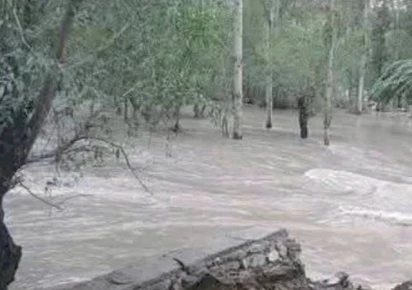
    Islamabad: Encroachments on rivers, nullahs and other natural waterways are increasing flood risks across Pakistan, a parliamentary committee warned, calling for strict action to clear blocked water channels. The committee also expressed displeasure over the absence of the Sindh Irrigation Secretary and warned that the matter could be sent to the Privileges Committee. The Senate Standing Committee on Water Resources, chaired by Senator Jam Saifullah Khan, reviewed the flood situation, disaster preparedness, water storage and coordination between federal and provincial authorities. The meeting was held at the National Disaster Management Authority headquarters. Members expressed serious concern over illegal construction and other encroachments along natural waterways, including the Ravi River and nullahs in different parts of the country. The committee said natural water channels must remain open so floodwater can move safely during heavy rainfall and monsoon emergencies. It called for strict measures to remove encroachments and prevent further occupation of rivers, drains and other water bodies. The Secretary of the Ministry of Water Resources informed members that a draft Flood Plain Regulations Act had already been shared with provincial governments. Chairman Jam Saifullah Khan directed the ministry to follow up with the provinces and strengthen joint efforts for flood prevention and management. The committee also expressed displeasure over the absence of the Secretary Irrigation of the Sindh government. Members indicated that continued non-attendance could lead to referring the matter to the Privileges Committee. The chairman directed the Sindh Irrigation Secretary to personally attend the next meeting. Another sensitive issue discussed was water distribution between provinces. The committee said any solution must be based on consensus, particularly because lower riparian provinces have concerns about water sharing. Members called for a wider national debate on water security and Pakistan’s long term water problems. The chairman said water security was directly connected with food security and the future of coming generations. He said all stakeholders should be part of an open national discussion so disagreements could be addressed through broader agreement. The committee was also briefed on the current monsoon situation and the government’s emergency response arrangements. Members were informed that the Prime Minister had formed an Emergency Response Committee headed by a senior federal minister. The committee is responsible for coordinating with all concerned authorities, including district administrations, during the monsoon emergency. Senator Jam Saifullah Khan said such coordination should not remain active only during floods or disasters. He said the system should operate throughout the year so institutions remain prepared before emergencies begin. The parliamentary delegation was received by the Chairman of NDMA at the National Emergencies Operations Centre. Members received a briefing on the technology used for disaster monitoring and decision making. NDMA officials explained the use of Global and National Portals, Hydro Analytics and the Water Equation system. The committee was also briefed on Disaster Lens 2026. Officials described it as an integrated technology based system designed to improve disaster risk assessment, preparedness and government decision making. The committee appreciated NDMA’s use of advanced technology, data analysis and risk information for disaster management and water planning. Water storage was another major subject discussed during the meeting. Members said Pakistan needed stronger water storage capacity to manage both shortages and excess floodwater. The committee discussed better water monitoring, planning based on reliable data and more efficient use of available water resources. It also discussed technology based solutions to improve national water security and reduce risks linked to climate change. Members were briefed on the possible use of smaller local water storage facilities. The committee was told that such facilities could be used alongside large dams to store extra floodwater. This could help reduce flood damage while also saving water for future use. The growing pressure from population growth and climate change was also discussed. The committee said increasing demand for water made modern irrigation systems more important. It called for new irrigation technologies that could produce more crops while using less water. Members said such measures were important not only for water conservation but also for Pakistan’s food security. The Ministry of Water Resources told the committee that research had been conducted comparing high efficiency crop production methods with existing farming practices. The chairman directed officials to present the full findings at the committee’s next meeting. Mechanized agriculture was also discussed as a possible way to increase agricultural production. Members observed that tax incentives for higher horsepower tractors could help farmers modernize agricultural operations. The committee said better machinery, modern irrigation and improved water management could help increase farm production while reducing waste. The meeting also focused on stronger cooperation between the federal government, provinces, district administrations and disaster management authorities. Members stressed that floods and water shortages cannot be managed effectively if different institutions work separately. The committee said better data sharing, early warnings and clear responsibility among institutions were essential for protecting communities. After the meeting, committee members visited several NDMA facilities. These facilities included the Centre of Excellence, the Logistics and Humanitarian Hub, and the Disaster Resilient Infrastructure Models centre. Officials briefed the delegation on emergency preparations, logistics, disaster response and technology being used during crises. The committee said its visit helped improve coordination between Parliament and NDMA. It called for stronger early warning systems, better water management, modern technology and long term planning to protect Pakistan against floods, water shortages and climate related disasters. The committee made clear that Pakistan’s water challenge is no longer limited to building dams or distributing river water.

  • |

    Saudi must recognise Israel, says Trump

    US President Donald Trump has reaffirmed that Saudi Arabia must establish diplomatic relations with Israel before Washington moves ahead with a civilian nuclear cooperation agreement with the kingdom. Speaking at the White House on Friday, Trump said the proposed nuclear partnership remains linked to Saudi Arabia joining the Abraham Accords, the US-backed agreements that normalized relations between Israel and several Arab states. Trump dismissed suggestions that the US Department of Energy had announced the nuclear deal without the Israel-related condition. He said there had been no misunderstanding within his administration and insisted the requirement had always been part of the discussions. “I have always said that Saudi Arabia must become part of the Abraham Accords for the deal to move forward,” Trump told reporters, adding that the accords had been successful and that the time had come for Riyadh to join them. The latest remarks came just days after the United States and Saudi Arabia signed a framework for cooperation on a civilian nuclear programme. While the initial announcement focused on energy cooperation and economic benefits, Trump later clarified that the agreement would only proceed if Saudi Arabia formally normalized ties with Israel. Saudi Arabia has not officially responded to Trump’s latest comments. However, the kingdom has consistently maintained that it will not establish diplomatic relations with Israel until meaningful progress is made toward the creation of an independent Palestinian state. Israeli leaders have repeatedly rejected international calls for a Palestinian state under current conditions. The proposed agreement is expected to create a long-term partnership between the two countries in the peaceful use of nuclear energy. It would involve the transfer of American technology, technical expertise and investment aimed at supporting Saudi Arabia’s civilian nuclear programme. Trump also rejected reports suggesting the agreement would allow Saudi Arabia to enrich uranium domestically. He stressed that no uranium enrichment would be permitted under the arrangement. US officials have argued that the partnership is designed to strengthen bilateral relations while ensuring strict oversight of nuclear activities. They say American companies will play a central role in developing the programme, allowing Washington to maintain close monitoring and prevent nuclear proliferation.

  • | |

    Katie Holmes makes rare comment about boyfriend Ja…

    Katie Holmes has offered a rare glimpse into her personal life by publicly acknowledging her relationship with New York-based artist Jason Bard Yarmosky. Known for keeping her private life away from the spotlight, the actress surprised fans by making one of her first public comments about her boyfriend after the couple recently stepped out together in New York City. (people.com⁠) The Dawson’s Creek alum, who has long maintained a low-profile approach to romance, spoke warmly about Yarmosky while attending a recent event. Although Holmes kept her remarks brief, she described the artist as someone she deeply admires and appreciates. Her comments quickly caught attention because the actress rarely discusses her relationships publicly. (people.com⁠) Holmes and Yarmosky were first linked earlier this year after they were photographed together on several occasions around New York City. The pair later made public appearances at art-related events, fueling speculation that their connection had grown stronger. Despite increased public interest, Holmes has largely remained silent about the relationship, choosing instead to focus on her career and family life. (usmagazine.com⁠) Jason Bard Yarmosky is a contemporary artist known for his emotional and thought-provoking paintings and mixed-media works. Based in New York, he has exhibited his art in galleries across the United States and has earned recognition for exploring themes of identity, family, and human connection. His artistic background appears to align with Holmes’ own passion for creativity and storytelling. (jasonbardyarmosky.com⁠) Holmes has always preferred to keep her personal relationships private, especially after years of intense media attention. Since her highly publicized marriage and divorce from Tom Cruise, the actress has carefully balanced her public career with her private life. In past interviews, she has emphasized the importance of protecting her personal space and maintaining a sense of normalcy for her daughter, Suri Cruise. (people.com⁠) Fans have praised Holmes for finding happiness while staying true to her values. Her recent remarks about Yarmosky, though brief, offered a rare and genuine insight into a relationship that appears to be built on mutual respect and shared interests. As Holmes continues to work on new acting and directing projects, her subtle acknowledgment of Yarmosky suggests that she is comfortable letting the public see a small part of her personal happiness. For admirers of the actress, it was a refreshing moment that highlighted a softer, more personal side of one of Hollywood’s most private stars.

  • | |

    Sarah Khan’s bridal look sparks online backlash

    Pakistani television actress Sarah Khan has come under criticism on social media after unveiling a bridal makeover for a recent salon photoshoot. Known for her performances in several hit television dramas, Sarah Khan enjoys a massive fan following on social media, with more than 12.7 million followers on Instagram. She is married to singer Falak Shabir, and the couple has two daughters. For the latest photoshoot, Sarah appeared in a traditional bridal look, wearing a deep red bridal outfit paired with elaborate jewellery. The makeover was created as part of a salon campaign and the images quickly gained attention online. However, many social media users expressed disappointment with the final look. Critics argued that the makeup did not complement the actress’s natural complexion and claimed that an ivory-toned base made her appearance look less natural. Several users also said the heavy makeup and bright highlighting overshadowed Sarah Khan’s natural beauty, making her look different from her usual appearance. Some commenters felt that the makeup style made the actress appear older than her age, while others said the bold blush and styling altered her facial features. Despite the criticism, many fans defended Sarah Khan, saying she remains one of Pakistan’s most naturally beautiful actresses. They argued that the issue was with the styling and makeup rather than the actress herself. The bridal makeover has sparked widespread discussion across social media, with users sharing mixed opinions about celebrity beauty trends, professional makeup techniques and the balance between glamorous styling and a natural appearance.

  • |

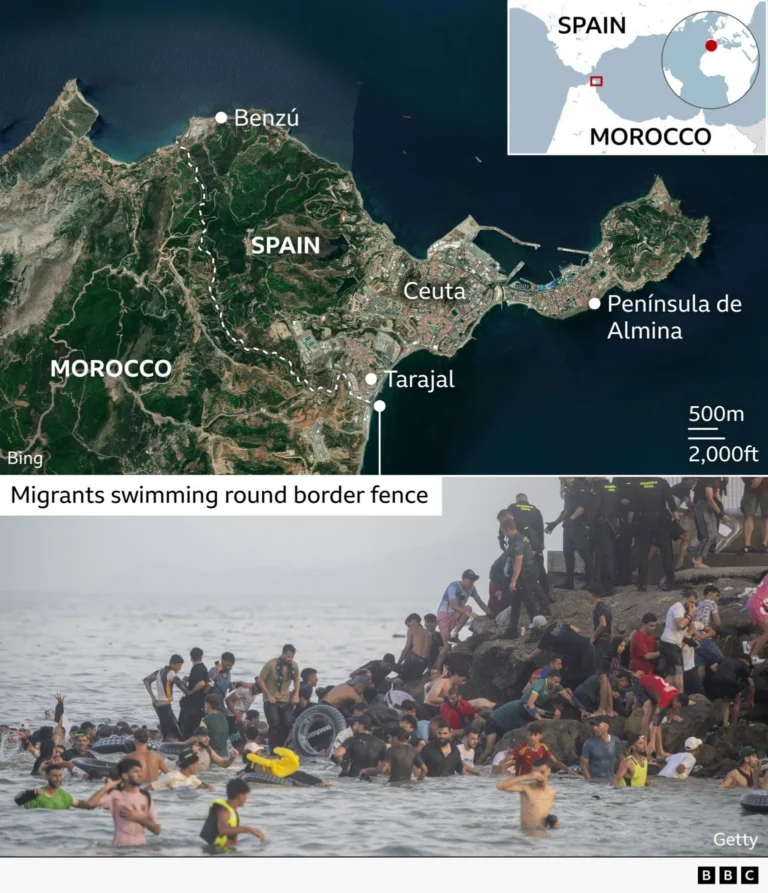
    60,000 migrants flood Spain’s Ceuta border

    Spain has deployed additional security forces to its North African territory of Ceuta after a massive wave of migrants crossed from Morocco, creating one of the largest border crises in the region’s recent history. Ceuta’s President Juan Jesús Vivas said around 60,000 migrants entered the Spanish enclave within 24 hours, while at least 43 people died during the crossing attempts. The sudden influx overwhelmed local authorities and triggered an emergency response from Madrid. Spain’s Interior Ministry gave a lower estimate, saying around 50,000 people had reached Ceuta since early Thursday. Officials said more than 25,000 migrants had already returned voluntarily to Morocco. The crisis intensified after Spain’s Supreme Court ruled that migrants intercepted at sea while attempting to reach Ceuta or Melilla could not be immediately returned to Morocco. Spanish Prime Minister Pedro Sánchez described the situation as an “attack” and promised that those who entered illegally would be sent back as quickly as possible. During a visit to Ceuta, Sánchez said Spain would strengthen border security and accused criminal networks of spreading misleading information about the court ruling to encourage migration attempts. He added that Moroccan authorities were cooperating with plans to return migrants. Spanish authorities have now increased military deployment in Ceuta and Melilla, another Spanish territory in North Africa, after several hundred additional crossings were reported there. Many of those arriving were young men, but women, children and infants were also among the migrants. Officials estimated that around 7,000 minors were part of the latest arrivals. Ceuta, located on Morocco’s northern coast, is one of the European Union’s only land borders with Africa. The territory has long been a major route for migrants seeking entry into Europe and remains a sensitive issue in Spain-Morocco relations. The latest arrivals have caused concern among European leaders. Several governments called for stronger border controls, while EU officials described the scenes in Ceuta as unacceptable and urged an immediate halt to irregular crossings. The last major migration surge in Ceuta occurred in 2021, when thousands crossed the border amid a diplomatic dispute between Spain and Morocco. However, officials said the current movement is far larger and has created an unprecedented challenge for local authorities.

Leave a Reply

Your email address will not be published. Required fields are marked *