chief minister forms
| |

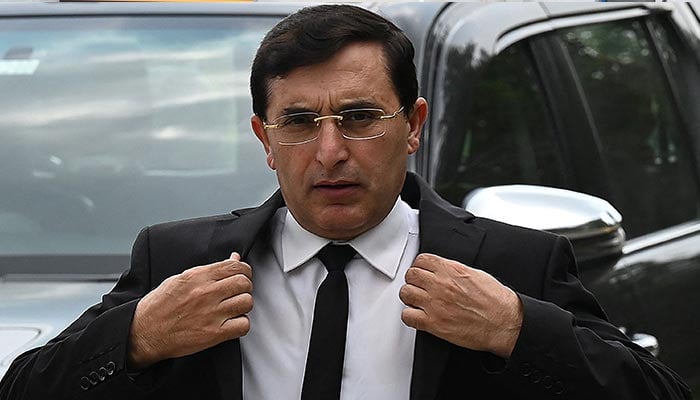
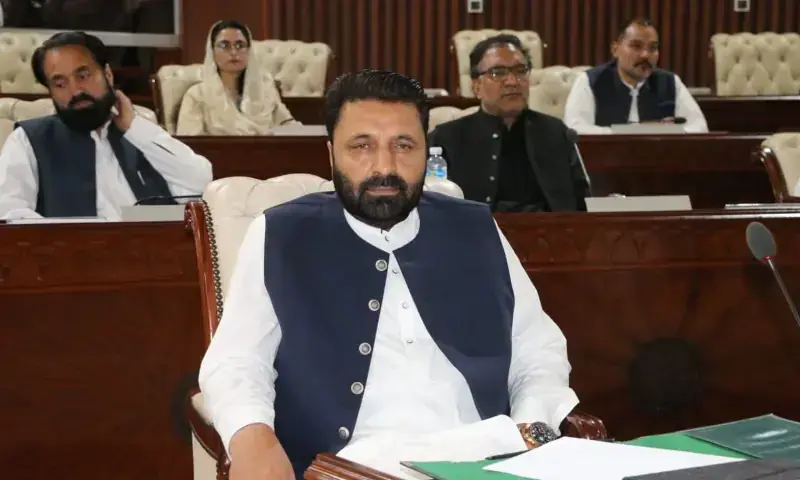
GB Chief Minister forms 12-member cabinet

Gilgit-Baltistan Chief Minister Amjad Hussain has formed his provincial cabinet, appointing 12 members of the Gilgit-Baltistan Assembly as ministers.

The newly formed cabinet includes eight members from the Pakistan Peoples Party (PPP) and four members from the Istehkam-e-Pakistan Party (IPP).

The appointments were made through an official notification issued by the relevant provincial departments. The notification stated that the members were appointed as ministers on the recommendation of the chief minister and approval of the governor.

The newly appointed PPP ministers include Zulfiqar Ali Murad, Syed Jalal Shah, Muhammad Ali Akhtar, Naiknam Karim, Iqbal Hassan, Raja Nasir Khan, Muhammad Naseem and Syed Tauqeer Mehdi.

The four IPP members joining the cabinet are Aman Ali, Asad Shafiq, Anwar Ali and Muhammad Dilpazeer.

The government has not yet announced the portfolios of the newly appointed ministers. Their departments are expected to be allocated in the coming days.

The IPP members selected for the cabinet had participated in the Gilgit-Baltistan elections as independent candidates before joining the party.

The new cabinet formation comes after political developments following the Gilgit-Baltistan elections. The PPP emerged as the leading party and formed the government with support from other political groups.

The Gilgit-Baltistan Assembly currently consists of representatives from multiple political parties, including the PPP, Pakistan Muslim League-Nawaz (PML-N), IPP, Majlis Wahdat-i-Muslimeen and a PTI-backed independent member.

Meanwhile, a by-election for the GBA-9 Skardu-III seat is scheduled after the disqualification of PPP candidate Fida Muhammad Nashad by the Gilgit-Baltistan Supreme Appellate Court over issues related to his nomination papers.

Following the elections, the PML-N and IPP supported the PPP candidate for the positions of chief minister, speaker and deputy speaker. However, the PML-N later decided to sit on the opposition benches.

Similar Posts

  • Man Shoots Ex-Wife and Her 19-Year-Old Lover in Deadly Bangkok Ambush

    BANGKOK – A tragic shooting on Sunday evening shocked a quiet neighborhood in Bangkok’s Prawet district. A former husband tracked down his ex-wife and her new teenage partner before opening fire on them. The brutal attack left a young factory worker dead and a young woman fighting for her life. Police investigators identified the suspect […]

  • | | |

    Cristiano Ronaldo hints at retirement, says upcomi…

    Football superstar Cristiano Ronaldo has hinted that his retirement could be closer than expected, saying the upcoming year will probably be the final year of his playing career. The 41-year-old Portugal captain made the comments in an interview with lifestyle magazine Vogue, saying he wants to leave behind a “spectacular legacy” when he eventually walks away from football. Ronaldo has enjoyed one of the most successful careers in football history. Since making his senior debut for Sporting in 2002, he has won major trophies with Manchester United, Real Madrid, Juventus and his current club, Al-Nassr. He has also won the Ballon d’Or five times. Despite his extraordinary list of achievements, Ronaldo was unable to add a FIFA World Cup title to his collection after Portugal fell short at the 2026 tournament. The forward has scored 976 goals for club and country during a career spanning more than two decades. He is now continuing with Al-Nassr as he approaches the remarkable milestone of 1,000 career goals. Ronaldo also acknowledged that retirement would leave a major gap in his life. He said he plans to spend more time travelling, playing and watching padel, and enjoying life away from professional football. His comments have intensified speculation about when one of football’s greatest careers will finally come to an end.

  • | | |

    Cabinet clears Rs1.8bn bureaucrats’ allowanc…

    The federal cabinet has approved a new Rs1.8 billion special allowance for senior bureaucrats despite continuing austerity measures and limiting the salary increase for government employees to 7% in the 2026-27 federal budget. The decision was taken during the cabinet meeting that approved the federal budget in June. The new benefit is the second special allowance granted to top civil servants in the past four years. It comes at a time when the government is urging public institutions to reduce spending and maintain fiscal discipline. The newly approved incentive has been named the All Pakistan Services Provincial Governments’ Cadre Posts’ Parity Allowance. It will be effective from July 1, 2026. The approved allocation of Rs1.8 billion indicates that the allowance could be close to 100% of an officer’s basic salary, although the government has yet to announce the final rate and eligibility criteria. Officials have not publicly explained why the allowance was introduced or whether any formal study was conducted before approving it. Government departments also did not clarify the exact structure of the benefit. According to officials familiar with the matter, the allowance is intended to reduce differences in salaries and benefits between officers serving in the federal government and those working in provincial governments. Authorities believe many senior officers prefer provincial postings because they receive better financial incentives and additional privileges. The government also wants to encourage members of the Pakistan Administrative Service and the Police Service of Pakistan to continue serving in federal institutions by offering competitive compensation. However, the decision has drawn criticism from observers who argue that the move increases inequality within the public sector. While senior bureaucrats continue to receive additional financial benefits, the majority of government employees have received only a modest salary increase despite rising inflation and increasing living costs. Analysts believe the decision could encourage other civil service groups to demand similar allowances, putting additional pressure on the government’s finances and complicating future pay reforms. The cabinet also approved a major revision to the 150% executive allowance introduced in 2022. Instead of calculating the allowance on the 2017 basic pay scale, it will now be based on officers’ current basic salary as of June 30, 2026. This change will substantially increase payments for officers serving in grades 17 to 22 across key federal institutions. At the same meeting, the government extended austerity measures for another fiscal year. The restrictions include a ban on purchasing new vehicles and non-essential equipment, creating new posts, unnecessary foreign visits, and other non-priority expenditures. Government meetings and official events will continue to follow a simple catering policy.

  • | |

    Two labourers killed, Three injured in Quetta road…

    A Quetta IED blast killed two labourers and injured three others in the Wali Tangi area of Quetta district on Sunday, according to police officials. Police said unidentified attackers planted an improvised explosive device (IED) along the roadside and detonated it remotely when a pickup carrying a contractor and four labourers passed through the area. The incident occurred around 30 kilometres from Quetta. The victims were reportedly travelling to Wali Tangi for construction work related to tube wells. The powerful explosion badly damaged their vehicle. All five people were initially injured and transported to Civil Hospital Quetta, where two later succumbed to their injuries. Police and Frontier Corps personnel quickly reached the blast site, cordoned off the area and launched a search operation to identify and arrest those responsible. In a separate incident in Killi Raisani on the outskirts of Quetta, unidentified armed men shot dead former Afghan army commander Haji Hazrat Ullah, also known as Rorad Achakzai. Police said motorcycle-riding attackers targeted him while he was travelling through the area. The latest violence comes amid growing security concerns in Balochistan, where recent figures indicate a sharp rise in fatalities.

  • | | |

    Pakistan to launch advanced IT courses to boost di…

    The federal government has announced a nationwide initiative to introduce advanced information technology (IT) courses as part of its broader strategy to strengthen Pakistan’s digital economy and equip young people with globally competitive digital skills. The decision was announced during a meeting chaired by Federal Minister for Information Technology and Telecommunication Shaza Fatima Khawaja, attended by the heads of IT training institutions from across the country. Participants agreed on a national roadmap aimed at accelerating the development of a skilled IT workforce and expanding access to high-quality digital training. During the meeting, the minister directed all provinces to immediately begin offering advanced IT courses and internationally recognised training programmes. The initiative is intended to prepare Pakistan’s youth for opportunities in the global technology sector, freelancing, and the rapidly growing digital economy. Shaza Fatima said developing a workforce with modern digital skills remains one of the government’s top priorities. She emphasised that training programmes should align with international industry standards and market requirements, enabling young Pakistanis to compete effectively in global employment markets. The government believes that expanding access to advanced IT education will not only increase employment opportunities but also help boost Pakistan’s exports of digital services and strengthen the country’s position in the global technology industry. The meeting also focused on improving coordination among IT training institutions to ensure consistent delivery of quality education and practical skills. Officials discussed measures to enhance the effectiveness of training programmes and ensure they meet the evolving demands of employers and technology companies. To monitor progress, the federal minister instructed all IT training institutions to submit weekly performance reports to the Ministry of Information Technology and Telecommunication. The reports will help the ministry assess implementation, track outcomes, and identify areas requiring additional support. Pakistan has been placing greater emphasis on digital transformation in recent years, with increasing attention on technology education, entrepreneurship, freelancing, and software exports. Government officials view investment in digital skills as a key component of long-term economic growth and employment generation. The planned rollout of advanced IT courses is expected to provide students and professionals with access to updated technical knowledge and practical training in emerging technologies. By expanding the country’s pool of skilled IT professionals, the government aims to support innovation, attract investment, and accelerate the growth of Pakistan’s digital economy while creating new opportunities for young people in domestic and international markets.

  • | |

    PTI backs new provinces with constitutional consen…

    PTI Chairman Gohar Ali Khan has voiced support for the creation of new provinces, saying administrative reforms are needed to improve governance, but stressed that any such move must be carried out strictly under the Constitution and with broad political consensus. Speaking during a television interview on Thursday, Gohar described the formation of new provinces as a national necessity. However, he emphasized that constitutional requirements must be fulfilled, including securing a two-thirds majority in the relevant provincial assemblies before any proposal could move forward. The PTI chairman also expressed skepticism about Prime Minister Shehbaz Sharif completing his full five-year constitutional term, though he did not elaborate on the reasons behind his remarks. The debate over creating new provinces gained momentum after Interior Minister Mohsin Naqvi recently argued that Pakistan’s governance system had become ineffective and required major structural reforms, including the establishment of additional administrative units. Naqvi later clarified that his comments reflected concerns about the country’s governance over several decades rather than criticism of the current government. The proposal has drawn mixed political reactions. Murad Ali Shah firmly rejected any suggestion of dividing Sindh, stating that the provincial assembly has repeatedly passed unanimous resolutions opposing such a move. He maintained that any change would require constitutional approval through a two-thirds majority in the concerned assembly. Meanwhile, Prime Minister’s Adviser Rana Sanaullah distanced the government from Naqvi’s remarks, describing them as the minister’s personal opinion. He said any discussion on creating new provinces should take place in parliament and follow the constitutional process. Sanaullah noted that establishing new provinces involves complex constitutional, financial and administrative considerations, including representation in parliament and resource distribution.

Leave a Reply

Your email address will not be published. Required fields are marked *