india approves first
| |

India approves first dengue vaccine

India has approved the use of its first dengue vaccine, marking a significant step in the country’s efforts to tackle a disease that affects millions of people each year.

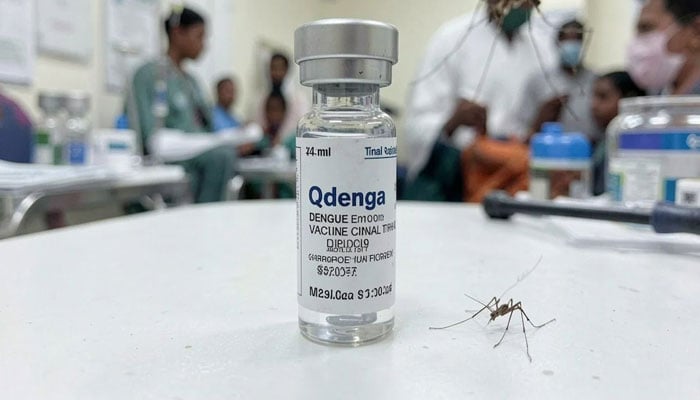
According to India’s Ministry of Health, authorities approved the Japanese pharmaceutical company Takeda’s dengue vaccine, Qdenga, on July 21. The Central Drugs Standard Control Organisation (CDSCO) has cleared the vaccine for people between the ages of 4 and 60.

Health officials say the vaccine could help protect children, teenagers, and adults from dengue, a mosquito-borne viral infection that can sometimes develop into a severe and potentially life-threatening illness. The vaccination schedule consists of two doses administered three months apart.

Takeda developed the vaccine in partnership with Indian pharmaceutical company Biological E, which is working with the Japanese firm to support its production in India.

According to media reports, Qdenga offers protection against all four major dengue virus serotypes. Regulators in 42 countries have already approved the vaccine, while more than 24 million doses have reportedly been administered worldwide. So far, health authorities have not identified any major safety concerns linked to its use.

The approval comes as India continues to face a substantial dengue burden. More than one million dengue cases have reportedly been recorded across the country since 2021, with around 1,500 deaths linked to the disease during the same period.

Dengue spreads primarily through the bite of infected Aedes mosquitoes and remains a major public health concern in tropical and subtropical regions. India’s approval of Qdenga could provide health authorities with another tool to reduce the impact of dengue, particularly during periods when mosquito populations rise and infections increase.

Similar Posts

  • | |

    Chilling details of Nancy Guthrie’s first ra…

    The investigation into the alleged kidnapping of Nancy Guthrie has taken a chilling turn as details of the first ransom note sent to her family have been revealed. The note, which authorities have described as both genuine and threatening, was addressed to Nancy’s daughter, Savannah, and contained warnings that have left investigators and the public on edge. Crime journalist Briana Whitney, speaking on the Crime Junkie podcast, revealed the terrifying message allegedly sent to Savannah. The most chilling line in the note read: “It is in the best interest of everyone to have this completed as soon as possible.” Whitney, reading from the ransom message, further detailed the captors’ demands: “You will not be able to contact me from here on out. There will be no negotiation. Do not play games. Law enforcement will not be able to help you.” The note, which was sent shortly after Nancy was last seen at home on January 31, has dominated the investigation. While some ransom notes were reportedly deemed to be hoaxes, authorities confirmed that others were genuine, adding to the complexity of the case. Investigators have yet to produce a suspect in the alleged kidnapping, leaving the family and the public seeking answers. The ransom notes have been central to the case, with authorities reportedly keeping many details under wraps to avoid compromising the investigation. However, the release of these chilling details has shed new light on the threats faced by the Guthrie family. The note’s warning that law enforcement would not be able to help and that there would be no negotiation suggests a calculated effort by the captors to isolate Savannah and exert maximum pressure on the family. Nancy Guthrie’s disappearance has sparked widespread concern, with her family making several public pleas for her safe return. The investigation remains ongoing, with authorities urging anyone with information to come forward. The release of the ransom note details has reignited public interest in the case, with many hoping that the new information will lead to a breakthrough. As the investigation continues, the Guthrie family remains in the spotlight, their ordeal serving as a stark reminder of the terror faced by families of kidnapping victims. The chilling words of the ransom note have left an indelible mark on the case, underscoring the urgency of finding Nancy and bringing her captors to justice. The public awaits further developments, hoping for a resolution that will bring closure to the family and accountability for those responsible.

  • | | |

    Video of Sunil Dutt’s ancestral home in Pakistan…

    A video showcasing the ancestral home of legendary Bollywood actor Sunil Dutt in Pakistan’s Jhelum district has gone viral on social media, attracting widespread attention from audiences in both Pakistan and India. The video was shared by Pakistani social media influencer Sameel Atif, who visited the historic house located in the village of Khord in Jhelum. According to the video, the property is the childhood home of Sunil Dutt, who was born as Balraj Dutt before the partition of British India in 1947. Following the video’s circulation, many social media users tagged Bollywood actor Sanjay Dutt, Sunil Dutt’s son, encouraging him to visit the family’s ancestral home and reconnect with his roots. The video has generated thousands of comments highlighting the shared cultural and historical ties between the two neighbouring countries. Reports state that Sunil Dutt spent his early years in the village before his family migrated to India during Partition. He later became one of Bollywood’s most respected actors and went on to serve as a member of the Indian Parliament. The story is further connected to Sanjay Dutt’s mother, legendary actress Nargis Dutt, whose family roots trace back to Rawalpindi. As a result, both of Sanjay Dutt’s parents had ancestral links to regions that are now part of Pakistan. In his social media post, Sameel Atif claimed that Sunil Dutt visited his ancestral village years after Partition. According to the post, the veteran actor requested the current owners of the house to preserve its original structure so that future generations could remember their shared history and heritage. This account has been widely shared online, though it reflects the information presented in the post. The viral video also includes a past interview in which Sanjay Dutt recalled his father’s emotional attachment to his birthplace. He said that whenever Sunil Dutt felt nostalgic, he would express a desire to return to what he considered his real home in Jhelum rather than Mumbai. Sanjay Dutt has also reportedly expressed a wish to visit Pakistan one day to see his father’s ancestral village and experience the place that held such deep emotional significance for him. The video has resonated with viewers on both sides of the border, many describing it as a reminder of shared history, cultural heritage, and enduring human connections beyond political boundaries. https://www.instagram.com/sameelatiff/reel/Dbs49YvKl5w/

  • |

    Right-wing party proposes armed forces intervention to halt Channel crossings

    Reform UK has proposed an extensive military-led framework aimed at completely stopping small boat migration across the English Channel. The policy proposal outlines leveraging combined military and intelligence tracking technology to create a heavily monitored sea border, alongside granting emergency powers to armed forces to intercept vessels and push them back toward French territory. The plan includes expanding detention facilities to enable immediate offshore or domestic processing and deportation without eligibility for standard asylum routes. To facilitate these changes, the party stated it would pursue major legal shifts, including withdrawing the United Kingdom from the European Convention on Human Rights and replacing current national human rights legislation with a new domestic framework. Critics and legal scholars have questioned the feasibility of the measures, pointing out potential conflicts with international maritime agreements and international law. Meanwhile, Prime Minister Andy Burnham stated his administration would maintain a relentless focus on tackling immigration networks through increased enforcement and cross-border security cooperation.

  • |

    US makes visa bond programme permanent, raises limit to $20,000

    The United States has announced that its visa bond programme will become permanent, introducing stricter financial requirements for certain foreign travellers seeking business and tourist visas. Under the new policy, US consular officers will have the authority to require applicants from 50 countries to post a refundable bond of up to $20,000 before a visa is issued. The programme applies to B1 (business) and B2 (tourist) visas and is aimed at reducing the number of visitors who overstay their visas. According to a notice published in the Federal Register, the decision follows the completion of a pilot programme launched in 2025. Officials said the trial demonstrated that visa bonds could be an effective tool for improving compliance with US immigration rules. The new regulation will officially take effect on August 3. During the pilot phase, applicants could be asked to pay bonds of $5,000, $10,000, or $15,000. The updated rule removes the $5,000 option and increases the maximum bond amount to $20,000, giving consular officers greater discretion when assessing visa applications. The programme covers citizens of 50 countries, with 30 of those nations located in Africa. US authorities say the selection is based on factors such as visa overstay rates and immigration compliance. The move is part of President Donald Trump’s broader immigration agenda, which focuses on tightening border controls and strengthening enforcement of immigration laws. The administration argues that stricter visa policies are necessary to protect national security and discourage individuals from remaining in the United States beyond the period allowed by their visas. However, immigration advocates and civil rights organisations have criticised the decision, saying the higher financial burden could discourage legitimate travellers, including tourists and business visitors, from applying for US visas. They also argue that recent immigration measures have made legal entry into the United States increasingly difficult through higher fees, expanded social media screening, and stricter visa requirements.

  • |

    Iran publicly confirms three missing Pilots were captured by Qatar

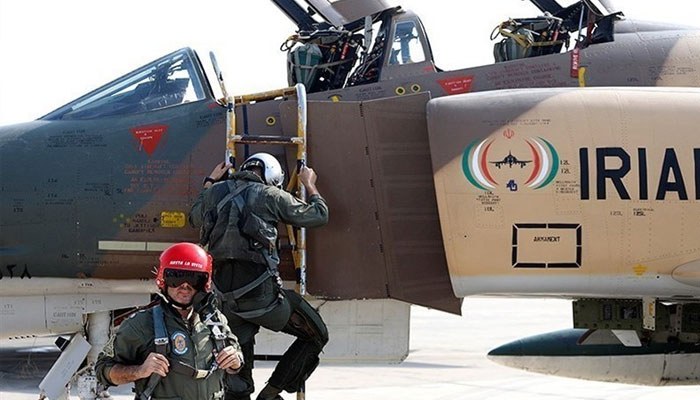
      Iran has publicly confirmed for the first time that three Iranian Air Force pilots who went missing following an attack on a US military base in Qatar on March 2 were captured alive by Qatari forces. According to news agency, a senior Iranian military official has called on the International Committee of the Red Cross (ICRC) to investigate the condition of the pilots and take steps to secure their release. Brigadier General Mohammad Bagherzadeh, commander of the committee established by the Iranian Armed Forces General Staff to investigate missing personnel, expressed concern over the fate of the pilots in a letter addressed to ICRC President Mirjana Spoljaric Egger. According to Bagherzadeh, on March 2, 2026, two Iranian Air Force Su-24 fighter bombers were dispatched toward a US military base in Qatar in response to attacks carried out against Iran. He said both aircraft successfully completed their mission but were targeted by an enemy air defence system while returning, forcing their crews to eject. Four pilots were aboard the two aircraft. One of them, Majid Kazemi, was killed in the incident. His remains were later recovered, transferred to Iran and buried there, according to the Iranian military official. Bagherzadeh said Iran had received information indicating that the other three pilots involved in the incident—Javad Salehi, Abdulhamid Dashtian and Imran Behroishian—had survived and were captured by Qatari forces. In his letter, the Iranian brigadier general criticised Qatar, claiming that six months after the incident, Qatari authorities had failed to respect the rights of the prisoners under international law, including the Geneva Conventions. He said that despite diplomatic efforts and continued communication, Iranian authorities had not been allowed to meet or interview the pilots. He also alleged that the three men had not been permitted to communicate with their families or Iranian officials responsible for following the case. Bagherzadeh said the issue could fall under provisions relating to war crimes and therefore required serious consideration and investigation. He called on the Red Cross to immediately visit the three Iranian pilots in Qatar, assess their health and current condition, inform Iranian authorities about their situation, and assist in securing their immediate release. The Iranian news agency said the disclosure came after months of uncertainty surrounding the fate of the three pilots. On August 1, Iranian military spokesman Brigadier General Mohammad Akraminia said Iran was continuing to pursue the matter. At the time, Qatari authorities maintained that they had no information regarding the missing Iranian air force personnel. According to the Iranian military, the two Su-24 aircraft had taken off from Shahid Doran Air Base in Shiraz. Iranian officials claimed that, despite advanced radar networks and sophisticated air defence systems, the aircraft managed to strike Al Udeid Air Base in Qatar, which is used by the United States. The Iranian military further claimed that the aircraft were targeted by enemy air defence systems over the Gulf while returning from the mission. Despite heavy ground-based anti-aircraft fire, the operation was reportedly completed successfully. Iranian officials described the mission as a demonstration that the attacking forces could be challenged and said it delivered a clear message to their adversaries. The development follows an earlier statement by Qatar’s Ministry of Defence, which said on March 2 that the Qatari Air Force had shot down two Iranian Su-24 aircraft approaching from Iran. The latest Iranian disclosure could add further diplomatic pressure on Qatar and increase international attention on the status and treatment of the three missing pilots.

  • | |

    Gulf allies reportedly lose confidence in Trump over Iran war

    Several US allies in the Gulf are reportedly becoming increasingly frustrated with President Donald Trump over what they see as a lack of effective diplomacy to end the war between the United States and Iran. According to a report by The Washington Post, officials from Arab, European and US circles said governments in Saudi Arabia, the United Arab Emirates, Qatar, Kuwait and Bahrain were growing increasingly concerned about the Trump administration’s approach to the conflict. The report said Gulf allies were particularly worried that the Trump administration had failed to advance the diplomatic efforts needed to achieve a peaceful settlement with Iran. According to the newspaper, some Gulf states have also started discussing whether continuing to host major US military bases on their territory remains in their national interest. Three current US officials and a former American diplomat reportedly told the Washington Post that the debate had intensified after months of war and continued missile and drone attacks by Iran and groups allied with Tehran. The officials said some Gulf countries were questioning how beneficial it was to host large US military installations while also facing potential security risks linked to the conflict. One senior Gulf official was quoted as saying that Trump had started the war while Gulf countries were paying the price. Despite the growing frustration, Gulf states continue to regard Washington as a major security partner and an important supplier of military equipment. The United States maintains major military facilities in Qatar and Bahrain. These bases have long played an important role in Washington’s military presence and security strategy in the region. However, the reported dissatisfaction is prompting some Gulf governments to consider alternative security arrangements. Some countries have also started exploring other options to reduce their dependence on the United States for defence and regional security. The recent mutual defence agreement between Saudi Arabia, Türkiye and Pakistan has also attracted attention in this context. A senior European official reportedly described the agreement as a signal to Washington. According to the official, the so-called Makkah defence agreement indicates that Gulf countries may no longer want to rely exclusively on the United States for their security. The development reflects growing concerns among some US allies about the consequences of the Iran conflict. While Gulf states continue to maintain close relations with Washington, the war has encouraged discussions about diversifying their security partnerships. The reported shift could have wider implications for US influence in the Gulf. Any reduction in reliance on American military protection could encourage regional countries to strengthen defence cooperation with other partners.

Leave a Reply

Your email address will not be published. Required fields are marked *