iran publicly confirms
|

Iran publicly confirms three missing Pilots were captured by Qatar


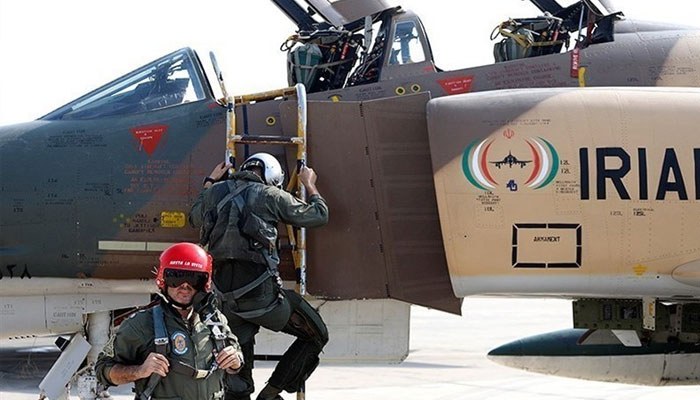
Iran has publicly confirmed for the first time that three Iranian Air Force pilots who went missing following an attack on a US military base in Qatar on March 2 were captured alive by Qatari forces.

According to news agency, a senior Iranian military official has called on the International Committee of the Red Cross (ICRC) to investigate the condition of the pilots and take steps to secure their release.

Brigadier General Mohammad Bagherzadeh, commander of the committee established by the Iranian Armed Forces General Staff to investigate missing personnel, expressed concern over the fate of the pilots in a letter addressed to ICRC President Mirjana Spoljaric Egger.

According to Bagherzadeh, on March 2, 2026, two Iranian Air Force Su-24 fighter bombers were dispatched toward a US military base in Qatar in response to attacks carried out against Iran. He said both aircraft successfully completed their mission but were targeted by an enemy air defence system while returning, forcing their crews to eject.

Four pilots were aboard the two aircraft. One of them, Majid Kazemi, was killed in the incident. His remains were later recovered, transferred to Iran and buried there, according to the Iranian military official.

Bagherzadeh said Iran had received information indicating that the other three pilots involved in the incident—Javad Salehi, Abdulhamid Dashtian and Imran Behroishian—had survived and were captured by Qatari forces.

In his letter, the Iranian brigadier general criticised Qatar, claiming that six months after the incident, Qatari authorities had failed to respect the rights of the prisoners under international law, including the Geneva Conventions.

He said that despite diplomatic efforts and continued communication, Iranian authorities had not been allowed to meet or interview the pilots. He also alleged that the three men had not been permitted to communicate with their families or Iranian officials responsible for following the case.

Bagherzadeh said the issue could fall under provisions relating to war crimes and therefore required serious consideration and investigation.

He called on the Red Cross to immediately visit the three Iranian pilots in Qatar, assess their health and current condition, inform Iranian authorities about their situation, and assist in securing their immediate release.

The Iranian news agency said the disclosure came after months of uncertainty surrounding the fate of the three pilots. On August 1, Iranian military spokesman Brigadier General Mohammad Akraminia said Iran was continuing to pursue the matter. At the time, Qatari authorities maintained that they had no information regarding the missing Iranian air force personnel.

According to the Iranian military, the two Su-24 aircraft had taken off from Shahid Doran Air Base in Shiraz. Iranian officials claimed that, despite advanced radar networks and sophisticated air defence systems, the aircraft managed to strike Al Udeid Air Base in Qatar, which is used by the United States.

The Iranian military further claimed that the aircraft were targeted by enemy air defence systems over the Gulf while returning from the mission. Despite heavy ground-based anti-aircraft fire, the operation was reportedly completed successfully.

Iranian officials described the mission as a demonstration that the attacking forces could be challenged and said it delivered a clear message to their adversaries.

The development follows an earlier statement by Qatar’s Ministry of Defence, which said on March 2 that the Qatari Air Force had shot down two Iranian Su-24 aircraft approaching from Iran.

The latest Iranian disclosure could add further diplomatic pressure on Qatar and increase international attention on the status and treatment of the three missing pilots.

Similar Posts

  • |

    Nigerian security forces rescue over 300 hostages in record single-day operation

    Nigerian joint security forces have rescued 308 abducted citizens from the Kainji Lake National Park in Niger state, marking the largest single-day hostage recovery operation in the country’s history. The intelligence-led operation involved the Nigerian military, police, Department of State Services, and the National Counter-Terrorism Centre. Those freed include 163 residents abducted during a February attack on the Woro and Nuku communities in Kwara state, alongside 145 individuals seized from neighbouring Niger state. During the February assault on Woro, the suspected killed more than 150 people and burned large parts of the village after residents refused to renounce the Nigerian government. Human rights monitoring groups reported that many victims of the raid were found bound and executed. President Bola Ahmed Tinubu commended the security services for their coordination, stating that the successful rescue demonstrates enhanced operational alignment among Nigeria’s defense and intelligence branches. The freed hostages are currently undergoing medical evaluation and receiving psychosocial support at a federal military facility before being reunited with their families.

  • |

    US investigates possible Russian role in Iranian strikes on CIA facilities

    US intelligence agencies are examining whether Russia helped Iran carry out drone attacks on CIA facilities in the Gulf, raising fresh concerns about growing military cooperation between Moscow and Tehran. Officials are reviewing intelligence to determine whether Russia provided targeting information, advanced drone technology, or other forms of support that may have increased the accuracy of the attacks. According to sources familiar with the investigation, analysts have not reached any final conclusions about Russia’s involvement. However, the precision of the strikes and Russia’s long history of military and technical cooperation with Iran have led intelligence officials to explore whether Moscow played a direct role in planning or supporting the operations. The investigation follows a series of Iranian drone attacks that targeted sensitive US intelligence locations in the region. At least two CIA facilities were reportedly hit in March. One of the sites was located inside the US Embassy in Riyadh, Saudi Arabia, while another was in eastern Iraq. Officials familiar with the matter said additional CIA locations may also have been attacked, although they declined to reveal further details because of security concerns. Western intelligence officials have also reviewed reports suggesting that Russia may have assisted Iran in selecting the targets. One intelligence assessment reportedly concluded that Russia likely contributed to identifying regional CIA facilities, although officials stressed that the findings remain under review and have not been publicly confirmed. According to officials briefed on intelligence reports, the attack on the US Embassy compound in Riyadh involved two upgraded versions of Iran’s Shahed drones. They said one drone created an opening in the embassy’s outer structure while the second entered through the damaged area before exploding inside. No casualties were reported, but the operation demonstrated a level of accuracy that surprised intelligence analysts. The investigation comes as tensions between the United States and Iran remain high following months of military exchanges across the Middle East. American officials are also examining recent Iranian strikes on a US military base in Jordan where ballistic missiles killed two American soldiers. Those attacks have intensified concerns that Iran may be receiving more advanced military support from Russia. Analysts believe Russia has spent years helping Iran improve its drone capabilities. Intelligence sources say Moscow has assisted Tehran in increasing the range and precision of its Shahed drones through technical upgrades. Reports also suggest Russia supplied Iran with the Kometa M satellite navigation system, which is believed to provide greater accuracy and stronger resistance to electronic interference than Iran’s previous guidance systems. Russia has denied supplying the technology and dismissed earlier reports on the matter. The White House referred questions about the investigation to the CIA, which declined to comment. Iran’s mission to the United Nations, the Russian Defense Ministry, and Saudi authorities also did not respond to requests for statements. The exact number and locations of the targeted CIA facilities remain classified. Intelligence sources said more than one site but fewer than a dozen were struck during the attacks. Overseas CIA operations often include embassy based stations as well as secure facilities used for surveillance, logistics, intelligence gathering, and other sensitive missions. US analysts are also investigating whether Russia supplied the intelligence used to identify the Riyadh facility. Some officials remain cautious, noting that Iran may have intended to strike the US Embassy as a whole rather than specifically targeting the CIA station located within the compound. Others believe very few countries possess both the intelligence capabilities and the strategic motivation to identify and support attacks against such highly sensitive US facilities. Former CIA station chief Daniel Hoffman said closer military cooperation between Russia and Iran makes such assistance plausible. He argued that both countries share a common interest in reducing American influence across the Middle East and other regions where they seek greater strategic control. The investigation remains ongoing as US intelligence agencies continue to assess the available evidence.

  • | | |

    Iran announces $30,000 reward for capturing or kil…

    TEHRAN: Iran has announced a $30,000 reward for anyone who kills or captures a US servicemember and hands them over to Iranian authorities, in a striking escalation of rhetoric amid continuing tensions between Tehran and Washington. Iranian Army chief Maj Gen Amir Hatami announced the reward, saying it had been introduced after what he described as a large number of public requests to participate in the confrontation with the United States. Under the reported scheme, a person who kills or captures a US soldier and hands the servicemember to Iranian authorities would receive $30,000, or the equivalent of about 5 billion Iranian tomans. Hatami reportedly said the reward would be doubled if the action was carried out by a woman. The announcement comes as tensions between Iran and the United States remain high. Tehran has repeatedly demanded that American forces leave the region, while Washington has maintained a significant military presence across the Middle East. Despite the threat, there are no known US ground forces permanently deployed inside Iran. Reports indicate that American personnel entered Iranian territory in April during a rescue operation following the crash of a US aircraft. Hatami also issued a warning over the Persian Gulf, Gulf of Oman and Strait of Hormuz, saying American forces would not be allowed to return. His comments came after US President Donald Trump made controversial statements concerning the strategic waterway. The Strait of Hormuz remains a major flashpoint because it is one of the world’s most important energy shipping routes. Any further escalation around the passage could have consequences well beyond the region, particularly for global oil markets. The latest Iranian announcement adds another provocative dimension to an already tense confrontation, raising concerns over the safety of US personnel and the possibility of further escalation across the Middle East.

  • |

    Putin visits Japan-claimed Islands, Tokyo protests

    MOSCOW: Russian President Vladimir Putin has visited Iturup, one of the disputed Kuril Islands claimed by Japan, in a move likely to further strain relations between Moscow and Tokyo and revive attention on a decades-old territorial dispute. Russian state media reported on Thursday that Putin travelled to Iturup after overseeing major naval exercises in Russia’s Far East. The visit was described by state news agency TASS as Putin’s first in-person trip to the island chain. Iturup, known as Etorofu in Japan, is among four islands that Tokyo calls the Northern Territories and considers its inherent territory. The territorial dispute has prevented Russia and Japan from signing a formal peace treaty to officially end the state of war left over from World War II. During his visit, Putin toured the Yasny fish-processing plant, where officials briefed him on the local fishing industry and the movement of fish in the surrounding waters. Russian television footage showed the president examining large tuna and halibut before sampling local fish roe. Putin also spoke with local residents, praising the island’s weather and comparing it with a resort. His informal interaction with residents highlighted Moscow’s efforts to portray the disputed territory as an active and integrated part of Russia. Japan responded sharply to the visit. Foreign Minister Toshimitsu Motegi said Tokyo had lodged a strong protest, insisting that the Northern Territories, including Etorofu, belong to Japan based on history and international law. The visit came at a particularly sensitive moment in East Asia. A day earlier, North Korea, a Russian ally, fired a ballistic missile towards waters off the Korean Peninsula. The launch occurred shortly before major joint military exercises involving the United States and South Korea, which Pyongyang has repeatedly condemned. Putin’s appearance on Iturup also followed Russian naval drills in the Far East, adding a military dimension to an already sensitive diplomatic dispute. The latest development underscores the continuing complexity of Russia-Japan relations. Despite periods of diplomatic engagement and economic cooperation, the unresolved island issue remains a major obstacle to a formal postwar peace agreement. For Tokyo, Putin’s visit represents another challenge to its territorial claims. For Moscow, the high-profile trip reinforces its control over the disputed islands and signals that the territorial question remains firmly within Russia’s strategic agenda.

  • | |

    Iran, Oman reach deal on Strait of Hormuz shipping routes

    Iran and Oman have reached an agreement on a proposed shipping route map for the strategically important Strait of Hormuz following weeks of technical negotiations, Iranian officials said on Saturday. Iranian Foreign Ministry spokesman Esmaeil Baghaei said the two countries had made significant progress in talks aimed at establishing safer navigation routes through the waterway. The negotiations began around three months ago under an agreement signed in June. Baghaei said the proposed route was developed through coordination between Iran’s foreign ministry and its defence, security and environmental authorities. He added that Tehran and Muscat were still discussing some remaining issues, including the wording of a joint statement. The spokesman stressed that the arrangement was a bilateral agreement between Iran and Oman and was intended to facilitate the safe movement of commercial vessels while respecting the sovereignty of both countries. However, Tehran has made clear that the full restoration of normal shipping through the Strait of Hormuz depends on broader developments involving the United States. Baghaei said Iran wanted an end to what it described as US military threats, naval restrictions and violations of previous commitments before normal commercial traffic could fully resume. Iranian Foreign Minister Abbas Araghchi separately said negotiations with Oman over the waterway were continuing. He described the discussions as separate from the wider diplomatic dispute between Tehran and Washington. Araghchi also rejected the description of an earlier agreement as a simple 60-day ceasefire. He said the understanding was aimed at ending the war, while the 60-day period was intended for negotiations toward a final settlement. He said Qatar and Pakistan were continuing to exchange messages with Iran but stressed that Tehran had not yet decided to resume direct negotiations with Washington. Iranian Deputy Foreign Minister Kazem Gharibabadi also rejected claims that the United States could take control of the Strait of Hormuz. He said Iran remained in charge of decisions concerning the waterway and dismissed statements suggesting that the strait could become US territory. The Strait of Hormuz is one of the world’s most important energy corridors, connecting the Persian Gulf with the Gulf of Oman. A prolonged disruption to shipping through the waterway has raised concerns over global energy supplies and fuel prices. The latest developments come amid continuing tensions between Iran, the United States and Israel. Shipping through the strait remains significantly below normal levels, while diplomatic efforts to end the wider conflict have yet to produce a lasting settlement. US President Donald Trump has meanwhile urged Americans to accept higher fuel prices while the conflict continues, arguing that confronting Iran was necessary to prevent it from obtaining a nuclear weapon. The dispute has already pushed global oil prices higher, while rising fuel costs in the United States have added to inflationary pressures.

  • | |

    Indian activist Sonam Wangchuk says he remains ali…

    Indian activist Sonam Wangchuk says he has lost 11 kilograms during a 26 day hunger strike but remains alive, as his protest continues to fuel a wider youth movement demanding education reforms in India. Wangchuk, known widely as Sonam sir, has become the central figure in a youth led campaign organized by the Cockroach Janta Party, which is calling for sweeping education reforms and the resignation of Education Minister Dharmendra Pradhan. He was removed from the group’s protest site at Delhi’s Jantar Mantar on Saturday and taken to a hospital, where he has continued his fast. Despite his removal from the demonstration site, thousands of supporters have kept returning to Jantar Mantar, even after a heavy handed police response to a march toward parliament earlier in the week left numerous protesters and police officers injured. That crackdown has intensified public anger and energized opposition parties, creating a growing political challenge for Prime Minister Narendra Modi’s government. Modi has not addressed the protests directly or met with demonstrators, but he issued a statement on social media that many interpreted as an effort to connect with students angered by repeated leaks of exam papers. He wrote that the welfare of the country’s youth matters above all else and said the government would establish fast track courts to deliver swift punishment for those responsible for the leaks. A spokesperson for the Cockroach Janta Party, Ashutosh Ranka, responded that the government’s plan addressed the aftermath rather than the root cause, saying the movement wants to know why the leaks keep happening and who profits from them. He indicated in a video statement that protesters intend to continue their campaign until their demands are met. Even though Wangchuk is no longer physically present at the protest grounds, his fast has become a symbolic centerpiece of the movement, with demonstrators displaying placards and artwork referencing his hunger strike. Before he was hospitalized, he spent 21 days enduring intense summer heat while consuming only salt and water. Medanta Hospital in Gurugram said in a statement that Wangchuk was admitted to intensive care and is being monitored by a team of specialists. The hospital described his condition as stable and said his vital signs remain within normal ranges, adding that all treatment is being given with his consent. On Wednesday, senior figures including Cockroach Janta Party founder Abhijeet Dipke, along with opposition lawmakers, activists and public personalities, again urged Wangchuk to end his fast. Health Minister JP Nadda, who visited the hospital on Tuesday night, said he too had asked the activist to stop and rejoin efforts to guide young people, adding that the government remains willing to discuss the issues he has raised. Wangchuk has so far rejected these appeals. In a video statement recorded from his hospital bed on Wednesday night, he said he wants to end his fast because his work matters to him, but added that he would only do so once the government guarantees no force or retaliation will be used against students. He said he would end the strike immediately if that assurance comes, and would continue if it does not. He also praised the students involved in Monday’s confrontation with police, saying they showed remarkable composure even while being beaten with sticks, and said their restraint under pressure led him to keep going with his fast. Neither Wangchuk’s latest statement nor an earlier letter he sent to government ministers he met on Tuesday mentioned Pradhan’s resignation directly, though the Cockroach Janta Party maintains that the demand has not changed. Dipke told supporters that the protest at Jantar Mantar will continue until Pradhan steps down, and said the movement would not let Wangchuk’s sacrifice or the injuries suffered by students go without result. The standoff reflects a broader pattern seen in past protest movements across South Asia, where a single high profile figure’s personal sacrifice becomes a rallying point that sustains momentum long after the initial spark fades. Hunger strikes in particular have a long history in Indian political life as a tool for applying moral pressure on governments, dating back to independence era activism, and their effectiveness often depends on sustained public attention and the government’s willingness to negotiate before a health crisis forces the issue. As the standoff continues, the government faces mounting pressure to address both the immediate demand for accountability over exam paper leaks and the broader question of how education policy is managed, while doctors continue to monitor Wangchuk’s condition inside the hospital.

Leave a Reply

Your email address will not be published. Required fields are marked *