
saudi capitals airport
|

Saudi capital’s airport to remain shut this week as airlines cancel services

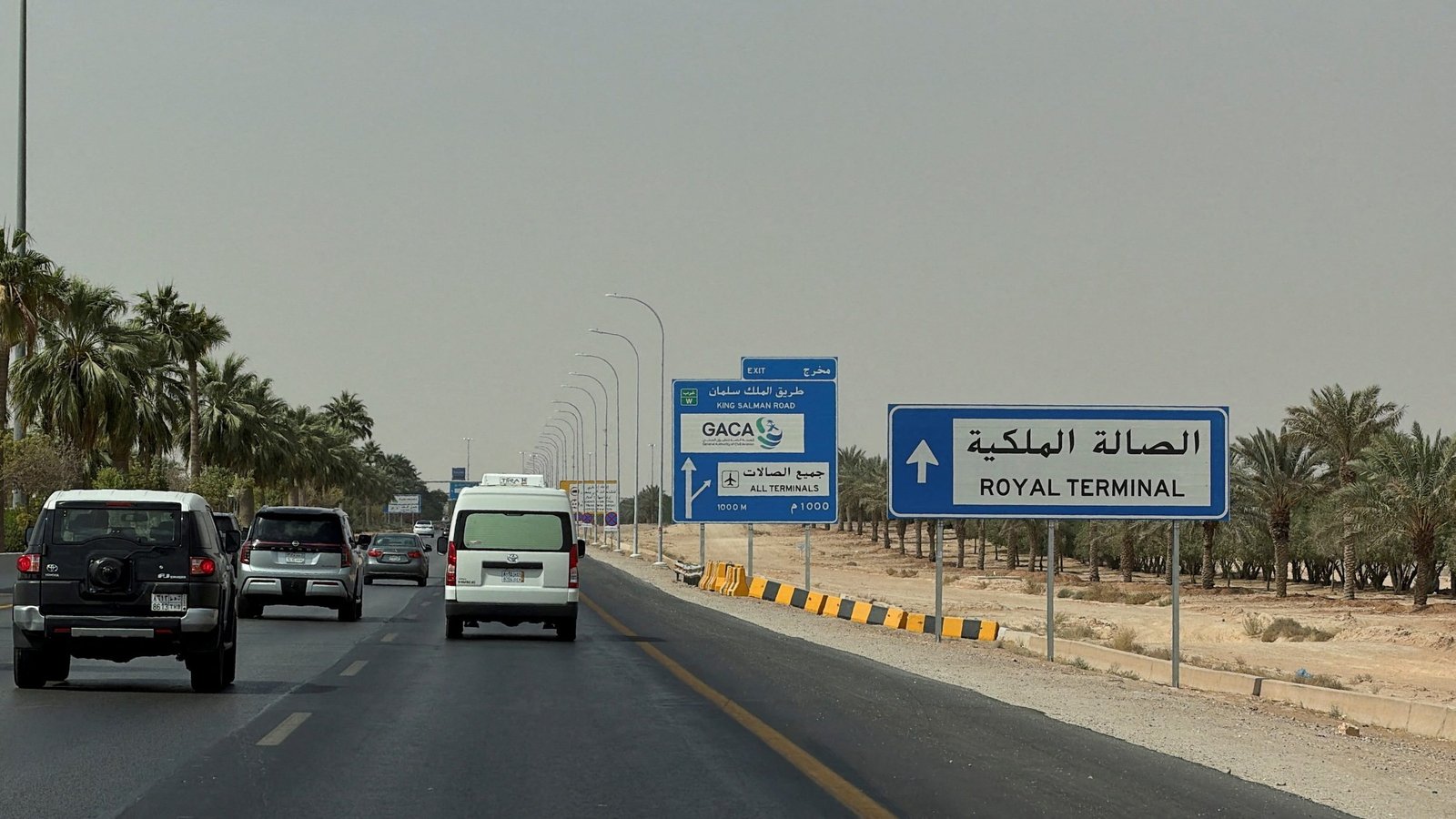
Authorities have extended the closure of Riyadh’s international airport until Saturday, October 17, and airlines scrapped flights after continuing attacks by Yemen’s Iran-aligned Houthis emptied the skies over Saudi Arabia’s capital.

Operations at King Khalid International Airport, Saudi Arabia’s second-busiest airport after Jeddah, were suspended to “allow for the completion of procedures to ensure the safety and operational readiness of the airport’s facilities,” the Saudi civil aviation authority said in a statement.

Late on Monday, the Houthis said they had attacked the airport with a ballistic missile, shortly after Saudi Arabia said it had intercepted and destroyed a ballistic missile fired by the group towards Riyadh.

The Houthis also said in a statement that they targeted an airbase in Khamis Mushait in the kingdom’s southwest with a drone. There was no immediate Saudi confirmation.

A Notice to Airmen issued on Monday showed King Khalid International Airport will stay closed until 2100 GMT on October 17.

The airport has been shut since an attack on Saturday that killed 13 people and wounded more than 300, the deadliest in the kingdom in more than a decade. On Sunday, another attack killed one person and injured nearly a dozen others.

The attacks marked one of the most significant disruptions to Saudi aviation in years, adding to pressures on an industry already grappling with conflict across the Middle East and with higher jet fuel prices that are eating into profits.

They have also raised worries over civil aviation becoming a target in armed conflict.

“This level of sustained intense attack on civil aviation is unprecedented,” said Mark Zee, founder of OPSGROUP, a membership-based organization that provides aviation safety advice.

“I think this requires us to rethink how we view the current risk picture, and tread very carefully,” he said.

Air traffic tracker Flightradar24 showed planes avoiding the city on Monday, though jets were crossing Saudi airspace and landing at top hub Jeddah on the country’s west coast.

Cancellations across all Saudi airports reached 46.4%, aviation analytics firm Cirium said.

Crisis overshadows Saudi business outlook

The disruption has forced airlines across Europe and Asia to suspend services, while the Federal Aviation Administration advised US carriers on Sunday to exercise caution when flying to or over Saudi Arabia. EU aviation body EASA widened a Saudi airspace warning on Friday, citing missile and drone attacks.

“The impact goes beyond Saudi Arabia to the wider region and to its global connections,” said aviation analyst John Strickland.

OPSGROUP advised airlines to avoid the southern aviation corridor over the Middle East altogether, and take a route from Europe to Asia over central Asia.

That adds “extensive distance” for some routes and “closes off options for getting into Dubai, Abu Dhabi for most western carriers,” Zee said.

Lufthansa Group canceled all flights to Riyadh until October 16, while Air France-KLM has extended a suspension to and from Riyadh until the end of the month.

Etihad Airways said it had canceled flights between Abu Dhabi and Riyadh, Jeddah and Dammam due to “regional disruption,” adding that all flights between Abu Dhabi and Riyadh would be canceled until October 19.

Qatar Airways said on Monday it had temporarily suspended flights to and from Riyadh and Dammam due to the “current situation.”

Delta Air Lines said it was delaying planned services from Atlanta to Riyadh, initially due to start on October 23, until March 2027.

The escalation with the Houthis has raised concerns over the broader economic impact. Saudi Arabia’s real GDP is projected to contract by 3.6% this year, reflecting a combination of factors including lower oil activity.

The attacks have put events scheduled in Riyadh this month under pressure, including the kingdom’s flagship investment conference and the WPC Energy Congress, where several top oil executives were dropped from the program. – Rappler.com

Similar Posts

  • |

    French and British coastguards rescue over 150 migrants following engine fire in English Channel

    Joint emergency response teams from France and the United Kingdom rescued 157 migrants after their vessel caught fire during an attempted crossing of the English Channel early on Tuesday morning. The vessel, which departed from the northern coast of France near Normandy, was under monitoring by French maritime authorities when its engine caught fire in France’s search-and-rescue zone close to British territorial waters. The blaze caused the boat’s condition to deteriorate rapidly, forcing emergency crews to initiate an immediate extraction operation involving naval helicopters, lifeboats, and medical units from both nations. Prior to the engine fire, French patrol vessels had retrieved five individuals who requested medical aid overnight. Maritime officials noted that passengers making irregular crossings frequently decline preventative assistance from coastal patrols, accepting aid only when confronted with catastrophic emergencies. All rescued individuals were disembarked at the northern French port of Boulogne-sur-Mer for formal health evaluations and processing. Authorities confirmed that no fatalities were recorded during the incident.

  • | |

    Typhoon Noul hits China, 715,000 evacuated

    Typhoon Noul has made landfall in southern China, bringing powerful winds and heavy rainfall to Guangdong province and neighbouring Hong Kong. The storm reached the coast of Huidong county in Huizhou, Guangdong, at around 3:50am local time on Sunday, according to China’s weather authorities. Noul was reported to be the strongest typhoon to make landfall in China so far this year. Authorities warned that heavy rain and strong winds could continue across parts of southern Guangdong and southeastern Fujian. More than 715,000 people in Guangdong had been moved to safer locations by early Sunday as authorities stepped up preparations for the storm. The number was more than double the evacuation figure reported a day earlier. The typhoon brought winds of up to 110 kilometres per hour near its centre as it moved inland across Guangdong. Weather officials said the storm would gradually weaken after making landfall, but dangerous weather conditions were expected to persist. Strong winds caused damage in several areas. Trees were uprooted in coastal Huilai county, while sections of scaffolding attached to a high-rise building in Hong Kong collapsed as Noul approached. Initial reports indicated that nobody was injured in the scaffolding incident. The storm also severely disrupted air travel. Hong Kong’s airport authorities said around 350 flights were cancelled on Sunday because of the adverse weather. At least nine people were injured in Hong Kong during the typhoon period, according to local authorities. The storm also affected Taiwan, where authorities reported rainfall in parts of the southern and eastern regions. Noul was moving away from the island after passing over waters to its south. China has faced several major tropical storms this month. Typhoon Bavi struck eastern China on July 11 after authorities evacuated more than two million people. Tropical Storm Maysak made landfall in southern China on July 3.

  • |

    Student protests intensify over exam paper leaks in India

    Student protests against repeated examination paper leaks have intensified across India, with growing anger among young people and an increasingly active anti-government campaign on social media. Thousands of students marched toward Parliament in New Delhi on July 20, demanding the resignation of Education Minister Dharmendra Pradhan. The demonstration reportedly turned tense as police and protesters clashed, with reports claiming that more than 100 students suffered injuries during the unrest. Police officials have rejected allegations that officers used excessive force against the protesters. However, several videos recorded by students and shared widely on social media appear to show police personnel using batons and tear gas and dealing harshly with demonstrators. The footage has further fueled public anger and drawn attention to the growing student movement. The protests have since spread beyond the capital, with demonstrations reported in cities including Mumbai, Bengaluru, Patna, Lucknow and Aizawl. Student groups say they will continue their campaign until the authorities address their concerns and meet their demands. The Cockroach Janta Party (CJP), which is leading the student movement, has called for sustained protests over the issue. The group has demanded the resignation of Education Minister Dharmendra Pradhan, assurances that authorities will not file cases against students who took part in the demonstrations, and financial compensation for the families of students who allegedly died by suicide after examination papers leaked. The controversy has also gained significant momentum online. Young Indians have turned to memes, short videos and satirical posts to criticize the government and question its handling of examination leaks. Social media discussions have also included calls for the education minister to step down, with some posts targeting the ruling Bharatiya Janata Party (BJP) over the issue. The protests come amid wider concerns about the integrity of competitive examinations in India, where millions of students rely on national and state-level tests for admission to universities and access to government jobs. Repeated allegations of paper leaks have raised questions about examination security and fairness, while students have expressed frustration over the disruption to their academic and career plans. Prime Minister Narendra Modi has also responded to the growing protests. In a post on X, he addressed the issue for the first time and said that nothing matters more than the welfare and future of the country’s young people. The student movement continues to put pressure on the government, as protesters demand stronger measures to prevent examination paper leaks and greater accountability from officials. With demonstrations spreading to multiple cities and the issue gaining traction on social media, the controversy has emerged as a significant challenge for the Indian government.

  • |

    UK stars join the fight to stop the Paramount-Warner Bros mega-merger

    Benedict Cumberbatch, Alan Cumming, and Benedict Wong are calling on the British government to step in and stop a massive media merger. They believe the deal could seriously damage the country’s entertainment industry. The three actors co-wrote an opinion piece for the Guardian, warning readers about the potential fallout from the merger. They urged immediate action to prevent it from going through. The well-known performers argued that the merger poses a serious threat to the public, describing its consequences as deeply harmful to people across Britain. Their intervention follows similar pushback from actors in Hollywood, adding British voices to the growing opposition against the proposed $111 billion merger between Paramount and Warner Bros. Discovery. The trio emphasized their long-standing ties to the UK’s creative industry, noting decades spent collaborating with British crews on British stages and film sets. They framed their involvement as a natural extension of their responsibility toward audiences who support and enjoy their work. According to the actors, the merger threatens nearly 180,000 jobs within the UK’s entertainment sector. It also puts billions of pounds in annual production spending at risk. They described the situation as one where intervention could still make a difference, calling it a battle that can still be won if action is taken soon. The piece also referenced recent comments from UK Culture Secretary Lisa Nandy, who has hinted she might take formal steps to intervene in the deal. The actors suggested that Nandy’s potential involvement represents one of two major fronts in the broader fight to stop the merger. They called any decision from her department potentially one of the most consequential moves affecting British film and television in years. Towards the end of their piece, the trio acknowledged that actors are typically expected to steer clear of legal and regulatory debates. However, they pushed back against that expectation, explaining that their years spent working alongside British crews, watching talented homegrown productions struggle to secure funding, gave them a personal stake in the outcome. Their public stance adds significant star power to the growing resistance against the merger. Industry figures on both sides of the Atlantic continue voicing concerns about its potential impact on jobs, cultural output, and the broader landscape of film and television production in the UK.

Leave a Reply

Your email address will not be published. Required fields are marked *