cher ordered pay
|

Cher ordered to pay over $1 million in legal fees

Cher has been ordered to bear more than $1 million in her own legal expenses despite previously winning a long-running legal battle over music royalties linked to her former husband and musical partner, Sonny Bono.

The legal dispute began in October 2021 when the legendary singer and actress filed a lawsuit against Sonny Bono’s widow, Mary Bono. Cher sought to protect her right to receive royalties from songs recorded during the successful Sonny & Cher partnership and claimed she was entitled to damages after her royalty payments were challenged.

According to the lawsuit, Cher argued that her 1978 divorce settlement with Sonny Bono guaranteed her a 50% share of the royalties generated by their music catalogue. She alleged that Mary Bono had attempted to terminate those royalty rights under U.S. copyright law, depriving her of income she was legally entitled to receive.

The dispute centred on whether Cher’s contractual rights established through the divorce agreement could continue despite copyright termination provisions. Cher maintained that the divorce settlement remained valid and enforceable, while Mary Bono challenged those claims.

In May 2024, the court ruled in Cher’s favour on the central issue. The judge found that she was entitled to unpaid royalty payments and awarded her more than $418,000 in damages for royalties that had been withheld.

Following that victory, Cher sought to recover the legal costs she had accumulated while pursuing the case. In January 2026, she filed a request asking the court to award her $1,023,605.30 in attorney’s fees.

Her legal team argued that the case involved a common set of facts across multiple claims and counterclaims, making it unnecessary to separate the legal costs for each issue individually. They also contended that any work related to Mary Bono’s partially successful counterclaim represented only a minimal portion of the overall litigation.

However, the judge rejected Cher’s request for attorney’s fees in a ruling issued on July 17. The court concluded that the case was fundamentally a contract dispute rather than one arising under federal copyright law. Because of that distinction, the judge determined that Cher was not entitled to recover her legal expenses from the opposing side.

As a result of the ruling, Cher will have to cover more than $1 million in attorney’s fees herself, despite winning the underlying royalties dispute. Court filings also indicated that approximately $10,000 in additional legal costs was expected to be incurred for her representation.

The case marks the latest chapter in a years-long legal battle involving the financial legacy of Sonny & Cher, one of the most influential entertainment duos of the 1960s and 1970s.

Cher and Sonny Bono rose to international fame with a string of hit songs before expanding into television with The Sonny & Cher Comedy Hour, which became one of the era’s most popular variety shows. Following their divorce and the end of their professional partnership, both continued with separate careers. Sonny Bono later entered politics, serving as mayor of Palm Springs before being elected to the U.S. Congress, where he remained until his death in 1998.

Similar Posts

  • | |

    Sindh information minister Sharjeel Memon accuses …

      Sindh Information Minister Sharjeel Inam Memon has alleged that the Pakistan Muslim League-Nawaz (PML-N) is attempting to secure power in Azad Jammu and Kashmir (AJK) through electoral manipulation rather than the democratic process Speaking at a press conference in Islamabad, Memon strongly criticized the ruling party’s political approach and accused its leadership of relying on what he described as “backdoor” methods to gain power. He claimed that the PML-N was now trying to repeat the same strategy in Azad Kashmir ahead of the upcoming political developments in the region. “The Pakistan Muslim League-N wants to come to power in Azad Kashmir through rigging,” Memon said while addressing journalists. He argued that free and fair elections are essential for maintaining public trust in democratic institutions and urged all stakeholders to ensure transparency in the electoral process. During the press conference, Memon also took aim at former Prime Minister Nawaz Sharif and Punjab Chief Minister Maryam Nawaz. He alleged that Nawaz Sharif had himself entered power through what he called the “backdoor,” adding that Maryam Nawaz had followed the same path. Referring to one of her recent public remarks, Memon criticized her statement asking, “When will the Day of Judgment come?” He said such expressions should not be used by political leaders, arguing that they were inappropriate in public discourse. The Sindh minister emphasized that politicians should exercise caution in their choice of words and avoid making statements that could create unnecessary controversy or distract from issues affecting the public. He said political leaders have a responsibility to maintain respectful and constructive dialogue, particularly during periods of heightened political activity. Memon also spoke about the challenges facing Karachi, describing the country’s largest city as unique in both its size and complexity. “Karachi has many challenges because Karachi is not just a city—it is like a country,” he remarked. He said the metropolis faces a wide range of issues, including infrastructure demands, traffic congestion, rapid population growth, and the need for improved public services. According to Memon, the Sindh government continues to work on addressing these longstanding challenges through development projects and administrative reforms. He stressed that managing Karachi requires coordinated efforts from both provincial and federal institutions due to the city’s economic significance and its role as Pakistan’s commercial hub. The press conference primarily focused on the current political environment, electoral transparency, and governance issues. Memon reiterated that democratic values must be upheld and that any attempt to influence election outcomes unfairly would undermine public confidence in the political system. His remarks come amid increasing political activity across the country, with parties positioning themselves ahead of future elections and regional political contests. The statements are expected to draw responses from the Pakistan Muslim League-N, which has previously rejected similar allegations and maintained that it believes in democratic and constitutional processes. The comments made by Sharjeel Memon add to the ongoing political debate in Pakistan, where electoral integrity, governance, and accountability continue to dominate public discussion. As political tensions persist, attention remains focused on ensuring transparent elections and promoting constructive political dialogue across the country.

  • | |

    Balochistan becomes regular police area after Levi…

    QUETTA: The Balochistan cabinet has approved several major measures aimed at improving security, governance, education and public services across the province. One of the key decisions was to declare the entire province a regular police area following the integration of the Levies Force into the police system. The decisions were taken during a cabinet meeting chaired by Chief Minister Mir Sarfraz Bugti at the Chief Minister’s Secretariat on Wednesday. The meeting reviewed several matters linked to law and order, development, administrative reforms and public welfare. The cabinet also approved the third phase of the Chief Minister Scholarship Programme. Under the programme, 300 children of registered workers from Balochistan will receive admission to a quality boarding school in Islamabad. The initiative aims to provide better educational opportunities to children of workers and help them build stronger prospects for the future. The cabinet approved the appointment of Superintendent of Police Nabeel Ahmed as chief operating officer of the Balochistan Safe City Authority. It also approved the establishment of a Provincial Parole Board on the recommendation of the Home Department. A new police station was approved for Hub Marble City. The move is aimed at improving security in the growing industrial and commercial area. The cabinet also approved a Service Level Agreement for the Quetta Safe City Project. The project will support the expansion of modern surveillance systems and technology-based policing in the provincial capital. Several decisions were also taken to strengthen local government institutions. Union Council Mesi Zai and Union Council Mai Zai were upgraded to municipal committees. The cabinet also approved a new Municipal Committee in Gulistan. The measures are intended to improve administrative services and strengthen local governance. For improved planning of development schemes, the cabinet approved the Balochistan Planning Manual. The meeting also endorsed the Balochistan Child Protection Rules 2026. The rules are aimed at strengthening safeguards for children and improving their welfare across the province. The cabinet approved amendments to the Balochistan Cadet Colleges Act 2026. It also extended the contract of the prosecutor general for another two years. Another major decision involved approval of the Balochistan Hybrid Weighted Procurement Policy 2026. The policy is intended to improve transparency and efficiency in government procurement. The cabinet also approved a financing proposal for the Harnai-Sibi Road Project. Other decisions included approval of the Gwadar Development Authority Service Rules 2024 and the creation of a new tehsil and subdivision in Nasirabad district. Officials said the administrative changes would help improve public service delivery and make development planning more effective. The meeting began with prayers for security personnel and civilians who lost their lives in recent incidents. Cabinet members paid tribute to those who died and expressed sympathy with their families. Speaking at the meeting, Chief Minister Sarfraz Bugti said his government was focused on improving law and order across Balochistan.

  • |

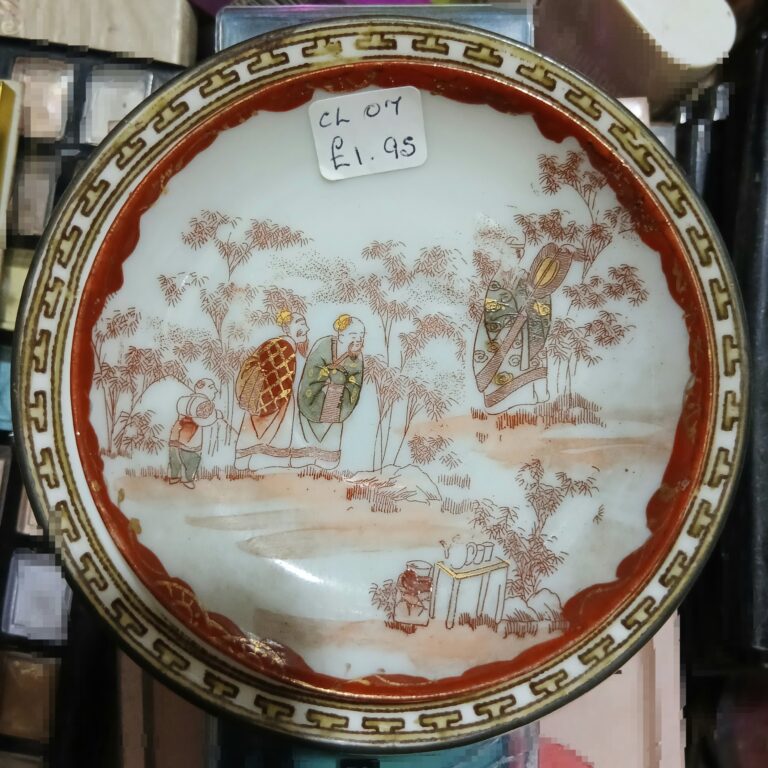
     Why collectors pay millions for fractured porcelain

    There is a low-frequency hum inside an antique shop, an acoustic hush from dust and centuries of quiet survival. It is often the wounded object that commands the most reverence amidst the polished mahogany and gleaming silver. A spiderweb hairline fractured across the belly of a Qing dynasty jar; a cobalt Blue Willow plate stitched together with iron staples; a tea bowl held in delicate cohesion by golden veins of lacquer. In a modern economy obsessed with pristine surfaces and factory precision, these fractured ceramics defy logic. They do retain value despite their damage. Often, they derive their singular majesty precisely because they broke. The art market regularly bears witness to this quiet paradox. At major auction houses in London and New York, porcelain pieces bearing dramatic structural fractures, historic restorations or visible fractures routinely sell for astronomical sums. When a cracked 18th-century Chinese brush washer or a chipped Song Dynasty bowl is launched, purists do not turn away. Instead, connoisseurs see a vessel that has successfully negotiated with time. A pristine artifact can feel like an untouched relic in a glass museum case. A cracked ceramic, however, carries the irreplaceable friction of human history. This romantic obsession with fracture finds its deepest philosophical roots in the Japanese tradition of Kintsugi: literally, golden joinery. In 15th-century Japan, legend holds that the shogun Ashikaga Yoshimasa sent a damaged Chinese tea bowl back to China for repair. It returned bound by heavy and unsightly metal staples. Japanese craftsmen was displeased and sought a more poetic solution. He bonded the porcelain shards with Japanese lacquer dusting it with powdered gold. Rather than disguising the trauma, Kintsugi illuminated the break. This technique transformed a domestic accident into a radiant architecture of resilience. When collectors haunt dim antique parlors today for cracked celadon or worn earthenware, they are participating in a quiet rebellion against the disposable. We live in an era of engineered obsolescence where a small fracture on a smartphone screen renders the entire device wasted. Antique ceramics represent the opposite: fired earth that withstands centuries, absorbing the touch of generations, bearing scars as badges of longevity. A crack proves that the vessel was used, held, washed, dropped, mourned and salvaged. It shifts the object from a passive decoration to an active survivor. Even the historical methods of repair have become prized antiques in their own right. Before gold lacquer was widely available, 18th and 19th-century itinerant tinkerers repaired heirloom china using metal staples. They were drilling tiny holes on either side of a split and hammering in delicate bronze or iron rivets. To a contemporary eye, these industrial-looking stitches might seem like visual vandalism. Yet, to collectors of stapled china, those iron rivets are exquisite evidence of human ingenuity and resourcefulness from an era when nothing precious was ever casually thrown away.   Ultimately, the enduring value of cracked porcelain in antique shops lies in what it reflects about our own human condition. Perfection is intimidating, fragile and ultimately unfeeling. Rupture, on the other hand, is universal. When a buyer pays for a cracked jar, they are purchasing a physical manifestation of survival. They acquire a tangible reminder that broken things can be mended, that wounds can be highlighted with beauty and that time does not diminish value, but rather confers it.

  • | |

    US unable to verify Israeli claims of Iranian plot…

    The United States has been unable to independently confirm several warnings from Israel alleging that Iran was planning to assassinate President Donald Trump, according to current and former US officials familiar with the intelligence. The warnings were reportedly shared with US intelligence agencies over the past year and, in some cases, communicated directly by Israeli officials to senior members of the White House. The alleged plots included plans to target Trump with a sniper or recruit an attacker to use a knife during a major public gathering. According to the officials, the warnings began emerging before the 12-day Israel-Iran war in June 2025 and became more frequent ahead of the US military campaign against Iran in February. One of the most detailed warnings reportedly came before the NATO summit in Ankara in July. Israeli officials informed the White House that Iran might attempt to target Trump while he was travelling aboard Air Force One, potentially using a shoulder-launched missile. However, US intelligence agencies were unable to independently corroborate several of the specific threats. A Turkish official also said that Turkey’s intelligence services found no evidence supporting the Israeli warning concerning a possible attack on Trump during his visit. Despite the lack of confirmation, US authorities took additional security precautions. Among the measures was an unusual deception operation during Trump’s Turkey trip, in which he was reportedly transferred from Air Force One to another aircraft for his return journey. The episode highlights the growing importance of Israeli intelligence in the Trump administration’s assessment of threats from Iran, while also revealing differences between American, Israeli and Turkish intelligence assessments. US intelligence agencies have long assessed that Iran has an interest in retaliating against Trump over the 2020 killing of Iranian military commander Qassem Soleimani. However, officials said the CIA has not been able to verify some of the specific assassination claims attributed to Iranian operatives. During the recent US military operations against Iran, some American intelligence assessments reportedly assigned low confidence to Israeli intelligence concerning Iranian threats, including alleged plans to assassinate Trump. The Israeli Embassy rejected the suggestion that Israel was using intelligence sharing to influence US policy toward Iran, arguing that intelligence exchanges were part of the countries’ security relationship. The White House and CIA declined to comment on the reports, while the US Secret Service said it continuously evaluates intelligence and other information to protect the president. The revelations come amid broader concerns over coordination within the US intelligence community. Former officials said cooperation between the CIA and the National Intelligence Council had declined, while staff reductions at the Office of the Director of National Intelligence had also contributed to fewer recent assessments concerning Iran. The conflicting intelligence assessments underline the challenges facing Washington as it balances threats from Tehran with intelligence supplied by its closest regional ally, Israel.

  • |

    Questions mount over funding as violence mars London Kashmir protest

    A protest held in central London in the name of solidarity with Kashmir has come under scrutiny following allegations over its funding and organisation, while reports of violence against a senior journalist have further fuelled controversy surrounding the demonstration. According to claims circulating among sections of the British Pakistani and Kashmiri community, around 50 coaches were arranged to transport participants from Bradford, Manchester and Birmingham to London. Some community members have alleged that the overall cost of the mobilisation exceeded £500,000 and have publicly questioned who financed the event, calling for greater transparency over its funding and logistics. Community sources further alleged that some families were offered a free day trip to London, including complimentary coach travel, to encourage participation in the demonstration. According to the sources, the offer attracted families who joined the trip. Allegations circulating on social media have also suggested that foreign elements including Indian agencies may have supported the protests through there frontmen’s Some members of the community further claimed that the number of British Pakistanis and Azad Kashmiris attending the protest was lower than expected, while participants from other communities appeared more visible. The demonstration was overshadowed by the alleged assault on senior Pakistani journalist Murtaza Ali Shah while he was covering the protest. Reports of the incident have drawn concern from journalists and media organisations, with calls for those responsible to be identified and held accountable. Witnesses also alleged that some protesters behaved aggressively towards members of the media, raising concerns about press freedom and the safety of journalists covering public demonstrations. Media observers said any intimidation or violence against journalists undermines democratic values and damages the credibility of a protest. The protest took place amid continuing demonstrations by sections of the Kashmiri diaspora over developments in Pakistan-administered Kashmir. While organisers described the event as a show of solidarity with Kashmir, the allegations over funding, crowd mobilisation and the reported violence have shifted attention to the conduct and organisation of the demonstration. The organisers have not publicly responded to the allegations regarding the event’s funding, logistics or the reported assault on the journalist. Community representatives have called for full transparency over the financing of the protest and urged all parties to ensure that future demonstrations remain peaceful and respectful of media freedom.Organisers have rejected claims of Indian funding by saying there members contributed for the arrangements.

  • | |

    Swat hosts flag rally in support of Pakistan army …

    A joint flag rally and patrol were held in Swat to demonstrate solidarity with the Pakistan Army and Khyber Pakhtunkhwa (KP) Police amid the prevailing security situation in the region. The event brought together security personnel and local residents in a show of unity aimed at reinforcing public confidence and promoting peace. According to official information, the rally featured participation from Pakistan Army personnel, KP Police officers, civilians, and children. Participants carried the national flag and expressed support for the country’s security forces while emphasizing the importance of cooperation between the public and law enforcement agencies. During the event, large crowds chanted patriotic slogans, including “Long Live Pakistan” and “Long Live Pakistan Army,” as the joint procession moved through key roads and public areas of Swat. The rally was accompanied by a coordinated patrol involving security vehicles and motorcycles, highlighting the continued presence of security forces across the district. The joint patrol was organized as part of ongoing efforts to strengthen security, reassure local communities, and enhance coordination between the Pakistan Army and the provincial police. Officials said such activities are intended to improve the public’s sense of safety while maintaining vigilance against potential security threats. Authorities stated that the initiative also aimed to send a clear message that the people of Swat stand united with the country’s security institutions against elements seeking to disrupt peace and stability. The visible participation of residents reflected community engagement in efforts to support law enforcement and contribute to a secure environment. Residents from different segments of society, including families and young people, took part in the event, underlining a shared commitment to peace and national unity. Organizers described the rally as a symbol of cooperation between citizens and security forces, stressing that maintaining peace requires collective responsibility and mutual trust. The flag rally comes as security agencies continue to monitor the situation in parts of Khyber Pakhtunkhwa and carry out measures aimed at ensuring public safety. Joint patrols and community outreach initiatives have become an important part of broader efforts to strengthen coordination between security institutions and local communities. Officials expressed confidence that continued collaboration between the Pakistan Army, KP Police, and the people of Swat would help preserve lasting peace and stability in the region. They emphasized that unity, vigilance, and public cooperation remain essential in addressing security challenges and safeguarding the progress made toward maintaining law and order.

Leave a Reply

Your email address will not be published. Required fields are marked *