pitb certification scheme
| |

PITB IT certification scheme crosses 20,000 applic…

LAHORE: The Punjab Information Technology Board (PITB) has crossed a major milestone in its Global IT Certifications Program, attracting more than 20,000 applications since the initiative was launched in September 2024. The achievement was highlighted during a progress review meeting chaired by PITB Chairman Faisal Yousaf, where senior officials assessed the program’s implementation and future direction.

The meeting was attended by Director General e-Governance Sajid Latif, Director of the Skills Development Wing Chaudhry Ahmed Islam, and other senior officials. Discussions focused on the pace of application processing, candidate and certification verification, as well as the reimbursement system designed to support successful participants.

Officials informed the meeting that the eligibility of nearly 11,000 applicants has already been verified through a dedicated online portal developed by PITB. Payment verification has been completed for approximately 1,350 candidates, while certification verification has been finalized for around 1,150 applicants, paving the way for reimbursement of certification costs.

According to the briefing, 662 candidates have so far received full reimbursement of their certification fees. The payments were transferred directly to their bank accounts after successful completion of internationally recognized IT certifications and the verification of their credentials.

The Global IT Certifications Program is aimed at equipping Punjab’s youth with internationally recognized digital qualifications, helping them strengthen their professional skills, improve employment prospects, and compete in the rapidly evolving global technology sector.

Speaking during the meeting, Chairman Faisal Yousaf said the strong response from aspiring professionals reflects the increasing demand for internationally recognized digital expertise. He noted that, in line with the evolving needs of the IT industry, PITB has expanded the initiative to include 125 globally recognized IT certifications, offering young Pakistanis broader opportunities to develop competitive careers in the international digital economy.

PITB has encouraged interested individuals to apply for the program through its official online portal, where details regarding eligibility, available certifications, and the registration process are available.

Similar Posts

  • | |

    Maryam Nawaz, Xinjiang leader discuss stronger Pun…

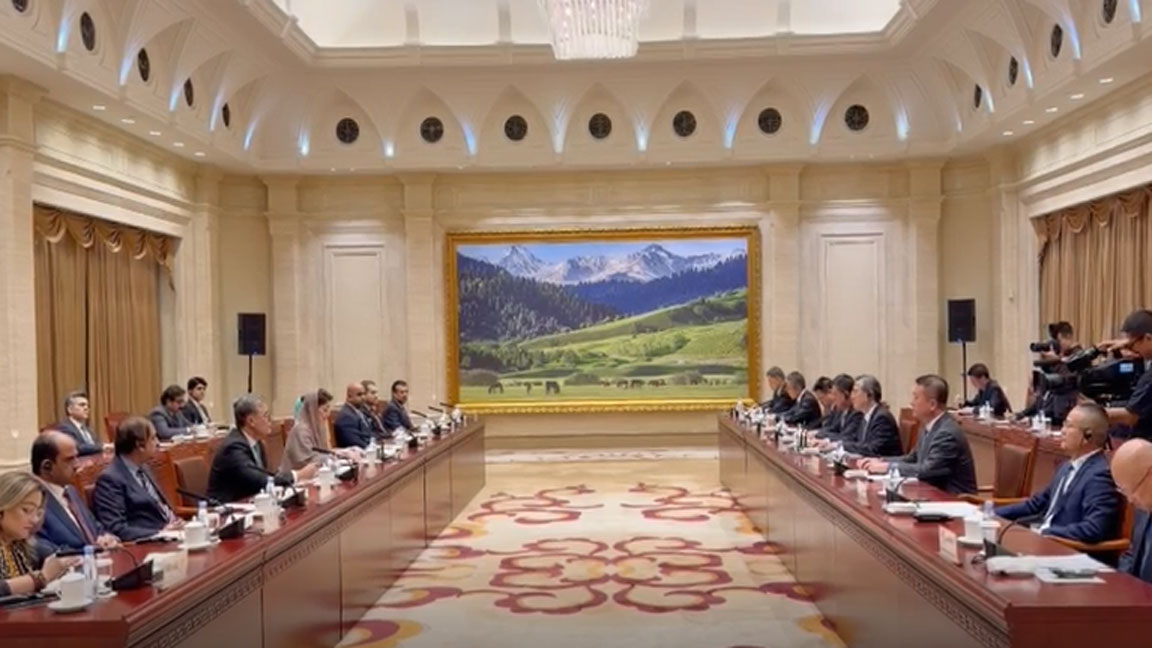
    LAHORE: Punjab Chief Minister Maryam Nawaz Sharif and Secretary of the Communist Party of China’s Xinjiang Uygur Autonomous Regional Committee He Zhongyou held a meeting in Urumqi and discussed ways to expand cooperation between Punjab and Xinjiang. The meeting focused on strengthening economic relations and developing greater collaboration in areas of mutual interest. During the meeting, Maryam Nawaz highlighted Punjab’s importance to Pakistan’s economy and agriculture. She said Punjab has the distinction of being the country’s “food basket” because of its major contribution to national food production. The chief minister said Punjab was keen to benefit from China’s experience, technology and expertise, particularly in sectors linked to agriculture and economic development. She proposed launching pilot projects in different parts of Punjab in cooperation with Chinese partners. According to the chief minister, such initiatives could help introduce modern practices and technologies while providing practical models that could later be expanded across the province. The discussions also covered opportunities for closer economic cooperation between Punjab and Xinjiang. Both sides expressed interest in strengthening institutional links and expanding collaboration in areas that can contribute to development and economic growth. Maryam Nawaz said cooperation with China could help Punjab improve productivity and make better use of modern technology. She also stressed the importance of developing partnerships that produce practical benefits for people and businesses. The meeting is part of Maryam Nawaz’s official visit to China, during which Punjab is seeking to strengthen ties with Chinese institutions and explore new areas of cooperation. Xinjiang’s experience in agriculture, infrastructure, water management and modernisation could provide opportunities for Punjab to develop joint projects and exchange expertise. The two sides also discussed the importance of maintaining regular engagement between Punjab and Xinjiang. Greater exchanges between officials, experts and business representatives could facilitate the transfer of knowledge and encourage new investment opportunities.

  • | |

    Kabaddi player’s wife dies in suspected suicide

    HARYANA: Muskan, the 23-year-old wife of international Indian kabaddi player Shailu Ballhara, was found dead at her residence in the Indian state of Haryana in what police believe to be a suspected suicide, according to Indian media reports. The incident reportedly took place on Friday afternoon. Family members informed the police after discovering her unconscious at the house. Law enforcement officials, along with a forensic team, reached the scene soon afterward and began collecting evidence. Police have launched an investigation to determine the circumstances surrounding the death. Officials said the exact cause behind the suspected suicide has not yet been established, and investigators are examining all possible aspects of the case. According to Muskan’s family, she married Shailu Ballhara in December 2023. The couple welcomed their son, Hardik, in November 2025. Relatives said the family had been living together following the birth of their child. Investigators are also reviewing Muskan’s recent social media activity. Indian media reported that a day before her death, she shared a video featuring a sad Punjabi song, which has become part of the ongoing investigation. However, police have not confirmed whether the post was linked to the incident. Officials said statements from family members and other individuals are being recorded, while forensic evidence collected from the residence is being examined. Authorities added that no conclusions will be drawn until the investigation is complete.

  • | | |

    Constitutional provisions fuel referendum debate

    Debate over the possibility of holding a national referendum has resurfaced in Pakistan, prompting discussions among political observers and constitutional experts about the legal framework governing such a move. Although the government has made no official announcement regarding a referendum, speculation in political circles has raised questions about when and how a nationwide vote can be conducted under the Constitution. Constitutional experts say Articles 48(6) and 48(7) of the Constitution empower the prime minister to propose a referendum on a matter of national importance. Under Article 48(6), the prime minister may refer such a proposal to a joint sitting of Parliament. If approved by the joint session, the matter can be presented to the public through a referendum in the form of a “Yes” or “No” question. Article 48(7) further provides that Parliament may legislate the procedure for conducting a referendum and determining its results. Legal experts note that, unlike a constitutional amendment, such legislation does not require a two-thirds majority and can be passed through a simple majority of members present, provided the quorum is complete. The renewed debate has also revived interest in the history of referendums in Pakistan. The concept first gained prominence during the political crisis that followed the March 7, 1977 general elections. Opposition parties, united under the Pakistan National Alliance (PNA), rejected the election results, alleging widespread rigging. They later boycotted provincial assembly elections and launched a nationwide protest movement demanding fresh elections, dissolution of assemblies and the resignation of then-prime minister Zulfikar Ali Bhutto. Despite mediation efforts by Saudi Arabia, negotiations between the government and the opposition failed, and the political deadlock culminated in the imposition of martial law by General Muhammad Zia-ul-Haq on July 5, 1977. Following these developments, constitutional provisions allowing referendums were introduced through the Seventh Constitutional Amendment. Pakistan’s first referendum was held on December 19, 1984, during General Zia-ul-Haq’s rule. While the public was asked to vote on the continuation of the Islamization process, a “Yes” vote effectively extended Zia’s presidency for another five years. Official results declared overwhelming support for the proposal, though opposition parties questioned both the process and the outcome. A second nationwide referendum was held in April 2002 under General Pervez Musharraf. The exercise enabled him to secure another five-year presidential term before the general elections later that year. After the 2002 elections, Musharraf was formally elected president by an electoral college comprising Parliament and the four provincial assemblies under the framework established through the Seventeenth Constitutional Amendment. Political analysts say recent discussions intensified after comments made during a media briefing by the Director General of Inter-Services Public Relations (ISPR), whose carefully worded responses to questions on constitutional matters drew public attention.

  • |

    Türkiye, Saudi Arabia and Pakistan to establish new defence cooperation mechanisms

    ANKARA: Türkiye, Saudi Arabia and Pakistan are set to establish new political and military coordination mechanisms following the signing of a landmark joint defence agreement, as the three countries move to strengthen strategic cooperation amid growing security concerns in the region. Türkiye’s Defence Ministry said on Thursday that the framework agreed by the three countries would bring senior political and military leadership into a structured mechanism aimed at enhancing coordination on defence and security matters. The three nations signed the Makkah Joint Defence Agreement on August 7, marking a significant development in their security relations. The agreement comes at a time of heightened tensions across the Middle East, with the escalation of regional hostilities raising security concerns among Gulf states and other countries in the region. Under the agreement, an armed attack against any one of the three countries would be treated as an attack against all members. The provision establishes a collective-defence commitment similar in principle to the collective security arrangement contained in Article 5 of the North Atlantic Treaty Organisation (NATO). High-level political and military coordination According to the Turkish Defence Ministry, the new mechanisms will involve the defence ministers, foreign ministers and military chiefs of Türkiye, Saudi Arabia and Pakistan. The arrangement is expected to provide the three countries with a regular platform for consultations on regional security developments, defence policy and potential threats. It could also facilitate closer coordination between their armed forces and government institutions. The agreement reflects the growing strategic importance of cooperation between the three Muslim-majority countries, particularly as regional security challenges continue to evolve. Joint military exercises planned The Turkish ministry also said the three countries were planning joint military exercises under the new defence framework. Such exercises could provide opportunities for their armed forces to improve interoperability, exchange operational experience and strengthen their ability to coordinate during potential security crises. Defence cooperation is also expected to extend beyond military exercises. The Turkish side said the agreement could pave the way for greater collaboration in the defence industry, including joint production, technology sharing and other forms of industrial cooperation. The expanded defence-industry partnership could allow the three countries to explore opportunities for developing and producing defence equipment together while sharing technical expertise and capabilities. Agreement follows rising regional tensions The pact was signed against the backdrop of heightened tensions in the Middle East, which have raised concerns over the security of Gulf countries and critical energy infrastructure. The escalation has also highlighted the importance of collective security arrangements and closer coordination among regional powers. For Pakistan, the agreement represents another step towards strengthening defence and strategic ties with Türkiye and Saudi Arabia. Islamabad has traditionally maintained close military and diplomatic relations with both countries. The agreement is therefore expected to broaden cooperation from traditional bilateral defence relations towards a more structured trilateral framework involving political consultations, military coordination and defence-industrial collaboration. Pakistan’s Deputy Prime Minister and Foreign Minister Ishaq Dar has also clarified the scope and intent of the Makkah agreement, stressing the nature of the arrangement and its broader security objectives. The three countries are now expected to work out the details of the new mechanisms, including the structure of ministerial consultations, military coordination and proposed joint exercises.

  • | |

    Another Reko Diq-Sized mining project in Pakistan,…

    ISLAMABAD: The United States has expressed strong confidence in Pakistan’s mineral sector, with a senior US Embassy official revealing that the Trump administration is prepared to support another mega mining project on the scale of  to invest in Pakistan despite security concerns, viewing the country’s vast mineral wealth as strategically important for future global industries. During a background briefing with journalists on Wednesday, the embassy official said Washington considers Pakistan a key partner in the global race for critical minerals that are essential for advanced technologies, clean energy, artificial intelligence, semiconductors and defence manufacturing. According to the official, the US government is encouraging American investors to explore Pakistan’s untapped mineral resources, ranging from large-scale copper and gold projects to smaller mining ventures worth only a few million dollars. US Prepared to Finance Another Mega Project The official said the US administration is ready to support another project comparable to the multibillion-dollar Reko Diq development if geological surveys and feasibility studies demonstrate strong commercial potential. He added that financing support could be extended through US institutions such as the Export-Import (Exim) Bank and the Development Finance Corporation, both of which are playing a growing role in securing global supply chains for critical minerals. The official noted that American companies are not only interested in major mining investments but are also examining opportunities to acquire, develop and expand smaller mining operations across Pakistan. Reko Diq Progress Continues Despite Delays Discussing the Reko Diq copper and gold project, the official acknowledged that work is progressing, although at a slower pace than initially anticipated. He explained that project costs are currently being reassessed, after which developers will return to financiers to finalize the remaining funding package. The first phase of the Reko Diq project is estimated to cost around $7.7 billion, while the US Exim Bank has already offered $1.25 billion in financing. However, the overall financial structure remains under discussion. The project has experienced delays due to rising construction costs and security concerns in Balochistan, prompting project stakeholders to revise cost estimates more than once. Earlier this year, Barrick Gold, which owns a 50 percent stake in the project, also reviewed development timelines because of increasing costs and security-related challenges. Major Economic Benefits Expected The embassy official said Reko Diq has the potential to transform Pakistan’s economy once it becomes fully operational. According to the estimates shared during the briefing, the project could generate nearly $2 billion in annual free cash flow. Of this amount, around $500 million would go directly to the Government of Balochistan, while another $500 million would benefit Pakistan’s state-owned enterprises. The official further stated that Pakistan’s mining sector currently contributes roughly 3 percent to the country’s economy, while Reko Diq alone could increase national GDP by approximately 0.5 percentage points, highlighting its significance for long-term economic growth. Critical Minerals Becoming Strategic Priority The US official emphasized that critical minerals have become a top strategic priority for Washington as demand continues to rise across technology, renewable energy and defence sectors. Pakistan possesses commercially attractive reserves of copper, antimony, tungsten and several other minerals considered essential for future industries. He said American companies believe Pakistan has enormous untapped potential, particularly as global demand for copper is expected to rise sharply over the coming decades. The official added that US firms are actively seeking long-term supply agreements for minerals extracted from Pakistani mines, while some investors are interested in purchasing and developing smaller mining assets. Investment Opportunities Across Pakistan Besides Balochistan, American investors are also exploring mineral opportunities in Khyber-Pakhtunkhwa, particularly for copper deposits, while rare earth mineral prospects in Gilgit-Baltistan have also attracted attention. The official said the United States is searching globally for around 60 critical minerals needed for emerging technologies, many of which are found in Pakistan. He noted that several companies have already begun exploration and extraction activities in different regions of the country. Security Remains the Biggest Challenge Despite strong investment interest, the official acknowledged that security remains one of the most significant obstacles facing mining projects in Pakistan. He said US companies fully understand the risks associated with operating in regions such as Balochistan and Khyber-Pakhtunkhwa but remain willing to invest if appropriate security arrangements are provided. The official stressed that the Pakistani government should continue strengthening security measures and facilitating investors to ensure long-term success of mining projects. He added that American companies are encouraged to partner with local firms, which possess valuable experience in navigating operational and security challenges in remote mining areas. US Calls for Transparent Investment Environment The embassy official also urged Pakistan to maintain a transparent, predictable and competitive investment climate to attract greater foreign investment into the mineral sector. He noted that Pakistan’s participation in the US Critical Minerals Initiative earlier this year reflects growing cooperation between the two countries in securing future mineral supply chains. According to the official, if exploration and investment continue at the current pace, Pakistan’s mining industry could emerge as one of the country’s strongest economic sectors over the next 10 to 20 years, creating employment, increasing exports and significantly boosting national revenues.

  • | |

    Ishaq Dar to visit UK from August 24-28

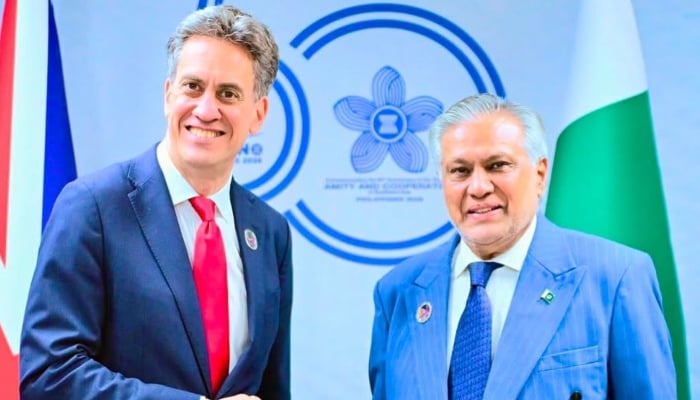
    Deputy Prime Minister and Foreign Minister Ishaq Dar will travel to the United Kingdom on an official visit from August 24 to 28, where he is scheduled to hold talks with senior British officials and meet members of the Pakistani community. According to the Foreign Office, Dar will meet UK Foreign Secretary Ed Miliband and FCDO Minister of State for Pakistan Stephen Doughty during his visit. He is also expected to hold discussions with other senior British government officials. A key focus of the visit will be the situation of Pakistani sailors held by Somali pirates. Dar is scheduled to meet the secretary-general of the International Maritime Organisation to discuss efforts to secure the release of the hostages. The MT Honour 25 oil tanker was hijacked near Somalia’s Puntland region on April 21. The vessel was carrying 17 crew members, including 10 Pakistani nationals. The prolonged captivity has raised concerns among the families of the crew, who have called for urgent efforts to secure their safe release. The Foreign Office has reaffirmed that the government remains committed to bringing the Pakistani nationals home safely. During his UK visit, Dar will also meet Commonwealth Secretary-General Shirley Ayorkor Botchwey. His schedule includes engagements with British parliamentarians and representatives of the British-Pakistani community. The visit comes as Pakistan and the UK continue to strengthen cooperation on security, migration and law enforcement. Earlier this year, the UK announced an additional £8 million in funding for joint efforts with Pakistan to tackle crime and illegal migration. The funding is intended to improve border and visa systems and strengthen law enforcement against human smuggling and trafficking networks. It will also support the return of people who do not have the legal right to remain in the UK and finance community-based programmes aimed at addressing factors contributing to irregular migration.

Leave a Reply

Your email address will not be published. Required fields are marked *