bushra ansari urges
| |

Bushra Ansari urges people to understand the respo…

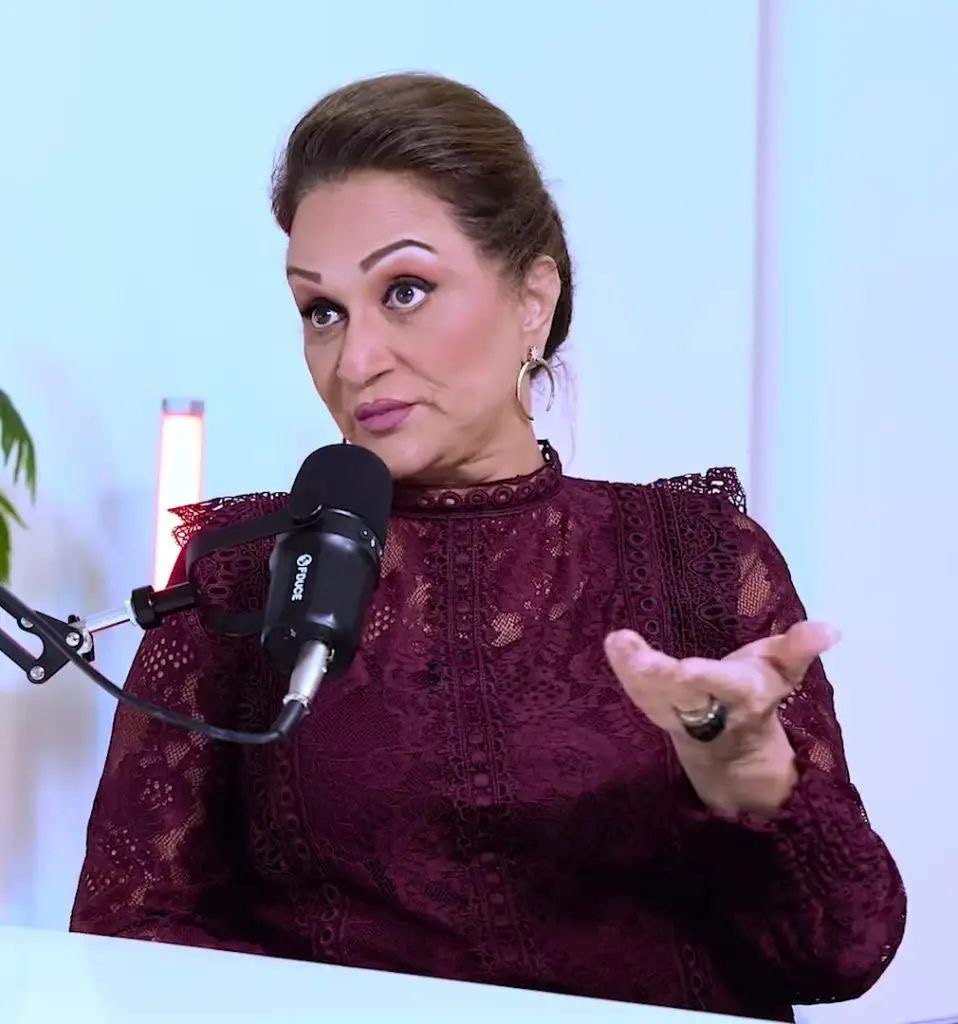
Veteran Pakistani actress Bushra Ansari has sparked discussion with her recent comments about multiple marriages in Islam, urging people to focus on the responsibility and fairness that come with such a decision.

While discussing the subject, Ansari emphasized that people often highlight the permission for a man to have up to four wives but pay less attention to the requirement of treating those wives fairly. Her remarks have renewed conversation about how Islamic teachings on marriage are understood and practiced in society.

The Quran permits a Muslim man to marry up to four women, but it places an important condition on that permission. If a man fears that he will not be able to deal justly with multiple wives, the Quran directs him to marry only one. (IslamQA⁠)

This requirement of justice is at the heart of the discussion surrounding polygamy. It means that multiple marriage cannot simply be viewed as a privilege without responsibilities. A husband is expected to fulfill the rights of each wife and treat them fairly in matters within his control.

Ansari’s comments appear to highlight this often-overlooked aspect. In societies where discussions about multiple marriages can become emotionally charged, her message encourages people to consider the consequences for everyone involved rather than focusing only on the number of marriages allowed.

Islamic scholarship also emphasizes that justice between wives is a serious obligation. Financial responsibilities, living arrangements, time and other practical rights are among the areas in which fairness is expected. If a person believes he cannot fulfill these responsibilities, choosing one marriage is the safer course. (IslamQA⁠)

The subject is particularly sensitive because marriage involves more than a legal relationship. It affects spouses, children and extended families. A decision that is made without careful consideration can create emotional and financial difficulties for everyone involved.

Pakistan’s legal framework also places regulations around multiple marriages. Under the Muslim Family Laws Ordinance, a man seeking another marriage while already married is subject to specific legal requirements, including approaching an Arbitration Council for permission. Pakistani courts have also upheld the importance of these legal procedures. (Pakistan Lawyer⁠)

Ansari’s remarks therefore arrive amid an ongoing conversation about the difference between religious permission and personal responsibility. The fact that something is permitted under certain conditions does not mean those conditions can simply be ignored.

Her comments have encouraged audiences to look at the broader principles behind marriage: fairness, responsibility, respect and protection of rights. For couples and families, these principles can be just as important as the legal question of whether another marriage is permitted.

Ultimately, the discussion surrounding Bushra Ansari’s statement is less about simply counting marriages and more about understanding the responsibilities that accompany them. Her message serves as a reminder that when people discuss religious rights, they should also acknowledge the duties and accountability that come with those rights.

Similar Posts

  • | |

    Pakistan’s federal tax authority suspends 211 se…

      ISLAMABAD: Pakistan’s Federal Board of Revenue (FBR) has suspended 211 senior officials and removed another 32 officers from key positions over integrity concerns during the past two years, according to official figures. The move is part of a comprehensive accountability campaign aimed at eliminating corruption, improving transparency, and restoring public confidence in the country’s tax administration. The disciplinary actions, covering the period from August 2024 to mid-2026, represent one of the largest internal crackdowns in the history of the FBR. The institution, responsible for collecting taxes and customs duties, has often faced criticism over allegations of corruption, misuse of authority, and lack of accountability. According to the official data, 211 officers belonging to grades 16 to 21 of the Inland Revenue Service (IRS), the FBR’s domestic tax collection wing, were suspended during the two-year period. Officials noted that previous annual averages for suspensions stood at around 33 cases, highlighting the significant increase in disciplinary measures under the current leadership. The number of major penalties imposed on officers also showed a steady rise. Cases increased from 38 during the 2023-24 fiscal year to 49 in 2024-25, before reaching 75 in 2025-26. Authorities say the increase reflects stricter monitoring and a stronger commitment to enforcing accountability rather than a rise in misconduct alone. In addition to suspensions, the FBR identified 32 officers as being of “questionable integrity” by April 2026. These included 14 officials from the Inland Revenue Service and 18 from Pakistan Customs. Most of the officers held senior positions in grade 20 or above and were removed from operational assignments to ensure greater transparency in tax administration. The accountability drive has coincided with investigations by the Federal Investigation Agency (FIA), which has arrested several senior tax and customs officials in separate corruption-related cases. These actions have reinforced the government’s broader efforts to strengthen oversight and address misconduct within public institutions. Official figures indicate a significant improvement in integrity levels among officers serving in sensitive positions. In the Inland Revenue Service, the proportion of officers considered to have low integrity dropped from 74 percent in July 2023 to just 11 percent by June 2026. Similarly, in Pakistan Customs, the figure declined from 71 percent to 9 percent over the same period. The FBR has also tightened its promotion process by introducing more rigorous screening measures. The number of officials placed on a performance watch list increased from around 2 percent in 2023 to nearly 40 percent by 2025, reflecting greater emphasis on ethical conduct, financial transparency, and professional performance. Officials say these reforms are part of a long-term institutional strategy rather than isolated disciplinary actions. Regular peer-review mechanisms have achieved completion rates of more than 97 percent, demonstrating improved compliance with internal evaluation procedures. As part of its modernization efforts, the FBR has also introduced a faceless income tax assessment system designed to reduce direct interaction between taxpayers and tax officials, thereby minimizing opportunities for corruption. Additionally, the board has implemented an integrity-based rating system that ranks officers from “A” to “D” based on their ethical standards and professional conduct. By June 2026, officers rated “A” or “B” occupied nearly 90 percent of critical positions in both Inland Revenue and Customs departments. Officials believe these reforms will help improve tax collection, strengthen governance, enhance investor confidence, and support Pakistan’s ongoing fiscal reform agenda.

  • | |

    Gohar Rasheed criticises Aurat March posters

    Actor Gohar Rasheed, known for his versatility and outspoken nature, has sparked a fresh round of public debate after sharing his views on Aurat March during a recent podcast appearance, taking particular issue with what he described as vulgar posters that appear at the annual women’s rights march. Rasheed drew a comparison between two things he sees as similarly problematic. He said that women should not be objectified, and in that spirit, item numbers in films should not exist because they reduce women to objects. He then extended that same logic to certain placards that appear at Aurat March, arguing that some posters cross a line into vulgarity and do not represent an appropriate way to communicate ideas or demands. He said the same points could be made in a more sophisticated manner without resorting to language or imagery that he found objectionable. The remarks touched on one of the most consistently contested topics in Pakistani public life. Aurat March, held annually on March 8 in major cities across Pakistan to mark International Women’s Day, has been a flashpoint for debate since its earliest editions. Supporters argue it is a necessary and long-overdue platform for women to voice demands around safety, equality and rights. Critics, including Rasheed, have frequently taken issue with specific posters that appear at the marches, arguing that certain slogans or images do not reflect the broader values of Pakistani society. The response online was immediate and divided, as it tends to be whenever the march becomes the subject of public commentary. Some users agreed with Rasheed. One person wrote: “He is right. Now Aurat Marchers will go against him,” anticipating the backlash while expressing support for the sentiment. Others pushed back sharply. One commenter wrote: “I wish he was this offended by violence against women and child rape,” arguing that the energy directed at posters would be better channelled toward the far graver issues women face daily. Another said: “Three men mansplaining what women should do or not do,” pointing to the irony of male voices deciding what is and is not an appropriate mode of feminist expression. The division in the comments reflects the genuine complexity of the debate. For those who support Aurat March unconditionally, the criticism of posters is a distraction from the march’s core purpose and represents the kind of policing of women’s expression that the march itself is pushing back against. For those who share Rasheed’s view, the concern is that certain forms of communication within the march alienate potential allies and hand critics easy ammunition to dismiss the broader cause. What is clear from the reaction is that this is a conversation Pakistan has not finished having, and that every public voice that enters it, whether from the entertainment industry or elsewhere, adds another layer to a debate that touches on deeply held values about gender, expression and what it means to advocate for change.

  • | |

    Qudsia Ali, Abbas Ashraf on unhealthy gender dynamics

    Pakistani dramas have long been a mirror to the society they come from, and Aik Mohabbat Aur is doing exactly that. The ongoing drama, in which Qudsia Ali plays Maham and Abbas Ashraf Awan plays Faris, explores the painful reality of marriages where women find themselves trapped with narcissistic partners. In a candid conversation with Fuchsia Magazine, the two actors stepped out of their fictional roles and spoke plainly about the dynamics they believe are damaging real relationships in Pakistan today. Abbas Ashraf was direct about where he believes the problem begins, and it is not with men themselves but with how they are raised. He said the narcissistic complex in men is a product of parenting, specifically the way sons are conditioned from childhood to feel superior to everyone around them. Parents, he argued, tell their sons they are the inheritors, the ones who matter, the ones who carry the family forward, while daughters are quietly assigned a lesser place. That imbalance, repeated across generations, plants the seeds of the entitlement and control that later destroys marriages. His prescription was as straightforward as his diagnosis. “Make both your sons and daughters feel equal if you want to stop your sons from becoming negative narcissists,” he said. It is a simple idea that carries enormous weight precisely because of how rarely it is practised. Qudsia Ali brought a different but equally sharp perspective to the same conversation, turning her focus toward the women who stay in difficult marriages long past the point of reason. Her explanation was rooted not in weakness but in a specific emotional wound. She said that many women are deprived of parental love from the very beginning of their lives. When they finally encounter even a fragment of affection from a partner, however temporary or conditional it may be, they hold on to it with everything they have because they have never known anything different. “Women are deprived of parental love and when they get even a glimpse of love, they lie down and take everything,” she said. “They take even a temporary love as they are extremely insecure.” The image is striking and uncomfortably accurate for anyone who has watched a woman accept treatment that from the outside looks impossible to justify. Qudsia did not offer this observation from a distance. She acknowledged that she herself had carried insecurities of her own, and that she had done the work to understand and overcome them. It was a moment of personal honesty that gave her words additional weight. Together, their observations form a connected picture of how the same system of unequal parenting produces both the men who expect everything and the women who accept anything. The drama they are appearing in explores exactly this territory on screen. But in this conversation, they chose to name it plainly off screen too, and that directness is what has made their remarks resonate beyond the usual boundaries of a promotional interview.

  • |

    Rashid Latif urges PCB to shield Babar from English media

    Former Pakistan captain Rashid Latif has urged the Pakistan Cricket Board (PCB) to reduce Babar Azam’s media commitments during the upcoming Test tour of England, warning that the Pakistan skipper could face intense scrutiny from the English press. Pakistan have arrived in England for a three-match Test series, with Babar returning to the leadership role in red-ball cricket. The series begins at Headingley in Leeds on August 19 and will continue at Lord’s before concluding at Edgbaston in September. Speaking on a television programme, Latif described an England tour as a challenging assignment and suggested that the PCB should carefully manage Babar’s interactions with the local media. According to the former wicketkeeper-batter, the English press can generate considerable attention around visiting teams, potentially creating distractions away from the cricket. “An England tour is a difficult assignment,” Latif said, adding that the PCB should consider keeping Babar away from frequent media appearances. His suggestion is not to isolate the captain completely, but rather to share the responsibility of representing the team with other experienced players. Latif specifically recommended Shan Masood, who previously led Pakistan in Test cricket and has considerable experience of playing in England. He believes Masood is well equipped to handle difficult questions and media pressure. The former captain also identified Imam-ul-Haq and Mohammad Abbas as players who could take on media duties during the tour. Babar was reappointed Pakistan’s Test captain in July, replacing Shan Masood after his stint in charge. The PCB confirmed Babar as captain for both the West Indies and England Test tours. Pakistan’s immediate challenge will be to carry the momentum from their recent Test victory over the West Indies, where they secured an eight-wicket win in Port of Spain to level the two-match series 1-1. The England assignment will test Babar both as a batter and captain. With the spotlight likely to remain firmly on him, Latif’s advice raises an interesting question: could fewer media commitments help Babar focus more sharply on Pakistan’s battle in English conditions? The first Test will be played in Leeds from August 19–23, followed by Lord’s from August 27–31 and Birmingham from September 9–13. Pakistan squad for England Tests Babar Azam (captain), Aamir Jamal, Abdullah Shafique, Ali Usman, Azan Awais, Imam-ul-Haq, Khurram Shahzad, Mohammad Abbas, Mohammad Ali, Mohammad Rizwan, Muhammad Awais Zafar, Muhammad Ghazi Ghori, Sajid Khan, Salman Ali Agha, Saud Shakeel, Shan Masood and Ubaid Shah.

  • | |

    Atif Aslam says he rediscovered himself through new album

    Pakistani music icon Atif Aslam has opened up about the personal journey behind his upcoming studio album Subah Aye Na, revealing that years of touring and commercial commitments left him disconnected from his artistic identity. Ahead of the album’s release, the singer shared that he had to “go back to zero” to rediscover himself as an artist. Speaking in recent interviews with Virgin Radio Dubai and Khaleej Times, Aslam reflected on the creative process behind Subah Aye Na, his first studio album in 18 years. The singer described the project as one of the most personal milestones of his career. “I forgot who I was, so I went back to zero and told myself that people had made me a star, by the grace of God, but now is the time to become an artist,” Aslam said. The singer explained that after spending more than two decades performing around the world, he realised he had been creating music mainly for audiences, concerts and record labels rather than for himself. “I have been doing it for the people, for my listeners, for music companies,” he said. “I thought of doing something for myself. And I found myself through this album.” Reflecting on the past 25 years of his career, Aslam admitted that his busy schedule had gradually distanced him from the creative passion that first inspired him to pursue music. “I had somehow lost touch with myself while staying busy with projects, concerts and other things, though that too is a blessing I acknowledge. But it was about time to look within and do what my heart had been yearning for,” he shared. Unlike his previous work, Aslam said he refused to rush the album’s production and instead allowed the music to develop naturally. “I did not want to be driven by timelines. I wanted it to come straight from the soul,” he explained. The award-winning singer also confessed that he had planned to release another album years ago but never completed it. “I was working on the album, but I couldn’t compile it earlier. I guess you could say, as candidly as it gets, that I was lazy,” he admitted with a smile. “But you eventually have to decide when you will perform and when you will make your own music. You have to do both.” Looking ahead, Aslam revealed that he hopes to maintain a more consistent release schedule and aims to put out a new album every year. During the interviews, the Aadat singer also shared that cricket—not music—was his first dream. He revealed that he wanted to become a fast bowler and was even selected for an under-19 cricket team before his parents encouraged him to focus on academics. “I wanted to be a fast bowler. I got selected for the under-19 cricket team, but my parents wanted me to study,” he recalled. Aslam said he only realised his vocal potential after his father’s transfer to another city. “When I hit that high note, I got scared. That’s when I realised something could come of it,” he said. Explaining the difference between his albums and film songs, Aslam noted that his studio records are deeply personal because he composes them himself. “I have composed all of my albums myself, but film songs are created with music producers and directors. My albums reflect what I have been through, the people I have met, what has inspired me and how it has shaped me,” he said. The singer also expressed gratitude to his Indian fans, recalling how his music first reached audiences across the border. “I remember when my first album came out, people would burn CDs and take them to India. Now we’re back to those days again,” he said, while thanking listeners who continue to support his music despite ongoing restrictions. Subah Aye Na, featuring eight tracks, is scheduled for release on July 31, marking Aslam’s long-awaited return to the studio album format after nearly two decades.

  • | |

    Public projects are people’s right, not a gift: …

    ISLAMABAD, July 26: Pakistan Peoples Party (PPP) Chairman Bilawal Bhutto Zardari has said that facilities and development projects built for the public should not be described as gifts. He said these projects are the people’s right. In a video statement, Bilawal said people were being told about promises involving buses, roads and airports. He welcomed every project aimed at improving public facilities. He said he would welcome every new bus service. He would also welcome every road, hospital and airport built for the people. However, Bilawal stressed that such facilities should not be presented as gifts to the public. He said the people have a right to better transport, healthcare, roads and other basic services. The PPP chairman said his party had also taken practical steps instead of making only promises. He claimed that around 3,000 new employment opportunities had been created through PPP initiatives. Bilawal also spoke about Mirpur Airport. He said he had personally worked to secure funds for the airport in the previous budget. He said the allocation was made during the budget process to support the airport project. He presented the initiative as part of efforts to improve facilities for the people of the region. Bilawal also criticised his political opponents while discussing development work in Azad Jammu and Kashmir. He said it appeared that Pakistan Muslim League-Nawaz leaders Nawaz Sharif and Maryam Nawaz were standing with their minister. The PPP chairman also referred to a stadium where his political opponents had recently addressed a gathering. He said the stadium was constructed during a previous PPP government. Bilawal said his focus was not limited to development projects. He said he wanted the people of Kashmir to receive their fundamental political and economic rights. He specifically mentioned the right to governance, ownership and employment. According to Bilawal, providing these rights to the people would be more important than announcing development projects as gifts. He said people should have ownership over the resources and development of their region. They should also have access to employment opportunities. Bilawal maintained that governments must fulfil their responsibilities towards citizens. Public infrastructure, he said, should be viewed as an entitlement. He added that roads, hospitals, transport services and airports are built using public resources. Therefore, they should not be used as political gifts.

Leave a Reply

Your email address will not be published. Required fields are marked *