mohsin naqvi calls
|

Mohsin Naqvi calls for autonomous, modern Interior…

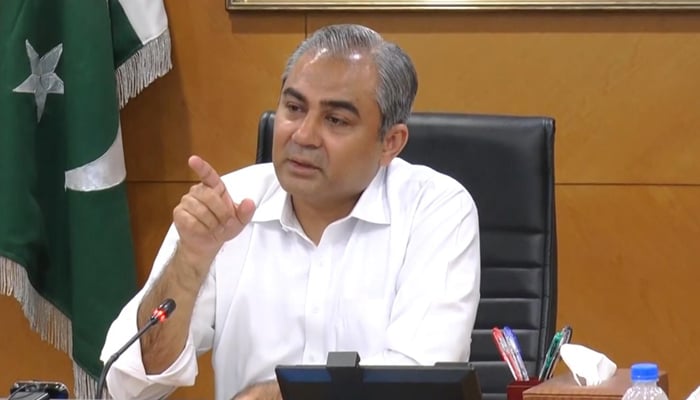
Federal Interior Minister Mohsin Naqvi has directed the Ministry of Interior’s affiliated institutions to become more autonomous, empowered and capable of making decisions independently rather than referring every matter to the ministry.

He made the remarks while chairing a meeting of heads of all subordinate departments and institutions of the Ministry of Interior. The meeting reviewed the performance of various institutions, ongoing reforms and measures to improve coordination and communication among them.

Naqvi stressed that institutions should take timely decisions within their respective mandates. He also instructed officials to immediately propose necessary legal amendments and administrative reforms wherever existing laws or procedures create obstacles to effective functioning.

The interior minister said the Ministry of Interior deals with matters that are different and more sensitive than those handled by many other ministries. He assured participants that the government would provide full support to newly established institutions, including the Land Port Authority, and ensure that all departments receive the resources they need.

He called for stronger cooperation among the ministry’s institutions and directed their heads to adopt comprehensive measures to strengthen data protection and cybersecurity. He said modernising the institutions and bringing them in line with contemporary requirements remained a key priority.

Naqvi also asked the heads of all affiliated institutions to submit comprehensive two-year transformation plans for their respective organisations. He said the government aims to transform every institution under the Ministry of Interior along modern lines and improve its overall efficiency.

“The goal is to make every institution under the Ministry of Interior exemplary and public-friendly,” Naqvi said, stressing the need to set clear targets and ensure their timely achievement to provide citizens with better facilities and quality services.

The minister also highlighted the performance of the ministry’s institutions during the Hajj operation, noting that the absence of any reported drug-smuggling case during the operation reflected improved performance and stronger enforcement measures.

Minister of State for Interior Talal Chaudhry also addressed the meeting and said a culture of poor performance had previously existed in federal institutions. He said the government had taken steps to change that mindset and was now focusing on target-based, result-oriented and performance-driven work.

Chaudhry stressed that all institutions must focus on measurable outcomes, improve efficiency and work collectively to deliver better services to the public.

Similar Posts

  • | | |

    AJK election first phase concludes, vote counting …

    Polling for the first phase of the Azad Jammu and Kashmir (AJK) Legislative Assembly elections concluded on Monday, with vote counting now underway across 13 constituencies in Mirpur Division. The first phase covered three districts — Mirpur, Kotli and Bhimber. Polling was initially scheduled to end at 5pm but was extended by one hour. Voting continued until 6pm to provide voters with additional time to cast their ballots. More than 1.4 million registered voters were eligible to participate in the first phase. The Election Commission had established 2,454 polling stations across the three districts. Of these, 597 polling stations were set up across four constituencies in Mirpur district. Kotli had 1,107 polling stations across six constituencies, while 608 polling stations were established in three constituencies of Bhimber. A total of 296 candidates, including nominees from the Pakistan Peoples Party (PPP), Pakistan Muslim League-Nawaz (PML-N), Istehkam-e-Pakistan Party and independent candidates, contested the 13 seats. Polling disrupted at some stations Although polling remained largely peaceful, some polling stations reported disruptions. In Kotli’s Aghaar Colony, voting continued at Polling Station 38. However, polling could not begin at Stations 36 and 37 because voters did not arrive. PPP AJK Election Cell in-charge Sardar Abdul Shakoor claimed that disturbances occurred at polling stations 119, 120 and 121 in LA-5 Barnala. He said polling was affected for some time. According to Shakoor, voting resumed after security forces reached the area. However, he said the polling process remained slow. The PPP also established a central election monitoring cell in Islamabad. Senior party leaders, including Sherry Rehman, Nadeem Afzal Chan, Shazia Marri, Sharjeel Memon and Saeed Ghani, monitored developments and remained in contact with election officials, district administrations and party candidates. Former National Assembly speaker Raja Pervez Ashraf expressed concern over alleged irregularities at different polling stations. He called for additional security personnel at sensitive locations, including Gulpur, Thurochi and Muhajir Camp. He urged the Election Commission to immediately and impartially investigate all complaints and ensure free, fair and transparent elections. Political leaders urge voters to participate PML-N candidate Chaudhry Tariq Farooq cast his vote at Polling Station 161 in Bhimber’s LA-7 constituency. Speaking after voting, Farooq said voter turnout was expected to be higher in rural areas than in cities. He also expressed confidence in the security and election arrangements in Bhimber. PPP Chairman Bilawal Bhutto Zardari, accompanied by his sister Aseefa Bhutto Zardari, appealed to voters in Mirpur to participate in the elections. In a video message, Bilawal urged people to leave their homes and exercise their right to vote if they wanted Kashmir’s future to be decided by its people. He also asked voters to support PPP candidates. PPP Karachi Division President Saeed Ghani described the election as a contest between the genuine issues of Kashmiris and what he called false promises. Ghani said Kashmiris needed political rights, ownership rights and employment opportunities. He criticised the focus on providing a limited number of buses, saying development should address wider public needs. PPP leader Nadeem Afzal Chan also raised concerns about alleged federal interference and the use of government resources during the elections. He demanded that the polls remain free, fair and transparent. He also called on the federal government to avoid any involvement that could influence the electoral process. PPP spokesperson Shazia Marri said the people of Kashmir would deliver their verdict through their votes. She said the party’s election symbol, the arrow, represented hope for the people of Mirpur. Police praise peaceful polling AJK police said the first phase of polling remained peaceful across Mirpur Division. A spokesperson for the AJK police chief said voters had rejected calls for unrest and instead chose to exercise their democratic right. Voters began arriving at polling stations soon after voting opened at 8am. AJK Inspector General of Police Liaquat Ali Malik thanked residents for cooperating with law enforcement agencies and helping maintain peace during the election. He warned that no individual, including political workers, would be allowed to take the law into their own hands. Mirpur Commissioner Raja Tahir Mumtaz and DIG Kamran Ali also visited Ward 16/17 in LA-3 to review the polling arrangements. The commissioner said polling had remained peaceful across Mirpur, Kotli and Bhimber. He urged voters to come out without fear and assured them that the administration had made arrangements for a secure environment. Security arrangements strengthened Authorities made extensive security arrangements for the elections. AJK Chief Election Commissioner Justice (retd) Ghulam Mustafa Mughal said legal action would be taken against anyone attempting to disrupt the voting process. AJK Chief Secretary Khushal Khan said state institutions were fully prepared to maintain peace during the elections. He said the people had rejected attempts to create disorder and demonstrated confidence in the democratic process.

  • | |

    Monsoon rains kill 11, injure 25 across Pakistan

    At least 11 people have died and 25 others have been injured in rain-related incidents across Pakistan during the past 24 hours. The latest casualties have pushed the nationwide monsoon death toll to 97 since June 26. The National Disaster Management Authority (NDMA) said 297 people have been injured during the same period. Punjab recorded the highest number of casualties in the latest 24-hour period. Seven people were killed and 20 others were injured. Sindh reported two deaths and two injuries. One person died and three others were injured in Khyber-Pakhtunkhwa. Another death was reported in Gilgit-Baltistan. House collapses were the main cause of deaths. The NDMA said they accounted for more than half of the fatalities during the latest reporting period. Drowning and lightning strikes were also among the major causes. The continuing rains have damaged homes and infrastructure in several areas. The NDMA said 22 houses were damaged during the past 24 hours. Seventeen suffered partial damage, while five were completely destroyed. Eight livestock were also lost during the latest spell. Since June 26, a total of 447 houses have been damaged across the country. Of these, 338 were partially damaged and 109 were completely destroyed. The number of livestock killed has reached 269. Heavy rain and landslides have also affected roads in Khyber-Pakhtunkhwa and Gilgit-Baltistan. Around 0.9 kilometres of roads were damaged during the latest period. Traffic has been disrupted at several locations. Authorities are working to restore affected routes. The Pakistan Meteorological Department has forecast more rain, strong winds and thunderstorms in several parts of the country during the next 24 hours. The department has warned of possible flash floods in hill torrents in Dera Ghazi Khan and northeastern Balochistan. Urban flooding is also possible in parts of southeastern Sindh. Rain and thunderstorms are expected in the upper catchments of major rivers. Islamabad, Kashmir and Gilgit-Baltistan may also receive showers. Parts of Khyber-Pakhtunkhwa, Punjab, Sindh and Balochistan are also likely to experience unsettled weather. The Met Office said flood-generating rainfall is not expected until July 28. However, another monsoon spell could begin from July 29. The expected system may affect upper river catchments, Islamabad, upper Punjab, Khyber-Pakhtunkhwa, Kashmir and Gilgit-Baltistan. Authorities have continued relief and rescue work in affected areas. The NDMA said 386 relief items were distributed during the past 24 hours. Rescue teams also carried out five operations. Eight people were rescued. Since the beginning of the monsoon season, authorities have conducted 130 rescue operations. A total of 3,841 people have been rescued across Pakistan. Karachi may receive more rain Karachi is expected to remain mostly cloudy, hot and humid over the next two days. The Met Office has forecast light rain and drizzle at isolated locations. Strong winds may also occur in some areas. The city is expected to remain partly cloudy and humid on Monday and Tuesday. Occasional drizzle is also possible. A low-pressure system over southwest Rajasthan and nearby areas is currently affecting weather conditions. The system is expected to weaken by Monday. However, strong monsoon currents from the Arabian Sea continue to move towards southern and central Pakistan. These conditions may keep the weather unsettled. Several districts of Sindh are expected to receive thunderstorms and rain. Tharparkar, Umerkot, Mirpurkhas, Badin, Sanghar and Matiari may receive moderate rainfall. Heavy rain is also possible at isolated locations. Ghotki, Kashmore, Jacobabad, Shikarpur, Sukkur, Larkana and Khairpur are also likely to receive rain. Naushahro Feroze, Tando Muhammad Khan, Tando Allahyar, Jamshoro, Shaheed Benazirabad and Hyderabad may also experience showers, strong winds and thunderstorms. The Met Office has warned that lightning and strong winds could damage weak buildings and other vulnerable structures. Heavy rain may also cause urban flooding in low-lying and vulnerable areas. Residents have been advised to remain alert. People in vulnerable locations have been urged to follow official weather updates and take necessary precautions during thunderstorms. Karachi received its first major monsoon spell of the season on Friday. Rain was recorded across several parts of the city. The rainfall began in areas including Gulshan-e-Maymar, Surjani Town, Ahsanabad and Manghopir. It later spread to several other parts of the city. Gulshan-e-Iqbal, Gulistan-e-Johar, Nazimabad, Jamshed Road and DHA also received rain. Several commercial and central areas were also affected. The rainfall brought relief from the heat and humidity. However, authorities remain concerned about water accumulation if another heavy spell hits the city. Sindh Chief Minister Murad Ali Shah had placed the province on high alert ahead of the forecast. He directed local government bodies, the Water Board and district administrations to remain operational around the clock

  • | |

    Gold prices fall in global and Pakistan markets as…

    In the international bullion market, the price of gold fell by $10 per ounce, bringing it down to $4,040 per ounce. The decline in global prices was mirrored in Pakistan’s local bullion market, where the price of 24-karat gold dropped by Rs. 1,000 per tola, settling at Rs. 426,436. Similarly, the price of 10 grams of 24-karat gold in the domestic market decreased by Rs. 857, reaching Rs. 365,600. The latest adjustment follows fluctuations in global bullion markets, where investor sentiment and international economic developments continue to influence precious metal prices. While gold registered a decline, silver prices moved in the opposite direction. In the international market, silver gained 68 cents per ounce, pushing its price to $58.12 per ounce. The increase in global silver prices was also reflected in Pakistan’s local market. The price of silver per tola rose by Rs. 68, reaching Rs. 6,291, while the price of 10 grams of silver increased by Rs. 58 to Rs. 5,393. Market analysts say fluctuations in precious metal prices are primarily driven by movements in international bullion markets, changes in investor demand, currency trends, and expectations regarding global economic conditions. Gold often experiences price volatility as investors respond to inflation data, interest rate expectations, and geopolitical developments, while silver prices are influenced by both investment demand and industrial consumption. Jewellers and bullion traders in Pakistan closely monitor international price movements, as domestic gold and silver rates are largely determined by global market trends along with the exchange rate of the Pakistani rupee against the US dollar. The latest decline in gold prices may provide some relief for buyers planning jewellery purchases or investment in physical gold. However, traders caution that bullion prices remain highly volatile, and future movements will depend on developments in the global economy and financial markets. With gold easing and silver continuing to strengthen, investors are expected to keep a close watch on international market trends before making further investment decisions in precious metals.

  • | |

    Japan’s 7.1 quake injures 50, cuts power to 40,0…

    A powerful 7.1-magnitude earthquake jolted Japan’s southern Kumamoto prefecture on Tuesday, leaving at least 50 people injured, disrupting transport and cutting electricity to around 40,000 homes as authorities warned residents to remain alert for aftershocks. The earthquake struck Kyushu, Japan’s southwestern main island, at a depth of about 10 kilometres, according to the Japan Meteorological Agency (JMA). The tremor reached the highest level of 7 on Japan’s seismic intensity scale in parts of Kumamoto, underlining the strength of the shaking. The powerful tremor damaged roads, bridges and buildings, while transport services across the affected region were thrown into disruption. Rail services, including high-speed trains, were suspended, while Kumamoto airport also temporarily closed its runway. The earthquake also triggered an emergency response across Kyushu. Authorities urged more than 150,000 residents to evacuate as officials assessed damage and monitored the situation. Reports said a fire and explosion occurred at a shopping mall, while a goods train was derailed during the chaos. For residents, the immediate concern was not only the first powerful jolt but the possibility of more shaking. Japanese authorities issued warnings over potential aftershocks and landslides, urging people in affected areas to remain cautious and follow official instructions. A tsunami warning was also issued after the earthquake, with authorities warning of waves of up to one metre along parts of the Ariake and Yatsushiro seas. The warning was later lifted after no significant tsunami activity was observed. Despite the widespread disruption, there were no reports of irregularities at nuclear power plants in the affected region, providing some relief as authorities continued their assessment. The earthquake has also drawn attention because Kumamoto has experienced devastating seismic activity before. The region was badly hit by a major earthquake sequence in 2016, which caused extensive destruction and hundreds of deaths. Japan is among the world’s most earthquake-prone countries, making disaster preparedness a central part of everyday life. Yet the latest tremor again demonstrated how quickly a powerful earthquake can disrupt communities, transport networks and essential services. With rescue and assessment operations continuing, authorities are now focused on helping those injured, restoring electricity and transport, and preparing residents for potentially dangerous aftershocks.

  • | | |

    Dar, Araghchi discuss regional tensions and Makkah…

    Pakistan’s Deputy Prime Minister and Foreign Minister Ishaq Dar held a telephone conversation with Iranian Foreign Minister Abbas Araghchi. The two leaders discussed the latest situation in the region. They also exchanged views on the recently concluded Makkah Defence Agreement between Pakistan, Saudi Arabia and Türkiye. The conversation comes as the regional security situation remains sensitive. Both sides discussed developments in the region and efforts to promote peace and stability. According to reports, Araghchi briefed Dar on recent discussions with Oman. The talks focused on a proposed new trade corridor in the Strait of Hormuz. The Strait of Hormuz remains an important international trade and energy route. Developments in the area have raised concerns about regional security and the movement of commercial shipments. During the telephone call, Dar also explained Pakistan’s position on the Makkah Defence Agreement. He told his Iranian counterpart that the agreement was aimed at strengthening strategic cooperation between the participating countries. Dar also stressed that the pact was intended to support peace and stability in the region. The agreement involving Pakistan, Saudi Arabia and Türkiye has attracted regional attention. Questions have also been raised about its possible impact on the wider security environment. Iran has previously sought clarification about the nature and objectives of the defence cooperation. Pakistani officials have maintained that the agreement is focused on strategic cooperation and regional stability. The latest conversation between Dar and Araghchi provided an opportunity for both countries to discuss these developments directly. The two foreign ministers also discussed diplomatic efforts aimed at preventing further instability in the region. Their conversation highlights the importance of continued engagement between Pakistan and Iran. Both countries share close regional ties and have an interest in maintaining peace and stability.

  • | |

    Petrol price cut by 94 paisa, diesel become more e…

      The government has reduced the price of petrol while increasing the price of high-speed diesel, according to a notification issued by the Petroleum Division. The Petroleum Division has formally announced changes in the prices of petroleum products, with the revised rates taking effect from midnight. Under the new pricing structure, the price of petrol has been reduced by 94 paisa per litre, while the price of diesel has increased by 54 paisa per litre. Following the revision, the new price of petrol has been fixed at Rs324.98 per litre, compared with the previous rate. Meanwhile, high-speed diesel will now be available at Rs382.79 per litre. According to the notification, the revised prices of petroleum products will be applicable for August 13 and will come into effect from 12am tonight. The latest adjustment comes just a day after the government made another revision to petroleum prices. On the previous day, petrol had been reduced by Rs1.70 per litre, while the price of diesel had been increased by Rs1.39 per litre. The repeated adjustments in petroleum prices come amid fluctuations in international oil prices and changes in domestic pricing factors. Petrol and diesel prices are closely watched in Pakistan because changes in fuel rates can directly affect transportation costs, electricity generation, industrial activity and the prices of everyday goods. The government has also reduced the price of kerosene oil. According to the notification issued by the Oil and Gas Regulatory Authority (OGRA), the price of kerosene oil has been cut by 41 paisa per litre. Following the reduction, the new price of kerosene oil has been set at Rs289.27 per litre. Kerosene oil is used by households and other consumers in areas where access to conventional gas or other energy sources can be limited. Any change in its price can therefore have an impact on household energy expenses.   Alongside the change in the retail price of diesel, the government has also increased the petroleum levy imposed on the fuel. According to OGRA, the petroleum levy on diesel has been increased by Rs1 per litre. Following the increase, the levy on diesel now stands at Rs77.28 per litre. The petroleum levy on petrol, however, has remained unchanged at Rs80 per litre. Similarly, the levy on kerosene oil has also been maintained at Rs20.36 per litre. The latest revision means consumers will see a marginal reduction in the price of petrol and kerosene oil, while diesel users will face a slight increase. Although the changes are relatively small on a per-litre basis, fuel price revisions can have a broader impact on the economy because diesel is widely used by public transport, commercial vehicles, agriculture and the industrial sector. The government is expected to continue reviewing petroleum prices in line with prevailing market conditions and other relevant pricing factors. For consumers, the latest notification provides a mixed outcome, with petrol and kerosene becoming slightly cheaper while diesel has become more expensive. The revised rates will remain applicable from August 13, with implementation beginning at midnight.

Leave a Reply

Your email address will not be published. Required fields are marked *