iran names battletested
| |

Iran names battle-tested commanders


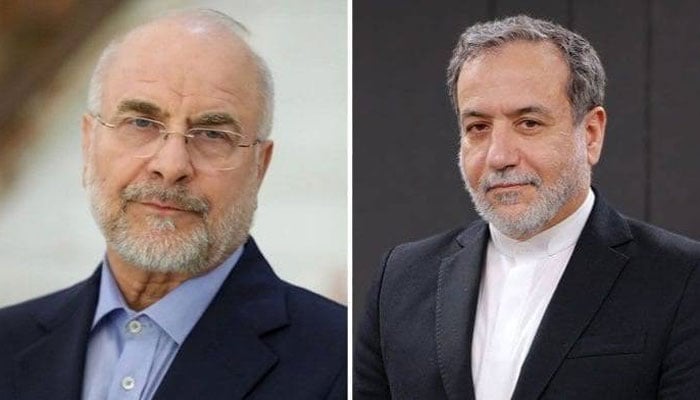
Iranian Foreign Minister Abbas Araghchi and Parliament Speaker and senior negotiator Mohammad Bagher Ghalibaf have defended the country’s latest military appointments, saying the newly selected commanders bring extensive battlefield experience to their new positions.

Their comments came after Supreme Leader Mojtaba Khamenei approved the appointment of six senior military commanders to key positions within Iran’s armed forces and the Islamic Revolutionary Guard Corps (IRGC).

In a post on his Telegram channel, Araghchi said the six commanders had demonstrated their capabilities during the two recent wars imposed on Iran. He described their combat experience as an important factor behind their selection for senior military roles.

Ghalibaf also welcomed the appointments, according to a statement carried by Iranian state media. He specifically highlighted General Ahmad Vahidi, saying Vahidi led the IRGC during the recent 40-day war and gained significant operational experience during the conflict.

Ghalibaf said the IRGC should continue its mission while drawing on the guidance and direction of Supreme Leader Mojtaba Khamenei. He also stressed the importance of maintaining the force’s capabilities and experience as Iran faces continued regional security challenges.

The latest appointments cover some of Iran’s most influential military positions. They include the chief and deputy chief of staff of the Armed Forces, the commander and deputy commander of the IRGC, the commander of the IRGC Navy, and the commander of the Basij paramilitary force.

Iranian officials have presented the appointments as part of an effort to place experienced military figures in strategic command positions. The emphasis on commanders with recent battlefield experience also reflects the security pressures Iran has faced during the latest period of regional conflict.

The appointments are expected to shape Iran’s military leadership and operational strategy in the period ahead, particularly as Tehran continues to deal with heightened tensions and evolving security challenges across the region.

Similar Posts

  • |

    Commercial shipping through critical Middle Eastern corridors stays subdued amidst mixed diplomatic signals

    Commercial vessel traffic through key maritime chokepoints in the Middle East, specifically the Strait of Hormuz and the Bab el-Mandeb, remained virtually unchanged, as maritime operators maintained a cautious stance amid conflicting signals regarding diplomatic negotiations. Data tracked by maritime analytics firm Kpler showed that eight vessels transited the Strait of Hormuz, consisting of five tankers and three bulk carriers, matching the previous day’s tally. Six of the vessels were inbound toward the Persian Gulf, while two made the outbound journey. Prior to the escalation of hostilties in late February and subsequent Iranian restrictions across the waterway, the strait typically logged between 130 and 140 daily vessel movements. Concurrently, tracking data recorded an Abu Dhabi National Oil Company (ADNOC) liquefied natural gas (LNG) carrier, the Mubaraz, emerging outside the Strait of Hormuz bound for India’s Dahej terminal in Gujarat. The shipment represents the third successful LNG transit by the vessel carrying cargo loaded from Das Island since regional maritime disruptions intensified. At the Bab el-Mandeb strait, daily transits held steady with 20 vessels passing through the passage, evenly split between entries and exits. Industry analysts emphasized that published transit totals reflect only ships navigating with active Automatic Identification System (AIS) transponders, noting that a significant volume of commercial traffic continues to operate with disengaged transponders to mitigate security risks. The persistent stagnation in maritime trade follows conflicting geopolitical communications. While Qatari mediators indicated progress in preliminary discussions aimed at bringing an end to hostilties, official statements from Tehran denied direct bilateral talks with Washington, noting instead that discussions mediated through Oman remain focused on managing navigation and security protocols through the strait.

  • | |

    Vance pledges military, diplomatic pressure on Iran

    The United States will use military, economic and diplomatic measures to bring the conflict with Iran to an end, Vice President JD Vance has said, stressing that Washington remains committed to preventing Tehran from acquiring nuclear weapons. In a television interview, Vance said negotiations with Iran remain difficult due to internal divisions within the country’s leadership. He claimed that while some factions in Iran want to end the conflict through diplomacy, others continue to support confrontation, making negotiations more complicated. Despite the challenges, Vance expressed confidence that a settlement could eventually be reached, although he acknowledged the process would take time. He said the US hopes regional stability will improve and global oil prices will ease once tensions decline. The vice president reiterated that the United States would continue using every available tool, including military strength, economic sanctions and diplomatic engagement, to achieve what he described as a lasting resolution. Meanwhile, President Donald Trump said he still prefers diplomacy over military action. Speaking at a public event, Trump said he would rather reach an agreement with Iran than resort to war, but warned that military action remains an option if negotiations fail. Trump also dismissed reports suggesting the United States is facing shortages of key military ammunition. He insisted that the country has substantial stockpiles of weapons and said defence manufacturers are rapidly expanding production to meet future requirements. The president further warned that individuals responsible for leaking classified information about US military capabilities would face legal action, saying authorities were actively pursuing those involved. The developments come as tensions remain high around the Strait of Hormuz, one of the world’s most important shipping routes for oil exports. At the same time, eight leading international shipping organisations have urged the United Nations to oppose any proposal to impose mandatory transit fees on vessels passing through the Strait of Hormuz. In a joint letter addressed to the UN and the International Maritime Organization (IMO), the organisations warned that introducing tolls would undermine the internationally recognised principle of free navigation and could increase shipping costs, fuel prices and inflation worldwide. The maritime groups also cautioned that allowing such charges could create a dangerous precedent for other international waterways and disrupt global trade. The appeal follows recent discussions between Iran and Oman on future arrangements for the Strait of Hormuz. Iranian officials said the two countries have reached preliminary understandings on several issues related to maritime traffic, although they clarified that the agreement does not mean the waterway will be fully reopened under a new system. Separately, reports in US media claimed President Trump had questioned senior defence officials over alleged shortages of military munitions during a recent Cabinet meeting. According to the reports, concerns over weapon supplies had influenced military planning regarding Iran.

  • |

    Chances of US-Iran agreement remain uncertain 

      Despite US President Donald Trump’s confident claim that a deal with Iran has effectively been finalized, senior Gulf officials have indicated that the prospects of reaching an agreement this Friday remain uncertain. These officials estimated the likelihood of a successful agreement at only “fifty-fifty,” suggesting that significant obstacles still stand in the way of a final breakthrough. According to the sources, one of the major concerns is the composition of the Iranian delegation currently involved in discussions. They revealed that representatives of Iran’s Islamic Revolutionary Guard Corps (IRGC) are not part of the negotiating team. This absence is viewed as highly significant because the IRGC is widely regarded as the most influential military and political institution in Iran and is expected to have the final authority in approving any interim or broader agreement. Without its backing, even a negotiated framework may struggle to gain official approval in Tehran. President Trump has repeatedly expressed confidence in the ongoing diplomatic efforts between Washington and Tehran. Earlier, he stated that American officials were holding “very good talks” with their Iranian counterparts and suggested that negotiations were progressing positively. However, he also issued a stern warning, saying that if Iran were to back away from a potential agreement as it had in previous rounds of negotiations, the United States would respond with decisive and severe measures. His remarks reflected a combination of optimism about diplomacy and a willingness to adopt a tougher stance should talks collapse. Trump also hinted that an agreement concerning the Strait of Hormuz could be reached as early as today. The Strait of Hormuz is one of the world’s most strategically important maritime routes, carrying a significant portion of global oil exports. Any understanding aimed at ensuring safe navigation through the waterway would be welcomed by international markets and regional governments, given the repeated tensions and security incidents that have threatened shipping in recent years. Despite the optimistic statements coming from Washington, Iran has continued to deny that it is engaged in direct negotiations with the United States. Iranian officials maintain that their current discussions are exclusively with Oman and are focused on resolving issues related to maritime navigation and shipping through the Strait of Hormuz. Tehran has consistently rejected claims that formal talks with Washington are underway, emphasizing that its engagement is limited to regional diplomatic channels. Political analysts believe, however, that the ongoing dialogue between Iran and Oman could serve as an important bridge toward eventual negotiations between Tehran and Washington. Oman has long played the role of a trusted intermediary between the two countries, facilitating discreet diplomatic contacts during previous periods of heightened tension. Analysts argue that if discussions between Iran and Oman produce positive outcomes, they could help build confidence, reduce mistrust, and create the conditions necessary for broader US-Iran negotiations in the near future. For now, uncertainty continues to dominate the diplomatic landscape. While President Trump projects confidence that a breakthrough is close, regional officials remain cautious, pointing to unresolved political and military considerations that could still prevent a final agreement. The coming days are expected to determine whether diplomatic efforts can translate into a meaningful deal or whether tensions between the United States and Iran will persist.

  • | |

    Greek police arrest boxer over death of Scottish c…

    Greek authorities have arrested a 26 year old former boxer in connection with the death of a Scottish aid worker whose body was discovered in a suitcase in Athens, according to a British broadcaster. The suspect, identified as Sharif Ahmadzai, was taken into custody after officers found the remains of 38 year old Elisabeth Jane Ross in an abandoned building in the Kypseli district of the Greek capital on July 18, several days after she had been reported missing. Ahmadzai is scheduled to appear in court in Athens on Wednesday. Ahmadzai was born in Afghanistan and later became a champion boxer before settling permanently in Greece, where he currently lives with his American wife and their child. He left Afghanistan as a teenager after losing both parents to the conflict there. His father, who served as a commander in the Afghan army, was shot dead, while his mother and siblings died in a suicide bombing in Kabul when he was 15 years old. According to a video account published by the International Federation of Red Cross and Red Crescent Societies, Ahmadzai made his way to Greece by traveling through Iran and Turkey before eventually reaching a refugee camp on the island of Lesbos. It was there that he is understood to have met his future wife and converted to Christianity. The couple went on to found a charity called Love Every Nation Athens, which works to support other refugees arriving in the country. Police say Ross, who was from Edinburgh and known to friends and family as Lisa, entered Greece on June 26 and initially stayed in the Kertasini area of Piraeus until July 10. She had traveled to volunteer with an Athens based refugee support organization. She later told friends in Greece that she planned to travel to Kypseli on July 15 to meet up with American acquaintances. A police union in Greece said investigators confirmed that Ahmadzai held a key to the apartment where Ross had been staying. The union also said officers verified surveillance footage that appears to show him carrying a suitcase believed to have contained her body. Data from a location sharing application used by Ahmadzai’s wife reportedly placed the suspect at an address on Rethymnou Street, the location where Ross is believed to have died, in the days leading up to her death. Authorities said the suspect also used the victim’s bank cards to withdraw cash after her death. The building where her body was ultimately found sits roughly twenty minutes away from the area where Ross had originally been staying during her time in the city. Mourners have since left flowers at the site where her remains were discovered. One handwritten note left among the tributes expressed hope that her memory would live on and that she would not be forgotten. In Edinburgh, Pastor Peter Anderson said Ross had belonged to the congregation at City on a Hill church for two decades. He described her as someone with a strong commitment to missionary work who had traveled widely to help others. Speaking in a video shared on the church’s social media page, Anderson called her a deeply valued member of the community and said her loss had been felt profoundly by those who knew her. During a search of Ahmadzai’s residence, police said officers seized a replica pistol along with a knife. Authorities have also fast tracked a toxicology examination in an effort to determine the exact cause of Ross’s death. Investigators say they are additionally trying to locate the American friends Ross had mentioned to acquaintances shortly before her disappearance. The case has drawn significant attention both in Greece and in the United Kingdom, where Ross’s church community and friends have publicly mourned her loss while the investigation into the circumstances surrounding her death continues.

  • |

    Houthis claim strike on Saudi oil tanker

    Yemen’s Houthi movement, Ansar Allah, has claimed responsibility for a missile attack on a Saudi oil tanker in the Red Sea, marking another escalation in regional maritime tensions. Houthi military spokesperson Yahya Saree said the group targeted the tanker with ballistic missiles near the Saudi coastal city of Yanbu. However, he did not specify the exact time of the attack or provide details about the extent of the damage or any casualties. Saree also claimed that Houthi forces have attacked eight vessels accused of violating the Saudi naval blockade imposed on July 22. According to him, the operations forced 29 other ships to alter their routes to avoid Houthi-controlled waters. The spokesperson vowed that the group would continue enforcing what it described as a naval blockade against Saudi Arabia, warning that vessels breaching the restrictions could face further attacks. The latest claim comes as security concerns continue to grow in the Red Sea, a vital international shipping route that has witnessed repeated attacks on commercial and energy-related vessels in recent months. Independent verification of the Houthi claims was not immediately available.

  • |

    Hong Kong records hottest day in more than 140 years 

      Hong Kong has experienced an unprecedented heatwave, with temperatures reaching a record high and breaking a more than 140-year-old temperature record. The city endured its hottest day on record as the Hong Kong Observatory recorded a scorching 36.9°C at its headquarters. The extraordinary heat was felt even more intensely in several parts of the region. In Sheung Shui, located in Hong Kong’s New Territories, temperatures climbed to an astonishing 39.8°C, highlighting the severity of the heatwave affecting the territory. According to reports,the extreme weather conditions were linked to subsiding air associated with Tropical Cyclone Dolphin. The atmospheric conditions caused temperatures to rise sharply across Hong Kong, producing exceptionally hot and humid weather. The new temperature record surpassed the previous official high of 36.6°C, which was recorded in August 2017 during the passage of Typhoon Hato. The latest reading therefore represents a significant increase and underscores the intensity of the current heat event. The Hong Kong Observatory serves as the city’s primary reference point for official temperature records. However, temperatures recorded in other areas demonstrate that some communities experienced considerably more severe conditions than the official citywide figure. The 39.8°C recorded in Sheung Shui is particularly notable and reflects the potentially dangerous conditions faced by residents in inland areas. Authorities have urged members of the public to remain cautious as the extreme temperatures continue. Residents have been advised to avoid prolonged exposure to direct sunlight, remain hydrated and take appropriate measures to reduce the risk of heat-related illness. Vulnerable groups, including older people, children and those working outdoors, are particularly susceptible to the effects of extreme heat. Weather officials have warned that the intense heat is unlikely to disappear immediately. Forecasts indicate that the heatwave could continue for the next several days before changing weather conditions potentially bring some relief. Meteorological authorities are closely monitoring the situation as hot and humid conditions remain across the region. The record-breaking temperatures have also renewed concerns about the growing frequency and intensity of extreme heat events. Hong Kong is not alone in facing unusually high temperatures. Several countries across Asia, Europe and the Middle East have experienced severe heatwaves, with temperatures in some locations reaching between 40°C and 55°C. Scientists and climate experts have increasingly warned that extreme heat is becoming a major global environmental challenge. Rising temperatures can place additional pressure on healthcare systems, energy supplies and water resources while increasing risks to people who work or spend extended periods outdoors. Hong Kong’s latest record serves as another reminder of the changing climate and the growing threat posed by extreme weather. As heatwaves become more frequent and intense, authorities and communities are being encouraged to strengthen preparedness and public awareness. With temperatures expected to remain elevated in the coming days, residents across Hong Kong are being urged to follow official weather advisories and take precautions against prolonged heat exposure.

Leave a Reply

Your email address will not be published. Required fields are marked *