pakistans 79th independence
| | |

Pakistan’s 79th Independence Day celebrated at H…

LONDON:  Pakistan’s 79th Independence Day was celebrated with traditional enthusiasm and national spirit at the Pakistan High Commission in London, with Chairman Kashmir Committee Rana Muhammad Qasim Noon attending as the chief guest.

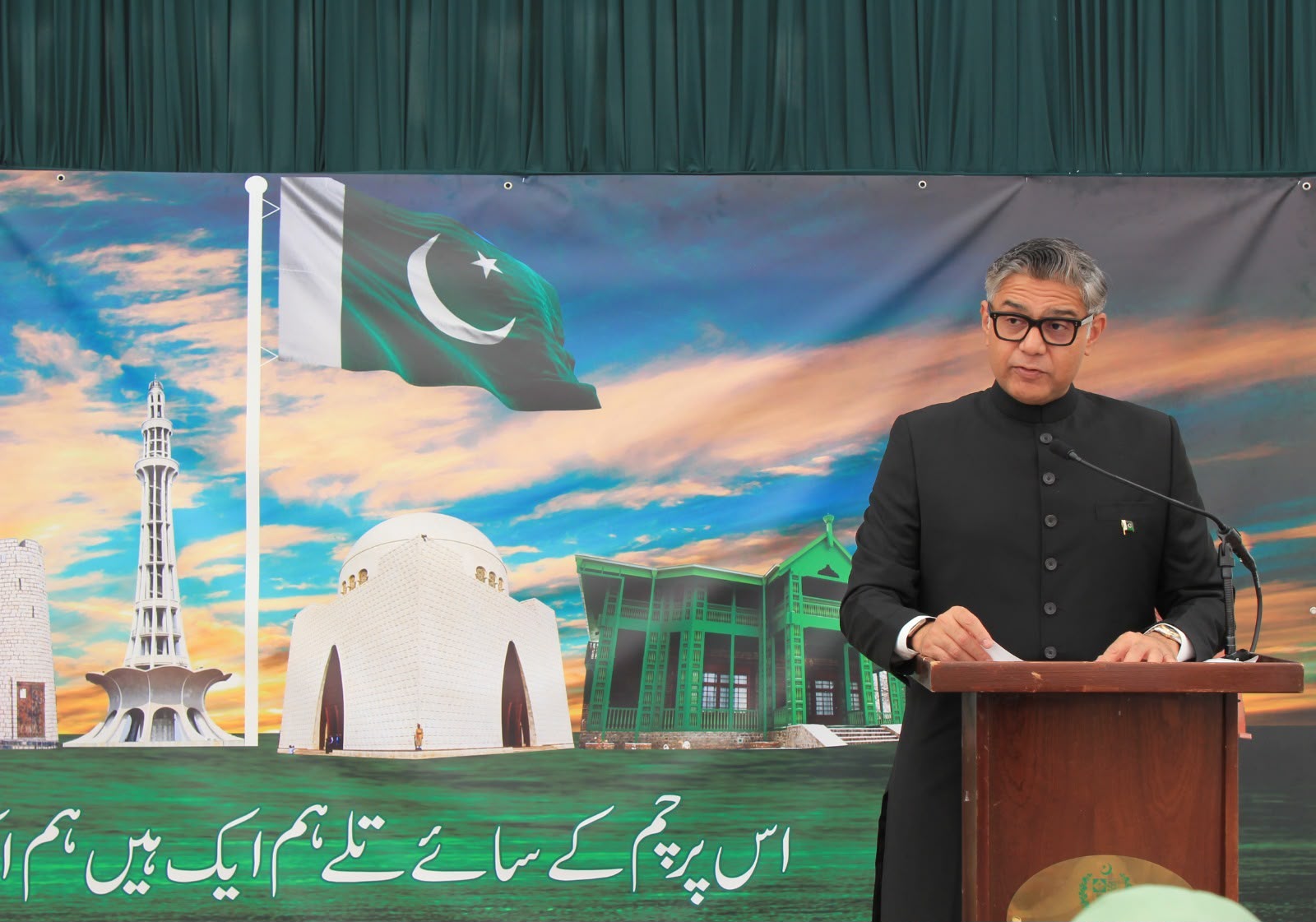
Pakistan’s High Commissioner to the UK, Tipu Usman, hoisted the national flag to the national anthem at a ceremony attended by a large number of members of the Pakistani community, media representatives, diplomats and High Commission officials with their families.

The ceremony began with the recitation of the Holy Quran, followed by the reading of special messages from the President, Prime Minister and Deputy Prime Minister and Foreign Minister of Pakistan.

Addressing the gathering, High Commissioner Tipu Usman paid tribute to Quaid-e-Azam Muhammad Ali Jinnah and the founders of Pakistan, as well as the sacrifices made by millions of men and women during the struggle for independence.

He said Pakistanis living in Britain were the country’s “true ambassadors”, playing an important role in strengthening relations between Pakistan and the UK and building bridges between the two countries.

The High Commissioner also reaffirmed Pakistan’s moral, political and diplomatic support for the Kashmiri people’s right to self-determination, saying they were entitled to this right under the relevant United Nations Security Council resolutions.

The celebrations featured national songs, while British-Pakistani soprano singer Saira Peter delivered a special performance. The enthusiastic participation of children added to the festive atmosphere.

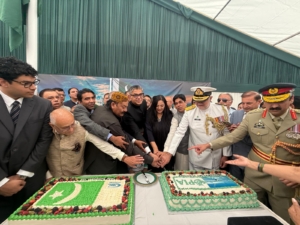
The ceremony concluded with High Commissioner Tipu Usman, Rana Muhammad Qasim Noon and other distinguished guests cutting a cake to mark Pakistan’s 79th Independence Day.

Similar Posts

  • | | | |

    Iraq demands proof over Saudi attack claims

    BAGHDAD: Iraq has rejected allegations that its territory was used to launch attacks against Saudi Arabia and has called for evidence to support the claims. A spokesperson for the Commander-in-Chief of the Iraqi Armed Forces said no country or organisation had presented proof that attacks on Saudi Arabia originated from Iraqi soil. The spokesperson said Iraq remained committed to protecting its sovereignty and preventing its territory from being used to threaten neighbouring countries. He added that the government was implementing measures to strengthen national security and maintain full control over the country’s borders and military activities. The statement came after reports linked Iraq to attacks on Saudi Arabia, increasing tensions in an already volatile region. Following recent US and Saudi military strikes inside Iraq, the Iraqi National Security Council convened an emergency meeting to assess the security situation. During the meeting, the council condemned the attacks and described them as a violation of Iraq’s sovereignty. Officials stressed that all hostile actions carried out on Iraqi territory were unacceptable. The council said the Iraqi government alone has the authority to decide how to respond to any attacks launched from within the country. It warned against any unilateral military action that could further destabilise the region. The office of Iraqi Prime Minister also issued a statement reaffirming Baghdad’s policy of keeping Iraq out of regional conflicts. The statement said the government would continue to pursue diplomatic and legal measures to protect the country’s sovereignty, security and political stability. The latest developments follow joint US and Saudi air strikes targeting locations believed to be used by Iran-backed militias in Iraq. The strikes were reportedly carried out in response to drone attacks on Saudi oil facilities. According to the Popular Mobilisation Forces (PMF), the attacks targeted its headquarters and facilities across seven Iraqi provinces. The group said at least 20 of its personnel were killed, while another 32 were injured in the air strikes. It added that the heaviest attack took place in Nineveh province, where 10 fighters lost their lives. The military action has further raised concerns about growing instability in the region and the possibility of wider confrontation involving regional and international powers.

  • |

    Pakistan’s health system requires lasting reform

    By Raja Ashraf A country’s healthcare system is judged not only by the number of hospitals it has but also by whether people can access timely, affordable, and quality medical care. In Pakistan, public confidence in the health sector has weakened due to persistent challenges, including shortages of healthcare professionals, rising medicine prices, under-resourced hospitals, and the continued presence of unqualified medical practitioners. These issues require comprehensive and long-term reforms rather than short-term policy responses Healthcare is a fundamental right closely linked to Article 9 of Pakistan’s Constitution, which guarantees the right to life. The Supreme Court has interpreted this provision to include access to essential healthcare services. Pakistan is also a signatory to the International Covenant on Economic, Social and Cultural Rights, which commits the country to progressively ensuring the highest attainable standard of physical and mental health for its citizens. One of the most pressing concerns is the shortage of qualified doctors in rural and underserved regions. Although medical institutions produce thousands of graduates every year, many public health facilities outside major cities continue to face vacant positions. As a result, many communities struggle to obtain even basic healthcare services and are often forced to travel long distances for treatment. The migration of doctors, nurses, and other healthcare professionals to foreign countries has further weakened the healthcare system. Better salaries, improved working conditions, career opportunities, and greater security abroad encourage many skilled professionals to leave Pakistan, creating significant gaps in public hospitals and specialized medical services. The pharmaceutical sector also faces increasing challenges. Some multinational pharmaceutical companies have reduced their presence in Pakistan, raising concerns about future medicine availability and investor confidence. While local pharmaceutical manufacturers continue to meet much of the country’s demand, policymakers must create a stable regulatory and economic environment that supports both domestic production and responsible international investment. The rising cost of medicines has become another major burden for families already affected by inflation. Patients suffering from chronic illnesses such as diabetes, hypertension, and cardiovascular diseases often require lifelong treatment, making affordability a growing concern. At the same time, the continued circulation of counterfeit and substandard medicines highlights weaknesses in regulation and quality control, despite improvements in oversight by regulatory authorities. Public hospitals also frequently experience shortages of essential medicines and emergency supplies, forcing patients to purchase drugs from private pharmacies. This increases treatment costs and can delay critical medical care during emergencies. Ensuring uninterrupted medicine supplies in government hospitals should remain a national priority. Another persistent issue is the presence of unqualified medical practitioners, commonly known as quacks, particularly in areas where licensed healthcare providers are scarce. Tackling this problem requires stronger enforcement of existing laws alongside improved access to qualified medical professionals. Pakistan’s healthcare challenges extend beyond these issues to include inadequate public health funding, ageing hospital infrastructure, weak primary healthcare services, limited mental health facilities, and uneven implementation of health policies across provinces. Addressing these problems requires a comprehensive national strategy focused on increasing healthcare investment, improving working conditions for medical professionals, strengthening medicine regulation, modernizing pharmaceutical oversight, expanding preventive care, and reinforcing primary healthcare services. Investing in healthcare is not merely a public expense—it is an investment in human capital, economic growth, and national development. Pakistan possesses skilled healthcare professionals, reputable medical institutions, and a capable pharmaceutical industry. With sound policymaking, stronger governance, and sustained investment, these strengths can be transformed into a healthcare system that guarantees every citizen safe, affordable, and quality healthcare. The need for reform is no longer in question; the real challenge is ensuring that action is not delayed any further.

  • |

    SBP to maintain focus on price stability, reforms and sustainable economic growth

    KARACHI: State Bank of Pakistan (SBP) Governor Jameel Ahmad has said the central bank will continue to prioritise price stability, structural reforms and the creation of a business-friendly economic environment aimed at boosting productivity, exports and employment. Addressing a flag-hoisting ceremony held at the SBP headquarters in Karachi to mark Pakistan’s 79th Independence Day, Governor Ahmad said the country had made notable progress towards macroeconomic stability over the past year. He attributed the improvement to disciplined fiscal and monetary policies, better economic management and continued efforts to strengthen financial and economic institutions. Inflation remains within medium-term range Speaking about the inflation outlook, the SBP governor said average inflation during fiscal year 2025-26 stood at 7.1 percent. He said the central bank believed that the prevailing monetary policy stance was appropriate for keeping inflation within its medium-term target range of 5 to 7 percent. According to Ahmad, the current policy framework also provides sufficient space for economic activity to continue, while supporting investment and employment generation. The governor said maintaining price stability would remain a central objective of the SBP as Pakistan seeks to move from short-term stabilisation towards sustained economic expansion. Growth expected to strengthen Ahmad said Pakistan’s economy recorded growth of 3.7 percent in FY26, reflecting the impact of improved macroeconomic conditions and greater fiscal and monetary discipline. Looking ahead, he projected economic growth in the range of 3.5 to 4.5 percent during FY27. He described the outlook as encouraging, saying the economy was gradually moving towards a more sustainable growth path after going through a difficult period of economic stabilisation. The governor stressed that maintaining policy discipline would be important to ensure that the gains achieved in recent years translate into durable economic development. Remittances strengthen external position The SBP chief also highlighted improvements in Pakistan’s external sector, particularly the performance of workers’ remittances. He said overseas Pakistanis had demonstrated confidence in the country by sending record amounts of money home, with remittances surpassing $41 billion during FY26. The inflow is expected to increase further, with remittances projected to reach around $44 billion in FY27, according to the governor. Ahmad said stronger remittance inflows, combined with a relatively low current account deficit, had helped improve Pakistan’s foreign exchange position. The country’s foreign exchange reserves reached $18.4 billion by the end of FY26, while the SBP expects reserves to rise above $21 billion during FY27. He said strengthening the external position would help improve economic resilience and provide greater capacity to withstand external shocks. SBP pushes digital transformation The governor also outlined measures taken by the central bank to modernise Pakistan’s financial infrastructure and expand the use of digital payment channels. He pointed to the successful launch of PRISM+, saying the upgraded payment and settlement infrastructure had brought Pakistan’s large-value payment system closer to international standards. The system has improved the speed, security and efficiency of large-value payments and settlements, he said. Ahmad added that SBP initiatives aimed at encouraging digital payments had resulted in a substantial increase in the use of electronic channels. Retail digital transactions increased from approximately 10 billion to 12 billion over the past year, reflecting growing adoption of technology across the financial system. According to the governor, the shift towards digital payments is more than a technological development. It is also contributing to greater documentation, transparency and efficiency within the economy. Self-reliance and institutions vital for progress Governor Ahmad said Pakistan’s long-term economic success would depend not only on financial and monetary policies but also on stronger institutions, economic self-reliance, respect for the rule of law and national unity. He emphasised that the country’s journey towards sustainable development required continued commitment and collective efforts from institutions, businesses and citizens. While acknowledging the progress achieved during the past year, he cautioned that Pakistan continued to face economic challenges that required sustained attention, policy consistency and determination. He said the objective should now be to convert the gains from economic stabilisation into a durable foundation for investment, productivity, exports and employment. The governor reaffirmed that the SBP would continue playing its role in supporting monetary and financial stability while contributing to broader efforts aimed at improving the welfare of the Pakistani people.

  • | |

    Joe Wicks shares simple habit that transformed his parenting

    Fitness coach and television personality Joe Wicks has opened up about how exercise has transformed not only his physical health but also his parenting, revealing that his daily workout routine helps him remain patient with his four young children. The 40-year-old fitness expert, who has built a global following with more than four million Instagram followers, shared the personal insight during a recent question-and-answer session, explaining that he exercises every morning before his children wake up to help regulate his emotions. Wicks said his message about fitness has evolved over the years and is now centred more on mental wellbeing than physical appearance. “The message I always share now is that exercise is about mental health. It’s about boosting your mood into being confident and energised and being a good parent and being patient,” he said. The father of four admitted that raising young children can be overwhelming, but said regular exercise allows him to approach parenting with a calmer mindset. “I have got four kids under seven and they stress me out so much, right? And if I didn’t exercise, I would be like my mum – she screamed at me and shouted at me and slammed doors. I’d be like my dad, I’d be aggressive and so for me, it’s like, I exercise every morning before they wake up, so I’m a calm dad,” Wicks explained. The fitness coach has previously spoken publicly about the difficult environment he experienced growing up. His father struggled with a long-term heroin addiction, while his mother battled obsessive-compulsive disorder (OCD) and eating disorders. Drawing on those experiences, Wicks said he is determined to create a different atmosphere for his own family and believes physical activity plays an important role in achieving that goal. He stressed that exercise should not be viewed simply as a way to improve appearance, but rather as a tool for improving overall wellbeing and relationships. “And that’s what I always share, exercise isn’t about how you look, it is also more than that. It’s so much more than that,” he said. Encouraging others to use their influence responsibly, Wicks urged people with public platforms to promote the wider benefits of staying active. “So just wherever you are, if you’re an influencer or you’ve got a platform, always share that message that exercise is a really powerful tool to change how you feel and help the relationship around you,” he added. Wicks shares four children with his wife Rosie. The couple are parents to Indie, Marley, Leni and Dusty, and the fitness coach has frequently spoken about balancing family life with his career. Known internationally for promoting home workouts and healthy living, Wicks has increasingly focused on the emotional and psychological benefits of exercise in recent years. His latest comments highlight how fitness has become part of his daily parenting routine, helping him stay patient and emotionally present for his children. Rather than chasing physical goals alone, Wicks said his morning workouts are about becoming the best version of himself for his family, explaining that maintaining his own mental wellbeing allows him to build healthier relationships with the people he loves most.

  • | |

    Senate debates Imran Khan’s health after opposit…

    The Senate held a detailed discussion on the health of PTI founder Imran Khan. The discussion was held after a demand by Opposition Leader Allama Raja Nasir Abbas. The Senate proceedings were also suspended to take up the issue. Speaking in the Senate, Raja Nasir Abbas said Imran Khan was facing punishment for crimes he had not committed. He described the former prime minister’s health as a highly sensitive matter. The opposition leader urged the government to show restraint. He said political differences should not lead to anyone being subjected to unnecessary suffering. Raja Nasir Abbas said the government should focus on resolving the country’s problems instead of pursuing political revenge. He also questioned whether the priority was to fix the system or settle political scores. He demanded that Imran Khan be allowed to meet his personal doctors. He said access to proper medical care was essential, particularly because of concerns about the PTI founder’s health. The opposition leader also called for Imran Khan to be shifted to a hospital if necessary. He demanded that a meeting with him should be allowed. Raja Nasir Abbas said such measures could help prevent a serious situation in the future. He stressed that the authorities should take the health concerns seriously. He also called for politicians to be given an opportunity to run the country. He said political issues should be resolved through political means. The opposition leader also raised the issue of PTI women who are currently in prison. He called for greater attention to their situation. During the debate, Raja Nasir Abbas addressed PML-N Senator Rana Sanaullah. He said Rana Sanaullah knew that the cases against him had not been filed by politicians. Rana Sanaullah responded by asking Raja Nasir Abbas who had filed the case against him. The exchange highlighted the political tensions between the government and opposition benches in the Senate. The debate also brought renewed attention to Imran Khan’s health and the opposition’s demand for greater access to medical care and personal doctors. Opposition lawmakers have continued to raise concerns about the PTI founder’s condition and have called for his medical needs to be addressed without political considerations.

  • |

    Lamine Yamal’s girlfriend breaks silence over past relationship rumours

    Lamine Yamal has been riding a wave of attention ever since his standout performance helped Spain defeat Argentina in the FIFA World Cup. But as the football world celebrated his success, the spotlight quickly turned toward his personal life, and specifically, toward his girlfriend. Social media influencer Inés García Santos found herself at the center of an online storm after rumours claimed she had ended a five-year relationship simply to pursue Yamal. The 21-year-old initially brushed off the speculation, saying she had not planned on addressing it or giving it any weight. Despite her attempt to stay silent, and no verified source backing the claims about her past relationship, the rumours kept spreading across social platforms. Users speculated endlessly about her reasons for supposedly leaving her ex-partner. Some accused her of chasing fame, while others suggested she was simply drawn to dating someone famous. Several commenters even urged Yamal to be cautious about the people around him, with one particularly harsh remark suggesting she might be using him for his status and money. Faced with the growing wave of hostility, García eventually decided to respond. In a post shared on X, she admitted she had not expected something so minor to spiral the way it did. She said she had spent hours reading through the comments and tried to stay strong. She however, wanted to remind people that she is a human too, someone capable of feeling hurt, making mistakes, and experiencing emotions just like anyone else. She acknowledged that not everyone has to like her, and said she welcomes fair and respectful criticism. But she drew a clear line between having an opinion and using that opinion as an excuse to demean, insult, or wish harm on someone you do not personally know. García also appealed for more compassion from online users. She reminded them that the person on the receiving end of their comments has loved ones, insecurities, and feelings, and that words carry more weight than people often realize. She made clear she was not trying to win anyone over, only asking for basic empathy and kindness, stressing that no one should have to endure a flood of hateful messages. Notably, García had already drawn public attention before Spain’s win over Argentina, when she confidently predicted the team’s victory and praised Yamal as the best player on the pitch.

Leave a Reply

Your email address will not be published. Required fields are marked *