announces nationwide shutterdown
| |

JI announces nationwide shutter-down strike after …

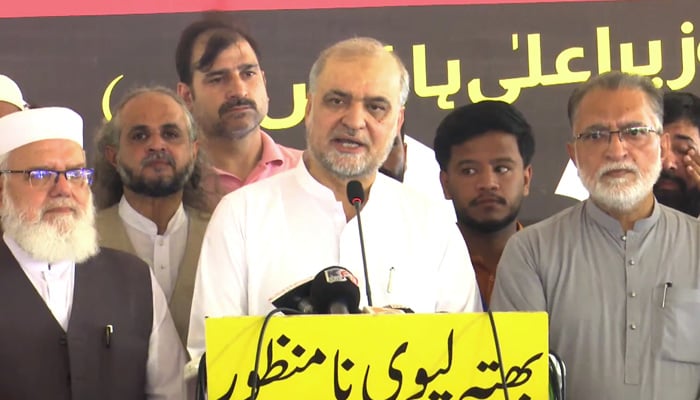
Jamaat-e-Islami (JI) Emir Hafiz Naeemur Rehman has announced a nationwide shutter-down strike after 12th Rabi-ul-Awwal, as the party continues its protests against rising petroleum prices and the government’s petroleum levy.

Speaking at a press conference in Lahore on Sunday, Hafiz Naeem said the JI’s sit-ins in provincial capitals had entered their eighth day and would continue until the government practically implemented the party’s demands.

He rejected the idea of ending the protests solely on the basis of government assurances, saying the party wanted concrete action rather than promises.

Hafiz Naeem called for a reduction in petroleum product prices and criticised what he described as excessive government expenditure. He also raised concerns over rising prices of essential commodities, saying flour and sugar mafias were making life difficult for ordinary citizens while farmers were struggling with expensive fertiliser.

The JI chief said the nationwide shutter-down strike would be launched after Eid Milad-un-Nabi, which falls on August 26 this year.

He warned that the party’s protest movement would not be called off until its demands were implemented. According to Hafiz Naeem, negotiations would no longer be based on requests for protesters to end their sit-ins in exchange for verbal commitments.

JI workers have been holding demonstrations since August 16. Sit-ins are being staged outside the Punjab chief minister’s residence in Lahore and at governor houses in Karachi, Quetta and Peshawar.

The protests come as consumers face growing pressure from fuel costs, inflation and high electricity bills. The government has also faced criticism following repeated increases in petroleum prices.

The situation has become more challenging amid fluctuations in international oil prices linked to renewed tensions in the Middle East. Authorities have also moved from a 15-day fuel price review to a daily mechanism.

The fuel price issue has triggered separate concerns among transporters and petroleum dealers. Earlier this week, the All Pakistan Goods Transport Alliance suspended a nationwide strike for 40 days after receiving assurances from the federal and Sindh governments regarding several demands, including petroleum pricing.

The Pakistan Petroleum Dealers Association has also pressed the government to resolve outstanding issues and honour previous commitments.

Similar Posts

  • | |

    Arjumand Rahim opens up about anxiety and multiple ER visits

    Arjumand Rahim is one of Pakistani television’s most enduring and respected performers. She began her career in the 1990s and has built a body of work that spans three decades, evolving alongside the industry itself and consistently delivering performances that leave a mark. Her recent role in Sher reminded audiences precisely what she is capable of, earning widespread praise and reinforcing her standing as one of the finest actors of her generation. Away from the screen, however, she has been quietly navigating a health struggle that was far more frightening than anything she has portrayed on camera. Appearing as a guest on Vasay Chaudhary’s show, Arjumand spoke with remarkable candour about a period in her life when she repeatedly found herself in the emergency room with no clear explanation for what was happening to her body. She described feeling faint and physically unwell on multiple occasions, with each ER visit leaving her more shaken than the last. Adding to her fear was a deeply personal detail: her father had passed away due to cardiac arrest, and the physical symptoms she was experiencing brought that grief rushing back in the most frightening way possible. Every episode of faintness or discomfort carried the shadow of that loss. It was only when she received a proper diagnosis that the picture began to make sense. She was found to be suffering from extreme anxiety and depression, conditions that had been manifesting through very real and alarming physical symptoms. For someone who had not understood what was happening to her, the diagnosis, while difficult to hear, was also the beginning of clarity. She sought professional help, underwent therapy, and received the treatment she needed to begin recovering. She described the period before the diagnosis as truly frightening, a time when she did not know what was wrong with her and could not explain what her body was doing or why. The uncertainty, layered on top of grief and the physical toll of the episodes themselves, made for an extraordinarily difficult stretch of time. The good news, and she was clear about this, is that she is doing significantly better now. The treatment worked, and the willingness to seek help made the difference. Her decision to speak openly about what she went through carries weight beyond her own story. In Pakistan, conversations around mental health and its physical manifestations remain challenging, and the stigma surrounding anxiety, depression and therapy continues to prevent many people from reaching out. When a figure of Arjumand Rahim’s stature speaks plainly about her own diagnosis and her experience of getting treatment, it sends a message that reaching for help is not weakness but the beginning of getting better. That is a message worth hearing.

  • | |

    Sindh, Aga Khan University forge 5-year ties to ad…

    The Sindh Cabinet has approved a five-year partnership between the Department of Empowerment of Persons with Disabilities (DEPD) and the Aga Khan University’s Institute for Educational Development (AKU-IED). The Memorandum of Understanding was signed today at Chief Minister House, Karachi. Chief Minister Sindh Syed Murad Ali Shah, who witnessed the signing, called it “not merely an agreement” but “a solemn commitment to every child with disabilities in Sindh that their dreams matter, their potential is recognised, and their future will no longer be limited by barriers.” The partnership will establish an Inclusion and Special Educational Needs (SEN) Unit at AKU-IED, for training, research, and innovation that will house sensory rooms, therapy spaces and dedicated resource centres. The initiative aims to train more than 2,000 educators and, through them, reach an estimated half a million school children over the next five years. According to UNICEF, an estimated 96% of children with disabilities in Pakistan are out of school, with Sindh bearing a large proportion of this burden due to poverty, gender disparities, and limited functional accessibility. Overall, Sindh has 7.4 million out-of-school children, where disability acts as a major compounding barrier to attendance. “For too long, children with disabilities have been invisible in our education system,” said Mr Tuaha Ahmed Faruqui, Secretary of DEPD. “Today, we are making a promise to every family in Sindh that their children matter.” The initiative’s most ambitious commitment is workforce transformation. AKU-IED will deliver modular courses, Training-of-Trainers programmes, and certification pathways to more than 2,000 educators. Its Bachelor of Education degree will offer specialisation in inclusive education with monthly stipends. Beyond training, the collaboration establishes a province-wide research and advocacy agenda: baseline assessments, implementation evaluations, and annual policy commissions to inform government decisions. Biennial SEN conferences and policy seminars will convene experts and advocates, while public education campaigns will produce multimedia resources, toolkits, and community sensitisation initiatives to shift mindsets about disability inclusion. “This is not just an institutional milestone,” said Professor Farid Panjwani, Dean, AKU-IED. “It is a commitment to every child in Sindh who has been waiting for an education system that sees them, hears them, and empowers them.” The Government of Sindh will provide grant funding, while AKU-IED contributes expertise and institutional resources. The SEN Unit will develop a strategic roadmap designed to sustain impact well beyond the five-year term. President of the Aga Khan University, Dr Sulaiman Shahabuddin, saidid, “The true measure of an education system is whether it reaches those who have historically been left furthest behind. By preparing teachers and schools to educate children with special needs, this partnership will help to ensure that all our children have the opportunity to fulfill their potential.”

  • | |

    Pakistani showbiz stars who built careers beyond family legacy

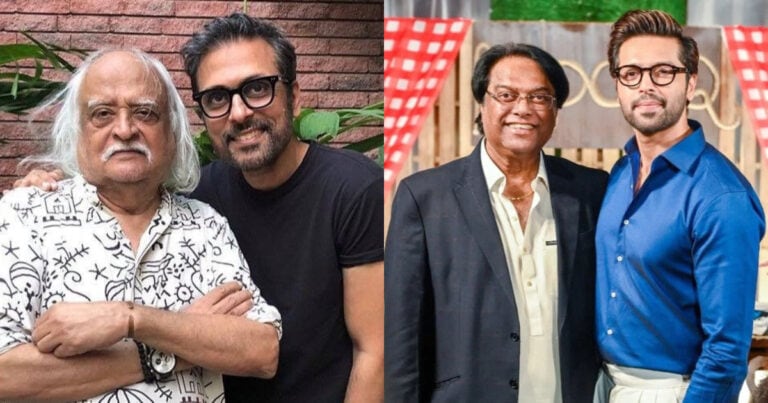
    The debate around nepotism in Pakistan’s entertainment industry has continued for years, particularly after similar discussions gained momentum in neighbouring India following the death of actor Sushant Singh Rajput. While several Pakistani celebrities have faced criticism for entering showbiz through family connections, there is another group of artists whose talent has largely overshadowed their famous family backgrounds. A recent Reviewit feature highlighted stars who, despite coming from influential showbiz families, established their own identities through years of hard work and consistent performances. The article notes that many viewers are unaware of the family backgrounds of these celebrities because they earned recognition on the strength of their own careers. Among them is actor and television host Adeel Hashmi, widely known for his memorable Ufone advertisements and versatile acting. Although he comes from a distinguished family—his mother is veteran media producer Muneeza Hashmi and he is the grandson of legendary poet Faiz Ahmed Faiz—Adeel has built his reputation through his own work in television and live performances. Another name on the list is Ali Tahir, who has spent over two decades in Pakistan’s television industry. Known for his performances in dramas such as Sher and Zard Patton Ka Bunn, Ali belongs to a family with a rich literary and broadcasting legacy. His grandfather was celebrated playwright Imtiaz Ali Taj, while his parents, Naeem Tahir and Yasmeen Tahir, also made significant contributions to the arts and media. The feature also highlights Momina Duraid, one of Pakistan’s most successful television producers. While she is connected to HUM Network founder Sultana Siddiqui through marriage, Reviewit credits Momina for establishing herself through acclaimed productions and for leading major projects, including Pakistan’s first Netflix series, Jo Bachay Hain Sang Samait Lo. Actress Hina Rizvi is another celebrity whose family has deep roots in the film industry. Despite being the sister of Lollywood veterans Sangeeta and Kavita, she has created a successful acting career of her own through diverse television roles. Similarly, producer Sana Shahnawaz, sister of Samina Humayun Saeed, has earned recognition by producing successful dramas including Man Mayal, Sinf-e-Aahan, Alif and Jaan-e-Jahan. The article also includes Ushna Shah, whose mother Ismat Tahira, sister Irsa Ghazal and brother Shah Sharabeel are all established names in Pakistani entertainment. Nevertheless, Ushna has become known for her own performances in dramas such as Bashar Momin and Alif Allah Aur Insaan. Other names featured are Fahad Mustafa, who successfully stepped out of the shadow of his father, Sindhi actor Salahuddin Tunio; Sheheryar Munawar, nephew of media entrepreneur Sultana Siddiqui; Nida Yasir, daughter of veteran PTV producer Kazim Pasha; and Bilal Maqsood, son of renowned writer Anwar Maqsood. According to Reviewit, each of these personalities has earned public recognition through individual achievements rather than relying solely on their family’s legacy, proving that while connections may open doors, long-term success depends on talent, dedication and consistent work. 

  • | |

    Sindh announces new school timings

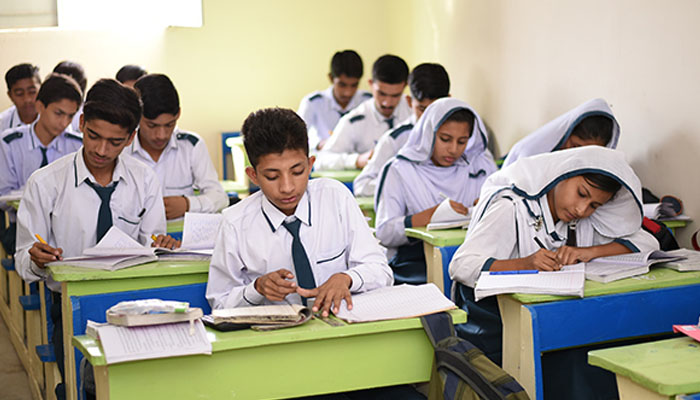
    The Sindh School Education and Literacy Department has issued a revised schedule for government schools across the province, outlining new operating hours for primary, elementary, secondary, and higher secondary institutions. According to an official notification, the updated timings will remain in effect from August until October 31, after which a separate winter schedule will be implemented from November 1 to March 31. Under the summer schedule, single-shift primary schools will operate from 8:00 a.m. to 2:30 p.m. from Monday to Thursday, while on Fridays, classes will end earlier, with schools remaining open from 8:00 a.m. to 1:00 p.m. For secondary and higher secondary schools, the first shift will run from 7:30 a.m. to 1:30 p.m. until October 31. The department has also announced revised winter timings. From November 1 to March 31, single-shift primary schools will function from 8:30 a.m. to 3:00 p.m., while the first shift for secondary and higher secondary schools will be held from 8:00 a.m. to 1:45 p.m. Schools operating in double shifts will also follow updated schedules. Until October 31, the  second shift will run from 1:00 p.m. to 6:00 p.m. Monday through Thursday. During the winter months, from November 1 to March 31, the second shift will begin at 12:45 p.m. and continue until 5:45 p.m. On Fridays, second-shift schools will operate from 10:45 a.m. to 2:15 p.m. The revised timings aim to ensure a uniform academic schedule for government schools across Sindh while accommodating seasonal changes in daylight and weather conditions.

  • | | |

    ‘Imran could face Morsi’s fate,’ sister warn…

    Pakistan Tehreek-e-Insaf (PTI) founder Imran Khan has expressed fears about his safety and allegedly told his sister that he could face a fate similar to that of former Egyptian president Mohamed Morsi, according to Dr Uzma Khan. Speaking at a press conference in Islamabad, Uzma said she was deeply concerned about her brother’s physical and mental condition following his prolonged confinement in Adiala Jail. She claimed Imran had repeatedly complained about being kept in solitary confinement and said he believed he was being treated inhumanely. According to Uzma, Imran told her that his concerns were not being properly heard by jail authorities. She said he had complained about the lack of human contact and believed that the isolation was affecting his health. Uzma further claimed that a doctor who examined Imran on August 10 attributed his anxiety and high blood pressure to his prolonged solitary confinement. She also said newspapers and television access had only been provided to him for a limited period. The PTI founder’s sister said she attempted to reassure him during their meeting, telling him that people across the country stood with him and that he should remain hopeful. Dispute over hospital transfer Uzma also provided details of the events surrounding Imran’s proposed transfer to Shifa International Hospital. She said she reached Adiala Jail between 8pm and 8:30pm after being contacted by authorities. She waited there with Imran’s physician, Dr Faisal Sultan. According to Uzma, they were later informed that Imran had been taken away, but she was not initially told where he had been taken. She said she was subsequently taken in a vehicle accompanied by a security convoy. After travelling for some time, she was informed that they had reached the Pakistan Institute of Medical Sciences (PIMS). Uzma said she reminded officials that the Supreme Court had ordered Imran’s transfer to Shifa International Hospital. She was reportedly told that he had instead been taken to PIMS for an eye examination. When she eventually met her brother, Uzma said Imran appeared surprised to see her. She told him that he was expected to undergo a comprehensive medical examination at Shifa. She said doctors at PIMS checked his blood pressure and examined his eyes. Dr Faisal Sultan separately said he had been summoned and taken to Shifa International Hospital but was repeatedly given unclear responses when he asked when Imran would arrive. He said he eventually concluded that the PTI founder would not be brought to the hospital. Government seeks review of Supreme Court order The dispute intensified after the federal government approached the Supreme Court seeking a review of its August 18 order concerning Imran’s medical examination and proposed transfer to Shifa International Hospital. The government had earlier filed a review petition, but it was returned after objections were raised by the Supreme Court registrar’s office. The government subsequently refiled the petition after addressing those objections. In its revised plea, the government argued that the August 18 order had been issued beyond the court’s jurisdiction and contained errors of law that warranted reconsideration. The government also relied on the Pakistan Prison Rules, 1978, arguing that the transfer of a convicted prisoner to a hospital is governed by a prescribed legal procedure. It referred specifically to Rule 197, which deals with the mechanism for transferring prisoners for medical treatment. The government further invoked Article 10-A of the Constitution, which guarantees the right to a fair trial and due process. It argued that adequate notice and an opportunity of hearing should be provided to both sides. The government therefore asked the apex court to review and recall its earlier order. Government rejects allegations of non-compliance Information Minister Attaullah Tarar defended the government’s position and rejected claims that the Supreme Court’s directive had been ignored. In a statement posted on X, Tarar said Imran had been taken for a medical examination during the early hours of August 21 under appropriate security arrangements. He said a team of doctors, including specialists in ophthalmology, cardiology and general medicine, examined Imran and declared him medically fit. Tarar said Uzma remained present during the medical examination and treatment process. According to the minister, Imran was subsequently returned to Adiala Jail at around 5am. In another statement, Tarar clarified that the examination was conducted at PIMS and that doctors from Shifa International Hospital were also present. He attributed the decision to use PIMS to security concerns surrounding the route to and area around Shifa International Hospital, which he said had been created by PTI workers. The minister maintained that the government had provided medical facilities to Imran in the past and would continue to do so whenever required. Opposition accuses government of contempt Opposition parties, however, strongly criticised the government’s handling of the matter. Opposition leaders alleged that the Supreme Court’s order had not been implemented in the manner directed and questioned the circumstances under which Imran was separated from his sister and physician. National Assembly Opposition Leader Mehmood Khan Achakzai and Senate Opposition Leader Allama Raja Nasir Abbas criticised the government’s decision and said those responsible should be held accountable. Achakzai questioned the circumstances surrounding the events during the night and described the episode as evidence of wider political problems in the country. Raja Nasir Abbas alleged that the government had effectively disregarded the Supreme Court’s decision by not transferring Imran to Shifa International Hospital as expected. He said the opposition would continue its legal and political struggle over the matter. The opposition leaders also expressed concern about Imran’s health and called for his medical treatment to be conducted transparently. Opposition alliance plans Supreme Court action The opposition’s joint parliamentary party, operating under the Tehreek Tahaffuz Aiyeen-e-Pakistan (TTAP) platform, also held a meeting at Parliament House. The meeting was chaired by Achakzai and attended by Raja Nasir Abbas, PTI Chairman Barrister Gohar Ali Khan, PTI Secretary General Salman Akram Raja, Khyber Pakhtunkhwa Chief Minister Sohail Afridi and other opposition lawmakers. The participants discussed Imran’s health, the Supreme Court order, the country’s political

  • | |

    US appeals Court again blocks Trump’s $100,0…

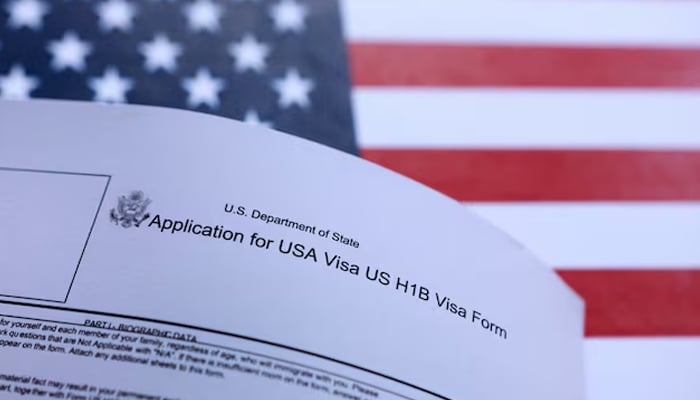
    The Trump administration has suffered another legal setback after a US federal appeals court refused to reinstate a controversial $100,000 fee for H-1B visas, dealing a fresh blow to the administration’s immigration policy. A three-judge panel of the First US Circuit Court of Appeals in Boston ruled that the administration had failed to demonstrate a strong likelihood of success in its appeal or prove that it had acted within its legal authority when imposing the massive fee increase. The decision comes in a lawsuit filed by attorneys general from 20 Democratic-led states, who challenged the legality of the policy soon after it was introduced. The appeals court’s ruling leaves in place an earlier decision issued on June 8, when a lower court declared the $100,000 H-1B visa fee unlawful. That court concluded that Congress had never granted the executive branch the authority to impose a charge of that magnitude, describing it as a tax that exceeded the administration’s legal powers. President Donald Trump introduced the fee increase through an executive order issued last year, arguing that the H-1B visa program had been widely used by companies to replace American workers with lower-paid foreign professionals. The administration maintained that the significantly higher fee would discourage misuse of the program and encourage employers to prioritize hiring US workers. Critics, however, argued that the measure would severely disrupt industries that rely on highly skilled international talent, particularly the technology, healthcare and engineering sectors. Under current immigration rules, the United States issues 65,000 H-1B visas annually, along with an additional 20,000 visas for applicants holding advanced academic degrees from US institutions. The visas are generally granted for periods ranging from three to six years. Before Trump’s proposed increase, employers typically paid between $2,000 and $5,000 in government filing fees for an H-1B visa, depending on the size of the company and other applicable charges. The proposed $100,000 fee would not have applied to foreign nationals already in the United States on student visas who later transitioned to H-1B status. The latest court ruling represents another significant legal obstacle for the Trump administration’s immigration agenda and ensures that the dramatic fee increase will remain suspended while the broader legal battle continues.

Leave a Reply

Your email address will not be published. Required fields are marked *