announces nationwide sitins
| |

JI announces nationwide sit-ins over rising fuel p…

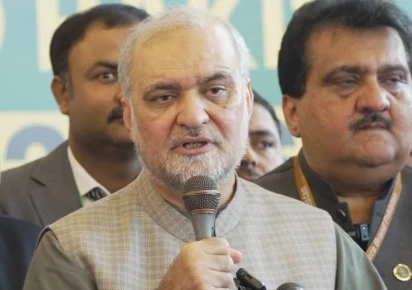
Jamaat-e-Islami (JI) Emir Hafiz Naeemur Rehman has announced sit-ins outside the chief minister’s residence in Lahore and governors’ houses across the country from August 16, protesting rising petroleum prices and the growing cost of living.

Speaking at a press conference in Lahore, Rehman said the Lahore demonstration would begin at 3pm from Masjid-e-Shuhada and move towards the Chief Minister’s House. He said the protests would continue until the government addressed the party’s demands, including immediate reductions in fuel, electricity and essential commodity prices.

Rehman accused the government of collecting Rs1,567 billion through petroleum levies, claiming the amount had exceeded the target set under the International Monetary Fund programme. He said JI would not remain silent while ordinary citizens faced increasing economic pressure.

The JI chief warned that any attempt to obstruct the demonstrations could escalate the campaign into a broader movement demanding the government’s removal. He maintained that the party’s previous sit-ins had been peaceful and caused no damage to public or private property.

JI has also launched a social media campaign against the petroleum levy, urging citizens to raise their voices against what is described as an unfair financial burden on the public.
Similar Posts

  • | |

    China stands firm on economic strategy ahead of ke…

    BEIJING: China has intensified its defence of its state-led economic model as it prepares for crucial trade discussions with the European Union and the United States, signalling that it is unlikely to make major policy concessions despite mounting international criticism. Beijing has repeatedly argued that its development strategy, which prioritises investment in advanced manufacturing and technology, remains essential for long-term economic growth. Chinese leaders maintain that the country’s industrial policies have helped strengthen innovation and global competitiveness, rejecting accusations that they distort international trade. The latest policy statements from China’s leadership indicate a commitment to maintaining its current economic direction. While officials acknowledge challenges such as weak domestic demand and excess production capacity, they continue to favour targeted policy support instead of broad consumer-focused stimulus measures. Chinese authorities have also dismissed Western claims of industrial overcapacity, describing such criticism as politically motivated. They argue that China’s manufacturing success reflects its stage of economic development and benefits global consumers through affordable, high-quality products. Ahead of expected meetings between President Xi Jinping and US President Donald Trump later this year, as well as upcoming negotiations with the European Union, Beijing has adopted a more confident tone in defending its economic policies. Analysts believe the messaging is intended to establish clear limits on what China is willing to negotiate while encouraging greater understanding of its development model. China has also sought to counter warnings of a new “China shock” by portraying its industrial expansion as an opportunity for global economic growth. However, many Western economists argue that China’s reliance on exports, combined with subdued domestic consumption, continues to create imbalances that affect international markets. Although Beijing has slowed public investment by tightening oversight of local government spending, officials acknowledge that supply and demand remain uneven. Authorities have pledged to reduce destructive price competition among manufacturers and have reiterated their intention to strengthen consumer demand, though without announcing sweeping structural reforms. Chinese policymakers have also recognised that the country’s traditionally low household consumption cannot remain a permanent feature of its economy. While official publications describe the existing model as historically appropriate, they also suggest gradual adjustments will be necessary to ensure sustainable long-term growth. Despite these acknowledgements, Beijing remains cautious about implementing rapid reforms, fearing that abrupt policy changes could undermine economic stability. International studies continue to raise concerns over China’s economic practices. Recent research suggests that government subsidies have played a significant role in boosting the global market share of many Chinese companies, while other reports attribute much of China’s export growth to weak domestic consumption and industrial overcapacity. Analysts also note that China continues to invest in productive assets at a much faster pace than Europe and the United States, even though returns on those investments have declined. Many experts believe Beijing’s increasingly assertive defence of its economic model reflects growing confidence that it can manage trade tensions with Western partners without fundamentally changing its industrial strategy.

  • |

    Come to streets, we’ll serve you water’: Nasir

    Sindh Local Government Minister Syed Nasir Hussain Shah has responded strongly to recent statements by MQM-P leaders Khalid Maqbool Siddiqui and Mustafa Kamal. The remarks have sparked a fresh political exchange between the Sindh government and the MQM-P leadership. Shah reacted to the MQM-P leaders’ calls for political mobilisation and protests. He said they were free to take to the streets if they wanted to. In a sarcastic remark, he said the weather was hot and that “water would be provided” to them. The minister also questioned MQM-P’s demand for an account of the past 18 years. He asked the party leaders to explain how much accountability they had themselves provided during their political tenure. Shah also rejected suggestions about changing the existing structure of Sindh. He said the constitutional and geographical status of the province could not be changed according to the wishes of an individual political leader. He also criticised Mustafa Kamal’s remarks about the creation of new provinces. Shah said the country was already facing difficulties in managing its existing four provinces. He questioned why there was now a demand for additional provinces. The minister accused the MQM-P of turning towards public issues as elections approach. He said the party had previously enjoyed the benefits of political power but was now raising issues concerning the people. Shah’s comments came after Khalid Maqbool Siddiqui accused the Pakistan Peoples Party of creating an ethnic and linguistic divide in Sindh. Siddiqui had also demanded an accurate population count and stronger local governments. MQM-P leader Mustafa Kamal had separately said that the party would take to the streets to demand its rights. The statements have increased political tension between the MQM-P and the Sindh government. Sindh Culture Minister Zulfiqar Shah also criticised the MQM-P leadership. He said Khalid Maqbool Siddiqui was struggling to protect his position as party chairman. Zulfiqar Shah described the differences between Khalid Maqbool and Mustafa Kamal as the result of what he called divisive politics. He said the MQM-P leadership should first resolve its own differences. He also questioned the competing positions within the party. According to Zulfiqar Shah, the divided leadership should first decide whose statements should be taken seriously. The latest exchange comes amid renewed political debate over Sindh’s governance, representation and local government system. MQM-P has been demanding greater authority for local governments and an accurate population census. The party has also raised concerns about political representation and resource distribution in Sindh. The Sindh government, however, has rejected calls that could affect the province’s existing constitutional and geographical structure.

  • |

    Abdullah Ejaz reveals painful reason behind leaving modelling

    Abdullah Ejaz, one of Pakistan’s well-known former male models and actors, has opened up about the difficult circumstances that forced him to step away from modelling. The former model, who once dominated the fashion industry, revealed that severe sciatica pain had a major impact on his career and eventually led him to pursue a different professional path. Abdullah Ejaz rose to prominence as one of Pakistan’s leading male models and received a Lux Style Award in 2006 in recognition of his work. After establishing himself in the modelling world, he successfully transitioned into acting and became part of several popular television projects. Over the years, Abdullah appeared in dramas and shows including Piya Mann Bhaye, Nail Polish, Tera Mera Rishta, Silsilay, and Hum Sab Umeed Se Hain. He later introduced himself to a new generation of viewers through his appearance in Tamasha Season 3, where audiences got the opportunity to see more of his personality beyond his earlier modelling and acting career. Abdullah is now working as a commercial director. He is also married to his university fellow from business school, Rabia, and the couple has two children. During a recent appearance on Wasim Shah’s talk show Zabardast with Wasi Shah, Abdullah spoke candidly about the health struggle that changed the direction of his career. Reflecting on the difficult period, he explained that he began experiencing severe sciatica around one and a half years ago. According to Abdullah, the pain became so intense that even sitting was extremely difficult for him. His condition eventually affected even the most basic aspects of his daily routine. Abdullah recalled that his back pain was so severe that he sometimes had to eat while lying down. He described the period as extremely challenging, not only for himself but also for his family, particularly his wife, who stood by him throughout the ordeal. The former model admitted that he still does not know exactly what caused the problem. However, he speculated that years of intense training and overtraining may have contributed to it. He said the pain appeared suddenly but continued for a prolonged period, making the experience particularly difficult. While discussing his wife’s role during that challenging time, Abdullah praised Rabia for the strength and support she showed. He described her as an “iron lady” and said her army background had made her exceptionally strong and resilient. Abdullah’s revelation gives fans a glimpse into the personal struggle behind his decision to move away from modelling. Although his career has taken a different direction, he continues to remain connected to the entertainment industry through commercial direction. His journey from a celebrated model to an actor and now a commercial director reflects the different phases of his career, while his recent candid revelation highlights the personal challenges that can sometimes remain hidden behind a successful public image.

  • | |

    Mahira Khan faces backlash over Gaza fundraiser appearance

    LONDON: Pakistani actor Mahira Khan has faced criticism on social media after attending a fundraising event in London in support of Palestinians affected by the Gaza crisis. Khan appeared at the event in a peach outfit by designer Saniya Maskatiya. Videos and pictures from the gathering quickly circulated online. Many people praised the actor’s appearance and her interaction with attendees. However, some social media users questioned her participation in the event. Critics focused on Khan’s previous associations with international brands. Some users referred to her work with L’Oréal and Pepsi while discussing her public support for Palestine. They questioned whether her commercial endorsements were consistent with her stance on the Gaza crisis. The format of the event also attracted criticism. Some users felt that the gathering appeared to focus partly on Khan’s career and public image rather than concentrating entirely on humanitarian fundraising. Videos from the event showed Khan engaging with guests and discussing different aspects of her professional life. She also participated in activities on stage. These moments prompted mixed reactions online. Some users argued that a humanitarian event should remain focused on the suffering of Palestinians and efforts to support those affected by the conflict. Others defended Khan’s participation. They said celebrities can use their public platforms to raise awareness and support humanitarian causes. The debate has also highlighted wider questions about celebrity activism. Many public figures support humanitarian campaigns while maintaining commercial partnerships with major international companies. Social media users often scrutinise these relationships. The discussion can become particularly intense when the causes involve politically sensitive international conflicts. Khan has remained an influential figure in Pakistan’s entertainment industry. She has built a large following through her television and film projects. Her public appearances also regularly attract significant attention. Her fashion choices, professional projects and social activities frequently become topics of discussion online. The latest controversy is therefore not limited to her appearance at the London fundraiser. It has also sparked a broader debate about the responsibilities of celebrities who publicly support humanitarian causes. Supporters believe Khan’s presence can help draw attention to the Palestinian cause. Critics, meanwhile, want greater consistency between celebrity activism and commercial endorsements.

  • | |

    Anne Hathaway and Ewan McGregor reveal what The En…

    Anne Hathaway and Ewan McGregor are stepping into an unusual cinematic adventure with The End of Oak Street, a new film that combines family drama, mystery and prehistoric thrills. While the movie places its characters in an extraordinary situation, the story also explores themes of family, adaptability and finding strength when life suddenly changes. The film, directed by David Robert Mitchell, stars Hathaway and McGregor as parents living with their family in a quiet 1980s suburban neighborhood. Their ordinary lives take an unexpected turn when a mysterious event transports their community into a prehistoric world filled with dinosaurs and other ancient creatures. (Variety⁠) Learning to adapt One of the strongest ideas surrounding The End of Oak Street is the importance of adapting to circumstances that are completely outside anyone’s control. Hathaway and McGregor’s characters are forced to leave behind the comfort and familiarity of their everyday lives. Suddenly, the skills they would normally rely on are no longer enough. They must work together, make difficult decisions and protect their family while trying to understand what has happened. That unusual premise gives the film an emotional foundation beneath its large-scale adventure. The story is not simply about dinosaurs or survival. It also places a family under extraordinary pressure and asks how people respond when everything familiar disappears. Family at the center Although the film promises plenty of spectacle, the family relationship remains an important part of the story. Hathaway plays a mother who begins questioning her life before the mysterious transformation changes everything around her. McGregor plays her husband, and their characters must navigate their complicated circumstances while attempting to keep their family together. Their journey gives the film a more personal dimension, allowing the adventure to explore questions about relationships, responsibility and change. The film has been compared to a blend of Spielberg-style wonder and Jurassic Park-level thrills, while remaining an original story. (World of Reel⁠) A new kind of challenge For Hathaway and McGregor, The End of Oak Street represents a departure from more conventional family dramas. The production required them to work within a world where the impossible becomes reality. The movie is scheduled to arrive in UK cinemas on August 14, 2026. With its combination of mystery, family dynamics and prehistoric adventure, it could offer audiences more than a traditional creature-feature experience. (London Post⁠) Ultimately, The End of Oak Street suggests that even when life takes an unexpected turn, staying connected, thinking creatively and protecting the people who matter can make all the difference.

  • | |

    Water level rises in the Chenab river, flooding se…

      The Irrigation Department has reported a significant increase in the water flow of the Chenab River, raising concerns about flooding in nearby riverine areas. According to officials, the rising water level has already affected several low-lying settlements, forcing floodwater into residential and agricultural areas and creating difficulties for local communities. The department stated that the increase in the river’s discharge has caused water to spread into nearby villages located along the banks of the Chenab River. As a result, a protective embankment known as the Zamindara Bund in Jalalpur Pirwala Tehsil has been breached. The collapse of the embankment has allowed floodwater to move more rapidly into surrounding areas, increasing the risk to people, homes, livestock, and crops. According to the Irrigation Department, at least five villages have been submerged due to the rising floodwaters. Among the affected settlements are Basti Khuda Bakhsh, Basti Allah Rakha, and Basti Bakhsha, along with two other nearby villages. Residents in these areas are facing severe challenges as water continues to enter homes, farmland, and local roads. Many families are concerned about the safety of their property and the possibility of further flooding if water levels continue to rise. Officials have also reported that water levels have increased in the surroundings of Head Muhammad Wala Road and near Qasim Bela. These areas are being closely monitored as authorities assess the situation and evaluate the potential for additional flooding. The rise in water has affected transportation routes, making travel difficult for residents and increasing the need for precautionary measures. The Irrigation Department is keeping a close watch on the river’s flow and is expected to continue monitoring the situation in coordination with local administration and disaster management authorities. Residents living in vulnerable riverine areas have been advised to remain alert and follow official instructions. If water levels continue to increase, further evacuations and emergency measures may become necessary to ensure public safety. Flooding in the Chenab River region is a recurring challenge during the monsoon season, particularly when heavy rainfall upstream leads to a sudden increase in river discharge. Breaches in protective embankments can significantly worsen the situation by allowing water to spread rapidly into populated areas. Such incidents often result in damage to homes, agricultural land, and infrastructure, while also disrupting daily life and economic activities. Local authorities are expected to assess the extent of the damage once water levels stabilize. Relief efforts may include providing temporary shelter, food, clean drinking water, and medical assistance to affected families. The government and emergency response agencies are likely to continue monitoring weather conditions and river flows to reduce further risks. The situation remains under observation, and officials have urged residents in flood-prone areas to stay informed through official updates and cooperate with emergency responders. Authorities are working to minimize the impact of the flooding and ensure the safety of communities living along the Chenab River.

Leave a Reply

Your email address will not be published. Required fields are marked *