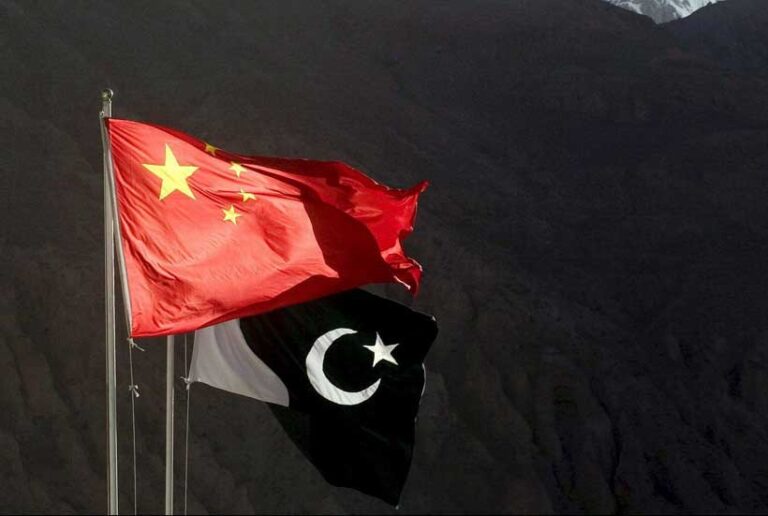
ishaq dar arrives
| | |

Ishaq Dar arrives in Kyrgyzstan to lead Pakistan d…

Deputy Prime Minister and Foreign Minister Ishaq Dar has departed for Cholpon-Ata, Kyrgyz Republic, to participate in the Shanghai Cooperation Organisation (SCO) Council of Foreign Ministers’ Meeting.

The visit comes after the successful conclusion of his trip to Manila, where he expressed gratitude to the Philippine government and the ASEAN Regional Forum team for their hospitality and support during his stay.

Ishaq Dar is leading Pakistan’s delegation at the two-day SCO Council of Foreign Ministers (SCO-CFM) meeting, which brings together foreign ministers from member countries to discuss key regional and international issues.

Foreign ministers from SCO member states, including Pakistan, China, Belarus, India, Iran, Kazakhstan, Kyrgyzstan, Russia, Tajikistan, and Uzbekistan, are participating in the meeting.

The SCO Council of Foreign Ministers is one of the organisation’s key forums and focuses on matters related to international relations, foreign policy coordination, and regional security cooperation.

During his visit to Kyrgyzstan, Deputy Prime Minister Ishaq Dar is also expected to meet the President of the Kyrgyz Republic. He will hold bilateral discussions with counterparts from other SCO member states on the sidelines of the meeting.

The SCO gathering provides an important platform for member countries to exchange views on regional cooperation, security challenges, economic partnerships, and diplomatic relations.

Similar Posts

  • | | |

    Cancer patient girl stuck in Karachi traffic jam d…

    A young girl undergoing cancer treatment was reportedly caught in a Karachi traffic jam while her family was taking her to a hospital for a medical check-up on Thursday. According to local media reports, the girl and her family became stuck near Essa Nagri after residents staged a protest over prolonged electricity and water outages in the area. The demonstration resulted in severe traffic congestion and long queues of vehicles on surrounding roads. The girl’s family said they were taking her to hospital for a scheduled check-up when they became trapped in the traffic. According to the family, the child is suffering from chest cancer and had a urine bag attached to her at the time, making the delay particularly distressing. Residents said they had been facing shortages of both electricity and water for around 15 days. Frustrated by the prolonged disruption, they took to the streets to demand an improvement in basic services. The protest caused significant disruption to traffic movement in the area. The road connecting Gharibabad to Hasan Square was reportedly closed to traffic, with vehicles being diverted through Liaquatabad No. 10, Karimabad and an internal bypass near Gharibabad. Traffic heading from the Hasan Square U-turn was also diverted towards University Road and NIPA. Meanwhile, motorists travelling from Hasan Square towards Liaquatabad faced further congestion and delays. The incident has drawn attention to the difficult balance between residents’ right to protest over essential services and the impact such demonstrations can have on emergency and medical journeys. For the affected family, the traffic jam created an especially difficult situation because of the child’s medical condition and the need to reach the hospital on time. The case also highlights the broader consequences of prolonged civic service disruptions, which can affect not only daily commuters but also patients requiring urgent or scheduled medical care. Residents maintain that repeated power and water outages have left them with little choice but to protest. Authorities, meanwhile, face the challenge of resolving the underlying service complaints while ensuring that major roads remain accessible, particularly for ambulances and people travelling for medical treatment. The situation has once again highlighted Karachi’s traffic and infrastructure challenges, as protests and road closures can quickly cause widespread congestion across major routes.

  • | | |

    AJK police allege 8 officers ‘abducted&#8217…

    MUZAFFARABAD: Azad Jammu and Kashmir (AJK) police on Thursday alleged that eight highway police personnel deployed for election duty had been “abducted” by the proscribed Joint Awami Action Committee (JAAC), as tensions continue to simmer across the region. Police spokesperson SSP Khawar Ali Shaukat made the allegation during a televised press conference in Rawalakot, claiming that the personnel were being held by members of the group and had been subjected to what he described as “brutal abuse”. According to the spokesperson, the security personnel were attacked while carrying out their election-related duties. He claimed the officials’ families had also been threatened, allegedly being warned that the personnel would be killed if the protesters’ demands were not accepted. “We will not allow pressure to be exerted over the lives of these officials,” Shaukat said, calling for the immediate release of the personnel. He warned that authorities would take action if the officials were harmed, their release was obstructed or their families continued to receive threats. The police spokesperson also rejected the perception that the JAAC was a peaceful movement, alleging that recent incidents showed the group was willing to use violence to challenge the state’s authority and institutions. “The state is not weak,” he said, adding that authorities had exercised restraint despite the escalating tensions. Shaukat also appealed to residents to distance themselves from the group and urged parents to monitor their children, alleging that propaganda was being used to encourage young people to participate in unrest. His remarks came as AJK continues to hold elections in phases amid heightened security concerns. The region has witnessed weeks of demonstrations led by the JAAC, which has been demanding, among other things, the abolition of 12 seats in the local legislature reserved for refugees from Indian-held Kashmir. Tensions escalated on July 28 when clashes were reported between protesters and law enforcement personnel in Rawalakot and Mirpur. The violence reportedly resulted in several casualties and further intensified the political and security situation. The government has also accused elements it describes as militants of exploiting the unrest and pursuing a foreign agenda, alleging Indian financial backing. Those allegations have added another layer to an already tense political environment. Last week, AJK Information Secretary Muhammad Rashid Hanif said seven law enforcement personnel, including police and Rangers officials, had been killed during the recent unrest. Meanwhile, Thursday’s police statement has placed renewed focus on the safety of personnel deployed for election duties. Shaukat called on the JAAC to release the eight officials and warned that any further violence against state employees would trigger a firm response under the law and Constitution. The allegations have not been independently verified, and the JAAC’s response to the police claims was not included in the report.

  • | |

    PPP rejects Sindh division, calls province ‘red …

    KARACHI: Pakistan Peoples Party (PPP) has firmly rejected any proposal to divide Sindh into administrative units, with Sindh government spokesperson Saadia Javed declaring that the province remains a “red line” for the party. Speaking to the media on Monday, Javed said the PPP has never supported the division of Sindh and has no intention of doing so in the future. She argued that Pakistan’s current economic challenges and rising inflation make the creation of additional administrative units impractical, questioning how the government would finance such a move. Criticising the Muttahida Qaumi Movement (MQM), she described the demand for new administrative units as a political stunt. Javed questioned the performance of senior MQM leaders, including Federal Health Minister Mustafa Kamal and Khalid Maqbool Siddiqui, asking what concrete steps they had taken to address the concerns of their voters or improve education and public services. She reiterated that Karachi is the capital of Sindh and stressed that any attempt to divide the province is unacceptable to the PPP. According to Javed, while some people in Punjab may favour the creation of additional administrative units, the people of Sindh do not share that view. Addressing Karachi’s civic challenges, she acknowledged that infrastructure development is underway but admitted that progress has not been as fast as residents expect. Referring to ongoing construction on University Road, she recognised the inconvenience faced by commuters and residents. She also shared her own experience, saying that despite living in Defence for four decades, her home still does not receive a regular water supply. Javed said the provincial government is working to resolve Karachi’s longstanding issues and insisted that all of the city’s problems should not be blamed solely on the current administration. She expressed confidence that visible improvements in Karachi would emerge by the end of the year. On the Red Line Bus Rapid Transit project, the spokesperson said work is progressing at a rapid pace, adding that the deadline for completing the mixed-lane track has been set for July 31.

  • | | |

    Weak bureaucracy lies at heart of governance crisi…

    Recent remarks by Interior Minister Mohsin Naqvi, who said that Pakistan’s governance system has “collapsed,” have once again sparked debate over the country’s administrative failures. However, the real issue goes far beyond the number of provinces or administrative units and cannot be attributed solely to a lack of political will at the highest level. The core problem, according to the analysis, is the gradual weakening of Pakistan’s civil administrative structure, which has steadily lost its ability to govern effectively over the past several decades. Instead of identifying this institutional failure, the minister’s comments appear to focus on the symptoms of the crisis rather than its root causes. The repeated reliance on extraordinary measures, task forces, and parallel administrative structures itself reflects the inability of the regular civil bureaucracy to perform its responsibilities efficiently. Under the leadership of Army Staff Field Marshal Asim Munir,the military leadership has consistently emphasized economic revival, action against organized mafias, and restoring investor confidence. The establishment of the Special Investment Facilitation Council (SIFC) also emerged as a response to the inability of the civil bureaucracy to deliver timely economic solutions. However, such initiatives cannot permanently replace an efficient civilian administrative system. The governance crisis stems from the persistent decline in the effectiveness of Pakistan’s civil bureaucracy across the federation, provinces, divisions, and districts. Political interference, weak accountability, and poor human resource management have significantly undermined its performance. Punjab is often cited as a partial exception, where relatively limited political interference in routine administration has enabled the bureaucracy to function more effectively. This reinforces the argument that sustainable governance depends on institutional autonomy and merit-based administration rather than temporary or emergency arrangements. Governance experts have long advocated restoring the Establishment Division at the federal level and the Services and General Administration Departments (S&GADs) in the provinces to their original role as independent institutions responsible for managing human resources. Their objective is to ensure that appointments, promotions, and career planning remain protected from political influence and external pressure. The analysis further argues that Pakistan’s civil service should adopt a structured personnel management system similar to the military’s Military Secretary Branch at General Headquarters (GHQ), where recruitment, promotions, training, and career progression are managed through institutional discipline based on merit and performance rather than political considerations. The military’s internal human resource management system is often regarded as organized, merit-based, and largely insulated from political interference. In contrast, the civil Establishment Division is frequently viewed as a bureaucratic office where transfers and appointments are influenced by political lobbying, personal connections, and pressure from powerful groups instead of institutional needs. These practices have produced long-term consequences. Civil servants are often assigned to positions unrelated to their expertise, career planning remains weak or absent, and accountability mechanisms continue to be inconsistent and ineffective. As a result, governance across various sectors has suffered. The report notes that these shortcomings have been identified repeatedly over the years. More than 20 commissions and reform committees have reviewed Pakistan’s civil service structure during the country’s history. Between 1996 and 2008 alone, at least six major studies highlighted the same concerns, including politicization of the bureaucracy, the absence of merit-based appointments, and weak institutional management of human resources. Despite these findings, most recommendations were never implemented. Successive governments, whether civilian or military, have shown little willingness to reduce their influence over administrative appointments and transfers. Consequently, repeated attempts at civil service reform have failed to produce lasting institutional change. The analysis concludes that Pakistan’s governance crisis is not the result of a failure to identify the problem but rather a lack of political commitment to implementing meaningful institutional reforms. In this context, Mohsin Naqvi’s recent remarks do not fully address the deeper structural weaknesses within the state. The central issue is not merely that the system has collapsed, but that the country’s primary administrative engine—the civil bureaucracy—has been allowed to deteriorate without comprehensive reform. The proposed solution is not the creation of additional provinces but the rebuilding of the civil administrative system on the principles of merit, protection from political interference, and professional career management comparable to the military’s administrative framework.

Leave a Reply

Your email address will not be published. Required fields are marked *