balochistan attack sessions
| | |

Balochistan attack: sessions judge Abdul Hakeem Ka…

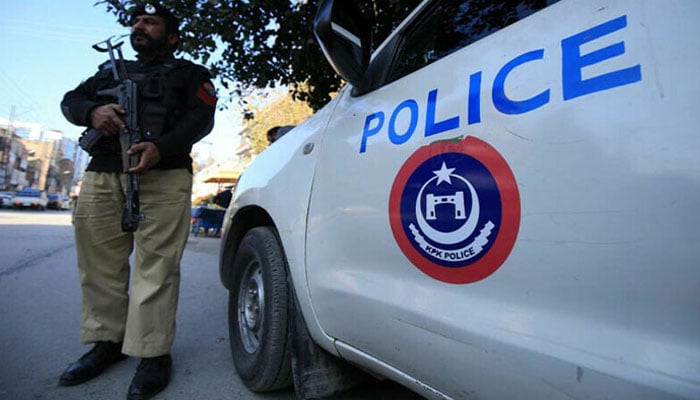
District and Sessions Judge Abdul Hakeem Kakar and his security guard were killed in an armed attack while traveling toward Mastung from Quetta, officials confirmed on Thursday.

According to officials, Judge Kakar was traveling with Additional Sessions Judge Tariq Lashari when unidentified armed men targeted their vehicles near Wali Khan crossing. The attack resulted in the deaths of Judge Kakar and his guard, while Judge Lashari and another person sustained injuries.

Balochistan Home Department officials said the injured victims were shifted to a hospital in Mastung for medical treatment. Authorities have launched an investigation into the attack and are collecting evidence from the crime scene.

Balochistan Chief Minister Sarfraz Bugti took notice of the incident and directed authorities to investigate all aspects of the attack. Officials said strict action would be taken if any negligence was found during security arrangements.

The provincial government described the attack as a targeted assault against the judicial community. Officials said such incidents were aimed at creating fear and challenging the authority of state institutions.

President Asif Ali Zardari strongly condemned the attack and expressed grief over the deaths of the judge and his guard. He said the sacrifices of those killed in such attacks would not go in vain and reaffirmed the country’s commitment to fighting terrorism.

Interior Minister Mohsin Naqvi also condemned the incident, saying such acts could not weaken the nation’s determination against terrorism. PPP Chairman Bilawal Bhutto-Zardari expressed solidarity with the victims’ families and vowed that those responsible would be brought to justice.

The attack comes amid heightened security concerns in Balochistan, where several violent incidents have recently taken place. Just a day earlier, three people were killed and several others injured in an attack on a passenger bus in Mastung, while a bridge on the national highway was damaged in a separate incident.

Security forces have intensified operations across the province following a rise in militant activities. Authorities say counterterrorism efforts are continuing to restore peace and prevent further attacks.

The investigation into the killing of Judge Abdul Hakeem Kakar and his guard remains ongoing, with security agencies working to identify and arrest those responsible.

Similar Posts

  • Beloved Big Bear eagle Jackie passes away, leaving millions heartbroken

    Jackie, the bald eagle who captured hearts across the internet, died on Monday. She had spent weeks under veterinary care after a rough patch in her final months. Caretakers at the Ojai Raptor Center had taken her in following an attack by rival eagles near her Big Bear home. The center shared that her health kept slipping despite round-the-clock treatment from vets and outside specialists. Things first went wrong on July 17, when Jackie was discovered injured after clashing with two other eagles. She was also dealing with serious weight loss and anemia at the same time, which made recovery an uphill fight. Even with intensive support, her body simply couldn’t bounce back, and she passed away this week. Her death has left thousands of longtime fans mourning online. So how did a wild eagle become such a household name? It all traces back to a livestream. Since 2015, the nonprofit Friends of Big Bear Valley broadcast Jackie and her partner Shadow’s nest around the clock, letting strangers around the world watch their daily lives unfold. One of her most unforgettable moments came during a brutal winter storm in 2024, when she stayed put on her eggs for more than 60 hours straight without budging. Viewers stuck around through the hard parts too, watching Jackie and Shadow deal with eggs that never hatched and predators trying to raid the nest. When chicks did survive and eventually flew off on their own, fans celebrated as though it were their own family news. Part of what made Jackie so beloved was her personality. She came across as fierce and fiercely protective, the clear boss of her nest, while Shadow played the gentler role of provider, bringing back food for the family. Wildlife experts say her journey mirrored something bigger too: the slow but real return of bald eagles across California decades after the species nearly vanished from the state. Her remains are now with the California Department of Fish and Wildlife.

  • |

    Pakistan targets 90% clean electricity by 2035, says Awais Leghari

    Federal Minister for Power Awais Leghari outlined Pakistan’s long-term strategy to transform its electricity sector, setting an ambitious target of raising the share of clean energy in the national power mix to 90 percent by 2035. The announcement came during the Solar, Storage and Flexibility 2026 Conference, where the minister also highlighted key policy hurdles, including restrictions under Pakistan’s International Monetary Fund (IMF) programme that are delaying the introduction of a market-based electricity pricing mechanism. Speaking at the conference on Tuesday, Leghari said the government was pursuing a major shift in energy policy by moving away from a traditional generation-focused model towards a system centred on grid flexibility, energy security, battery storage and domestic manufacturing. He said the new approach is designed to reduce Pakistan’s dependence on imported fuels, shield consumers from volatile global energy prices and maximise the benefits of the country’s rapidly expanding solar sector. The minister said Pakistan has witnessed remarkable growth in rooftop solar installations, with nearly 38 gigawatts of distributed solar capacity now installed through private consumer investment. He described the rapid adoption of rooftop solar as one of the country’s biggest energy success stories but cautioned that it has also created new challenges for the national power system. According to Leghari, Pakistan generates significant amounts of electricity from solar energy during daylight hours, yet the absence of sufficient battery storage infrastructure prevents that surplus electricity from being utilised during evening peak demand. He stressed that without modern storage systems, the country would continue to struggle with balancing electricity supply and demand despite having abundant renewable energy resources. Referring to disruptions in Re-gasified Liquefied Natural Gas (RLNG) supplies earlier this year, the minister said the episode exposed Pakistan’s continued dependence on imported fuels. He noted that the interruption in fuel supplies led to electricity shortages and load shedding even though ample solar power was available during the daytime, highlighting the urgent need for large-scale energy storage. “Battery storage is no longer an optional technology—it has become a strategic national asset that is essential for ensuring Pakistan’s energy sovereignty,” Leghari said. He noted that clean energy sources, including hydropower, nuclear, wind and solar, currently contribute approximately 55 percent of Pakistan’s total electricity generation. However, he warned that achieving the government’s renewable energy targets would require significant investment in battery storage systems, transmission infrastructure and power market reforms. The minister emphasised that expanding renewable generation alone would not be sufficient unless supported by a modern electricity network capable of storing and transmitting clean energy efficiently. To support the country’s long-term energy transition, Leghari announced a three-point strategy. The plan includes expanding battery energy storage systems across the national grid, encouraging local battery manufacturing and assembly to reduce reliance on imports while creating employment opportunities, and introducing regulatory reforms aimed at providing long-term certainty and confidence for domestic and foreign investors. During a question-and-answer session following his address, the minister also disclosed that Pakistan’s commitments under the IMF programme currently limit the government’s ability to introduce a fully flexible, market-based electricity tariff system. He explained that the government has been in discussions with the IMF for several months regarding the introduction of a time-of-use tariff, under which electricity prices would vary according to the actual cost of power generation at different hours of the day. Such a system, he said, would encourage consumers to shift electricity consumption to off-peak periods, reduce pressure on the national grid and help integrate renewable energy more efficiently.

  • | |

    President Zardari approves civil awards for 355 pe…

    ISLAMABAD: President Asif Ali Zardari has approved civil awards for 355 Pakistani and foreign personalities in recognition of their outstanding services and achievements in various fields. The awards will be presented at a special ceremony on Pakistan Day, March 23, next year. The recipients include prominent figures from politics, public service, entertainment, sports, journalism, law enforcement, medicine and other sectors. Among the personalities from the entertainment industry, singers Tarannum Naz and Nisho Begum will receive the Sitara-i-Imtiaz. Actors Ghazala Kaifi, Sania Saeed and Maria Wasti, along with singer Zohaib Hassan, will be honoured with the Tamgha-i-Husn-i-Karkardagi. Singer Shiraz Uppal will receive the Tamgha-i-Imtiaz. In sports, shooter Kishmala Talat and former Test cricketer Sadiq Mohammad will be awarded the Tamgha-i-Husn-i-Karkardagi for their contributions and achievements. Several senior government officials and political figures have also been included in the awards list. Deputy Prime Minister and Foreign Minister Ishaq Dar, Interior Minister Mohsin Naqvi, Federal Ministers Ahsan Iqbal and Muhammad Aurangzeb, and Minister of State Bilal Azhar Kayani will receive the Nishan-i-Imtiaz. Director General Intelligence Bureau Fawad Asadullah, Attorney General Mansoor Usman Awan, Federal Board of Revenue Chairman Rashid Mahmood Langrial, Finance Secretary Imdadullah Bosal and Commerce Secretary Jawad Paul will receive the Sitara-i-Imtiaz. Chairman Pakistan Ulema Council Allama Hafiz Tahir Mahmood Ashrafi will be awarded the Tamgha-i-Imtiaz, while Federal Minister Engineer Amir Muqam will receive the Hilal-i-Imtiaz for public service. Zobia Khursheed Raja of Azad Kashmir will receive the Tamgha-i-Shujaat for her bravery in confronting rioters. She reportedly risked her life to rescue an injured police officer who was surrounded by rioters. A total of 46 martyrs of law enforcement agencies will be awarded the Sitara-i-Shujaat. Group Captain Asim Tariq Shaheed will also receive the same honour. Drug Regulatory Authority of Pakistan CEO Dr Ubaidullah will receive the Sitara-i-Imtiaz, while Punjab Saaf and Suthra Authority Director General Babar Sahib Din will be awarded the Tamgha-i-Imtiaz. Senior journalists Saleh Zafar and Haji Nawaz Raza will receive the Sitara-i-Imtiaz. Journalists Ammar Masood, Maria Zulfiqar, Adil Shahzeb and Hamad Hassan will be honoured with the Tamgha-i-Imtiaz. Two physicians associated with Quaid-e-Azam Muhammad Ali Jinnah, Dr Jal Ratanji Patel and Dr Jal Dabu, will be conferred the Nishan-i-Quaid-i-Azam posthumously. The list also includes prominent foreign figures. Saudi Prince Saud bin Naif will receive the Hilal-i-Pakistan, while Turkish Foreign Minister Hakan Fidan, Defence Minister Yasar Guler and Trade Minister Omer Bolat will each be awarded the Sitara-i-Pakistan. Dr Khalid Abbas Al-Asadi and Dr Paul Jacob Bhatti will receive the Tamgha-i-Imtiaz in recognition of their services.

  • | |

    KP police put Rs285.8m bounty on 83 wanted terrori…

    Khyber Pakhtunkhwa Police have announced rewards for information leading to the arrest or identification of 83 wanted terrorists. According to a list issued by the police, the total reward amount stands at Rs285.8 million. The Central Police Office said financial rewards would be given to individuals who provide information that helps authorities locate, arrest or identify the wanted terrorists. Police said the identity of anyone providing information would be kept completely confidential. The rewards announced for the wanted individuals range from Rs500,000 to Rs100 million, depending on the importance and threat level of each suspect. The list includes wanted individuals from several areas of Khyber Pakhtunkhwa, including Dera Ismail Khan, Kulachi, Darazinda, Daraban and Paharpur. Police urged citizens to remain vigilant and closely monitor suspicious activities linked to terrorists and Fitna al-Khawarij. Authorities appealed to the public to share credible information with law enforcement agencies. They stressed that the confidentiality of informants would be fully protected. The reward scheme is part of police efforts to locate wanted militants and strengthen security across the province. Officials said public cooperation could help prevent terrorist activities and improve the overall security situation in vulnerable areas.

  • | | |

    PM Shehbaz says Makkah pact sends message of unity…

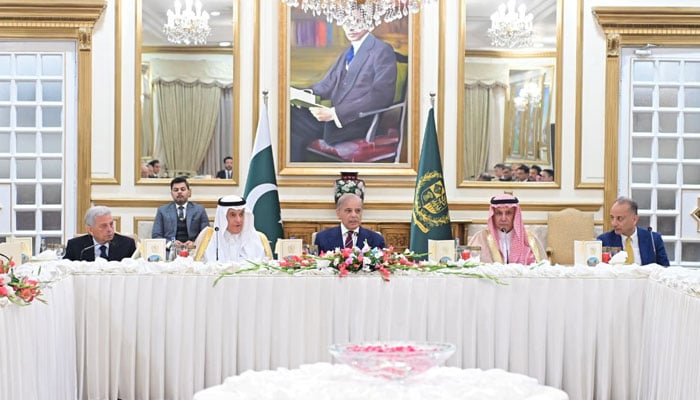
    ISLAMABAD: Prime Minister Shehbaz Sharif has described the recently signed Makkah Joint Defence Agreement between Pakistan, Saudi Arabia and Türkiye as a significant step towards greater regional unity and peace, saying the pact has brought the three countries closer. The prime minister made the remarks on Friday during a meeting with Saudi Arabia’s Minister of Environment, Water and Agriculture, Engineer Abdulrahman bin Abdulmohsen Al-Fadley, who called on him at the Prime Minister’s House in Islamabad. The Makkah agreement was signed on Aug 7 by Saudi Crown Prince and Prime Minister Mohammed bin Salman, Turkish President Recep Tayyip Erdogan and Prime Minister Shehbaz Sharif in Makkah. The agreement provides a framework for stronger collective defence cooperation and states that an armed attack against any one of the three countries will be regarded as an attack against all. Sharif said the agreement had further strengthened the strategic relationship among Pakistan, Saudi Arabia and Türkiye while conveying a message of unity and peace across the region. The prime minister also stressed that Pakistan and Saudi Arabia should now build on their strategic partnership by expanding economic and agricultural cooperation. He said stronger trade and investment ties could help transform the longstanding relationship between the two countries into a broader and more mutually beneficial economic partnership. Focus on agriculture and food security Agriculture emerged as a key area of discussion during the meeting, with both sides reviewing ways to increase cooperation in agricultural productivity, technology, research and development, and efficient water management. Sharif expressed satisfaction with the ongoing cooperation over Pakistani agricultural exports to Saudi Arabia. He said Islamabad was keen to expand the range and volume of agricultural products supplied to the Kingdom. Pakistan has increasingly sought to strengthen its economic relationship with Saudi Arabia beyond traditional financial and energy cooperation, with agriculture and food security offering significant opportunities for both sides. The prime minister announced that a delegation of Pakistani agricultural experts would soon travel to Riyadh to continue discussions and explore practical areas of cooperation. The delegation is expected to focus on improving agricultural productivity through modern technology, research and more efficient use of water resources. The Saudi minister, meanwhile, reaffirmed Riyadh’s commitment to expanding cooperation with Pakistan in agriculture, water management and food security, according to the Prime Minister’s Office. A broader strategic partnership The meeting reflects Islamabad’s effort to translate its close political and strategic ties with Riyadh into greater commercial and economic engagement. Saudi Arabia has historically remained one of Pakistan’s most important partners, providing financial support and assistance during periods of economic pressure. In recent years, however, both countries have increasingly emphasised investment, trade and private-sector partnerships. The latest discussions also come shortly after the signing of the Makkah Joint Defence Agreement, which marked a new phase in security cooperation among Pakistan, Saudi Arabia and Türkiye. Pakistan’s Foreign Office has described the agreement as defensive in nature, saying it is intended to strengthen collective deterrence and promote regional peace and stability rather than target any particular country. For Islamabad, the challenge now will be to convert the political momentum generated by the Makkah pact into tangible economic gains. The planned visit by Pakistani agricultural experts to Riyadh could provide an early test of that approach, particularly as both countries seek greater cooperation in food security, water management, agricultural technology and exports. The meeting therefore carried significance beyond diplomatic messaging, highlighting Pakistan and Saudi Arabia’s shared interest in developing a relationship that combines strategic cooperation with stronger economic ties. As regional security concerns continue to shape diplomacy in the Middle East and beyond, Islamabad appears keen to present the Makkah pact not simply as a defence arrangement, but as part of a wider push for stability, cooperation and closer partnerships among the three countries.

  • |

    UN chief visits Syria after 17 years and backs reconstruction efforts

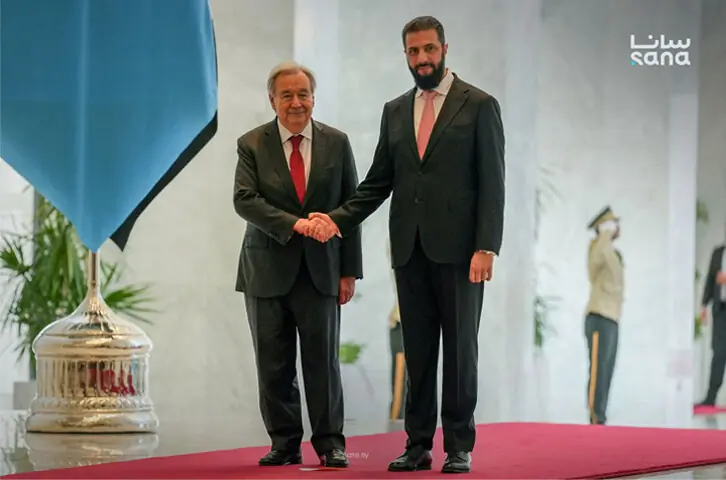
    United Nations Secretary General Antonio Guterres visited Syria on Saturday for the first time in 17 years, marking a significant moment in the country’s efforts to rebuild after more than a decade of conflict. During his visit to Damascus, Guterres met Syrian President Ahmed al Sharaa and pledged continued UN support for reconstruction, humanitarian recovery and long-term stability as Syria works to recover from years of war. President Sharaa welcomed Guterres at the presidential palace, where the two leaders held talks focused on rebuilding the country and strengthening cooperation with the United Nations. Speaking after the meeting alongside Syrian Foreign Minister Asaad al Shaibani, Guterres said no nation can recover from a devastating conflict without international assistance. He stressed that the global community has a responsibility to help Syria restore its economy, rebuild damaged infrastructure and create conditions for lasting peace. Foreign Minister Shaibani called on the international community, particularly the European Union, to increase financial and technical support for Syria’s recovery. He said discussions with Guterres also covered plans to expand UN assistance for reconstruction projects and support the government’s efforts to gradually close displacement camps as security conditions improve. Regional security was another major topic during the visit. Guterres expressed concern over the situation in the Golan Heights, describing recent developments as unacceptable. Syrian officials repeated their demand for Israeli forces to withdraw immediately from the United Nations monitored buffer zone where troops have been stationed since 2024. Damascus has also called for a return to the 1974 disengagement agreement that previously governed military positions in the area. The visit is being viewed as another important step in Syria’s return to the international stage following the removal of former president Bashar al Assad in late 2024. The end of Assad’s rule brought an end to a civil war that began in 2011 and resulted in hundreds of thousands of deaths while forcing millions of Syrians to flee their homes. At the time, Guterres described the political transition as a hopeful moment for both Syria and the wider region. Before arriving in Damascus, the UN chief described his trip as a visit of solidarity and reaffirmed the United Nations’ commitment to supporting the Syrian people during this critical period. He is expected to spend several days in the country, meeting senior government officials, representatives of civil society and humanitarian organizations. Guterres is also scheduled to address Syria’s parliament, where he is expected to speak about the country’s opportunity to build a more stable, inclusive and prosperous future after years of conflict. The visit comes as Syria continues to rebuild diplomatic ties with countries around the world. President Sharaa’s administration has sought to strengthen relations beyond the country’s traditional allies while encouraging international investment and cooperation. Since taking office, the government has focused on restoring Syria’s place in regional and global affairs after years of political isolation. Recent diplomatic developments have reflected that effort. Last year, Sharaa became the first Syrian president in decades to address the United Nations General Assembly. Earlier this month, US President Donald Trump announced plans to remove Syria from the United States list of state sponsors of terrorism after Washington lifted most of its sanctions on the country. Despite these diplomatic gains, security concerns remain. Guterres’ visit follows recent bomb explosions near a hotel in Damascus that had hosted French President Emmanuel Macron during his landmark visit, the first by a European Union head of state since Syria’s political transition. The incidents highlighted the continuing security challenges facing the country as it moves through a delicate rebuilding process. During his stay, Guterres is also expected to visit the UN peacekeeping mission responsible for monitoring the buffer zone between Israeli and Syrian forces. The mission has operated in the area for decades and continues to play a key role in maintaining stability along the disputed frontier. His visit underscores the United Nations’ commitment to supporting Syria’s recovery while encouraging dialogue, regional stability and international cooperation.

Leave a Reply

Your email address will not be published. Required fields are marked *