ogra increases petrol
|

OGRA increases petrol, diesel prices again

Islamabad – The Oil and Gas Regulatory Authority (OGRA) has announced another increase in petroleum prices marking the fourth consecutive day of fuel price hikes and issued new rates for petrol and high-speed diesel.

According to an OGRA notification, the price of petrol has been increased by Rs. 4.40 per litre bringing the new price to Rs. 331.52 per litre.

Similarly, the price of high-speed diesel (HSD) has been raised by Rs. 3.62 per litre taking the new price to Rs. 378.66 per litre.

The notification states that the revised prices will come into effect from 12:00 a.m. on the night between July 23 and July 24 after which fuel stations across the country will charge customers according to the new rates.

OGRA said the price adjustment was made after taking into account global crude oil prices, import costs and other relevant market factors.

The continued increase in petroleum prices is expected to raise transportation costs which could in turn push up the prices of essential commodities. Members of the public and the business community have expressed concern over the repeated increases and urged the government to take effective measures to stabilize fuel prices.

It is worth noting that this is the fourth consecutive day that OGRA has increased petroleum prices resulting in a significant rise in fuel costs over the past several days.

Similar Posts

  • | |

    Madaris back Army, reject Fazlur remarks

    The Muttahida Madaris Council Pakistan has publicly distanced itself from recent remarks made by Jamiat Ulema-e-Islam-F (JUI-F) chief Maulana Fazlur Rehman regarding the Pakistan Army and the country’s martyrs. In an official statement, the council said religious seminaries across Pakistan have always stood with the country’s armed forces and fully respect the sacrifices made by military personnel in defending the nation. It stressed that no seminary or religious educational institution supports any narrative that could be interpreted as being against the armed forces. The council reaffirmed its commitment to national unity and expressed solidarity with Pakistan’s security institutions. It also paid tribute to the country’s martyrs, saying their sacrifices for national security and peace deserve the highest respect. The controversy began after Fazlur Rehman addressed a public gathering in Kasur, where he spoke about the security situation in Khyber Pakhtunkhwa and Balochistan. During his speech, his comments about soldiers and martyrdom sparked widespread criticism from political leaders and members of the public. Several politicians described the remarks as inappropriate and called on the JUI-F chief to publicly clarify or withdraw his statement. They maintained that the sacrifices of soldiers should not become part of political debate and should always be treated with respect. Punjab Assembly Speaker Malik Muhammad Ahmad Khan strongly criticised the remarks and urged Fazlur Rehman to issue a public apology. He also proposed the formation of a Senate committee to examine the issue and determine whether the veteran politician should be formally called to explain his comments. The matter has also entered the legal arena. A sessions court has issued a notice to the National Cyber Crime Investigation Agency (NCCIA) regarding the registration of a cybercrime case linked to the controversial remarks. The agency is expected to submit its response during the legal proceedings. Legal experts say the court will review the available evidence before deciding whether further action is warranted under the relevant laws. The controversy has continued to dominate political discussions, with leaders from different parties expressing contrasting views over the issue. While critics insist that the remarks were disrespectful to the sacrifices of the armed forces, supporters of Fazlur Rehman have defended his right to express political opinions.

  • Singapore’s Global Talent Push: ONE Pass Holders Double in Two Years

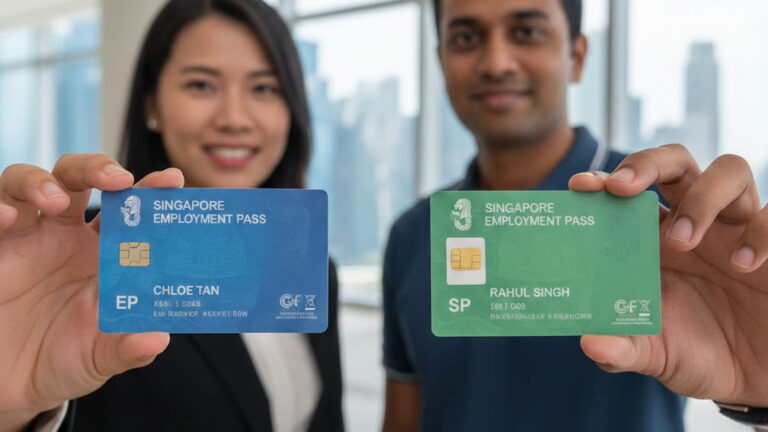
    BANGKOK – Singapore has significantly ramped up its push to attract the best minds in the world. The city-state has more than doubled the number of high-earning foreign professionals holding a special work visa since its launch. The number of Overseas Networks and Expertise (ONE) Pass holders jumped to 8,500 by December 2025. This is […]

  • | |

    Punjab cybercrime crackdown, 28 suspects arrested

    LAHORE: Authorities have arrested 28 suspects in Lahore, Faisalabad and Multan as part of a major crackdown on organised online fraud, exposing alleged schemes that relied on impersonation, fake investment opportunities and fabricated official identities to deceive citizens. The arrests were made during a province-wide operation by the National Cyber Crime Investigation Agency (NCCIA) Punjab, directed by Punjab Director Muhammad Ali Wasim, officials said. Investigators also seized 24 mobile phones and a laptop, which are now being examined for evidence that could lead to other members of the alleged network. The investigation has revealed how fraudsters allegedly manipulated trust to convince victims to hand over large sums of money. Millions allegedly lost in Lahore scam In Lahore, 18 suspects were arrested in separate operations. Investigators said the suspects allegedly impersonated relatives, visa agents, government officials and personnel associated with the Punjab Safe Cities Authority. In one case, suspects allegedly posed as both a relative and a visa agent and persuaded a victim to transfer Rs25.86 million. The case has highlighted how scammers can combine apparently familiar identities with urgent requests to make their schemes appear legitimate. Rs54.66m trading fraud uncovered Three suspects were arrested in Faisalabad in connection with alleged online trading fraud and unauthorised access to a company email account. According to investigators, a victim was shown fabricated trading records, digital-wallet balances and purported profit statements to create the impression that substantial returns were being generated. After being persuaded to invest, the victim allegedly lost Rs54.66 million, investigators said. The case demonstrates the growing sophistication of investment scams, where criminals allegedly use manipulated digital information to make fraudulent platforms appear genuine. Multan arrests expose impersonation tactics In Multan, seven suspects were arrested for allegedly posing as relatives, bank employees and individuals claiming to be based in Britain. Officials said victims were approached with various demands, including payments supposedly required for prize money, customs clearance, taxes and visa renewals. Such tactics typically create a sense of urgency, leaving victims with little time to verify the identity of the caller or the authenticity of the demand. Digital evidence now under forensic examination NCCIA investigators are examining the seized devices through forensic analysis. Financial transactions, call records and digital communications are also being reviewed to establish the full extent of the alleged operation and identify other people who may be connected to it. The crackdown comes amid growing concern over online financial fraud in Pakistan. The NCCIA’s own statistics identify financial fraud as a major category of reported cybercrime. The latest arrests underscore a simple but increasingly important warning: an apparently familiar voice, official-looking message or promising investment opportunity may not be what it seems. Authorities are expected to continue the investigation as they trace the alleged network and follow the digital and financial trails left behind.

  • | |

    Customs seize cameras and electronics worth Rs5.5m…

    Customs officials at Jinnah International Airport in Karachi have seized a large quantity of electronic goods from a passenger arriving from Dubai. According to customs sources, the passenger was intercepted during a routine check at the airport. Officials recovered 29 cameras from the passenger. The seized items also included five camera lenses. The consignment contained 19 digital cameras. Customs officials also found 10 fitness bands among the electronic goods. Other electronic items were also recovered during the inspection. The total value of the seized goods has been estimated at around Rs5.5 million. Customs officials are examining the recovered items as part of the ongoing investigation. The authorities are also checking the passenger’s travel and import details. The action was carried out at Jinnah International Airport, one of the country’s busiest entry points for international passengers. Officials regularly conduct inspections of incoming passengers to prevent the illegal movement of commercial goods and other undeclared items. The latest seizure highlights the continued monitoring of international arrivals at Karachi airport. Customs authorities are taking action when passengers are found carrying goods that require declaration or clearance under applicable rules.

  • | | |

    Google releases Android 17 QPR2 beta 3 with new fe…

    Google has released Android 17 Beta 3, also known as the QPR2 Beta 3 update, for eligible Pixel devices. The latest beta includes bug fixes as well as several new features and customization options. One of the biggest changes is a redesigned Quick Settings editor. The feature will allow users to arrange toggles and settings according to their preferences. Users can also choose which Quick Settings tiles appear in larger formats. Google is further expanding customization by allowing users to adjust the position of the brightness slider and media player. Additional theming options are also reportedly being prepared for the final release, including adjustable colour hues and more blur effects across different parts of the interface. The Android 17 Beta 3 update also introduces new call-protection features designed to help users avoid social-engineering scams. Additional confirmation dialogs may appear when users dial numbers associated with call forwarding, reducing the risk of unknowingly redirecting their calls to another number. The QPR2 Beta 3 update is currently available to eligible Pixel devices through the beta programme. While some features are already available for testing, Google is expected to introduce further improvements before the stable Android 17 release.

  • | |

    12 Pakistani and foreign groups submit bids to acq…

    Twelve business groups, including eight prominent Pakistani conglomerates and four foreign firms, have formally expressed interest in acquiring majority stakes in the Faisalabad Electric Supply Company (Fesco), marking the government’s most serious attempt in a decade to privatise the profitable power distribution utility. The Privatisation Commission released the list of interested parties on Friday after the extended deadline for expressions of interest closed. The development represents a major milestone for Pakistan’s long delayed plan to sell off state owned power distribution companies, a process that stalled in 2016 when the previous government abandoned the sale just before bidding began. The federal cabinet has already authorised the sale of majority stakes in three of the country’s most profitable power distribution companies, positioning Fesco as the first test case in the broader privatisation drive. Local business families dominate interest Eight of the twelve groups that submitted expressions of interest are well established Pakistani business families with deep roots in energy, textiles, automobiles and cement manufacturing. A consortium formed by Nishat Mills, controlled by one of Pakistan’s wealthiest businessmen, Mian Mohammad Mansha, and Pak Elektron Limited, owned by the Saigal family, has entered the race. Mansha also participated in the failed 2015 to 2016 bidding round for the same company. The Saigal family additionally submitted separate bids through Maple Leaf Cement and Kohinoor Textile Mills, giving the family multiple entry points into the process. Other major local contenders include Engro Energy Limited, part of the Dawood family’s diversified business empire, and Sapphire Fibers Limited, owned by the Abdullah family. Hub Power Holdings, controlled by the Habibullah Khan family and already a significant player in Pakistan’s power sector, has also thrown its hat in the ring, alongside Lucky Cement, owned by the Mohammad Ali Tabba family. Lucky Cement previously finished as runner up in the privatisation of Pakistan International Airlines. Shirazi Investments, which also holds interests in the automobile sector, and Artistic Milliners, owned by the Yaqoob family, rounded out the list of local applicants. K-Electric, Pakistan’s largest integrated power generation and distribution company, submitted documents as well, even as its Saudi and Kuwaiti shareholders pursue international arbitration against the government over a blocked 1.7 billion dollar Chinese investment in the company. Foreign firms from Turkey and China join the race Four international firms rounded out the list of interested parties. Three Turkish companies, Aktor Elektrik Enerji Yatirimlari, Genvera Enerji (part of the Celik Group) and Cengiz Enerji Sanayii ve Ticaret, submitted bids alongside Chinese firm Jiang Xi Electric Power Construction. Officials noted that firms qualifying technically and financially for Fesco will also be eligible to bid for two additional distribution companies, Gujranwala Electric Power Company and Islamabad Electric Supply Company, if they fail to win Fesco. This flexibility likely contributed to the strong turnout, as qualified investors gain multiple chances to enter Pakistan’s power distribution market. Government hails strong investor response Muhammad Ali, Adviser to the Prime Minister on Privatisation and Chairman of the Privatisation Commission, called the response a significant milestone in the broader privatisation of state owned distribution companies. He said the strong interest in Fesco reflects investor confidence in the growth potential of Pakistan’s electricity distribution sector and in the government’s commitment to running a transparent and competitive process. Ali added that the commission will now engage with prequalified investors through detailed due diligence and begin discussing the structure of the post-privatisation regulatory regime. He said the sale aims to improve operational efficiency, modernise ageing distribution infrastructure, strengthen customer service and reduce financial losses across the sector, ultimately supporting more competitive electricity distribution and more affordable, reliable power for consumers. The expressions of interest and accompanying statements of qualification will undergo evaluation against the prequalification criteria set by the commission. Groups that meet the requirements will move to the next stage, gaining access to a virtual data room to conduct detailed buy side due diligence on Fesco’s operations and finances. Concerns remain over guaranteed returns and uniform pricing Despite the enthusiastic response, some analysts have raised concerns about the government’s proposal to guarantee investors a minimum return of 13 percent, warning that such guarantees could discourage efficiency gains and slow technological upgrades at the privatised utility. Questions also remain over whether the government will maintain uniform electricity pricing nationwide after privatisation, a policy that would keep subsidy costs on the federal budget rather than shifting the burden fully to market pricing. Fesco is one of three companies included in the first batch of distribution company privatisations, alongside Gepco and Iesco. The deadline for expressions of interest in Gepco is set for 21 August 2026, while Iesco’s deadline falls on 7 September 2026. Fesco’s financial position underscores its appeal Financial data from the finance ministry’s Central Monitoring Unit shows Fesco held total assets worth 410.3 billion rupees as of June last year, against liabilities of 347 billion rupees. The company posted net positive equity of 63 billion rupees, which climbed 28 percent due to share deposits and asset revaluation gains. Non-current liabilities stood at 217.6 billion rupees, with staff retirement benefits accounting for the largest share at 123 billion rupees. Current liabilities totalled roughly 130 billion rupees, including trade payables of 118 billion rupees. The company reported a profit after tax of 9.4 billion rupees for the period. With twelve qualified groups now in the running, the Fesco privatisation stands as a critical test of investor appetite for Pakistan’s power sector reforms and could shape the pace and structure of future electricity distribution company privatisation efforts.


Leave a Reply

Your email address will not be published. Required fields are marked *