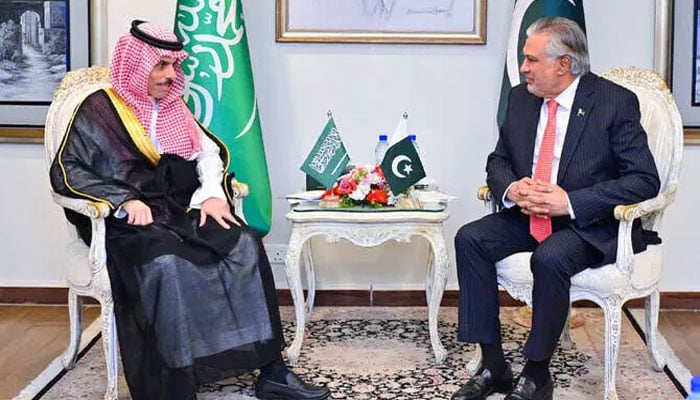
shehbaz accuses india
| | |

PM Shehbaz accuses India of backing terrorism, urg…

ISLAMABAD: Prime Minister Shehbaz Sharif on Friday accused India of playing a direct role in terrorism inside Pakistan and urged Afghanistan’s interim government to prevent militant groups from using its territory to launch attacks across the border.

Addressing participants at the Balochistan National Workshop, the prime minister said Pakistan had successfully eliminated terrorism by 2018, but claimed that violence later resurfaced as part of what he described as a “well-organized conspiracy.”

“India’s role in terrorism inside Pakistan is evident,” Shehbaz said, adding that the country had paid an enormous price in the fight against militancy, with more than 90,000 Pakistanis losing their lives over the years.

Referring to the recent killing of a session judge in Mastung, the prime minister described the incident as another reminder of the continuing terrorist threat facing the country. He stressed that defeating terrorism requires a united national response involving state institutions and the public.

Shehbaz also called on Afghanistan’s interim authorities to ensure that Afghan soil is not used by militant groups to carry out attacks against Pakistan. While emphasizing the importance of good relations between the two neighboring countries, he expressed regret that the Afghan administration had failed to stop terrorist elements operating from its territory.

The prime minister said Pakistan’s diplomatic efforts for regional peace had received international recognition, adding that the country’s recent achievements had unsettled its adversaries. He praised Field Marshal Syed Asim Munir and Deputy Prime Minister and Foreign Minister Ishaq Dar for their diplomatic initiatives aimed at strengthening Pakistan’s regional and international engagement.

Turning to development, Shehbaz highlighted the strategic importance of Balochistan, describing it as Pakistan’s largest province by area and the smallest by population. He said the people of Balochistan had always played a vital role in strengthening the federation and assured them that their sacrifices would never be forgotten.

He also announced that construction work on the dual carriageway linking Karachi and Chaman was progressing, calling it a major infrastructure project expected to improve connectivity and economic activity in the province.

Discussing the National Finance Commission (NFC) Award, the prime minister said Punjab had made significant contributions for Balochistan while the other provinces had also extended full support. He pledged to correct past shortcomings and ensure every province receives its constitutional share of national resources.

Responding to questions from workshop participants, Shehbaz said Pakistan’s future prosperity depends on the collective efforts of all four provinces, expressing confidence that the country is ready to embark on a new phase of national development while continuing its fight against terrorism.
Similar Posts

  • | |

    Sindh orders immediate reduction in public transpo…

    The Sindh government has ordered an immediate reduction in public transport fares following a significant decrease in the price of high-speed diesel. According to local media reports, the Sindh Transport Department has directed transporters to pass the full benefit of the Rs32.63 per litre reduction in diesel prices on to passengers. The directive covers buses, minibuses, coaches, vans and other public service vehicles operating across the province. Transport authorities have also instructed operators to clearly display updated fare lists at vehicles and bus terminals. The move is aimed at ensuring that passengers receive the benefit of lower fuel prices and that transporters do not continue charging fares based on previous diesel rates. Officials have further been directed to conduct daily road inspections and check public transport vehicles to monitor compliance with the new instructions. Transporters found charging passengers excessive fares could face strict action. According to the Transport Department, penalties for violations may include fines, suspension of route permits and cancellation of vehicle fitness certificates. Authorities have also been instructed to submit daily implementation reports to the Sindh Transport Department. The directive comes after the price of high-speed diesel was reduced by Rs32.63 per litre, bringing its new price to Rs363.06 per litre. The reduction is expected to lower operating costs for public transport operators and has prompted authorities to seek a corresponding reduction in passenger fares. Public transport fares are an important issue for millions of commuters, particularly low-income workers, students and daily wage earners who rely heavily on buses, minibuses and other shared transport services. The Sindh government’s decision is therefore likely to attract considerable attention from passengers who have been waiting for transport fares to reflect changes in fuel prices. The enforcement mechanism will be crucial in determining whether commuters actually receive the benefit of the diesel price reduction. Daily inspections and penalties could help prevent transport operators from charging fares above the officially approved rates. Authorities have emphasized that transporters must comply with the new instructions and ensure that revised fares are clearly communicated to passengers. The latest move represents an effort by the provincial government to link public transport fares in Sindh with changes in fuel prices and provide immediate relief to commuters following the reduction in diesel costs.

  • | |

    Rana Sanaullah says PML-N set to secure two-thirds…

      ISLAMABAD: Adviser to Prime Minister Rana Sanaullah has said that the Pakistan Muslim League-Nawaz (PML-N) is expected to secure a two-thirds majority in the Azad Jammu and Kashmir (AJK) Legislative Assembly after elections for the reserved seats. Speaking about the political situation in Azad Kashmir, Rana Sanaullah said that PML-N would form its government in the region with a clear majority. He stated that the party had secured victory on 25 seats and would achieve a two-thirds majority once the elections for reserved seats were completed. The prime minister’s adviser also expressed his appreciation for Sajid Iqbal, who was elected from LA-14. He thanked the newly elected lawmaker for deciding to support PML-N and said that Sajid Iqbal would work alongside the party for the development and improvement of Azad Kashmir. Rana Sanaullah said that the people of Azad Kashmir had given PML-N a mandate to improve the situation in the region and address the issues faced by its people. He emphasized that the party would fulfill the commitments it had made during the election campaign and would work to bring positive changes to the lives of citizens. He further said that the AJK Legislative Assembly would be allowed to function with its full constitutional powers. According to him, the new government would focus on governance, development and resolving the problems of the people instead of engaging in political confrontation. Commenting on the ongoing protests and sit-ins in Azad Kashmir, Rana Sanaullah said that the citizens participating in the demonstrations were their brothers and should not be viewed as opponents. He stressed that the people of Azad Kashmir were as much owners of Pakistan as citizens living in other parts of the country. However, he claimed that only a very small portion of the protesters, estimated at around one to one-and-a-half percent, might be influenced by elements attempting to create unrest or provoke violence. He maintained that the majority of the people participating in the protests were ordinary citizens expressing their concerns. Rana Sanaullah’s remarks come amid heightened political activity in Azad Kashmir following the recent elections. The expected formation of a PML-N government, along with the possibility of the party securing a two-thirds majority through reserved seats, could significantly strengthen its position in the AJK Legislative Assembly. The PML-N leadership has indicated that its priority will be to address governance and development-related challenges in Azad Kashmir. Rana Sanaullah reiterated that the party would honor its election commitments and work toward improving the region’s overall situation. He also emphasized the importance of maintaining unity between Azad Kashmir and Pakistan, saying that the people of the region have an equal stake in the country. His comments appeared aimed at reassuring protesting citizens while also distinguishing them from what he described as a small number of potentially disruptive elements. With the reserved-seat elections still to be completed, the final composition of the AJK Assembly will determine whether PML-N achieves the two-thirds majority claimed by the prime minister’s adviser. The party is nevertheless confident that it has secured sufficient political support to form the government and pursue its legislative and development agenda in Azad Kashmir.

  • |

    Japan earthquake survivors struggle with water shortages and extreme heat

    Communities across southern Japan are facing growing hardship after a powerful 7.1 magnitude earthquake left at least 17 people dead, damaged essential infrastructure, and cut off water and electricity for thousands of residents. As emergency teams continue rescue and relief operations, authorities are racing to address the worsening impact of intense summer temperatures on affected communities. The earthquake struck Kumamoto Prefecture on Tuesday, causing widespread destruction in Yatsushiro, a port city where cracked roads, collapsed buildings, and broken water pipelines have made daily life increasingly difficult. While damaged homes and public buildings are visible reminders of the disaster, local officials say the lack of clean water and electricity has become one of the biggest challenges facing residents. Akio Matsushita, a city official involved in coordinating relief efforts, said restoring the damaged water system could take a long time because of the scale of the destruction. He explained that repair crews are still assessing the underground damage and cannot estimate when normal services will resume. With temperatures reaching around 35 degrees Celsius and humidity remaining high, the shortage of water has become especially dangerous. Even city hall has been affected, forcing officials to install temporary toilets above sewer manholes after indoor facilities stopped working. Authorities have confirmed that at least 17 people lost their lives in the earthquake. Most of the deaths occurred at a paper manufacturing plant operated by Nippon Paper Industries, where severe structural damage trapped workers. Others were reported at an Aeon shopping mall after what officials believe may have been a gas explosion. Six more people remain in cardiopulmonary arrest, while authorities continue investigating additional deaths that may also be linked to the earthquake. Including those cases, the overall death toll could rise to 28. Emergency responders are also preparing for another serious threat as weather forecasts predict temperatures could approach 40 degrees Celsius over the coming days. Officials have warned that people staying in evacuation centres face an increased risk of heat related illnesses. To reduce that danger, Japan’s Self Defense Forces have begun installing around 300 air conditioning units at evacuation shelters and other important relief locations throughout Kumamoto Prefecture. In the hours after the earthquake, military vehicles transported large water tanks to schools and community centres across Yatsushiro. Emergency water stored beneath city hall has been used to refill the tanks, allowing residents to collect drinking water. However, supplies remain limited, with each person allowed only three litres. Among those waiting for water was Masahiro Miyamoto, who spent hours clearing debris after a temple gate collapsed during the quake. Although his own home remained standing, the neighbouring house was destroyed. Without running water, he has depended entirely on military water deliveries. He said the few stores that reopened after the disaster were crowded with shoppers trying to buy food and other essentials, while long lines formed outside petrol stations as people rushed to fill their vehicles. Japan’s location along the Pacific Ring of Fire makes earthquakes a frequent occurrence. The country has invested heavily in earthquake resistant construction and emergency preparedness, helping reduce casualties during many disasters. Even so, powerful earthquakes continue to cause severe disruption, especially in regions with major industrial facilities. The latest earthquake has also affected manufacturing across Kyushu, an important centre for Japan’s automobile and semiconductor industries. Several leading companies, including Toyota, Honda, Nissan, Aisin, and Sony, temporarily suspended parts of their production while inspections were carried out. Taiwan Semiconductor Manufacturing Company also evacuated workers and briefly stopped operations to ensure facilities remained safe. Many residents of Kumamoto still remember the devastating earthquakes that struck the region in 2016, killing more than 260 people and destroying thousands of homes. Even those who survived that disaster said this week’s shaking felt stronger in parts of Yatsushiro. Miyamoto recalled shelves crashing to the floor and computers being thrown across rooms. He said the violent movement was unlike anything he had experienced before, describing the sensation as if he had been lifted off the ground and tossed through the air.

  • |

    Govt increases petrol by Rs1.09, HSD by Rs2.42

    The government on Thursday increased the prices of petrol and high-speed diesel (HSD) by Rs1.09 and Rs2.42 per litre, respectively, passing on the impact of fluctuating global oil prices amid ongoing Middle East tensions. Following the revision, petrol will retail at Rs336.15 per litre, while HSD will cost Rs393.04 per litre. The government continues to levy Rs110 per litre in taxes and duties on petrol and Rs96 per litre on diesel. The Petroleum Division’s notification said the new prices would be applicable for July 31 (Friday). The diesel price has come down from a peak of Rs520.35 recorded on April 3, after beginning its upward trajectory from Rs281 per litre when the US-Iran war broke out on February 28. Similarly, petrol had peaked at Rs458.41 on April 3 after rising from Rs266 in the first week of March. Earlier, Petroleum Minister Ali Pervaiz Malik announced that fuel prices would now be fixed on a daily basis due to fluctuations in international market prices following renewed hostilities between Iran and the US. The government had been announcing weekly revisions since early March, alongside conservation measures amid possible oil supply disruptions due to the ongoing conflict in the Middle East. In April, the federal government also announced targeted relief measures to provide subsidised fuel. The petroleum minister stated that the cabinet and the prime minister had decided to give the Oil and Gas Regulatory Authority (OGRA) the responsibility of deciding fuel prices on a daily basis based on international market trends. The daily pricing decision was rejected by the All Pakistan Dealers Association, which said it would consider a protest plan this week. Petrol is mainly used in private transport, small vehicles, rickshaws and two-wheelers, and changes in its price affect the middle and lower-middle classes. Similarly, diesel price changes impact the public at large, as it is primarily used in the heavy transport sector, power plants and large generators. Petrol and HSD are the major revenue earners, with monthly sales of about 700,000 to 800,000 tonnes, compared to just 10,000 tonnes of monthly demand for kerosene.

  • | |

    Pakistan’s military tightens grip on Islamis…

    Munir’s family background feeds into this shift as well. He is the son of an imam and considers himself a devout, conservative Muslim, and religious identity remains deeply woven into Pakistan’s state institutions. Even so, he has pushed the country toward international engagement through cryptocurrency partnerships, foreign investment deals, a mediating role in the conflict between the United States and Iran, and a mutual defence pact with Saudi Arabia. Data shared with a foreign news agency by the Armed Conflict Location and Event Data Project, a group that tracks conflict incidents worldwide, shows the scale of the shift. Pakistan averaged more than seven blasphemy related riots or attacks annually between 2021 and 2024, but recorded only one such incident over the past twelve months. Economic pressure appears to have played a significant role in prompting the crackdown. Two Pakistani government sources said officials grew alarmed during the summer of 2025 that rising hostility from fundamentalist groups toward France and other European countries threatened to jeopardize a European Union duty waiver covering Pakistani exports. Nearly a third of Pakistan’s total exports go to the EU, and losing that preferential access could have dealt a severe blow to the national economy. Neither the European Commission nor Pakistan’s commerce ministry responded to requests for comment on the matter. Washington has added its own pressure over religious freedom concerns. The US Commission on International Religious Freedom, a government watchdog, recommended last year that Pakistan be placed back on a list of countries of particular concern due to its blasphemy laws, a designation Islamabad has firmly rejected. Analyst Abdul Basit of Singapore’s S. Rajaratnam School of International Studies said worsening insurgent violence in Balochistan and Khyber Pakhtunkhwa, Pakistan’s two most mineral rich provinces, likely added urgency to Munir’s campaign, particularly since he has pitched foreign investment in the country’s mining sector to American officials over the past year. Basit noted that religious groups have lost favor within the state’s priorities, though he cautioned that the militias driving these regional insurgencies are not formally tied to the newly banned Islamist organizations, even if both draw recruits from the same pool of young, radicalized men. Elizabeth Threlkeld, who directs the Stimson Center’s South Asia program, said the open question going forward is whether Pakistan can sustain this level of focus over time. Crackdown targets country’s largest fundamentalist movement The largest of the groups swept up in the crackdown, Tehreek e Labbaik Pakistan, built its identity around the slogan “Death to blasphemers” before authorities banned it late last year. Many of its leaders now sit in jail, its mosques have been sealed shut and its financial accounts frozen. A previously undisclosed government document that laid the groundwork for the ban argued the organization had become a serious threat to Pakistan by damaging both domestic stability and the country’s standing internationally. A spokesperson for the group pointed to a statement it issued last year describing the ban as illegal and unconstitutional. The move against Tehreek e Labbaik follows earlier crackdowns on groups such as Lashkar e Taiba and Jaish e Muhammad, which Pakistan pursued under pressure from the Financial Action Task Force, the international body that monitors terrorism financing. Basit linked the newest crackdown to a period of internal reflection within Pakistan over its historical backing of the Afghan Taliban, whom Islamabad now blames for stoking Islamist insurgencies against the Pakistani state from across the border. The Taliban government in Kabul has dismissed that accusation as baseless, and a spokesperson for its foreign ministry declined to comment further, describing Pakistan’s crackdown as an internal matter. For Pakistan’s Christian, Shia and Ahmadi communities, the change in atmosphere has been dramatic. In the past, suspects in blasphemy related killings, including police officers, were sometimes greeted with rose petals or celebratory receptions, and individuals accused of burning churches or minority mosques often received public praise. Blasphemy remains a capital offense under Pakistani law, and even a rumor of an accusation has historically been enough to spark riots or lynchings. Human rights organizations say victims’ families have rarely obtained justice, since judges and lawyers have often been too frightened to take on such cases. Officer Malik said everyone who confronted the crowd during last month’s incident in Karachi felt genuine fear. The Christian family targeted that day was eventually moved to safety, and an initial investigation has since found the accusations against them to be false. Group’s military links trace back a decade Tehreek e Labbaik formed in 2015 while its founder was imprisoned for shooting and killing a Pakistani provincial governor in 2011 over his support for a Christian woman accused of blasphemy. That gunman, a former police bodyguard, was later convicted and executed months after the group’s founding. Analysts have long suspected the group’s creation received at least tacit support from Pakistan’s military establishment, including its intelligence services, as a tool to keep civilian governments and mainstream political parties in check. Following violent riots led by the group in 2017, then army chief General Qamar Javed Bajwa referred to its protesters as the country’s own people. Pakistan’s Supreme Court later ordered the military and intelligence agencies to stay out of politics but stopped short of directly tying them to the organization. Analysts and former officials say the effects of years of tolerance for the group will not disappear simply because of a ban, and that the shock felt by its supporters could still trigger backlash. Ihsan Ghani, who served as Pakistan’s counter terrorism chief during the 2017 riots, said he worries the group could resurface at full strength if its usefulness to the state changes again. He compared decades of state backed nurturing of the movement to something that cannot simply be switched on and off at will. Within Pakistan’s minority communities, the sudden shift still feels fragile. One of the Christian women rescued during last month’s incident in Karachi said she and her family are now physically safe, but admitted the fear has not fully faded.

  • |

    Pakistan tops FTR medal table at F-Class World Championship in UK

    LONDON: Pakistan has produced a historic performance at the 7th F-Class World Championship in the United Kingdom, emerging as the highest medal-winning nation in the FTR category after securing 4 gold, 4 silver and 5 bronze medals during the opening individual competitions. The championship, being held at the renowned Bisley National Shooting Centre, began on 12 August and has brought together 207 elite long-range shooters from 24 countries. The first phase featured individual matches over distances of 800, 900 and 1,000 yards. Competing with a modest contingent of just 12 shooters, Team Pakistan outperformed much larger international teams, underlining the country’s rapid rise in long-range target shooting. The achievement comes only three years after Pakistan entered the international F-Class arena, making its emergence as a major force all the more remarkable. The standout performer was Lieutenant Colonel Junaid Ali, who delivered a world-class performance to claim the coveted Individual FTR World Champion title. He won three gold, one silver and one bronze medal, finishing ahead of all 207 competitors through exceptional consistency across all three shooting distances. His triumph marks the biggest individual achievement in Pakistan’s F-Class shooting history. Sepoy Muhammad Waleed added another gold and a bronze medal to Pakistan’s tally, while Huzaifa Gill excelled in the Under-25 category with three silver and two bronze medals. Ahsan Gill also secured a bronze medal. Pakistan’s impressive depth was reflected in the overall standings, with seven shooters—Lt Col Junaid Ali, Muhammad Waleed, Obaid, Qasim, Huzaifa Gill, Junaid Waqas and Ahsan Gulrez—finishing among the championship’s top 100 competitors. The latest success follows another outstanding performance at the F-Class British Open 2026, held at Bisley earlier this month, where Pakistan won seven gold, two silver and four bronze medals, signalling the country’s growing stature in international long-range shooting. Attention now turns to the prestigious 16-member World Championship Team Match, scheduled for 15–16 August, where Pakistan will compete across 800, 900 and 1,000 yards with hopes of adding to its remarkable medal haul. Pakistan’s performances at Bisley have established the national team as one of the fastest-rising forces in world F-Class shooting and brought considerable pride to the country on the international stage.

Leave a Reply

Your email address will not be published. Required fields are marked *